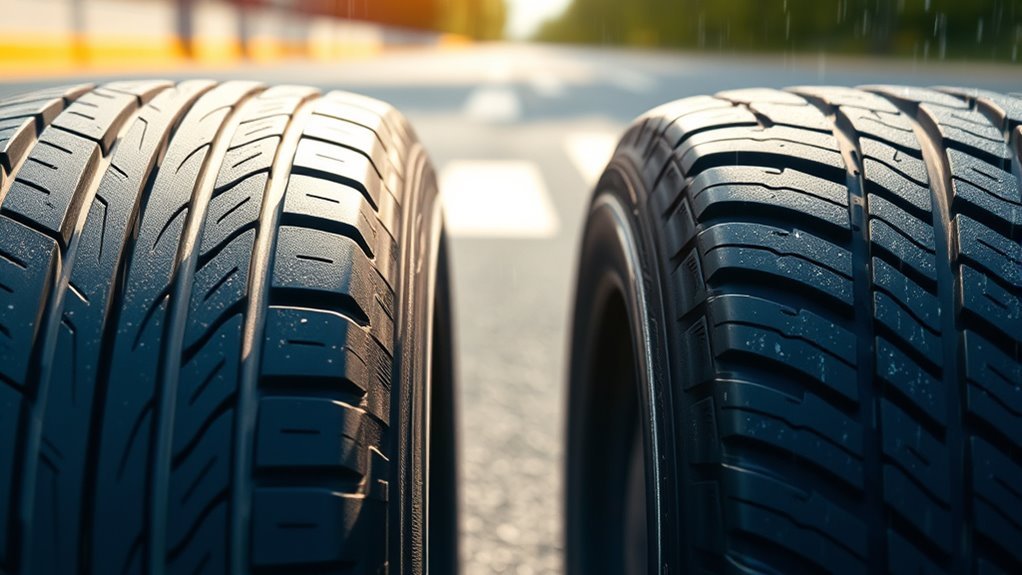
What Is the Difference Between All-Season and All-Weather Tires?
You’ll find that all-season tires work well in mild climates above 45°F and handle light snow.
However, their rubber hardens in colder weather, which reduces grip.
All-weather tires, on the other hand, stay flexible below 45°F.
They also feature deeper treads with snow certification, offering you better traction and safety in colder, snowy conditions.
Plus, they tend to provide a quieter, smoother ride.
If you want to know which tire suits your driving needs best, keep exploring the details.
Understanding All-Season Tires
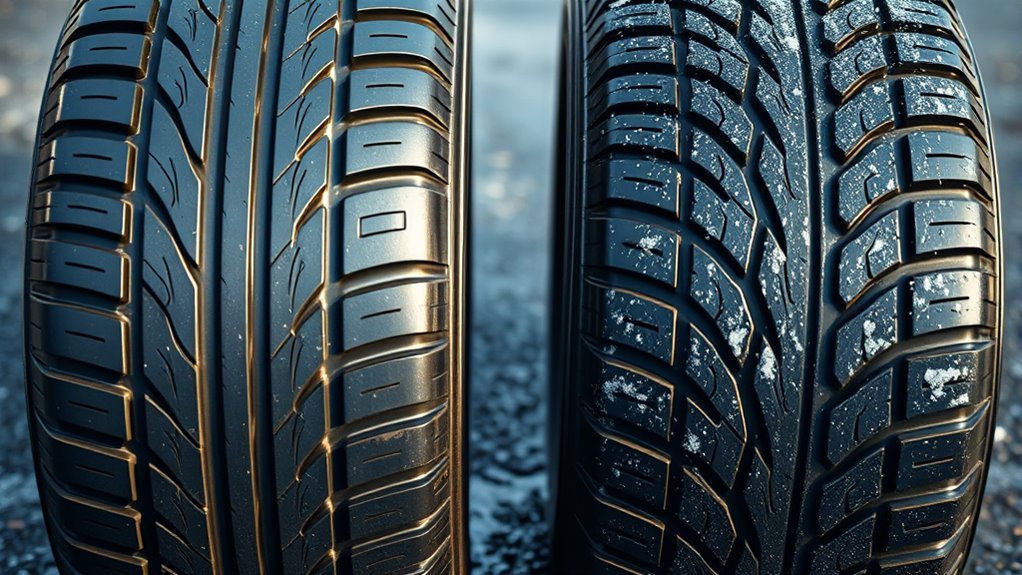
Although all-season tires are designed to handle dry, wet, and light winter conditions year-round, they perform best in mild climates.
You’ll find that these tire types balance driving performance by using shallower tread depths and narrower grooves, optimizing comfort and fuel efficiency.
The rubber compounds in all-season tires work well in warmer temperatures but tend to harden below 45°F, which reduces grip.
While they often carry an M+S rating, their snow traction is limited because they lack the 3-Peak Mountain Snowflake symbol.
This means you shouldn’t rely on them in severe snow or icy conditions.
Features of All-Weather Tires

If you need tires that handle harsher winter conditions than all-season tires can manage, all-weather tires offer a smart alternative.
They feature a deep tread and an intricate sipe pattern, designed to boost traction on wet surfaces, snow, and ice.
Certified with the 3-Peak Mountain Snowflake symbol, these tires meet strict winter performance standards.
Made from advanced rubber compounds, they stay flexible in cold temperatures, preventing hardening and cracking.
This tread design enhances snow grip while maintaining strong performance in other seasons.
So, all-weather tires balance summer and winter capabilities, making them ideal for year-round use in areas with variable weather.
Their combination of deep tread, sipe pattern, and durable rubber ensures you get reliable traction and control beyond what all-season tires typically provide.
Performance Differences in Winter Conditions

When winter temperatures drop below 45°F, you’ll notice all-season tires harden and lose much of their grip. This can compromise your braking and handling on snow and ice.
All-weather tires, however, maintain rubber flexibility in cold temperatures. They provide better traction and braking power on snow-covered roads during typical winter conditions.
All-weather tires stay flexible in cold, boosting traction and braking on snowy roads.
While all-weather tires outperform all-season tires in light snow, they still can’t match the performance of dedicated winter tires. Winter tires use specialized rubber compounds and tread patterns that excel in severe winter, offering superior grip and control when snow and ice are at their worst.
If you frequently face harsh winter conditions, winter tires remain the safest choice. But for moderate winters, all-weather tires substantially improve your safety compared to all-season options.
Traction and Handling Comparison
When you’re driving in cold, wet, or dry conditions, the traction and handling of your tires play a pivotal role in safety and control.
All-weather tires feature deeper tread patterns and extra sipes that boost grip, especially on slippery surfaces.
Understanding how tread design impacts performance will help you choose the right tire for your driving needs.
Traction in Cold
Although both all-season and all-weather tires aim to provide reliable traction, you’ll notice a significant difference in cold temperatures.
All-weather tires use specialized rubber compounds that resist hardening below 45°F. This helps them maintain flexibility in winter and achieve better grip in cold conditions.
Their deeper, more aggressive tread patterns, loaded with sipes, enhance traction on icy and snowy surfaces. Many all-weather tires carry the 3-Peak Mountain Snowflake (3PMSF) symbol, which means they meet strict winter traction performance standards.
In contrast, all-season tires tend to stiffen as temperatures drop. This loss of flexibility results in reduced traction because their rubber compounds are optimized for warmer conditions.
While all-weather tires won’t match winter tires in extreme cold, they definitely offer superior winter traction compared to all-season tires.
Wet and Dry Handling
Because all-weather tires feature deeper tread grooves and specialized siping, they provide better traction and handling on wet and dry roads compared to all-season tires.
You’ll notice improved wet traction thanks to their advanced siping, which reduces the risk of hydroplaning by enhancing water channeling.
This design also helps shorten stopping distances in wet conditions, boosting overall performance.
Both tire types offer solid handling capabilities at moderate speeds, but all-weather tires maintain flexibility in colder temperatures, which further aids wet traction.
On dry roads, their tread grooves provide consistent grip, ensuring reliable control.
Choosing all-weather tires means you get superior wet and dry handling, making them a smart option if you want confidence in varied weather without sacrificing performance.
Tread Pattern Impact
Understanding how tread patterns affect traction and handling can help you choose the right tire for your driving needs.
All-season tires have shallower, more uniform tread patterns that offer balanced traction on dry, wet roads, and light snow. Their design focuses on smoothness and quietness, which can limit performance on ice and heavy snow.
In contrast, all-weather tires feature deeper, more aggressive tread patterns with larger grooves and numerous sipes.
These elements enhance traction and handling by improving grip on snow, slush, and icy surfaces. The increased water evacuation channels in all-weather tires reduce hydroplaning and boost performance on wet roads.
If you prioritize safety and control in winter conditions, the tread pattern of all-weather tires provides superior traction and handling compared to all-season tires.
Suitability for Different Climates
When you pick tires, considering the climate you drive in is crucial to guarantee safety and performance.
Here’s how all-season and all-weather tires suit different climates:
- All-season tires work best in mild climates with temperatures above 45°F and occasional light snow.
- All-weather tires handle a wider range, performing well in both mild and moderate winter weather.
- In cold temperatures, all-weather tires maintain better traction because they stay flexible, unlike all-season tires that can harden.
- If you face frequent snow or severe winter conditions, all-weather tires are a smarter, climate-specific choice to ensure safety.
Understanding these differences helps you choose tires that match your local weather, enhancing control and confidence year-round.
Fuel Efficiency and Ride Comfort
While both all-season and all-weather tires are designed to optimize rolling resistance and boost fuel efficiency, all-weather tires often provide a quieter, smoother ride thanks to their advanced tread patterns and flexible rubber compounds.
Their rubber compounds stay flexible in colder weather, enhancing ride comfort year-round.
Maintaining proper tire pressure and regular tire rotation helps both tire types maximize fuel efficiency.
Plus, all-weather tires tend to reduce road noise, giving you a more pleasant driving experience.
| Feature | All-Season Tires |
|---|---|
| Fuel Efficiency | Good with proper maintenance |
| Ride Comfort | Standard |
| Rubber Compounds | Less flexible in cold |
| Tread Patterns | Conventional |
| Road Noise | Moderate |
| Feature | All-Weather Tires |
| Fuel Efficiency | Optimized with rolling resistance |
| Ride Comfort | Smoother ride |
| Rubber Compounds | Flexible rubber in cold |
| Tread Patterns | Advanced |
| Road Noise | Reduced |
Selecting the Right Tires for Your Vehicle
Choosing the right tires means balancing your local climate, vehicle type, and budget to get the best performance.
You’ll want all-season tires for mild weather, but all-weather tires might be smarter if winters hit harder.
Don’t hesitate to consult experts to find the perfect fit for your driving needs.
Climate Considerations
Because your vehicle’s tire performance depends heavily on climate, selecting the right type means considering local weather patterns carefully.
When choosing between all-season and all-weather tires, focus on these climate considerations:
- If you live in a mild winter area with temperatures mostly above 45°F and occasional light snow, all-season tires will handle the conditions well.
- For harsher winters with frequent snow, ice, and temperatures below 45°F, all-weather tires provide better winter traction.
- All-weather tires feature the 3-Peak Mountain Snowflake symbol, certifying their ability to manage snow conditions effectively.
- If you expect regular winter driving, all-weather tires act like snow tires, helping to snow away safely.
Selecting tires based on these climate factors ensures safer handling and better performance year-round.
Vehicle Compatibility
If your vehicle spends most of its time in mild climates, all-season tires usually fit sedans, coupes, and minivans perfectly.
For SUVs, trucks, and CUVs facing variable winter road conditions, all-weather tires with superior snow traction offer better vehicle compatibility.
Always verify tire size, load capacity, and speed rating per your vehicle type to guarantee proper tire fit.
Your driving environment—city streets or off-road—also guides the choice between all-season tires’ balanced performance and all-weather tires’ versatility.
| Vehicle Type | Recommended Tire |
|---|---|
| Sedan | All-season tires |
| Coupe | All-season tires |
| Minivan | All-season tires |
| SUV/Truck/CUV | All-weather tires |
| Severe winter roads | All-weather tires (3PMSF) |
Budget and Performance
Understanding your vehicle’s compatibility with tire types sets the stage for weighing budget and performance factors.
When choosing between all-season tires and all-weather tires, consider these points:
- All-season tires usually cost less and suit mild climates, offering decent tire performance for your budget.
- All-weather tires cost more upfront but deliver superior safety and traction in winter conditions.
- Investing in all-weather tires could save money long-term by eliminating the need for seasonal tire swaps.
- Your climate and performance needs should guide whether you prioritize initial cost or enhanced safety.
If you drive in areas with harsh winters, all-weather tires provide better overall value despite a higher cost.
For moderate climates, all-season tires keep your expenses down while maintaining reliable performance.
Frequently Asked Questions
What Is Better, All-Weather or All-Season Tires?
All-weather tires are better if you face unpredictable winters since they grip well in snow and ice.
But if you live where winters are mild, all-season tires give you a smoother, more fuel-efficient ride.
What Are the Disadvantages of All-Weather Tires?
You might think all-weather tires are perfect year-round, but they wear out faster, especially in heat.
They can also be noisy, cost more upfront, and aren’t as safe in severe winter compared to dedicated winter tires.
Is All-Season or All-Weather Better for Rain?
You’ll find all-weather tires better for rain since they have deeper grooves and advanced tread patterns that improve water evacuation and grip.
This gives you safer handling and shorter stopping distances on wet roads compared to all-season tires.
What Kind of Driving Conditions Are All-Season Tires Good For?
You’ll find all-season tires work great in temperatures above 45°F, handling dry, wet, and light snow roads.
Since 80% of drivers live in moderate climates, these tires fit most year-round driving needs comfortably and efficiently.
Conclusion
When it comes to choosing between all-season and all-weather tires, you’re basically deciding if you want your car to handle winter like a snow ninja or just survive it like a clumsy penguin.
All-weather tires are the superheroes for year-round grip, while all-season tires play it safe in mild climates.
Pick wisely, or you might end up sliding more than a kid on an ice rink—no one wants that kind of drama on the road!
In conclusion, if you live in an area with harsh winters and varying weather conditions, all-weather tires are your best bet for optimal traction and safety.
On the other hand, if you’re in a milder climate, all-season tires can provide a balanced driving experience.
Choose the right tires for your driving needs to ensure you stay safe and comfortable on the road, no matter the season!