Do You Know How to Maintain a Constant Temperature in Cold Weather?
You can maintain a constant temperature in cold weather by setting your thermostat between 68-70°F while awake and lowering it when asleep or away.
Using programmable or smart thermostats can help adjust settings automatically and avoid unwanted temperature spikes.
It’s also a good idea to place your thermostat on an interior wall, away from drafts or heat sources, to ensure accurate readings.
Regular maintenance, insulation, and proper heating system care play a crucial role in keeping your home warm and efficient.
By exploring these simple steps, you can enhance comfort and protect your home from the chill.
Staying cozy during cold weather doesn’t have to be a challenge!
Understanding Thermostat Settings for Winter Comfort
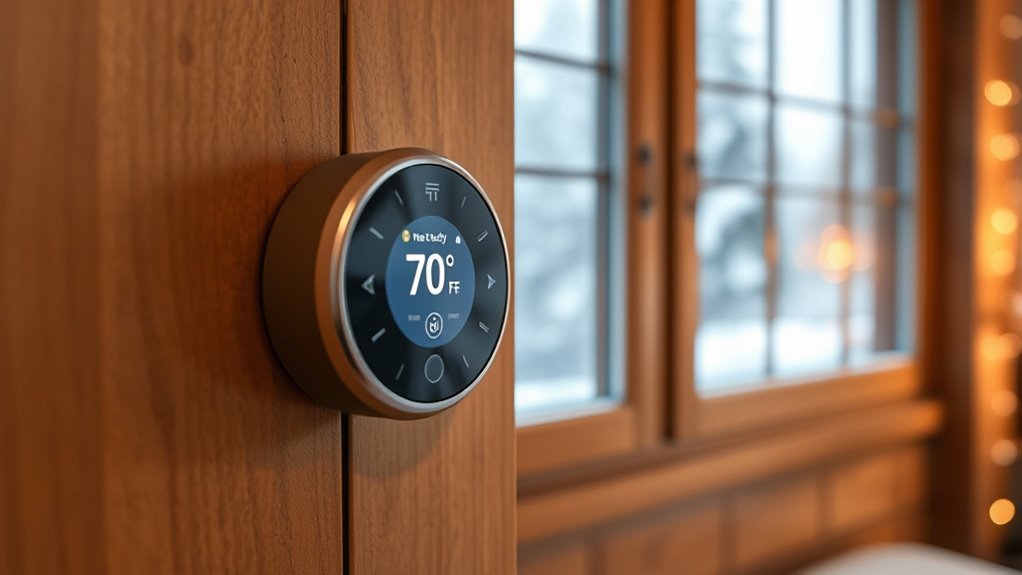
To maintain winter comfort, set your thermostat between 68-70°F while you’re awake.
Keep your thermostat at 68-70°F during waking hours for cozy, efficient winter warmth.
This range balances a cozy temperature with energy efficiency.
Programmable thermostats help by keeping these settings consistent, cutting down on wasted energy and avoiding sudden cold drafts.
When you sleep or leave home, lowering your thermostat by 7-10°F can substantially reduce heating costs without sacrificing comfort.
Upgrading to a smart thermostat takes it a step further—it learns your schedule and lets you adjust the temperature remotely.
This way, you can keep your home efficient and comfortable.
Using these strategies ensures you get the best balance of warmth and energy savings throughout the cold season.
Proper Placement of Your Thermostat for Accurate Temperature Control

Although setting your thermostat correctly is important, placing it properly plays a crucial role in maintaining accurate temperature control.
For the best thermostat placement, install it on an interior wall away from direct sunlight, drafts, and heat-producing appliances.
Position it at eye level—about 4 to 5 feet above the floor—to get the most accurate temperature reading.
Avoid spots near windows, exterior doors, or vents, as these areas cause fluctuations that distort the indoor temperature.
Also, keep your thermostat away from high airflow zones like air vents or ceiling fans, which can create false readings.
Ideally, place it centrally in your home so it reflects the overall indoor temperature accurately.
Proper thermostat placement ensures your heating system runs efficiently, keeping you comfortable all winter.
How Programmable and Smart Thermostats Enhance Temperature Maintenance
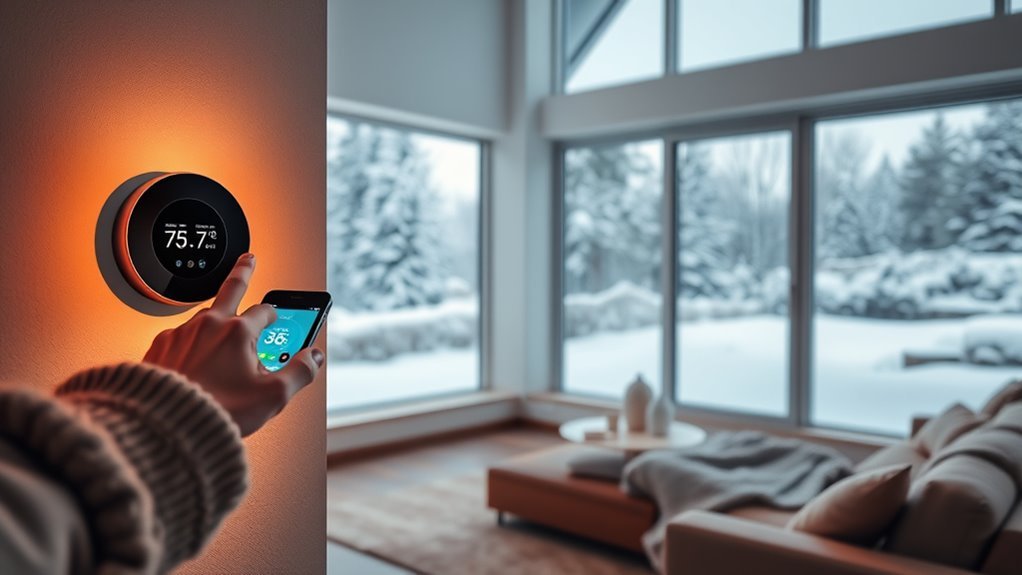
You can set your thermostat to follow a schedule that keeps your home warm when you need it and saves energy when you don’t.
With remote control via smartphone apps, you’ll never have to worry about adjusting the temperature manually.
These smart features not only boost comfort but also help cut heating costs by optimizing energy use.
Thermostat Scheduling Benefits
When you set a programmable or smart thermostat, it automatically adjusts your home’s temperature based on your daily schedule. This keeps it steady without constant manual changes.
This precise temperature control helps reduce energy waste and keeps your home comfortable during cold weather.
Here are key thermostat scheduling benefits:
- A programmable thermostat lowers heat during sleep or when you’re away. This saves energy without sacrificing comfort.
- Smart thermostats learn your routines, adjusting heating to maintain consistent temperatures effortlessly.
- Scheduling maintains temperature within a 1-2°F range. This avoids the spikes caused by manual tweaks.
- Proper use can cut your energy bills by 10-15% annually. This makes heating more efficient and affordable.
Remote Temperature Control
Because programmable and smart thermostats connect to your Wi-Fi, they let you control your home’s temperature remotely through smartphone apps.
This remote control means you can adjust settings anytime, whether you’re at work or on your way home, ensuring consistent warmth.
Programmable thermostats allow you to schedule temperature changes automatically, but with Wi-Fi-enabled smart thermostats, you gain added flexibility.
These devices learn your habits and optimize heating schedules to keep your home comfortable without constant manual adjustments.
You can monitor and tweak temperatures in real-time, preventing cold snaps or overheating.
By using remote control features, you maintain a stable indoor climate effortlessly, no matter where you are.
This makes cold weather much easier to manage!
Energy Efficiency Features
A programmable or smart thermostat can substantially boost your home’s energy efficiency by managing temperature settings with precision.
These devices optimize temperature management, keeping your home comfortable while reducing energy waste.
Here’s how they enhance energy efficiency:
- Programmable thermostats let you set specific schedules, ensuring consistent warmth throughout the day and night.
- Smart thermostats learn your habits and adjust settings automatically to maintain comfort and efficiency.
- Remote control via smartphone apps allows you to adjust temperatures anytime, preventing unnecessary heating.
- Advanced features like adaptive learning and geofencing help avoid temperature swings during extreme cold.
Upgrading to these thermostats can cut heating costs by 10-15% annually, making them a smart investment for energy efficiency and temperature management.
Tips for Maximizing Heating Efficiency During Extreme Cold
To maximize heating efficiency during extreme cold, you’ll want to optimize your thermostat settings and use programmable features to save energy.
Improving air circulation by running ceiling fans on low in reverse helps distribute warm air evenly throughout your space.
Don’t forget to maintain your heating system by regularly cleaning filters and keeping vents clear to make certain it runs smoothly.
Optimize Thermostat Settings
When you optimize your thermostat settings during extreme cold, you can maintain comfort while saving energy.
Proper temperature control guarantees your heating system runs efficiently without unnecessary waste. Here’s how to get the most from your thermostat:
- Set your thermostat between 68-70°F while awake to balance warmth and energy use.
- Use a programmable thermostat to lower heat at night and raise it before you wake.
- Place the thermostat on an interior wall, away from drafts, sunlight, or heat sources for accurate readings.
- Pre-heat your home by increasing the thermostat a few degrees before the coldest part of the day to keep temperatures steady.
Regularly maintaining your heating system and upgrading to a smart thermostat can further enhance automatic, optimized temperature control.
Improve Air Circulation
Although keeping your home warm relies heavily on your heating system, improving air circulation plays a crucial role in maximizing efficiency during extreme cold.
Run your ceiling fans on a low, reverse setting to push warm air downward and prevent heat from rising to the ceiling.
Make sure vents and radiators aren’t blocked, allowing air to flow freely throughout your rooms.
Use draft stoppers on doors and weather stripping around windows to reduce cold air infiltration and keep indoor temperatures steady.
Closing interior doors can also help contain heat in frequently used areas, boosting overall air circulation.
Regularly check and clean air filters and vents to maintain ideal airflow and heating performance.
These steps will help you keep your home comfortable while using less energy.
Maintain Heating System
Since cold weather puts extra strain on your heating system, you should keep vents and radiators clear to guarantee heat spreads evenly throughout your home.
Proper maintenance reduces heat loss and ensures your thermostat works efficiently.
Follow these tips to maximize your heating system’s performance during extreme cold:
- Replace or clean furnace filters monthly to maintain ideal airflow and system efficiency.
- Run ceiling fans on reverse at low speed to push warm air down from the ceiling.
- Close blinds, curtains, and doors at night to minimize heat loss and keep warmth inside.
- Schedule an HVAC inspection before winter to catch and fix potential issues early.
Staying on top of these tasks can make a big difference when the temperatures drop!
Preventing Frozen Pipes in Freezing Temperatures
To prevent your pipes from freezing during cold snaps, you need to keep your indoor temperature at or above 55°F, especially in unheated areas like garages and basements.
Frozen pipes can burst, causing costly damage, so it’s essential to insulate exposed pipes with foam or pipe sleeves in these vulnerable spots.
Don’t forget to open cabinet doors under sinks to let warm air circulate around plumbing.
Keep your thermostat set to a consistent temperature and avoid turning off the heat entirely, even when you’re away.
Additionally, letting cold water drip slowly from faucets connected to exposed pipes helps keep water moving, reducing freeze risk.
Taking these steps ensures your pipes stay protected throughout freezing temperatures.
Maintaining Your Heating System for Reliable Performance
Protecting your pipes from freezing is just one part of keeping your home warm during cold weather.
Maintaining your heating system ensures reliable performance and consistent warmth.
To keep your HVAC running efficiently, follow these steps:
- Schedule professional HVAC inspections and tune-ups at least once a year to catch issues early.
- Change or clean furnace filters monthly to maintain proper airflow and system efficiency.
- Keep air vents and radiators clear to ensure even heat distribution throughout your home.
- Use a programmable thermostat to maintain a steady indoor temperature and reduce energy waste.
Safety Measures to Take When Heating Your Home in Cold Weather
When cold weather hits, taking safety measures while heating your home becomes essential to prevent hazards and guarantee comfort.
Start by increasing your thermostat a few degrees before the coldest days to keep your home’s heating steady and prevent frozen pipes.
Use the HOLD mode on your programmable thermostat during cold snaps to maintain a consistent temperature indoors.
Regularly change furnace filters monthly to improve your HVAC system’s efficiency and avoid breakdowns.
Keep ceiling fans on reverse to circulate warm air trapped near the ceiling.
Also, clear outdoor vents of ice and snow, and check intake and exhaust pipes for blockages to prevent dangerous carbon monoxide buildup.
These steps help you stay safe while keeping your home warm all winter.
When to Seek Professional HVAC Assistance
Although you might try troubleshooting minor issues yourself, you should call a professional HVAC technician if your heating system can’t keep a steady temperature during extreme cold.
Experts can quickly identify problems with your thermostat, system efficiency, or other components that you might overlook.
Experts swiftly detect thermostat issues, efficiency drops, and hidden component problems you might miss.
Know when to seek professional help:
- Your heating system struggles to maintain consistent warmth during cold snaps.
- You notice unusual noises or frequent cycling of your HVAC system.
- Energy bills increase despite less usage, signaling inefficiency.
- The furnace or heat pump fails to operate properly in freezing conditions.
Timely professional assessment prevents damage and ensures reliable, constant indoor temperature all winter long.
Frequently Asked Questions
How Do You Maintain a Constant Temperature in Cold Weather?
You maintain a constant temperature in cold weather by setting your thermostat steady, using programmable controls, sealing windows and doors, insulating your home, and regularly servicing your heating system.
This keeps warmth consistent and energy efficient.
It’s important to check for drafts and seal any gaps to prevent heat loss.
Making sure your heating system is in good shape will also help in maintaining that cozy temperature.
Is It Better to Keep Your Thermostat at a Constant Temperature in Winter?
Yes, you should keep your thermostat at a constant temperature in winter.
This practice prevents energy waste and reduces the strain on your heating system, which is great for its longevity.
Plus, it maintains a consistent level of comfort in your home.
Using a programmable thermostat can make this even easier.
It allows for scheduled temperature adjustments and can save you money annually.
How Does the Human Body Maintain a Constant Temperature in Cold Weather?
You don’t just shiver like a caffeinated squirrel; your body tightens blood vessels and cranks up heat with muscle tremors.
Your brain’s thermostat kicks in, keeping you warm despite winter’s icy tantrums.
How to Maintain a Constant Temperature?
You maintain a constant temperature by setting your thermostat consistently, sealing drafts, ensuring vents are open, and using insulation.
Programmable thermostats help by adjusting heat gradually, keeping your indoor environment steady and comfortable.
It’s important to regularly check for any gaps or leaks that might let cold air in.
Also, make sure that furniture isn’t blocking your heating vents to allow for proper airflow.
Conclusion
By adjusting your thermostat thoughtfully and placing it just right, you not only keep your home cozy but also avoid surprise cold spots.
This, coincidentally, helps in preventing frozen pipes at the same time.
Using smart thermostats and keeping your heating system in top shape means you’re ready for any winter chill.
Remember, a little care now can save you from costly repairs later.
When things feel off, don’t hesitate to call a professional to keep your comfort constant all season.
In conclusion, maintaining a constant temperature during cold weather is essential for comfort and safety.
By being proactive with your thermostat settings and heating system maintenance, you can avoid issues like frozen pipes and high repair costs.
Stay ahead of the winter chill, and remember that expert help is just a call away if you need it.
Keep your home warm and worry-free this season!