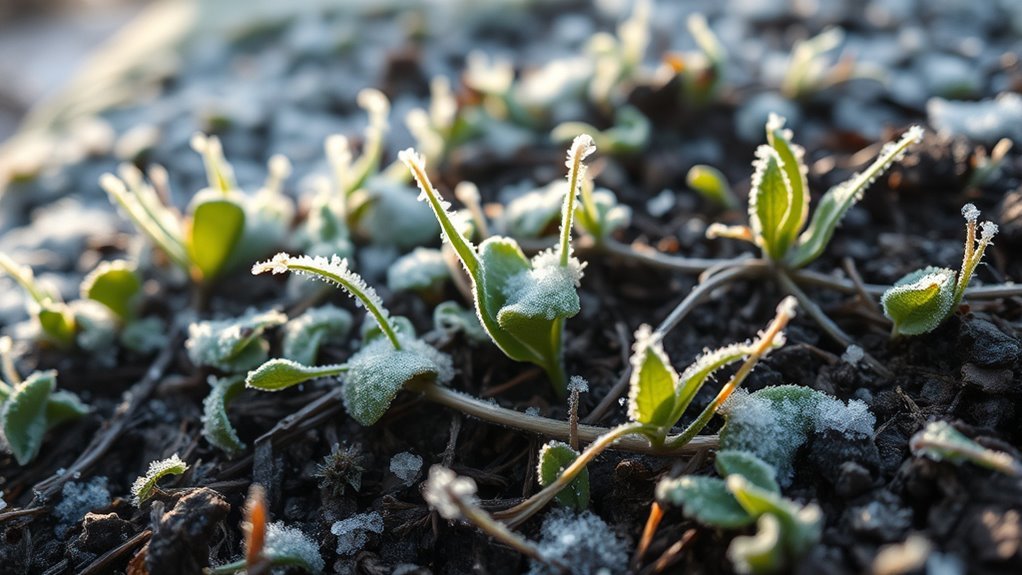
Does Roundup Work in Cold Weather?
Roundup is a popular herbicide used to control weeds, but its effectiveness can be significantly impacted by cold weather conditions. When temperatures drop below 50°F, the performance of Roundup declines because the cold slows down both weed uptake and the movement of the herbicide.
Applying Roundup near freezing temperatures won’t kill weeds quickly. Instead, you’ll likely experience delayed damage, especially if warmer weather follows.
To improve control in colder conditions, consider using higher glyphosate rates. Adding surfactants can also enhance the herbicide’s effectiveness.
It’s best to wait for daytime temperatures to rise above 46°F for several hours before applying.
Additionally, combining products and selecting the right nozzles can further optimize your results.
By understanding how cold weather affects application timing and techniques, you can ensure better weed control with Roundup.
Impact of Temperature on Glyphosate Performance
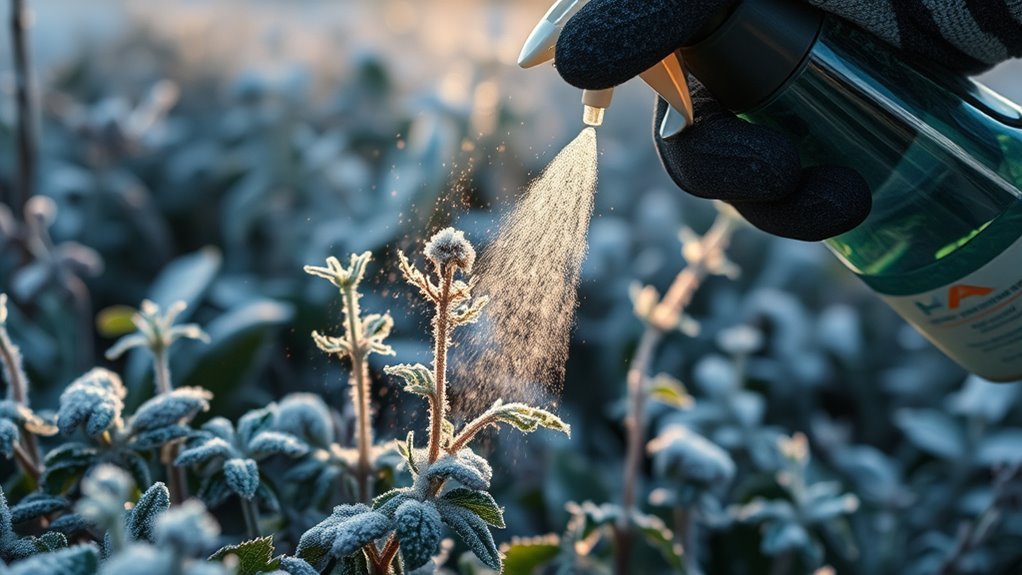
Although glyphosate can control many weeds effectively, its performance drops sharply when overnight temperatures fall below 50°F.
Glyphosate effectiveness declines significantly when overnight temperatures drop below 50°F.
In cold weather, especially below 60°F, weed uptake and translocation slow down markedly, delaying visible symptom development and reducing immediate control results.
If you apply glyphosate when temperatures dip to around 38°F, you might see minimal damage initially.
However, some weeds like chickweed and violets may still show effects over time.
Applying glyphosate to dormant or semi-dormant weeds during cold weather often results in delayed or reduced control, with damage signs appearing days later.
But, if warmer weather above 60°F follows your application, glyphosate’s translocation improves.
This can boost overall herbicide performance despite the earlier cold conditions.
Cold Weather Effects on Weed Uptake and Translocation
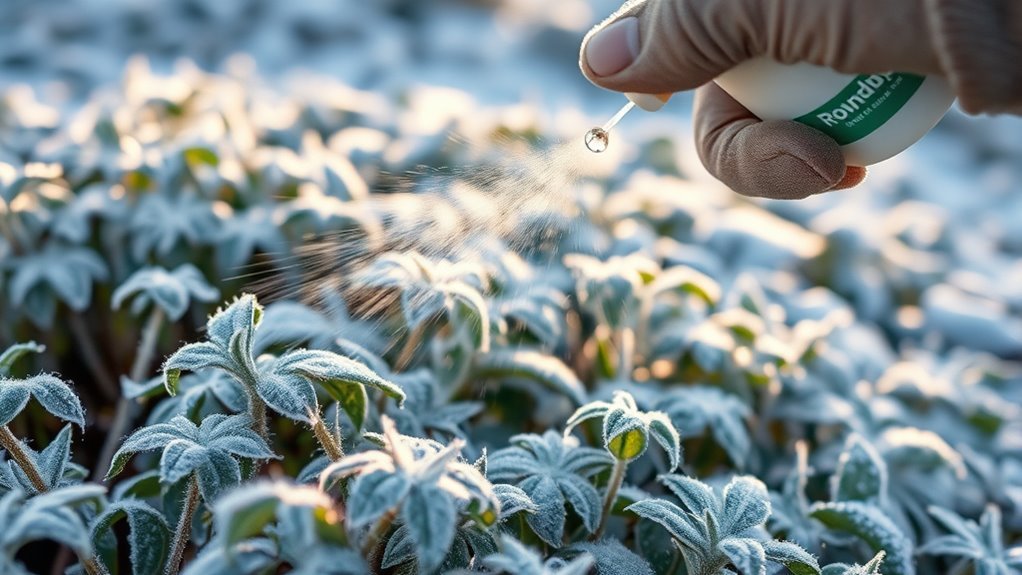
When temperatures drop below 50°F, the way weeds absorb and move glyphosate inside their tissues changes dramatically.
Cold weather slows weed growth, which directly reduces glyphosate uptake and translocation.
Since glyphosate’s systemic action depends on active plant processes, you’ll notice delayed or limited weed control during these cooler periods.
Around 38°F, glyphosate might still damage leaves on dormant or semi-dormant weeds, but its movement throughout the plant is restricted.
This limitation reduces overall effectiveness.
If temperatures rise above 60°F after application, glyphosate translocation picks up.
This improvement enhances weed kill over time, despite slow initial absorption.
Understanding these cold weather effects on weed uptake and translocation helps you manage expectations and timing for more effective weed control with glyphosate.
Recommended Glyphosate Rate Adjustments in Cooler Conditions
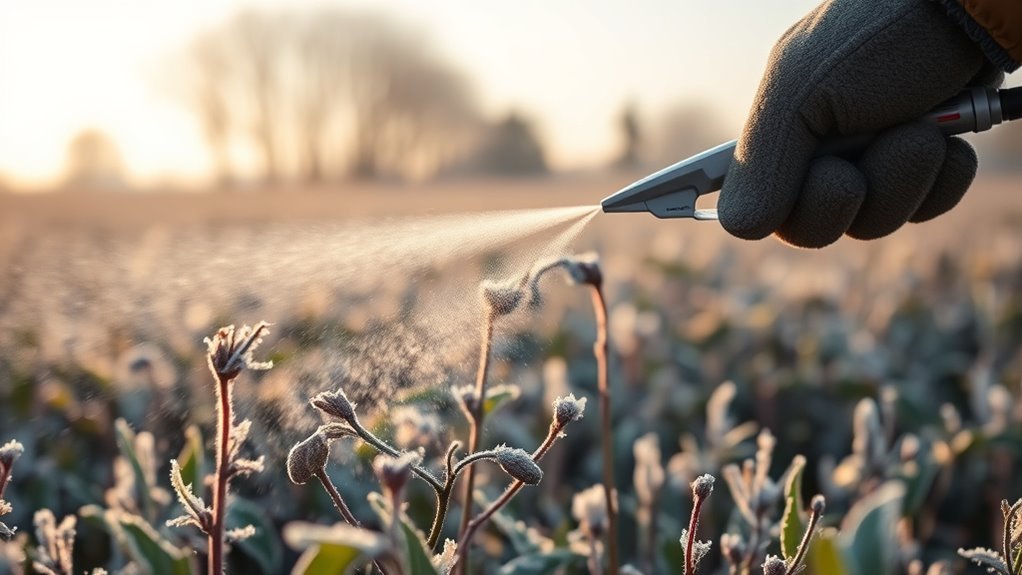
Because cooler temperatures reduce glyphosate’s absorption and movement within plants, you’ll need to increase application rates to maintain effective weed control.
In colder conditions, raising glyphosate rates by up to 50% helps offset slower translocation and ensures better efficacy without exceeding label limits.
For cereal rye termination, aim for at least 1.25 lbs acid equivalent per acre, but consider higher rates when temperatures drop.
When dealing with annual rye or wheat cover crops in cold weather, applying a minimum of 2.5 lbs acid equivalent per acre is essential to compensate for reduced herbicide activity.
Adjusting glyphosate rates properly in cooler weather is critical to achieving thorough weed and cover crop control despite the natural slowdown in absorption and movement within plants.
Role of Spray Adjuvants and Surfactants in Cold Weather Applications
Cold weather challenges glyphosate effectiveness by limiting herbicide contact and absorption, so you need spray adjuvants and surfactants to bolster performance.
Surfactants improve droplet spread and adhesion, which is critical when cold temperatures reduce herbicide uptake.
Using the right spray additives helps ensure your application sticks and penetrates effectively despite the chill.
To enhance glyphosate activity in cold weather, focus on:
- Adding surfactants like NIS to improve droplet coverage and adhesion.
- Using Landoil to boost droplet retention, penetration, and rainfastness.
- Conditioning spray water with Soil Boost Plus to prevent glyphosate tie-up with hard water ions.
Timing Applications Around Frost and Freezing Conditions
Although glyphosate can control weeds effectively, applying it during or just before freezing temperatures can delay its action and reduce overall results.
When timing applications, avoid spraying if temperatures fall below 32°F. Freezing conditions can hinder herbicide translocation and weaken weed control.
Light frosts around 26-28°F usually don’t damage weeds, so you can postpone treatment until daytime temps rise above 46°F for at least 2-4 hours.
This warmer window ensures better glyphosate uptake and effectiveness. Heavy or prolonged frosts soon after application may particularly reduce glyphosate activity on perennial or dormant plants.
To maximize weed control, focus on timing applications during warmer periods and steer clear of frost conditions.
This careful scheduling helps you achieve the best results with Roundup, even in colder weather.
Influence of Rainfall and Rainfast Periods on Herbicide Effectiveness
You need to pay close attention to rainfast timing because rain right after spraying can wash away the herbicide and reduce its effectiveness.
If you’re mixing Roundup with other herbicides, remember that each product may have different rainfast periods to take into account.
Always check the label and weather forecasts to avoid rain during these critical hours.
Rainfast Timing Importance
When you apply Roundup, waiting at least 30 minutes to an hour before rainfall is essential to guarantee the herbicide absorbs properly.
Rainfast timing plays a vital role in how effective the herbicide will be.
If rain arrives too soon, it can wash away the product before it penetrates the plant’s surface, reducing weed control.
Keep these points in mind regarding rainfast timing:
- Most glyphosate products recommend a rainfast period of 30 minutes to 1 hour for proper absorption.
- Environmental factors like humidity and cloud cover can extend the needed dry period.
- Different formulations may require longer rainfast periods to maintain effectiveness.
Impact of Early Rain
How does early rain affect the performance of Roundup and other herbicides?
If rain falls before the rainfast period ends, it can wash away the herbicide, reducing its effectiveness.
Glyphosate, the active ingredient in Roundup, typically needs about 6 hours of dry time.
Poor weather like high humidity or overcast skies can extend this needed period, making early rain even more problematic.
Always check product labels for specific rainfast periods to ensure you apply at the right time.
| Condition | Rainfast Period Needed |
|---|---|
| Glyphosate (Roundup) | ~6 hours |
| Other herbicides | 1 to 6 hours |
| High humidity/overcast | Longer than usual |
| Rain before rainfast end | Reduced control |
Plan applications carefully to avoid early rain washing off your herbicide.
Tank Mix Rainfasts
Why does the rainfast period matter so much when you tank mix herbicides like Roundup with others?
Because the effectiveness of your entire application depends on the shortest rainfast period among all tank-mix partners.
If rain comes too soon, it can wash away the herbicides before they fully absorb, reducing weed control.
Keep these points in mind:
- Glyphosate formulations typically need 30 minutes to several hours rainfree to work effectively.
- Rainfast ratings assume good growing conditions; poor weather can extend this period.
- Always follow the shortest rainfast period on the tank-mix partner labels to ensure maximum efficacy.
Selecting Proper Equipment and Nozzles for Cold Weather Spraying
Although cold weather presents challenges for herbicide application, selecting the proper equipment and nozzles can substantially improve Roundup’s effectiveness.
Choosing the right nozzles and equipment boosts Roundup effectiveness in cold weather conditions.
You’ll want to use flat fan nozzles because they produce smaller droplets, enhancing coverage and glyphosate uptake in cooler conditions.
Avoid air induction or coarse droplet nozzles since they generate large droplets, which reduce herbicide efficacy.
Drift reduction nozzles create bigger droplets, so you should only use them if wind and application speed require it.
Proper nozzle selection guarantees uniform spray distribution, especially important during temperature fluctuations.
Aim for nozzles that produce a fine to medium spray pattern to maximize herbicide contact on target weeds.
Making these choices helps you get the best results from Roundup even when temperatures drop.
Strategies for Terminating Cover Crops in Low Temperatures
When terminating cover crops like cereal rye or wheat in cold temperatures, you’ll need to increase glyphosate rates by up to 50% and use surfactants to guarantee effective control.
Applying herbicide products when daytime highs exceed 50°F helps improve efficacy, so avoid spraying during freezing conditions.
Proper spray water conditioning is also vital to prevent glyphosate tie-up caused by hard water ions, especially in cold weather.
Keep these strategies in mind:
- Use at least 2.5 lbs acid equivalent of glyphosate per acre for reliable termination.
- Delay application 2-3 days after frost or wait for warmer weather to boost translocation.
- Add surfactants and conditioners like Soil Boost Plus to enhance herbicide product performance.
Following these steps ensures you terminate cover crops effectively despite low temperatures.
Combining Glyphosate With Other Herbicides and Growth Regulators
If you want to boost glyphosate’s effectiveness on tough cover crops, combining it with growth regulators like 2,4-D can help by promoting herbicide uptake and influencing plant growth.
These growth regulators support glyphosate performance, especially when cold temperatures slow weed growth.
Adding 2 to 4 ounces of 2,4-D can improve control of hard-to-kill weeds, but results depend on environmental conditions.
When mixing glyphosate with other herbicides or growth regulators, you need to follow label compatibility and recommended application rates carefully to avoid crop damage.
Proper timing and formulation are essential to maximize weed control efficacy.
Best Practices for Maximizing Weed Control in Cold and Wet Springs
To get the most out of glyphosate during cold and wet springs, you’ll need to carefully monitor temperatures and adjust your application timing.
Herbicide efficacy drops considerably below 50°F, so targeting actively growing weeds in warm weather above 60°F improves translocation and visible results.
For effective weed management, consider these best practices:
- Delay application until temperatures stay above 46°F for 2-4 hours post-application to maximize uptake.
- Increase glyphosate rates by up to 50% and add adjuvants like non-ionic surfactants (NIS) to enhance herbicide efficacy in cold conditions.
- Adjust spray droplet size to ensure better coverage and absorption on weeds struggling in cooler weather.
Following these tips can really help improve your weed control efforts!
Frequently Asked Questions
What’s the Lowest Temperature I Can Spray Roundup At?
You can spray Roundup at temperatures as low as 38°F, but it works best above 50°F.
Below 50°F, its effectiveness drops, so aim to apply it when it’s warmer for better weed control.
What Will Kill Weeds in Cold Weather?
You’ll want to use herbicides formulated for cold weather or apply non-selective options like vinegar-based sprays.
Target weeds during warmer parts of the day to improve effectiveness.
Consider mechanical removal when temperatures stay low.
What’s the Best Time of Year to Use Roundup?
You should use Roundup in spring or fall, when weeds grow actively and temperatures stay between 60°F and 75°F.
This is when soil moisture is also adequate.
You’ll get better control, quicker results, and less frustration applying it then.
Can I Use Roundup in October?
You can use Roundup in October, but you should apply it on warm days above 50°F.
Cold weather slows its effectiveness, so timing applications carefully helps you get the best weed control results.
Conclusion
Don’t expect Roundup to work like magic in freezing temps—it’s not a superhero!
Cold weather seriously slows down how glyphosate moves through weeds. So if you spray when it’s chilly, you might as well be throwing water on them.
But with the right timing, boosted rates, and trusty adjuvants, you can still outsmart those stubborn weeds.
Just remember: in cold weather, patience and precision are your best friends for killer weed control!
In conclusion, while Roundup may not be as effective in cold weather, strategic application can still yield results. Timing, enhanced rates, and the right additives are key to overcoming the challenges posed by low temperatures. With careful planning and a little patience, you can achieve effective weed control even when it’s chilly outside. So gear up and tackle those weeds head-on!