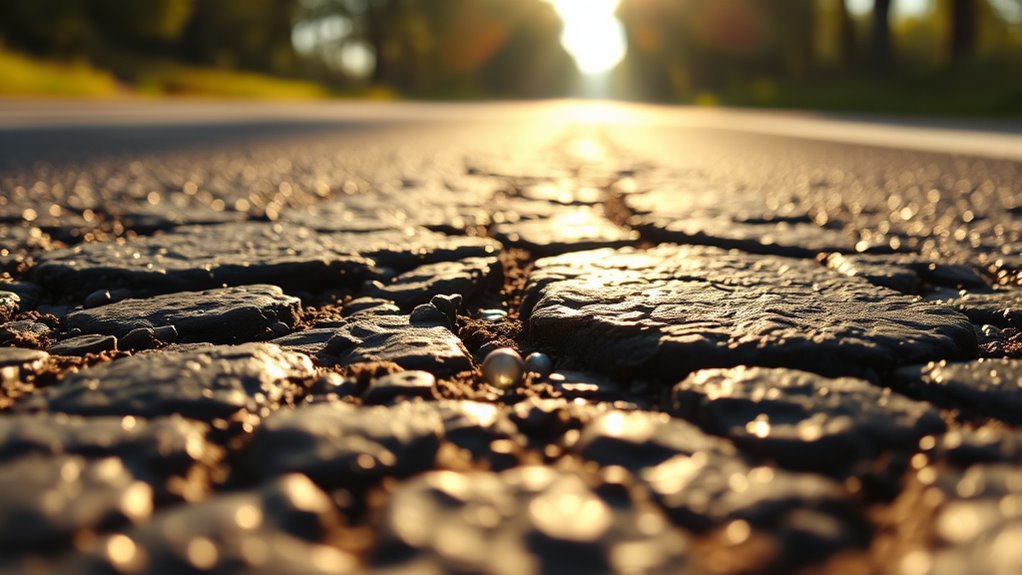
What Happens to Road Tar During Hot Weather?
When road tar heats past 120°F, it softens and becomes sticky. This change means it loses strength, making the pavement more prone to rutting and deformation under traffic.
You might notice the surface getting slick, with loose gravel and bleeding tar appearing.
Additionally, heat cycles cause expansion and contraction, which can lead to cracking in the asphalt.
Over time, oxidation makes the binder brittle, speeding up damage and deterioration.
If you want to understand how to protect and maintain your pavement in the heat, keep exploring these effects and solutions.
Understanding the impact of high temperatures on road tar can help you take preventive measures to extend the lifespan of your pavement.
How Heat Affects Asphalt Binder
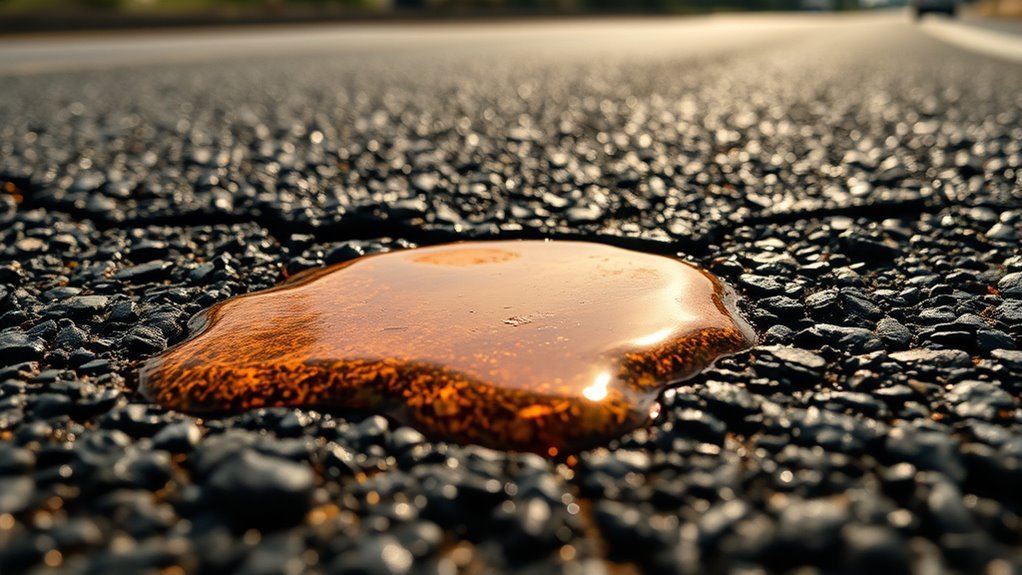
When temperatures rise above 100°F, you’ll notice the asphalt binder, mainly made of bitumen, softens and becomes more pliable.
At temperatures over 100°F, asphalt binder softens and becomes more flexible, affecting pavement stability.
This heat reduces its viscosity, making it less effective at holding the aggregates together.
As the temperature climbs, oxidation speeds up, causing the binder to become brittle, which leads to cracking on the pavement surface.
If it gets hotter—above 130°F—the binder can turn sticky, resulting in deformation and rutting under traffic pressure.
You’ll also see the effects of repeated heating and cooling cycles as the binder expands and contracts, gradually weakening its structural integrity.
Understanding how heat impacts the asphalt binder helps explain why road surfaces develop cracks and deform in hot weather.
The Softening of Road Tar in High Temperatures
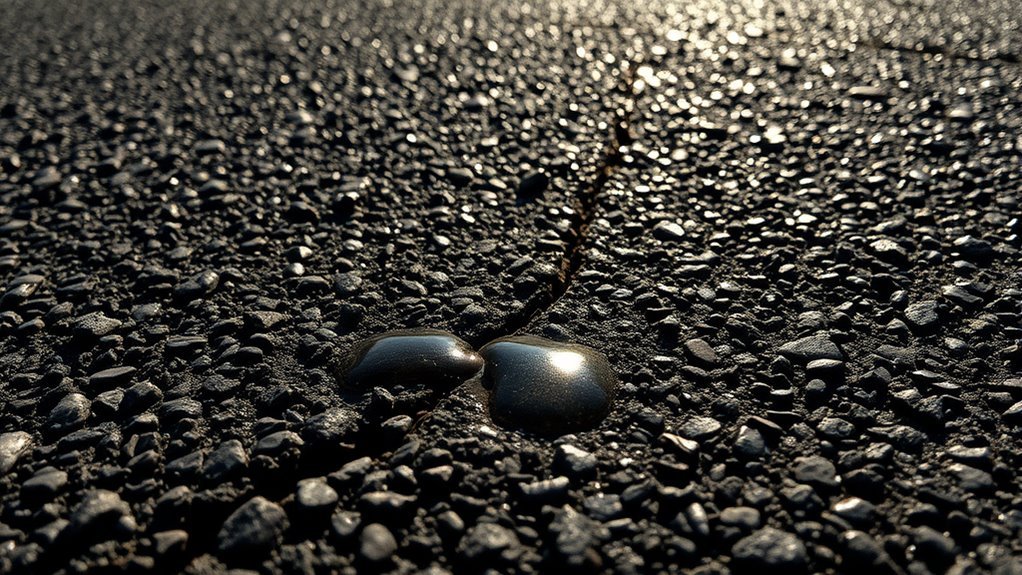
As temperatures climb beyond 120°F, road tar starts to soften, which weakens its ability to bear the weight of heavy traffic.
At high temperatures, the viscosity of the asphalt binder decreases, making the pavement surface more pliable and prone to deformation.
This softening leads to damage such as surface raveling, where small particles break away and create loose gravel patches.
Prolonged exposure to extreme heat causes the tar to become sticky, increasing the risk of track marks and rutting under vehicle tires.
As a result, the pavement deteriorates faster, requiring more frequent repairs.
When you drive on softened road tar during hot weather, you’re witnessing the direct impact of high temperatures accelerating pavement deterioration and compromising road safety.
Impact of UV Radiation on Asphalt Durability
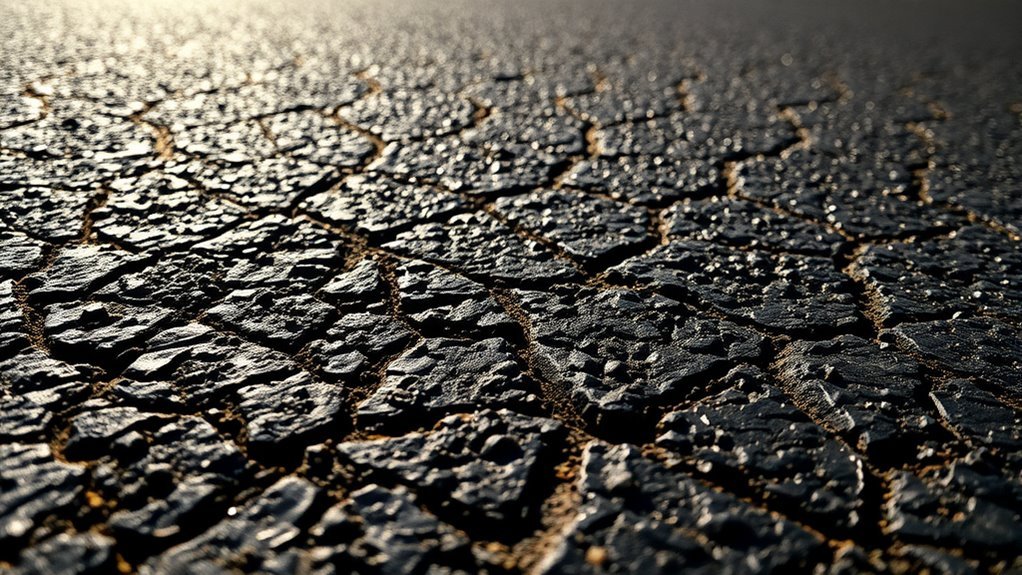
Although high temperatures considerably affect road tar, UV radiation plays an equally damaging role by triggering chemical reactions in the asphalt binder that reduce its flexibility.
When UV damage occurs, it accelerates asphalt oxidation, breaking down the binder’s molecular structure. This process makes the asphalt more brittle, leading to surface aging and increased cracking.
As you rely on the pavement, you’ll notice how these effects diminish asphalt durability over time.
Continuous exposure to UV rays also causes fading in surface pigments and sealcoats, further compromising the road’s protective layers.
Understanding the impact of UV radiation helps you grasp why regular maintenance becomes necessary sooner than expected. The combined effects of oxidation and surface aging weaken the road’s structural integrity.
Thermal Expansion and Pavement Stress
Beyond the effects of UV radiation, heat itself plays a significant role in how road tar behaves.
As temperatures rise, thermal expansion causes the tar to lengthen and become more pliable. This expansion puts pavement stress on the asphalt, which can lead to surface cracks and pavement deformation.
Over time, these stresses weaken the road surface, making it more susceptible to heat-related damage. When temperatures get excessively high, the tar softens further, causing rutting and more severe pavement deformation, especially under heavy traffic.
To protect the pavement, proper maintenance and design must accommodate these thermal stresses.
Formation of Cracks Due to Heat Cycles
You’ll notice that thermal expansion causes the asphalt to stretch during hot days, creating small cracks.
As temperatures cycle, these cracks grow because the pavement contracts and expands repeatedly.
Understanding how these heat cycles stress the surface helps explain why cracks form and worsen over time.
Thermal Expansion Effects
When temperatures climb above 130°F, road tar expands and softens, causing the pavement to stretch and sometimes crack under pressure.
This thermal expansion puts considerable stress on the asphalt, especially during prolonged hot weather.
As the pavement heats up, it swells. But when it cools, it contracts, creating tension that can worsen existing cracks or form new ones.
You’ll notice how repeated cycles of heating and cooling cause these cracks to multiply, weakening the road’s structural integrity.
Over time, this constant expansion and contraction weaken the asphalt, making it more prone to damage like fissures and potholes.
Understanding thermal expansion’s effects helps explain why roads deteriorate faster in hot climates and why maintenance is vital after intense heat periods.
Crack Growth Mechanisms
Although thermal expansion sets the stage, repeated heating and cooling cycles actively cause asphalt to crack by creating stress fractures.
Thermal cycling forces asphalt expansion and contraction, which weakens its structure and starts crack formation.
When asphalt heats up, its binder softens, lowering cohesion and making cracks more likely.
As temperatures drop, contraction widens existing cracks and forms new ones, accelerating surface damage.
This continuous cycle induces fatigue stress that turns small cracks into larger fissures, causing significant structural damage over time.
You can think of it like this:
- Thermal cycling generates repetitive stress fractures.
- Expansion during heat softens the binder, promoting crack initiation.
- Contraction in cooling widens cracks, worsening deterioration.
Understanding these mechanisms helps you see why road tar fails faster under fluctuating temperatures.
The Role of Sealcoating in Heat Protection
Since asphalt surfaces absorb a lot of heat, applying sealcoat plays a crucial role in protecting road tar from damage.
Sealcoating acts as a shield, offering UV protection and reducing heat absorption, which enhances asphalt durability.
It also prevents water infiltration that weakens the structure during hot weather.
By restoring flexibility, sealcoat boosts heat resistance, slowing oxidation and preventing brittleness.
| Benefit | Impact on Asphalt |
|---|---|
| UV Protection | Reflects harmful rays |
| Water Infiltration | Blocks moisture entry |
| Heat Resistance | Maintains flexibility |
With regular sealcoating, you extend your pavement’s life and keep it resilient against extreme heat.
This ensures safer, longer-lasting roads.
Risks of Rutting and Surface Deformation
If temperatures climb above 130°F, asphalt softens enough for tires and heavy vehicles to create ruts.
This leads to uneven road surfaces.
Rutting results from asphalt deformation when the pavement can’t resist compressive forces under high temperatures.
You’ll notice long grooves forming along traffic lanes, which can cause serious pavement damage over time.
So, watch for these risks during hot weather:
- Increased surface cracks near rutted areas.
- Permanent deformation that worsens with repeated traffic.
- Safety hazards from uneven pavement affecting vehicle control.
Stay alert to keep the roads safer for everyone!
Consequences of Binder Oxidation in Summer
When asphalt binder faces high summer temperatures, it oxidizes faster, making the pavement harder and less flexible.
This oxidation leads to binder degradation, causing surface cracking and reducing asphalt durability.
As the binder becomes brittle, you’ll notice color changes and increased risk of pavement failure.
Here’s a quick look at the consequences:
| Effect | Description | Outcome |
|---|---|---|
| Oxidation Rate | Accelerated by heat | Binder hardening |
| Binder Degradation | Loss of binding properties | Surface raveling |
| Surface Cracking | Brittle, less flexible binder | Cracks form |
| Asphalt Durability | Decreases over time | Shorter pavement life |
| Pavement Failure | Result of cumulative damage | Potholes and decay |
Understanding these effects helps you grasp how summer heat hastens pavement deterioration.
Strategies to Maintain Asphalt Integrity During Heat
The accelerated oxidation and brittleness of asphalt binder in summer clearly show how heat weakens pavement.
To maintain asphalt integrity during high heat, you need proactive measures against UV rays and thermal stress.
Start with routine crack sealing to prevent water infiltration and further damage.
Next, apply specialized sealcoating designed for high temperatures to enhance asphalt protection and reduce oxidation.
Finally, monitor for bleeding caused by softened tar, which can create slick surfaces, and address it promptly to preserve traction.
By focusing on these strategies, you’ll extend the pavement’s lifespan and keep it safe under intense summer conditions.
Here are some key strategies:
- Crack sealing to block moisture and heat damage.
- High heat-resistant sealcoating for UV and oxidation defense.
- Regular inspection to catch and fix bleeding or deformation early.
Frequently Asked Questions
What Happens to Tar in Road Pavement During Hot Weather?
You’ll notice tar softens and becomes sticky during hot weather, causing surface deformation and bleeding.
This weakens the pavement, making it prone to rutting and cracking.
As a result, roads require more frequent repairs to keep them safe and smooth.
At What Temperature Does Road Tar Melt?
Think of road tar as chocolate in the sun; it starts melting around 130°F (54°C).
You’ll notice it softens near 120°F (49°C) and flows above 150°F (66°C), losing its firm structure.
What Happens to Asphalt When It Gets Hot?
When asphalt heats up, it softens and becomes more flexible.
But you’ll notice it can deform or even melt slightly.
This makes it prone to ruts, cracks, and sticky surfaces,
weakening the road’s structure.
How Long Does It Take for Asphalt to Cure in Hot Weather?
Think of asphalt curing like a slow dance in the sun—it usually takes you 24 to 48 hours to set in hot weather.
But full strength can take up to six months, so be patient with the process.
Conclusion
When the sun turns up the heat, road tar softens like butter on a warm skillet. This makes your pavement vulnerable to cracks and ruts.
UV rays act like relentless sculptors, slowly wearing down its strength.
But don’t worry—you can shield your asphalt with sealcoating. This gives it armor against the fiery onslaught.
By staying vigilant and maintaining your roads, you keep them strong and smooth.
This way, they’re ready to withstand the summer’s sizzling dance.
In conclusion, hot weather can significantly affect road tar, making it soft and prone to damage. Regular maintenance, including sealcoating, is essential for protecting asphalt from heat and UV rays. By taking these preventive measures, you ensure your roads remain durable and safe throughout the summer months. Keeping your pavement in good condition will help prevent costly repairs and prolong its lifespan. Remember, a little effort goes a long way in maintaining the integrity of your roads!