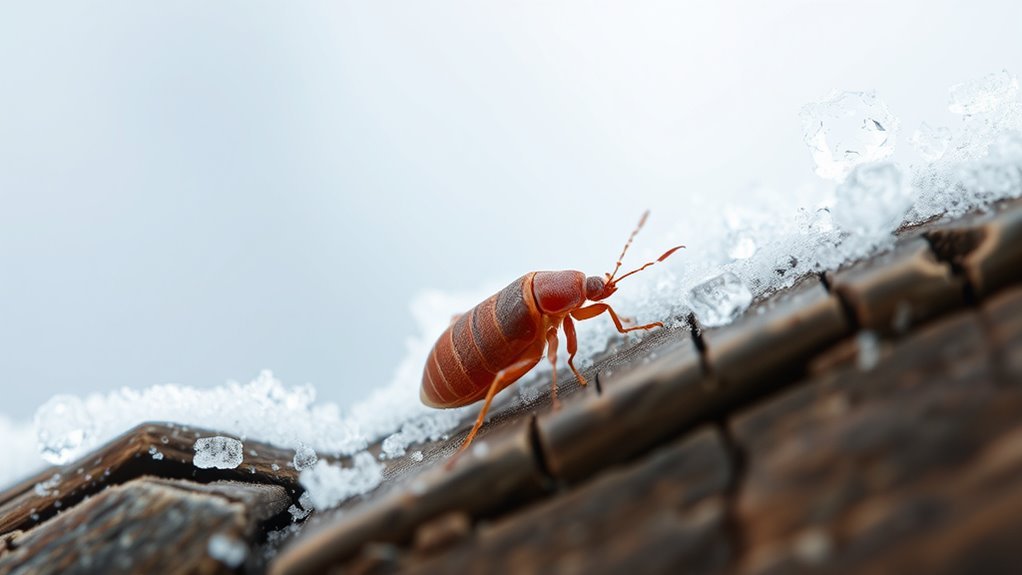
What Cold Weather Can Bed Bugs Survive?
You should know that bed bugs can survive cold weather much better than you might think.
They actually thrive in temperatures between 70-80°F, and while they do slow down in colder conditions, they don’t die just because it’s slightly above freezing.
To effectively kill these pests, you need to expose them to temperatures of 0°F or colder for around four days or more.
Interestingly, bed bugs can enter a dormant state when temperatures drop below 61°F, which helps them endure chilly conditions.
If you want to understand how indoor warmth affects them or what freezing really does, keep exploring.
Bed Bug Temperature Preferences
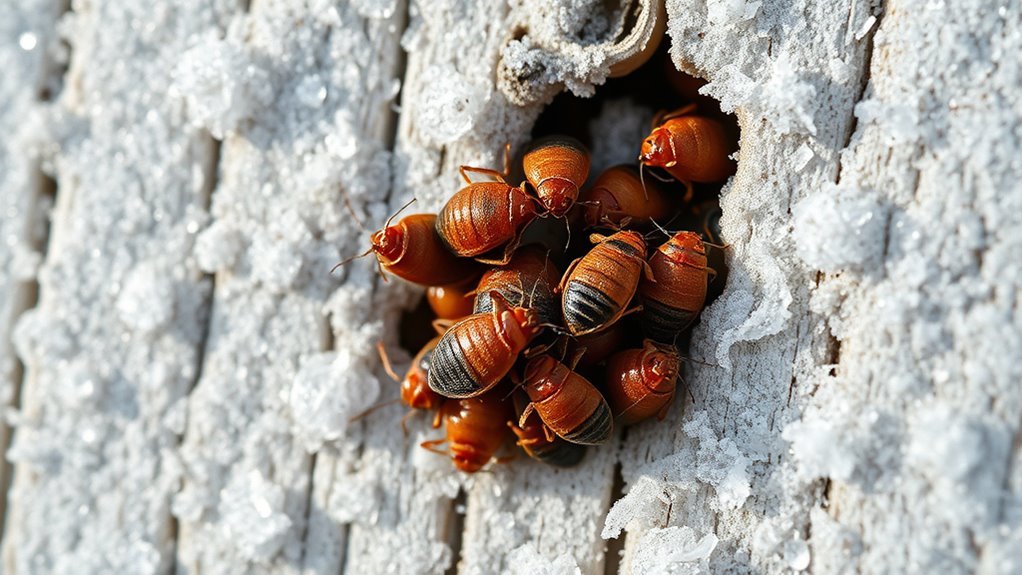
Although bed bugs can survive in cooler temperatures down to 46°F, they thrive best between 70-80°F.
Bed bugs survive in cool temperatures but thrive best in warmth between 70-80°F.
This is where they reproduce and grow rapidly. You’ll find that their temperature preferences favor warm, indoor environments, making cold temperatures less hospitable.
When temperatures drop below 61°F, bed bugs enter diapause—a dormant state that slows their metabolism and activity. This helps their survival during low temperatures.
Their development halts entirely below 50°F, delaying their life cycle without necessarily killing them.
While bed bugs can tolerate some cold, prolonged freezing is needed to effectively eliminate them.
Understanding these temperature preferences helps you grasp why bed bugs are less active or survive less effectively in extreme cold, yet still persist in moderately cool conditions.
How Cold Temperatures Affect Bed Bug Survival
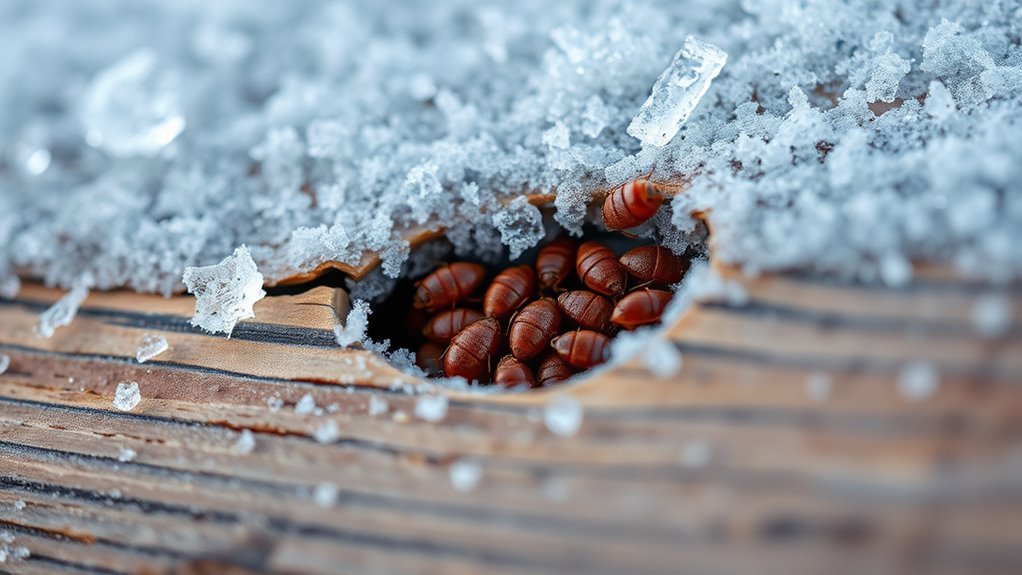
Understanding how cold temperatures impact bed bug survival helps you recognize why simply cooling a room isn’t enough to eliminate them.
Bed bugs can survive at low temperatures above freezing, showing remarkable cold tolerance. To kill bed bugs, you need extended exposure to freezing temperatures below the freezing point.
Short-term cold won’t stop all eggs and adults.
Consider these facts about bed bug survival in cold:
- Bed bugs survive in temperatures as low as 46°F (8°C).
- Freezing temperatures below 0°F (-18°C) for at least four days are needed to kill bed bugs.
- Some tolerate brief exposure to -13°F (-25°C).
- Temperatures just above freezing slow them but don’t kill them.
- Prolonged freezing exposure is essential to effectively kill bed bugs.
You can’t rely on brief cold spells to eliminate infestations.
The Role of Diapause in Cold Weather Survival
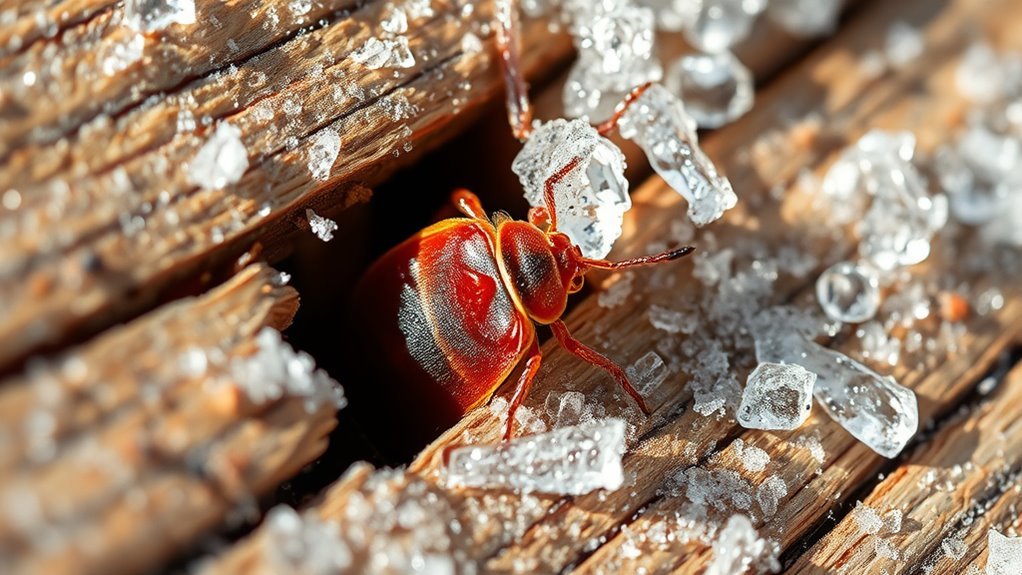
When temperatures drop below 61°F, bed bugs enter a state called diapause. This slows their metabolism and helps them conserve energy.
This dormancy allows them to halt development and survive unfavorable environmental conditions, especially cold temperatures.
You’ll find that diapause kicks in below 50°F, increasing their chances of survival during winter. The longer and colder the exposure, the better bed bugs endure without feeding.
However, diapause isn’t foolproof—prolonged exposure to freezing temperatures can still threaten their survival.
While this state helps bed bugs withstand cold spells by reducing their activity and energy needs, extreme cold can overcome diapause defenses.
Understanding diapause is key if you want to grasp how bed bugs survive winter’s chill without succumbing immediately to freezing conditions.
Freezing Temperatures and Bed Bug Mortality
If you want to kill bed bugs by freezing, you need to keep infested items at 0°F (-18°C) or lower for at least four days to guarantee all bugs, including eggs, die.
Freezing temperatures must reach this temperature threshold throughout the entire item to ensure bed bug mortality.
Ensure freezing temperatures penetrate the entire item to effectively kill all bed bugs.
Cold exposure at low temperatures above 0°F may slow activity but won’t cold kill bed bugs completely.
Household freezers often don’t maintain consistent cold enough conditions for reliable results.
Keep in mind:
- Bed bugs survive short exposure to -13°F (-25°C) by lowering their bodily fluids’ freezing points.
- Infested items must be frozen deeply, including their core.
- Four days at or below 0°F is essential.
- Freezing above 0°F is usually ineffective.
- Consistent low temperatures are critical for cold kill bed bugs success.
Can Bed Bugs Hibernate or Enter Dormancy?
Although bed bugs can’t truly hibernate like some animals, they do enter a state called diapause.
This allows them to survive cold or harsh conditions by substantially slowing their metabolism.
This form of dormancy helps bed bugs endure extended periods without feeding when temperatures drop below certain thresholds, typically around 61°F (16°C).
During diapause, their activity nearly stops, allowing them to survive cold temperatures that would otherwise be challenging.
However, cold doesn’t kill them unless it’s extreme and sustained for a long time.
Once the environment warms up, bed bugs exit dormancy and resume feeding.
Impact of Indoor Heating on Winter Bed Bug Activity
Since indoor heating keeps your home temperatures between 68°F and 77°F, bed bugs stay active and reproduce all year long.
This stable indoor environment prevents them from entering diapause, allowing continuous feeding and survival despite freezing outdoor temperatures.
Your heating system creates ideal conditions for winter bed bug activity, making infestations harder to eliminate.
Here’s what you should know:
- Indoor heating sustains temperatures that boost bed bug reproduction.
- Warm indoor spaces stop bed bugs from becoming dormant.
- Bed bugs survive longer and feed more frequently in heated environments.
- Infestations persist through winter due to stable indoor warmth.
- Outdoor cold has little effect if indoor temperatures stay above 50°F.
Understanding this helps you see why controlling bed bugs indoors during winter requires careful attention to your heated environment.
Effectiveness of Freezing as a Bed Bug Control Method
While indoor heating keeps bed bugs active during winter, cold temperatures can still play a role in controlling them.
Freezing bed bugs effectively requires keeping an infested item at or below 0°F (-18°C) for at least four days to ensure all life stages, including eggs, are killed.
Temperature regulation is essential—if the core of the infested item doesn’t reach the freezer set temperature long enough, bed bugs survive cold conditions.
Household freezers often don’t maintain consistent cold enough temperatures to cold kill bed bugs reliably.
Professional cold treatment, reaching around -30°F (-34°C), can kill bed bugs within minutes but isn’t practical for most.
Preventing Bed Bug Infestations During Winter Travel
When you travel during winter, taking steps to prevent bed bug infestations can save you from a lot of hassle.
Bed bugs can hitch a ride on your luggage, so it’s vital to inspect hotel rooms carefully and protect your belongings.
Bed bugs may travel on your luggage, so inspect rooms carefully and safeguard your belongings.
To prevent infestations during winter travel, follow these tips:
- Inspect hotel rooms thoroughly, focusing on mattress seams and corners.
- Avoid rooms adjacent to suspected bed bug infestations.
- Use plastic bags or protective covers on your luggage.
- After your trip, vacuum and steam clean suitcases.
- Wash all clothes in hot water immediately.
If you spot bed bugs, notify hotel management and request a room change.
These steps help prevent bringing bed bugs home and keep your travels worry-free.
Frequently Asked Questions
How Cold Is Too Cold for Bed Bugs?
You’d need temperatures at or below 0°F (-18°C) for at least four days to kill bed bugs.
Anything warmer lets them survive.
Do Bed Bugs Go Away in Cold Weather?
No, bed bugs don’t go away in cold weather.
They hide and survive indoors since typical temperatures aren’t low enough to kill them.
You’ll need professional treatment to fully eliminate an infestation.
Conclusion
You might wonder if freezing temperatures alone can get rid of bed bugs, but the truth is they’re tougher than you think.
While extreme cold can kill them, bed bugs often survive typical winter chills by hiding indoors or entering a dormant state.
So, don’t rely solely on cold weather to control them.
Instead, stay vigilant with prevention and treatment, especially during winter travel, to keep these pests from hitching a ride into your home.
In conclusion, while bed bugs can be affected by cold temperatures, they have strategies to endure typical winter conditions.
Thus, it’s crucial to utilize multiple methods for controlling bed bugs, such as regular inspections and professional treatments.
Remember that vigilance is key to preventing a bed bug infestation, especially during the colder months when they might seek refuge indoors.