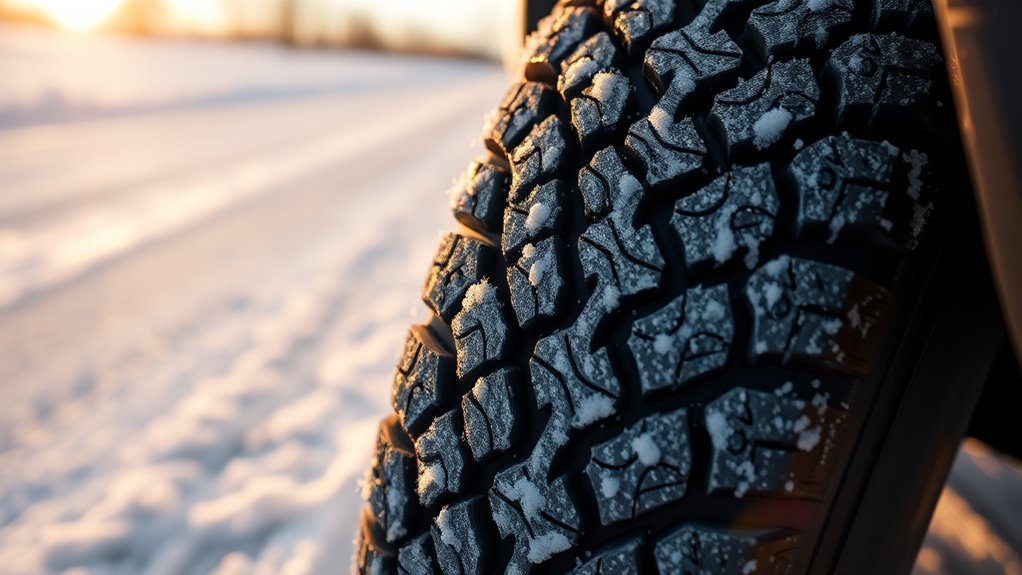
5 Tips Your Tire Tread Should Follow When Driving in Cold Weather
When driving in cold weather, it’s crucial to ensure your tire tread is deep enough.
Replace tires that are below 2/32 inch to maintain proper traction on slippery roads.
Remember to check and adjust your tire pressure monthly; cold weather can drop PSI significantly.
It’s also a good idea to rotate your tires every 5,000 to 8,000 miles to promote even wear.
Switching to winter tires is a smart move once temperatures fall below 45°F, as they provide better grip in cold conditions.
Lastly, adjust your driving habits!
Reduce your speed and brake gently to enhance traction and stay safe on icy surfaces.
Keep reading to discover more tips for driving confidently this winter!
Check and Maintain Adequate Tread Depth
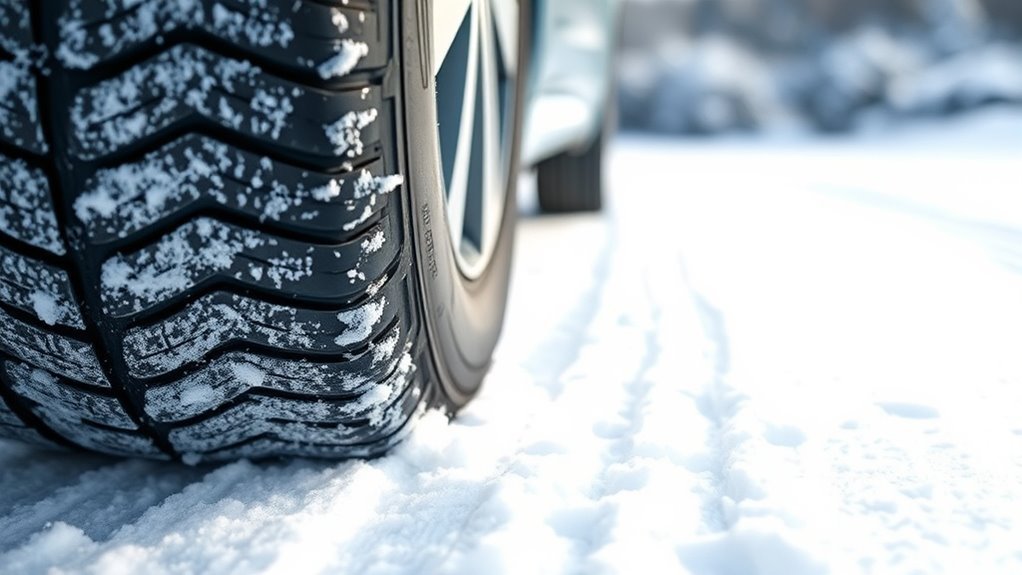
Before winter hits, you should check your tire tread depth to make certain of safe driving on icy roads.
Use a quarter to check tire tread by inserting it into the grooves. If Washington’s head is partially covered, you’ve got adequate tread depth—at least 4/32 of an inch.
Use a quarter in tire grooves—partially covered Washington means safe tread depth for winter driving.
Regularly inspecting tread wear before winter weather sets in helps guarantee better traction and reduces stop distance on slippery surfaces.
Watch for uneven wear patterns or bald spots, as these can compromise driving safety and increase slipping risks.
Replace tires worn below 2/32 inch to maintain control and prevent hydroplaning.
Keeping an eye on your tire tread is vital vehicle maintenance that directly impacts your safety during cold weather conditions.
Don’t skip this simple check—it makes all the difference.
Monitor Tire Pressure Regularly
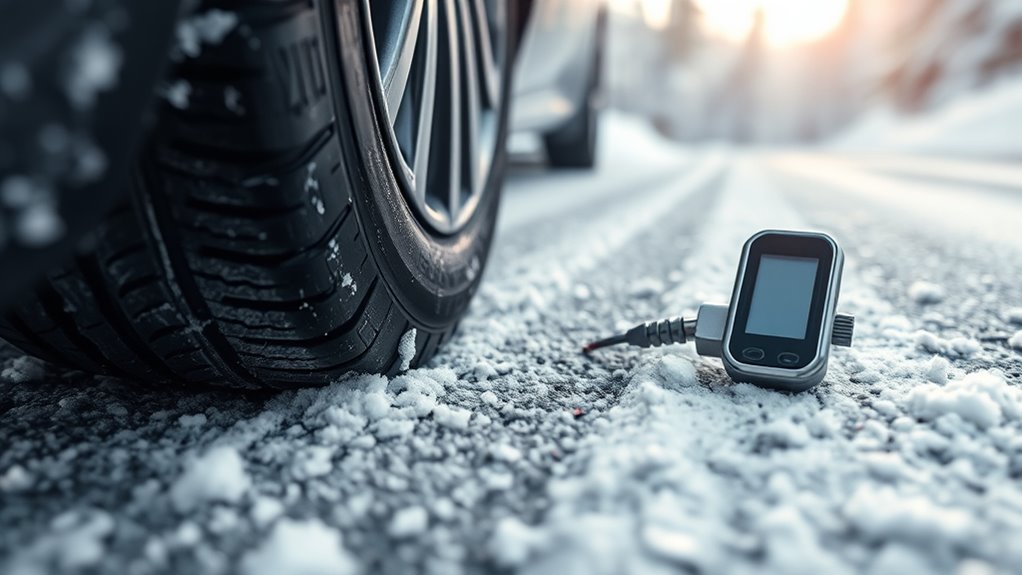
Since tire pressure drops about 1 PSI for every 10°F decrease in temperature, you need to monitor it more often during cold weather.
Cold temperatures cause your tire pressure to fall, increasing the risk of underinflation, which can reduce traction and compromise vehicle safety.
Always check tire pressure when your tires are cold—before driving or after resting at least three hours—using a reliable tire gauge.
Don’t rely on the maximum PSI listed on the tire sidewall; instead, follow your vehicle manufacturer’s recommended PSI for proper inflation.
During winter months, check your tire pressure at least once a month, especially if you use winter tires.
Maintaining proper inflation ensures better handling, longer tire life, and safer driving in icy, snowy conditions.
Rotate Tires to Ensure Even Wear
Maintaining proper tire pressure is just one part of keeping your tires in top shape during cold weather.
To ensure even tread wear, you should schedule tire rotation every 5,000 to 8,000 miles or follow your vehicle manufacturer’s guidelines.
Regular tire rotation prevents uneven tread and tire wear patterns that can reduce traction in winter driving conditions.
Rotating tires regularly helps maintain even tread wear, enhancing traction on slippery winter roads.
By following a proper rotation pattern, you promote uniform tread depth across all tires, extending tire lifespan and improving grip on icy or snowy roads.
Performing tire rotation before the cold weather hits guarantees balanced tread levels, reducing risks like hydroplaning or slipping.
Incorporating tire rotation into your vehicle maintenance routine is essential for safe and efficient driving throughout the winter season.
Switch to Winter Tires at the Right Time
When temperatures consistently fall below 45°F (7°C), you should switch to winter tires to guarantee your vehicle maintains peak traction.
Waiting for the first snow can catch you off guard with icy roads and frosty mornings, risking your vehicle safety.
Winter tires have specialized tread and rubber compounds that stay flexible in low temperatures, improving grip on cold pavement.
Proper timing means focusing on temperature drops rather than calendar dates.
By switching to winter tires promptly, you ensure your tire tread depth and tire pressure work together to provide ideal handling during winter driving.
This early transition enhances control, helping you navigate cold weather conditions safely and confidently.
Don’t delay—switch to winter tires at the right time for maximum safety and performance.
Adjust Driving Habits for Better Traction
To improve traction in cold weather, you’ll want to adjust how you drive to match the road conditions.
In winter driving, your driving habits play a pivotal role in traction maintenance.
Reduce your driving speed to maintain better control on slippery surfaces.
Increase your following distance to give yourself more time for braking safely.
Accelerate gently to prevent tire spin, especially on icy roads, and brake gradually to avoid skidding.
If you find yourself stuck, avoid spinning your tires aggressively; instead, rock your vehicle back and forth to gain traction.
By adapting your driving speed, braking, and following distance, you’ll enhance control and safety.
These simple changes help your tires maintain traction and keep you steady on winter roads.
Frequently Asked Questions
When Driving in Cold Weather, Tire Tread Should?
When driving in cold weather, your tire tread should be at least 4/32 inch deep to maintain traction.
You should regularly check for wear and use winter tires.
Also, replace any damaged or unevenly worn tires promptly.
What Is the 7 7 Rule for Winter Tires?
The 7-7 Rule says you should install winter tires when daily temperatures drop below 7°C (45°F) and stay there.
This keeps your tires flexible, improving traction and safety on cold, icy roads before winter fully hits.
So, keep an eye on the forecast!
When those temperatures dip, it’s time to get those winter tires on for a safer drive.
Do I Need to Put Air in My Tires When It’s Cold?
When cold bites, your tires lose air like a deflating balloon.
Yes, you need to add air regularly to keep them properly inflated.
This ensures safety, better grip, and prevents uneven wear during chilly drives.
What Are the 3 P’s of Winter Driving?
The 3 P’s of winter driving are Preparation, Prevention, and Patience.
You’ll prepare your vehicle, prevent accidents by driving carefully,
and stay patient on slippery roads to keep yourself and others safe during winter conditions.
Conclusion
Keeping your tire tread in top shape is essential for safe winter driving.
Did you know that tires with less than 4/32 inch tread depth are twice as likely to hydroplane on wet roads?
By regularly checking tread depth, you can avoid this dangerous situation.
Monitoring tire pressure is just as important.
Make sure your tires are inflated to the recommended levels for optimal performance.
Rotating your tires regularly helps them wear evenly, which is crucial for winter traction.
Switching to winter tires at the right time is another key factor.
They’re designed to provide better grip in cold and snowy conditions.
Lastly, adjusting your driving habits can make a huge difference.
Take it slow and give yourself extra time to react on icy roads.
Don’t wait—your safety depends on it when the temperatures drop.
Keep an eye on your tire tread, and you’ll navigate winter roads with confidence.