What Is a Weather Goat and How Does It Work?
A weather goat, or wether, is a male goat that’s been castrated to stop breeding and reduce aggressive behaviors.
When you wether a goat, its hormones drop, making it calmer and easier to manage in your herd.
Wethers don’t mark territory with strong odors like bucks do, which creates a peaceful environment.
They’re popular as pets or fiber animals.
If you want to understand how they impact herd dynamics and care, there’s more to discover.
Definition and Characteristics of a Weather Goat

Although you might not be familiar with the term, a weather goat is simply a castrated male goat, called a wether, whose testicles have been removed.
A weather goat is a castrated male goat, known as a wether, with removed testicles.
Wethers undergo neutering or castration typically between 8 to 12 weeks old, using methods like banding, burdizzo, or surgery.
This process stops the production of hormones linked to breeding behavior, making wethers calmer and less aggressive than intact males.
You’ll notice they don’t have the strong musky scent or urine-marking habits common in bucks.
Because of their docile nature and manageable size, wethers are often kept as pets, companions, or fiber animals.
Understanding these characteristics helps you appreciate why weather goats are valued beyond just their initial role as male goats.
Reasons for Wethering Male Goats
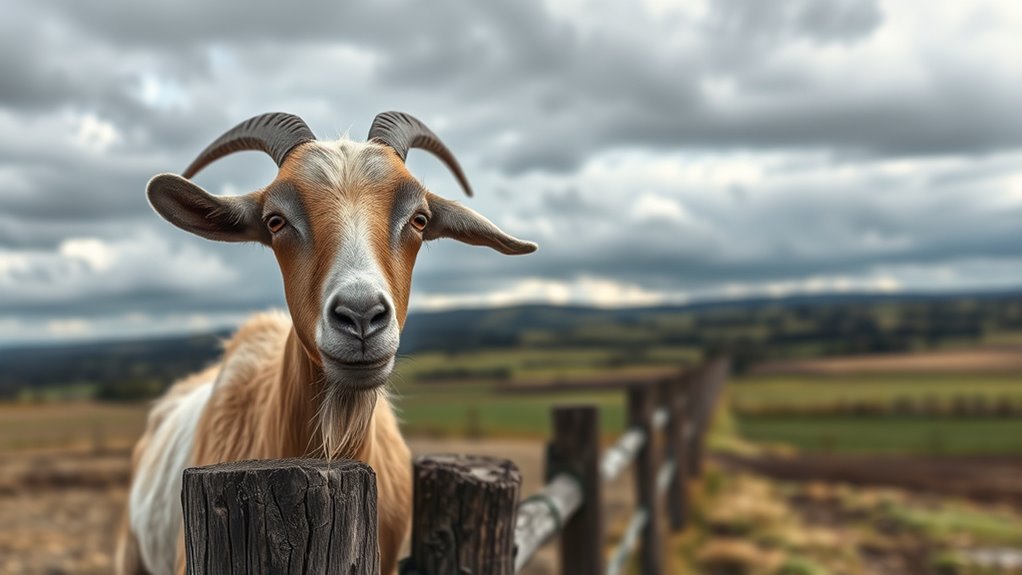
When you wether a male goat, you prevent unwanted breeding and reduce aggressive behaviors that can disrupt your herd.
Wether goats produce fewer hormones, which means they’re calmer and less prone to fighting or marking territory with strong musk and urine.
This makes managing your herd much easier, especially if you keep males with does or other animals.
By wethering, you also avoid the complications that come with intact bucks, such as dominance struggles and constant mating attempts.
Overall, wether goats help maintain a peaceful environment and simplify herd dynamics.
If you want a manageable, less territorial male goat that won’t contribute to breeding, wethering is a practical and effective choice for your livestock management.
Common Methods of Castration
If you decide to castrate your male goat, you’ll find several common methods available, each with its own benefits and considerations.
Banding uses an elastic band to cut off blood supply, causing the testicles to fall off after a few days—this method is simple and makes great sense for young goats.
The Burdizzo method crushes the spermatic cords without removing the testicles, sterilizing the goat while keeping them intact.
Surgical castration involves a vet making an incision to remove the testicles, usually under local anesthesia, and requires careful aftercare.
Timing matters; castrating between 8 to 12 weeks old reduces stress and health risks.
Whichever method you choose, proper aftercare ensures your goat heals well and stays healthy.
Behavioral Differences Between Wethers and Bucks
Because wethers don’t experience the hormonal changes that intact bucks do, you’ll notice distinct differences in their behavior.
These behavioral differences are especially clear during breeding season when bucks become more aggressive and territorial.
Unlike bucks, wethers lack the strong musky scent and avoid urine marking behaviors.
You’ll find wethers generally calmer and easier to handle year-round.
Key behavioral differences include:
- Bucks show increased aggression, territoriality, and noisy behavior during rut, while wethers remain calm and gentle.
- Bucks often urinate on themselves as a mating signal; wethers do not.
- Wethers tend to be more manageable, making them safer and less stressful to work with.
Understanding these behavioral differences helps you better manage your goats and anticipate changes in their temperament.
It’s all about knowing what to expect!
Roles of Wethers in Herd Management
Understanding how wethers behave compared to bucks helps you see why they play unique roles in herd management.
Since wethers are castrated males, they don’t produce breeding hormones, which means they fit perfectly in herds where calmness and stability are key.
You can use wethers to reduce stress and social conflicts, especially by providing companionship to young or isolated males.
Their calm nature helps manage aggressive behaviors like fighting or marking that bucks often display.
Wethers are often kept separate from breeding does and bucks to maintain herd cohesion and prevent disruptions.
In fiber flocks, wethers also contribute by producing high-quality fleece.
Care and Maintenance of Wethers
Though wethers are generally easier to care for than intact males, they still need proper attention to stay healthy and comfortable.
Wethers may require less care than intact males but still need consistent attention to remain healthy and comfortable.
As a castrated male goat, a wether avoids many hormonal changes but still requires a clean, secure space, especially during breeding season. This helps to prevent conflicts with bucks and does.
Whether you have Nigerian Dwarf or larger dairy goats, proper care comes first. Wether goats make excellent companions when you maintain their hygiene, nutrition, and monitor health regularly.
Here are some key care tips:
- Provide separate enclosures during breeding season to avoid stress from intact males.
- Watch for infections or urinary issues, especially if castration was recent.
- Maintain clean water and a balanced diet tailored to your wether’s needs.
This ensures your wether thrives and stays in first place for health and comfort.
Benefits of Keeping Wethers as Pets or Companions
If you’re looking for a calm and friendly animal to add to your family, wethers make excellent pets and companions.
These castrated goats are less aggressive and easier to handle than intact males, so you’ll find them predictable and gentle.
They don’t have the strong odor typical of bucks, making them more pleasant to keep around.
Wethers often live longer—up to 15 years—since they avoid reproductive strain, giving you many years of companionship.
As goats, they require minimal grooming and come with fewer health issues related to hormonal behaviors.
Their calm nature makes them especially great around children, providing a safe, low-maintenance pet option.
If you want a loyal, easygoing goat, wethers are a solid choice.
Potential Health Concerns and Preventative Measures
You need to watch for infection risks, especially after procedures like castration, by keeping the area clean and monitoring for swelling or discharge.
Preventing urinary calculi means balancing minerals in your wether’s diet and ensuring they drink enough water.
Staying proactive with these steps helps keep your goat healthy and comfortable.
Infection Risks
Because improper banding or surgical castration can introduce bacteria, you need to be vigilant about infection risks in wethers.
Infection usually arises from contaminated wounds, leading to redness, swelling, pus, or a foul smell.
To protect your wether, regularly inspect the castration site and maintain strict hygiene.
Keep their living area clean and tools disinfected to minimize bacterial or fungal infections.
Avoid excessive handling of the wound and keep it dry until fully healed.
If your wether shows persistent swelling, heat, pus, or refuses to eat, seek veterinary care immediately.
Key steps to prevent infection include:
- Regular wound checks for early signs of infection
- Maintaining clean living conditions and sanitized equipment
- Minimizing wound contact and keeping the area dry
Urinary Calculi Prevention
Alongside infection risks, wethers face other health challenges, including urinary calculi—a common condition caused by reduced water intake and dietary imbalances.
To prevent bladder stones, you should always provide fresh water and maintain a proper calcium-to-phosphorus ratio in their diet.
Limiting high-oxalate foods helps reduce stone formation, and adding supplements like ammonium chloride can acidify urine effectively.
You’ll also want to keep an eye on urination frequency and urine appearance to catch early signs of blockages.
Proper herd management matters too; avoid overfeeding and ensure a balanced diet to lower risks.
Post-Procedure Monitoring
Although castration is a common procedure, it requires careful post-operative monitoring to prevent complications.
You need to check the wound daily for signs of infection like redness, swelling, or pus.
Keep the site clean and dry, applying antiseptic if your vet recommends it.
Watch for abnormal swelling or pain, which may signal a hematoma or poor healing.
Also, observe your goat’s urination and behavior to catch any urinary blockages early.
Key points to monitor include:
- Signs of infection: redness, swelling, pus
- Abnormal swelling or pain near the surgical site
- Urination difficulties or distress, possibly indicating urinary calculi
Promptly consult your vet if you notice any of these issues to ensure your goat recovers smoothly.
Frequently Asked Questions
What Is the Point of a Wether Goat?
You keep a wether goat to enjoy a calm, friendly companion that helps manage your herd without aggressive behaviors.
They’re great for fiber, pack work, and reducing odor, making your livestock easier to handle.
How Long Do Wether Goats Live?
Wether goats typically live 12 to 15 years if you provide proper care.
With good nutrition, regular vet check-ups, and a safe environment, you’ll help them stay healthy and active throughout their longer lifespan.
How Can I Tell a Goat Is a Wether?
You can tell a goat is a wether because it lacks testicles, has a calmer demeanor, doesn’t smell musky, and won’t display aggressive behaviors typical of bucks.
They also have a smaller, less hairy body.
What Is the Difference Between a Buck and a Wether Goat?
A buck is an intact male goat.
They often have a strong musky odor and can display aggressive behavior.
On the other hand, a wether is a castrated male goat.
Wethers are generally calmer, odorless, and easier to handle.
You’ll find that wethers are better suited for companionship or farm work.
Conclusion
Now that you know what a weather goat is and how wethers fit into herd life, you’ll see they’re more than just ordinary animals—they’re the unsung heroes of goat management!
Keeping a wether around can make your herd run smoother than a rocket ship on turbo mode.
With proper care, these calm companions bring balance and charm to any farm or pet family.
So, don’t underestimate the power of a well-managed weather goat!
These incredible animals not only help maintain harmony in the herd but also provide companionship and entertainment.
Their gentle nature makes them excellent pets, whether on a farm or as part of a family.
In conclusion, investing in a weather goat can transform your livestock experience.
They contribute to a more efficient and joyful environment, showcasing that these goats are truly invaluable to goat management and herd dynamics.