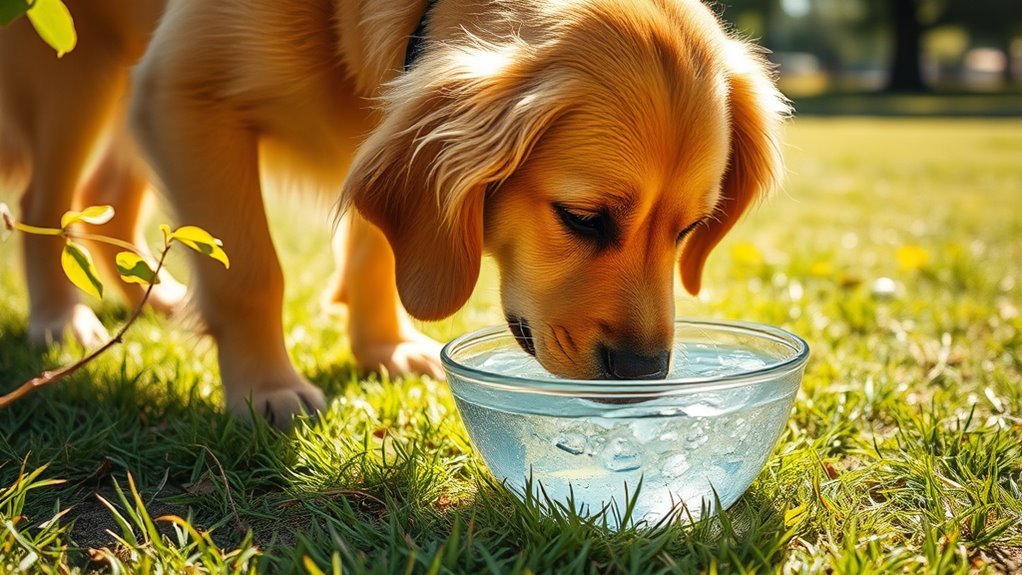
Is Cold Water Bad for Dogs in Hot Weather?
Is Cold Water Bad for Dogs in Hot Weather?
You can safely give your dog cold water in hot weather to help them cool down and stay hydrated.
Cold water doesn’t cause stomach issues or discomfort, but be sure your dog drinks slowly to avoid gulping air.
Gulping air can lead to bloating or more serious problems like gastric dilation volvulus.
Managing how your dog drinks and understanding breed risks can keep them safe and comfortable.
Keep exploring to find out how to prevent gastric issues and best care tips for your dog.
Should Dogs Drink Cold Water in Hot Weather?

While some might worry about cold water upsetting a dog’s stomach, you can confidently offer your dog cold water in hot weather to help them cool down quickly.
Cold water and ice water are effective cooling methods that encourage proper hydration, which is essential for dogs to regulate their body temperature.
Staying hydrated helps prevent heat stress and reduces the risk of heat stroke during hot weather.
Recent studies show no link between cold water and stomach issues in dogs, so you don’t need to worry about water temperature causing gastric problems.
Recent studies confirm cold water does not cause stomach issues in dogs, so it’s safe to offer.
Providing your dog with cool water supports their natural ability to manage heat and keeps them comfortable.
Effects of Drinking Cold Water Quickly on Dogs

When your dog drinks cold water too quickly, they might swallow air, which can lead to bloating or stomach discomfort.
However, research shows that the water’s temperature itself isn’t the main issue—gulping large amounts fast is what raises the risk.
Drinking Speed Risks
If your dog gulps cold water too quickly, they can swallow air, which raises the risk of bloating and stomach discomfort.
Rapid water intake, especially gulping, can increase the chance of gastric dilation volvulus (GDV), a serious gastrointestinal issue in certain breeds.
While water temperature has little effect on bloat risk, drinking speed plays a vital role.
To support proper hydration and reduce gastric discomfort, encourage your dog to drink slowly by offering small amounts frequently.
| Factor | Effect | Prevention |
|---|---|---|
| Drinking Speed | Increases gulping and air intake | Offer small, steady amounts |
| Cold Water | Minimal impact on bloating | Focus on controlled drinking |
| Rapid Intake | Raises gastric dilation risk | Encourage calm hydration |
Cold Water Impact
Although drinking cold water quickly can cause your dog to swallow air and increase bloating risk, the water’s temperature itself doesn’t directly lead to gastric issues.
Scientific studies show that cold water, even ice water, doesn’t cause shock risk or worsen gastric discomfort.
In hot weather, your focus should be on maintaining proper dog hydration rather than worrying about water temperature.
Rapid drinking of any water, cold or not, can lead to gulping, which may cause gastric dilation.
Using cold water as a cooling method is safe and supports animal welfare by helping regulate your dog’s body temperature.
So, don’t hesitate to offer chilled water; just encourage slower drinking to minimize risks.
Prioritizing hydration and safe drinking habits ensures your dog stays healthy in the heat.
Preventing Gastric Dilatation and Volvulus in Dogs
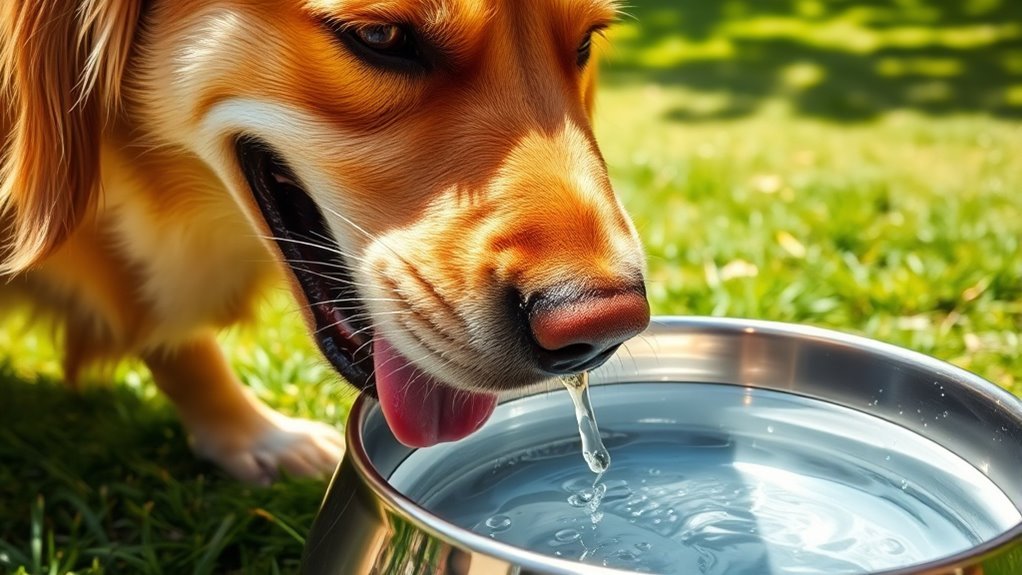
Because gastric dilatation and volvulus (GDV) can quickly become life-threatening, you should take proactive steps to reduce your dog’s risk.
In hot weather, managing dogs’ hydration is essential. But, avoid letting them gulp cold water rapidly after meals, as this can cause stomach bloating.
Instead, provide gradual water access to prevent rapid water gulping. This helps in preventing GDV.
Feeding smaller, divided meals lowers air intake, which reduces the chance of gastric dilatation volvulus.
Also, avoid vigorous exercise right after eating to help prevent stomach twist. This is especially important for deep-chested breeds prone to GDV.
Identifying Dog Breeds Prone to Gastric Issues
You should know that certain breeds, like Great Danes and Dobermans, are more prone to gastric dilation volvulus (GDV).
Small breeds such as Miniature Schnauzers and brachycephalic dogs like Bulldogs also face higher gastric risks.
Recognizing these breeds helps you stay alert for symptoms like abdominal swelling and restlessness before emergencies arise.
Breeds Susceptible to GDV
When you consider the risk of gastric dilation volvulus (GDV), certain dog breeds stand out due to their unique anatomy and genetics.
Deep-chested breeds like Great Danes, St. Bernards, and Doberman Pinschers are among the breeds susceptible to GDV because their narrow, deep chests increase the chance of stomach twisting.
Large heavyweight breeds such as Rottweilers and Irish Setters also face higher risk for gastric torsion and bloat.
These breed-specific traits influence susceptibility regardless of diet or activity level.
For high-risk breeds, bloat prevention often involves prophylactic gastropexy, a surgical procedure that secures the stomach to prevent twisting.
Understanding which breeds are most vulnerable helps you take proactive steps to protect your dog from this serious condition.
Recognizing Gastric Risk
Although any dog can experience gastric issues, certain breeds show a higher tendency toward conditions like gastric dilatation volvulus (GDV) due to their anatomy and age.
Deep-chested breeds such as Great Danes, Saint Bernards, Dobermans, and even smaller ones like Boxers face increased gastric risk.
Dogs over 7 years old are especially vulnerable.
In hot weather, rapid cooling from cold water intake might exacerbate stomach bloating or gastric dilation, especially if combined with vigorous activity or eating.
To reduce risk, monitor your dog’s water temperature, and avoid sudden cold water after exercise or meals.
Encouraging smaller, frequent meals and controlled water intake helps prevent gastric emergencies and heat stress.
Understanding these factors helps you protect your dog from serious gastric complications linked to their breed and environment.
Recommended Water Temperatures for Dogs
Since dogs rely on water to regulate their body temperature, offering it at the right temperature is key.
Proper water temperature is essential for dogs to effectively regulate their body heat.
In hot weather, cool water is ideal because it encourages hydration without shocking your dog’s system. Water temperature slightly below their body temperature helps with effective cooling and can prevent heatstroke.
You can add ice cubes occasionally to fresh water for a quick cool-down, especially during extreme heat.
However, avoid giving your dog icy cold water all the time, as sudden temperature changes might be uncomfortable.
The priority is ensuring your dog has constant access to fresh water at a comfortable temperature.
Remember, boiling water is harmful and should never be offered.
Staying mindful of water temperature helps keep your dog comfortable and healthy during hot weather.
Best Practices for Bathing Dogs in Warm Water
Bathing your dog in lukewarm water around their body temperature prevents shock and keeps them comfortable.
When bathing dogs, avoid cold water that can cause shock or stress, especially in smaller or short-haired breeds.
In hot weather, you can use slightly cooler water, but never below 15°C (59°F), to help them cool down safely.
Follow bathing best practices by ensuring thorough rinsing to remove all shampoo, preventing residue that can irritate the skin.
Also, avoid leaving a damp coat, as trapped moisture can lead to overheating.
Limit bath duration and dry your dog’s coat thoroughly afterward to maintain comfort and health.
Frequently Asked Questions
Can Cold Water Make a Dog’s Stomach Flip?
No, cold water won’t make your dog’s stomach flip.
It’s rapid gulping that can cause issues, so encourage slow drinking.
Cold water actually helps cool your dog safely without increasing bloat risk.
What Is a Silent Killer for Dogs?
Heatstroke sneaks in like a shadow at noon, a silent killer for dogs.
You might miss early signs like heavy panting or drooling, so stay vigilant.
Act fast to keep your dog safe and cool.
Will Spraying My Dog With Water Cool Them Down?
Yes, spraying your dog with cool water helps cool them down effectively.
Just avoid freezing water, and spray gently.
Combine it with shade or fans to keep your dog comfortable and prevent overheating safely.
Is It Okay to Hose Down Your Dog in Hot Weather?
Yes, you can hose down your dog in hot weather using cool or lukewarm water.
Just avoid very cold water, as it can be a shock to their system.
Also, make sure to supervise closely to prevent slipping or stress.
This way, you can ensure your dog stays comfortable and safe.
Conclusion
While cold water can refresh your dog on a scorching day, gulping it down too quickly might trigger uncomfortable or serious issues like gastric dilatation.
On the other hand, lukewarm water offers a safer, gentler option that keeps them hydrated without the risks.
Balancing temperature and pace ensures your furry friend stays cool and healthy.
So, don’t just grab the coldest bottle—consider what’s best for your dog’s comfort and well-being.
In hot weather, it’s essential to provide your dog with water that helps them cool down safely.
Opting for lukewarm water can prevent any potential health issues while keeping your pup hydrated.
Remember, the goal is to keep your dog comfortable and safe.
So, next time you’re outdoors in the heat, think about what water temperature will best suit your dog’s needs.