How to Help a Palm Tree Survive Cold Weather
To help your palm tree survive cold weather, it’s crucial to choose cold-hardy species right from the start. These varieties are better equipped to handle low temperatures.
Next, apply about 3-4 inches of mulch around the base of the tree. This will insulate the roots and keep them warmer during chilly nights.
Before freezing temperatures hit, water your palm deeply. However, as the cold sets in, it’s important to reduce watering to prevent stress on the tree.
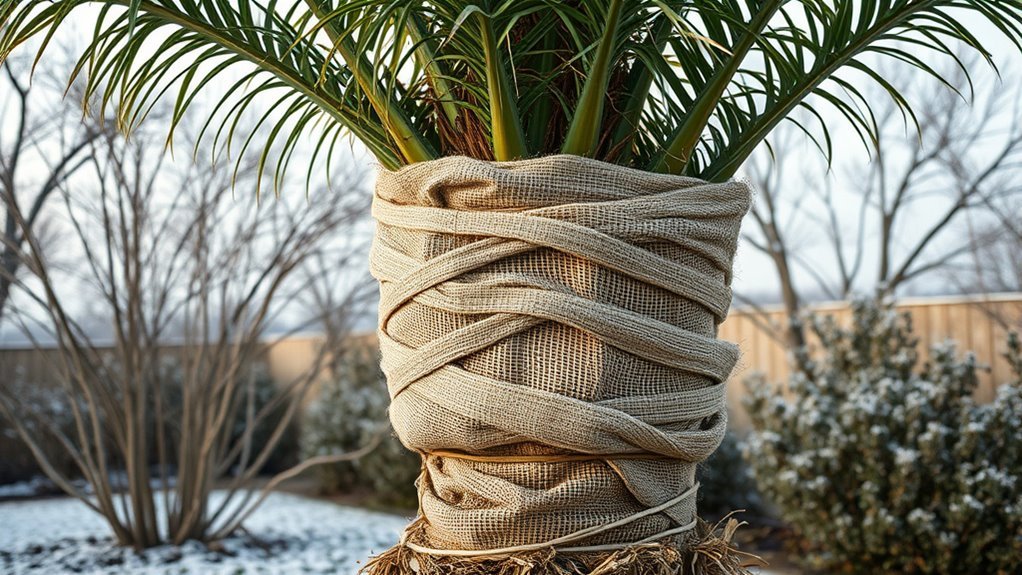
Wrapping the trunk and fronds with breathable materials can provide extra protection. During severe freezes, consider using heat tape for added warmth.
After the cold spells, don’t forget to check for any damage. Pruning dead fronds helps prevent infection and keeps your palm healthy.
Keep these simple steps in mind to protect your palm through winter, and you’ll discover even more ways to support its health!
How Cold Temperatures Impact Palm Trees
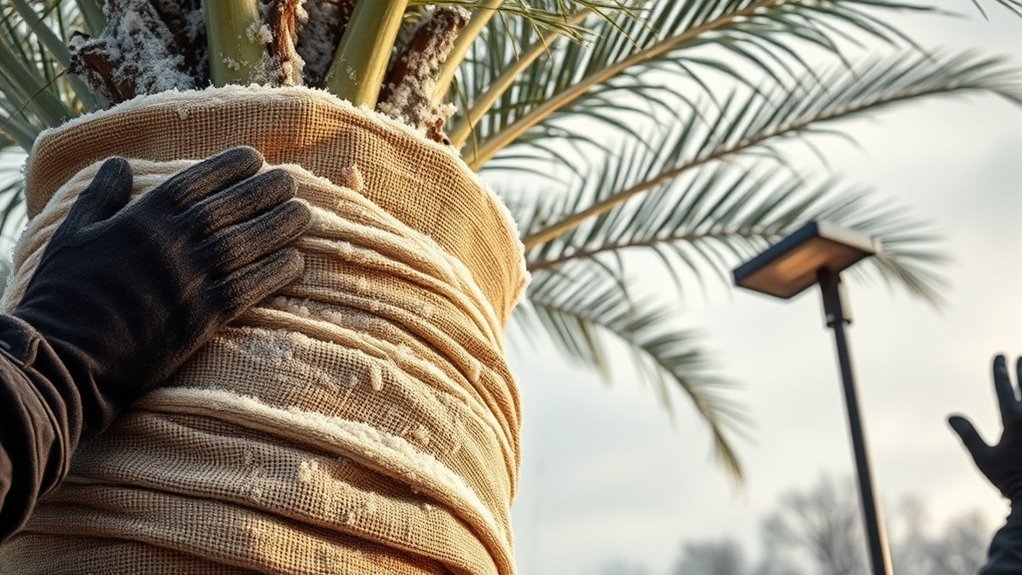
When cold temperatures hit, the water inside your palm tree’s cells can freeze. This freezing causes the cells to rupture and damages the tissue.
You might notice this kind of palm damage as browning fronds or even cracks in the trunk.
If the cold snap is severe enough to drop below your palm’s hardiness threshold, it could kill the tree outright.
Palms are especially vulnerable during unexpected or prolonged freezes, which can weaken their overall health and slow recovery.
Keep in mind, palm damage from cold might not be visible right away. It can take weeks before you notice any signs.
Understanding how cold temperatures impact your palm’s cells and tissues helps you recognize the risks.
This knowledge allows you to take steps to protect your tree before serious harm sets in.
Selecting Cold-Hardy Palm Species
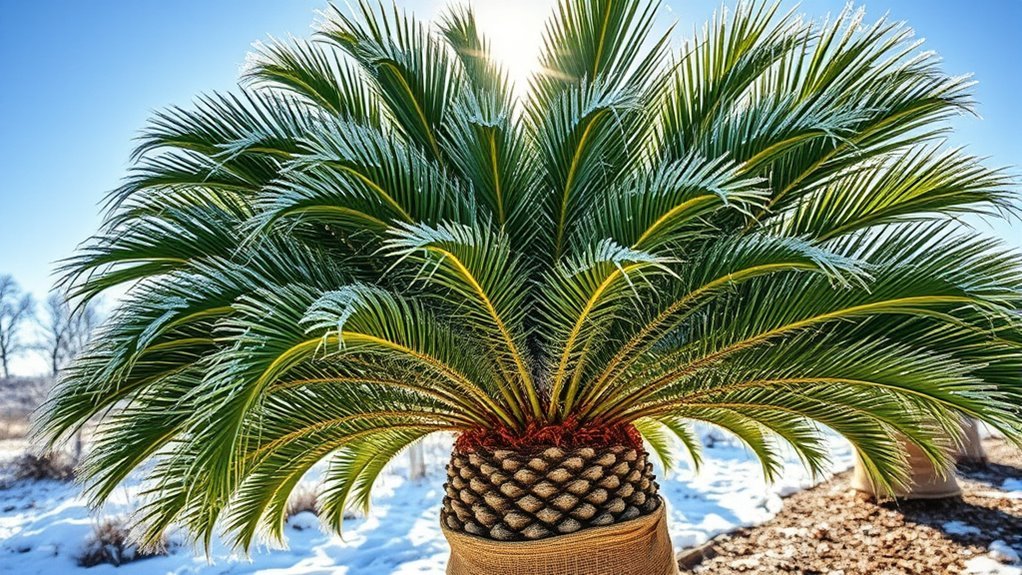
Choosing the right palm species is essential if you want your tree to thrive through cold winters.
When temperature drops, only cold hardy palms will survive and flourish.
Here are three hardy palm species to contemplate:
- Windmill Palm (Trachycarpus fortunei) – survives temperatures as low as 0°F (-18°C), making it one of the most cold hardy palms available.
- Dwarf Palmetto (Sabal minor) – tolerates temperature drops to 0°F (-18°C), perfect for USDA zones 7-11.
- Needle Palm (Rhapidophyllum hystrix) – highly cold-tolerant and thrives in similar zones, withstanding 0°F (-18°C).
Selecting palms bred or naturally adapted for colder climates greatly enhances their chances of surviving winter cold snaps.
Choosing the right hardy palm now saves you effort later.
Preparing Palms for Winter With Mulching
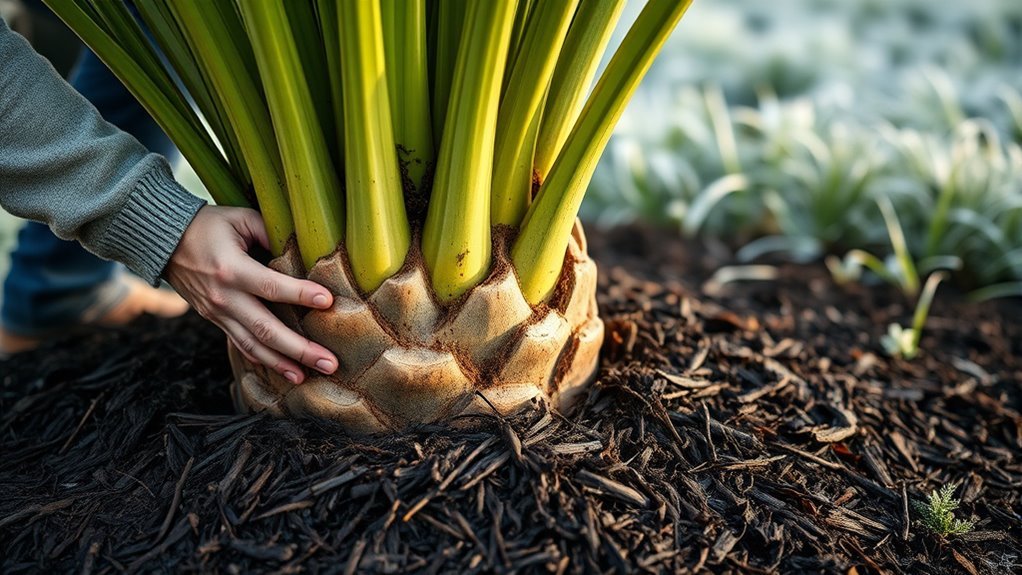
After selecting a cold-hardy palm species, you’ll want to protect its roots from freezing temperatures to keep your tree healthy through winter.
Applying a 3-4 inch layer of mulch around the base effectively insulates the root system from cold ground temperatures.
Mulch, especially organic types like straw, wood chips, or shredded bark, prevents deep soil freezing and maintains consistent root temperatures during sudden cold snaps.
This insulation reduces the risk of cold damage that can severely harm your palm’s roots.
Make sure to mulch before a freeze is forecasted to maximize protection.
Once temperatures rise, promptly remove the mulch to avoid excess moisture, which can lead to rot and disease.
Proper mulching is a simple yet vital step in shielding your palm’s root system during cold weather.
Proper Watering Techniques Before Freeze Events
Before a freeze, make sure you water your palm deeply to keep its roots hydrated and ready for cold stress.
Timing is key—water thoroughly when temperatures are above 40°F, but cut back as it gets colder to prevent waterlogging.
Avoid overwatering, since soggy soil can harm roots and reduce your palm’s chance of surviving the freeze.
Deep Watering Benefits
How often do you think about watering your palm before the temperature drops?
Deep watering is vital for helping your palm survive cold weather. It ensures the soil is saturated enough to keep the roots hydrated, boosting your palm’s cold tolerance.
Here’s why deep watering matters:
- It promotes hydrated roots that resist dehydration and temperature stress.
- Moist soil—not waterlogged—prevents root rot while maintaining essential moisture.
- Well-hydrated palms recover faster from cold damage thanks to water’s role in cellular repair.
To maximize these benefits, water deeply at least 24 to 48 hours before a freeze.
This timing helps your palm absorb moisture fully, strengthening its defenses against the cold and improving overall resilience.
Timing Water Application
Since palms absorb water best when soil temperatures stay above 40°F, you should water deeply 24 to 48 hours before a freeze to maximize hydration without risking root damage.
The timing of your water application is vital—watering too close to freezing conditions can leave roots unable to absorb moisture, increasing stress.
Make sure the soil is moist but not waterlogged; saturated soil helps maintain leaf turgor and reduces dehydration during cold snaps.
Avoid watering when soil temperature dips below 40°F because the palm’s water uptake markedly decreases, and excess moisture can harm roots.
Consistently monitor soil temperature and moisture throughout winter to support your palm’s cold tolerance.
Adjust your watering schedule as needed to keep your tree healthy during freezing weather.
Avoid Overwatering Risks
Although keeping your palm well-hydrated is essential before a freeze, you need to avoid overwatering to prevent root damage.
Overwatering can lead to waterlogged roots, increasing the risk of root rot during the winter months.
To manage soil moisture properly, follow these steps:
- Water deeply before cold snaps to ensure leaves stay hydrated and reduce cold stress.
- Reduce watering frequency as temperatures drop below 40°F, since roots absorb less water in cold weather.
- Monitor soil moisture regularly, keeping it saturated but not soggy, and allow excess water to drain.
Effective Methods for Wrapping and Covering Palms
When wrapping your palm, choose breathable materials like burlap or frost cloth to insulate the trunk effectively.
Start at the base and secure the wrap tightly.
But remember to add heat tape with a thermostat for extra protection if needed.
Once the cold snap passes, remove all coverings promptly to prevent moisture buildup and rot.
Wrapping Materials Selection
How do you choose the best materials to wrap your palm tree for cold weather protection?
Selecting the right wrapping materials is key to providing effective insulation while allowing your palm to breathe.
Here’s what you should consider:
1. Use breathable coverings like burlap, landscape fabric, or heavy-duty blankets.
These provide insulation but prevent moisture buildup, reducing rot risk.
2. Layer bubble wrap or aluminum-backed insulation under the outer covering to boost thermal insulation without suffocating the plant.
This extra layer can make a big difference in keeping your palm cozy.
3. Secure your coverings with duct tape or twine to keep them in place during windy, cold snaps.
You don’t want your hard work to be undone by a gust of wind!
Wrap trunks and fronds loosely to avoid chafing.
And make sure to remove all coverings promptly after frost danger passes.
Proper insulation and breathable coverings ensure your palm stays healthy through cold weather.
Trunk Insulation Techniques
To protect your palm’s trunk from freezing temperatures, start by wrapping heat tape evenly from the base up to the fronds. This provides consistent warmth.
For effective trunk insulation, wrap the trunk with 3-4 layers of burlap or heavy-duty fabric over the heat tape. Secure it tightly with duct tape to minimize heat loss.
If you’re expecting severe cold weather, consider adding a layer of bubble wrap or aluminum-backed insulation over the burlap.
Finally, enclose the entire wrapped trunk and fronds with plastic or shrink wrap. This traps heat and moisture, preventing frost damage.
Don’t forget to keep the heat tape’s thermostat outside the covering. This ensures proper temperature regulation.
These trunk insulation techniques will help your palm survive cold weather successfully.
Covering Removal Timing
Although protecting your palm during cold snaps is essential, you’ll want to remove coverings within five days after a freeze to avoid moisture buildup and rot.
Proper covering removal timing prevents damage and fungal infections, promoting healthy recovery.
Here’s how to do it right:
- Wait until temperatures consistently stay above freezing before removing wraps or blankets.
- For small palms, gently remove coverings and inspect for moisture or mold.
- For taller palms, slowly unwrap the trunk and ensure fronds are dry before full exposure.
Using Heat Tape and Insulation for Severe Cold
When temperatures plunge below freezing, wrapping your palm tree with heat tape and insulation can make all the difference in its survival.
Start by wrapping heat tape evenly around the trunk from base upward.
Begin by evenly wrapping heat tape around the palm tree trunk from the base upward.
Place a thermostat outside the insulation layer to activate the heat tape only during cold weather.
Next, cover the heat tape with 3-4 layers of burlap or other insulating material and secure it with duct tape to minimize heat loss.
For added protection, wrap the entire palm, including fronds if possible, with plastic or shrink wrap over the insulation.
Only plug in the heat tape after the trunk is securely wrapped, and double-check the system is working properly before cold snaps arrive.
This method helps safeguard your palm in severe cold conditions.
Identifying and Treating Cold Damage in Palms
If your palm shows browning or yellowing fronds and drooping leaves after a cold snap, these are clear signs of cold damage you need to address.
To identify and treat it effectively, start by checking for these key indicators:
- Gently tug on the spear leaf—if it pulls out easily, internal tissue beneath is likely dead.
- Inspect the trunk for cracks or sap leakage, which signals severe damage.
- Remove all damaged leaves and shoots promptly to prevent infection and encourage healthy regrowth.
Recommended Products to Support Palm Recovery and Protection
To help your palm recover and stay protected during cold weather, you can use a range of specialized products designed to strengthen its health and shield it from further damage.
Using Cold Weather Blankets offers essential frost protection.
Meanwhile, palm Fertilizer like TreeHelp Complete Palm Fertilizer Spikes supplies nutrients that boost resilience.
Supplements with magnesium, potassium, and manganese enhance cold hardiness, and liquid copper fungicide prevents infections after cold stress.
For exhaustive care, the Annual Care Kit for Palms & Sagos supports recovery and growth through winter.
| Product | Purpose |
|---|---|
| TreeHelp Complete Palm Fertilizer | Nutrient boost for cold stress |
| Palm Magnesium/Potassium/Manganese | Enhances cold hardiness |
| Liquid Copper Fungicide | Prevents bacterial infections |
| Cold Weather Blankets | Physical frost protection |
| Annual Care Kit | All-in-one nutrient & recovery |
Frequently Asked Questions
How to Keep a Palm Tree Alive in Winter?
You should mulch around the base,
water deeply before cold snaps,
cover shorter palms with blankets,
wrap the trunk, and
plant them in protected sunny spots.
These steps help keep your palm tree alive through winter’s chill.
How Cold Is Too Cold for Palm Trees?
You might be surprised, but most tropical palms can’t handle temperatures below 50°F.
If it dips near freezing, your palm’s in danger.
Only hardy temperate palms can brave colder chills, but even they have their limits.
How to Protect a Palm Tree From Cold Weather?
You should wrap your palm with blankets or burlap, securing it tightly.
Mulch around the base, and use heat cables if needed.
Also, place it near a south or east-facing wall to shield it from cold winds.
Do Palm Trees Need to Be Covered in Winter?
You don’t always need to cover palm trees in winter, especially hardier varieties.
But if you expect frost or freezing temperatures, covering them helps prevent damage.
Conclusion
You might be surprised to learn that over 80% of palm tree damage in cold climates happens during unexpected freeze events.
By choosing cold-hardy species, mulching properly, and using effective wrapping or heat tape, you can dramatically improve your palm’s chances of surviving winter.
Remember, a little preparation goes a long way in protecting these tropical beauties.
Stay proactive, and your palms will thrive even when the temperature drops.
In conclusion, understanding the risks of cold weather is crucial for palm tree care.
Selecting resilient species, applying mulch, and utilizing wrapping techniques can significantly enhance their winter survival.
With simple yet effective strategies, you can ensure your palms remain healthy and vibrant year-round.
So, take the time to prepare, and give your palm trees the best chance to weather the cold!