How Does Paint Dry in Cold Weather?
When you paint in cold weather, the drying process can really take a hit. Lower temperatures slow down evaporation and hinder chemical curing reactions, making it tough for your paint to set properly.
Water-based paints tend to struggle the most because the moisture they contain takes longer to escape. In some cases, it can even freeze, leading to problems like streaks or bubbles on your surface.
Oil-based paints aren’t off the hook either; they also cure more slowly when the temperature drops.
So, if you want your paint to dry effectively and stand the test of time, you’ll need to consider various factors. This includes the type of paint you’re using, the temperature ranges you’re working in, and possible methods to speed up the curing process.
Keep reading to learn more about how to navigate painting in cold weather!
The Chemistry Behind Paint Drying
Although paint drying might seem straightforward, the chemistry behind it is quite complex.
You need to understand that drying involves a temperature-dependent chemical process combining evaporation and oxidation.
For water-based paints, solvent evaporation removes water, allowing polymerization to begin.
In oil-based paints, oxidation drives molecular reactions essential for chemical bonding.
These reactions form the solid film during the curing process.
When temperatures drop, viscosity increases, making paint thicker and harder to spread evenly.
This change slows molecular reactions, delaying polymerization and the overall curing process.
Also, solvent evaporation diminishes below 60°F, markedly prolonging drying times.
Effects of Low Temperatures on Drying Time
When you paint in cold temperatures, the drying process slows dramatically because solvents and water evaporate much more slowly.
The reduced evaporation rate extends drying times, often leaving the paint tacky for hours or even days, especially when surface temperature drops below 50°F.
Cold temperatures also slow the chemical reactions essential for the curing process, delaying the formation of a hardened paint film.
Even if the surface feels dry, moisture can remain underneath, increasing the risk of damage or failure.
Since cold air holds less moisture, evaporation is further hindered, prolonging drying time.
Cold air’s low moisture content slows evaporation, extending paint drying times significantly.
Understanding how low temperatures affect drying times helps you manage expectations and plan accordingly when painting in chilly conditions.
Common Problems When Painting in Cold Weather
Since cold weather slows drying and curing, you’ll often face issues like bubbles, streaks, and uneven textures when painting.
Cold temperatures can freeze paint, especially water-based types, causing freezing paint that damages the coating’s integrity.
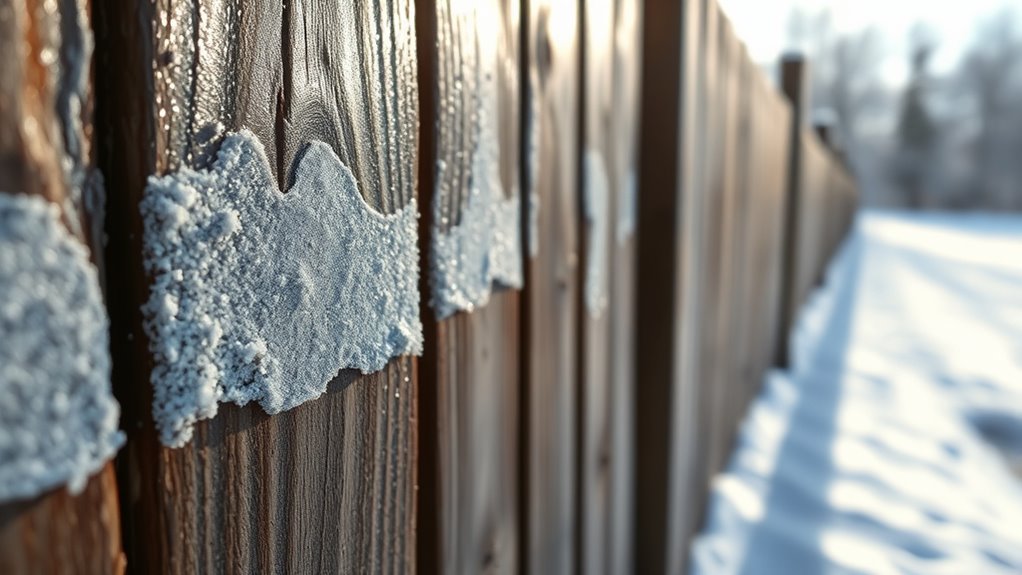
Moisture from dew or frost worsens adhesion problems, leading to peeling or blistering over time.
Temperature fluctuations disrupt the curing process, resulting in weak bonds and surface defects, increasing the risk of paint failure.
When you tackle exterior painting in such conditions, paint drying takes longer, and the finish becomes less durable.
Ignoring manufacturer-recommended temperature ranges often causes these problems, reducing the lifespan of your paint job.
To avoid costly repairs, it’s essential to understand the challenges cold weather brings to painting projects.
Recommended Temperature Ranges for Painting
To get the best results, you should paint within the ideal temperature range of 50°F to 90°F. This range allows the paint to dry and cure properly.
Water-based paints require a minimum temperature of about 50°F for effective drying, while oil-based paints can sometimes be applied down to 40°F.
Water-based paints need at least 50°F to dry well; oil-based paints can be used as low as 40°F.
It’s essential to maintain both the ambient temperature and the surface temperature above these minimums to guarantee proper adhesion and curing.
Painting in cold weather below these thresholds slows drying considerably, often causing surface defects and poor finish quality.
Manufacturers typically specify these minimum temperatures to help you avoid issues like extended drying times and compromised durability.
Staying within the recommended temperature range guarantees a smooth, long-lasting paint job.
Tips to Improve Drying in Cold Conditions
Painting in colder temperatures can slow down drying times and affect the finish quality, but you don’t have to wait for perfect weather to get the job done.
When painting in cold weather, controlling surface temperature and ambient temperature is key to speeding up the drying process and ensuring proper curing.
Here are four tips to improve drying in cold conditions:
- Use low-temperature paints designed for cold temperatures to support faster drying and better adhesion.
- Warm paint cans indoors before use to optimize paint formulation and flow.
- Schedule painting during the warmest part of the day to take advantage of higher ambient temperatures.
- Employ heaters or heat lamps near the surface to maintain dry conditions and improve curing.
These steps help you manage cold weather challenges effectively.
Selecting the Right Paint for Cold Weather
When picking paint for cold weather, choose formulas designed to work at lower temperatures, like those rated for 35°F or below.
You’ll want to take into account oil-based options, which dry better in the cold.
And don’t forget to handle storage carefully to maintain quality.
Checking the product details ensures you’re using paint that performs well despite the chill.
Cold-Weather Paint Types
Although cold weather can pose challenges for painting projects, choosing the right paint type makes all the difference in achieving a durable finish.
Cold-weather paints are specially formulated to handle temperature effects on the drying process and curing. Here’s what you need to know:
- Oil-based paints suit cold temperatures well, often usable down to 35°F–40°F.
- Latex paints generally need at least 50°F to cure properly; some low temperature paint application formulas exist but are rare.
- Specialty cold-weather paint like BEHR WEATHERSTRONG™ Sealant works as low as 0°F, ensuring adhesion in freezing conditions.
- Fast-drying solvent-based paints cure faster and resist temperature effects better during winter.
Always consult manufacturer specifications to match paint choice with your specific cold-weather project needs.
Storage and Handling
Since cold weather can affect paint performance, you’ll want to store and handle your materials carefully to guarantee they stay effective.
Proper paint storage means keeping your cans in a climate-controlled space above the freezing point to maintain viscosity and ensure a smooth curing process.
Check product data sheets for specific temperature control guidelines before use.
If paint freezes, thaw it thoroughly at room temperature and inspect the paint consistency for lumps or stringiness, as frozen paint can become unusable.
Selecting paints rated for low temperatures helps, but even then, adhering to ideal storage conditions preserves quality.
Solvent-based paints dry faster in cold weather, so consider them if you’re working in lower temps.
Frequently Asked Questions
How Long Does It Take Paint to Dry in Cold Weather?
You’ll find paint takes much longer to dry in cold weather—often two to three times the usual duration.
Water-based paints can stay tacky over 24 hours, and oil-based ones might take several days to fully cure.
Will Paint Dry Outside in Cold Weather?
You won’t see paint magically dry outside in freezing cold—it’s more like watching a glacier move!
Cold weather drastically slows drying, so your paint might never set properly unless you warm things up or wait for milder temps.
What Is the Lowest Temperature That Paint Will Dry At?
You’ll find latex paints dry at about 35°F if specially made for cold weather.
Meanwhile, oil-based paints can dry near 40°F.
Below these temperatures, drying slows, which can risk poor adhesion and cause finish problems.
Will Paint Cure at 40 Degrees?
No, paint won’t properly cure at 40 degrees.
You’ll find the drying process slows drastically or stops, especially for water-based paints. This can lead to poor adhesion and longer curing times.
Oil-based paints do better but still slow down.
Conclusion
Painting in cold weather can feel like racing against a slow-moving glacier.
But understanding the chemistry behind drying helps you stay ahead. Low temperatures slow the evaporation and curing processes, leading to longer drying times.
This can cause potential issues like cracking or poor adhesion.
By choosing the right paint and working within recommended temperatures, you can make a big difference.
Plus, using helpful tips can ensure your project dries smoothly—even when the cold tries to freeze your progress.
Keep these tricks handy, and you’ll paint with confidence.
In conclusion, painting in cold weather doesn’t have to be a challenge. By being aware of how low temperatures affect drying times and taking the right precautions, you can achieve great results. Remember to select suitable paint, follow temperature guidelines, and apply smart strategies. This way, your projects will not only dry effectively but will also look fantastic, regardless of the chilly conditions. Happy painting!