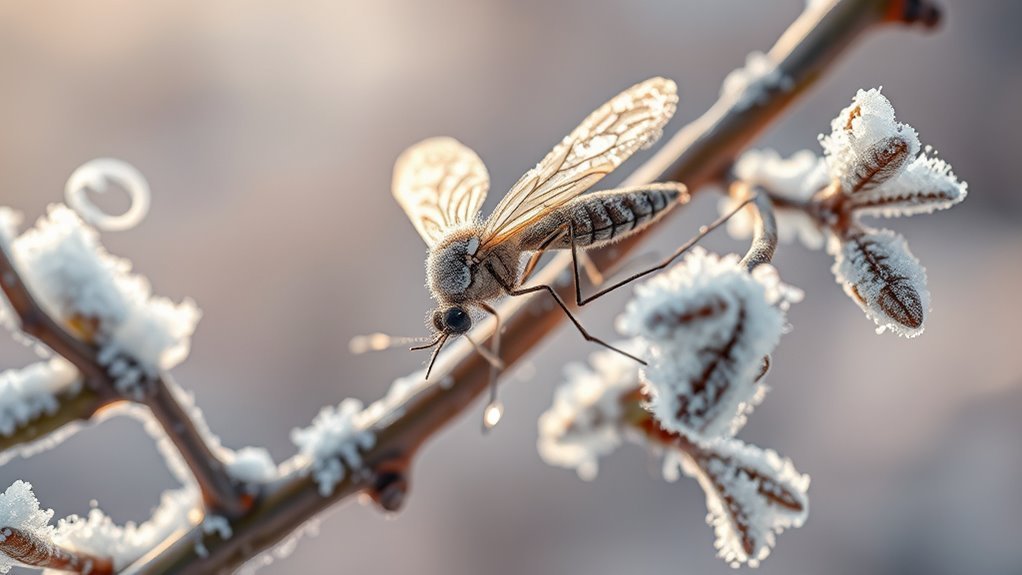
How Does Cold Weather Kill Mosquitoes Step by Step
When cold weather hits, mosquitoes slow down and stop moving below 50°F as their metabolism drops.
Females enter diapause, which means they conserve energy and halt egg development.
Freezing temperatures cause ice crystals to form in their cells, rupturing membranes and killing tissues.
While eggs can survive in dormancy, most adults and larvae die, sharply cutting populations.
Mosquitoes also seek shelter to survive winter’s harshness.
If you want to understand how these strategies affect mosquito survival, keep exploring further.
Mosquito Activity and Temperature Thresholds
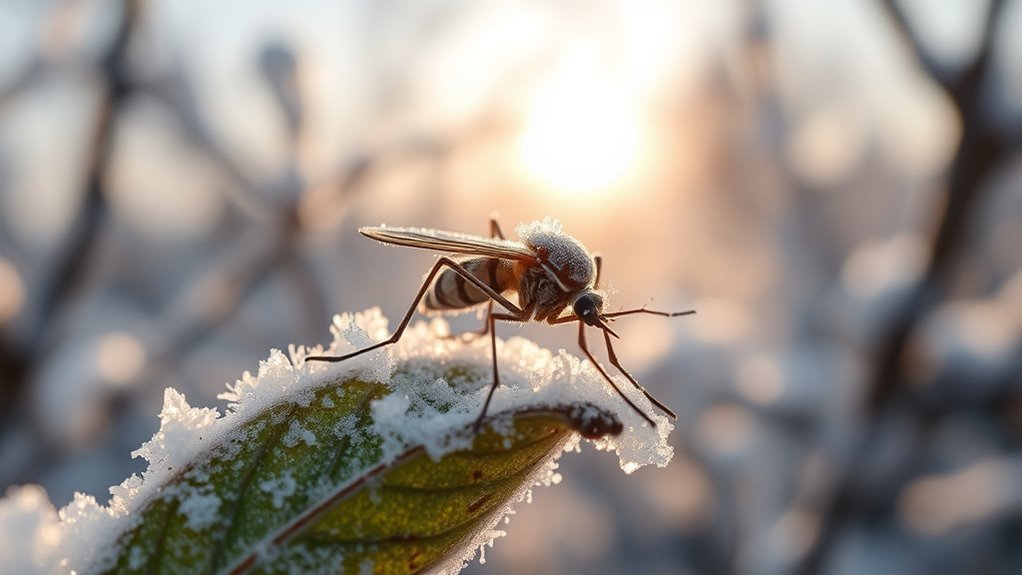
Although mosquitoes thrive in warm weather, their activity drops sharply once temperatures dip below 50°F.
When the temperature falls, mosquitoes’ metabolic processes slow, making them lethargic and less likely to fly.
Cold weather also hinders larval development, preventing mosquito larvae from maturing into adults, which reduces population growth.
Most mosquito species can’t survive temperatures below 32°F, forcing them into dormancy or causing death.
As the temperature drops, you’ll notice adult mosquitoes stop flying and seek shelter to avoid the cold.
These temperature thresholds play a vital role in controlling mosquito populations naturally.
Understanding how cold weather impacts mosquitoes helps you grasp why their numbers dwindle as winter approaches.
The Onset of Diapause in Mosquitoes
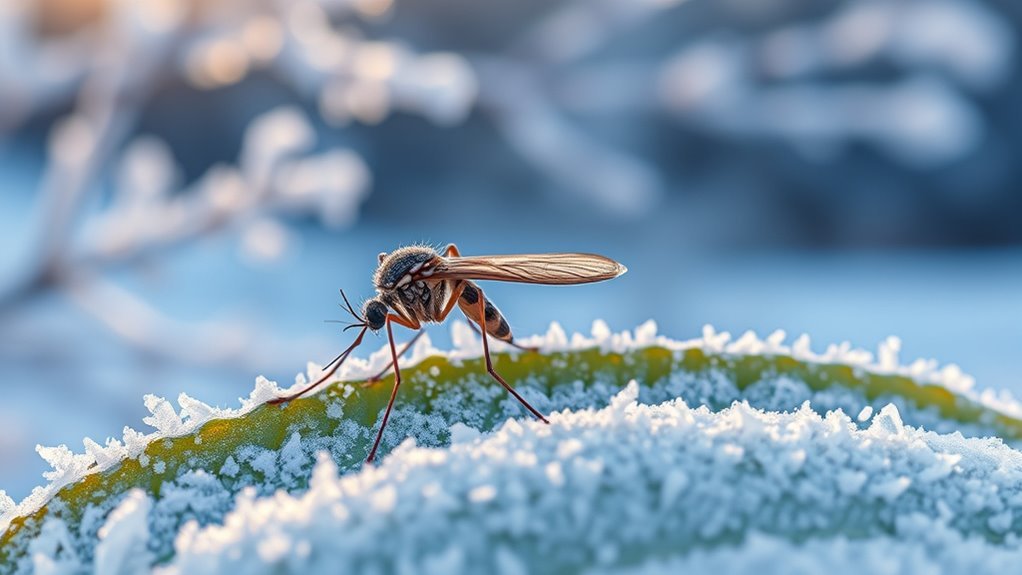
When temperatures drop below about 50°F, female mosquitoes respond by triggering a hormonal shift that starts fat accumulation.
This process prepares them to enter diapause, a dormant state where their metabolism slows dramatically.
Triggering Cold Temperature Response
As temperatures drop below 50°F, you’ll notice many mosquito species enter diapause, a hormonally controlled state of dormancy.
This cold-triggered response slows down their metabolism, reducing movement, feeding, and reproduction.
When the temperature drops, adult mosquitoes actively seek sheltered spots like burrows or basements to protect themselves from harsh conditions.
The onset of diapause helps them survive winter by suspending development until warmer temperatures return.
During this time, physiological changes kick in, preparing mosquitoes for the cold months ahead.
By entering diapause, adult mosquitoes effectively pause their life cycle, conserving energy and increasing their chances of surviving until spring.
This cold temperature response is critical to their survival but also marks the beginning of their vulnerability to prolonged cold exposure.
Fat Accumulation Process
How do female mosquitoes prepare for the long cold months ahead?
They kick off an essential fat accumulation process, storing up to ten times their normal fat reserves. This buildup happens as they feed intensively on blood and nectar, fueled by hormonal changes triggered by decreasing temperatures and shorter daylight.
Unlike male mosquitoes, females need this energy to survive diapause, the dormant state that helps them endure cold weather.
Without ample fat, they can’t maintain their metabolism during this inactive period.
This fat reserve acts as their survival fuel, keeping them alive through harsh winter conditions.
Entering Dormant State
Although temperatures haven’t dropped to freezing yet, female mosquitoes start entering diapause once the mercury dips below about 50°F.
You’ll notice adult females preparing for winter by halting egg development and dramatically increasing fat reserves.
This hormonally controlled diapause reduces their metabolic activity to a minimum, conserving energy during cold temperatures.
To survive, they burrow into sheltered spots like soil or under leaf litter, where they remain dormant.
In this state, they don’t feed or reproduce, effectively pausing their life cycle until warmth returns.
By entering diapause, these mosquitoes withstand harsh conditions that would otherwise be lethal.
Understanding this step shows how cold weather interrupts their activity and survival, ultimately controlling mosquito populations through natural seasonal cycles.
Physical Effects of Freezing Temperatures on Mosquitoes
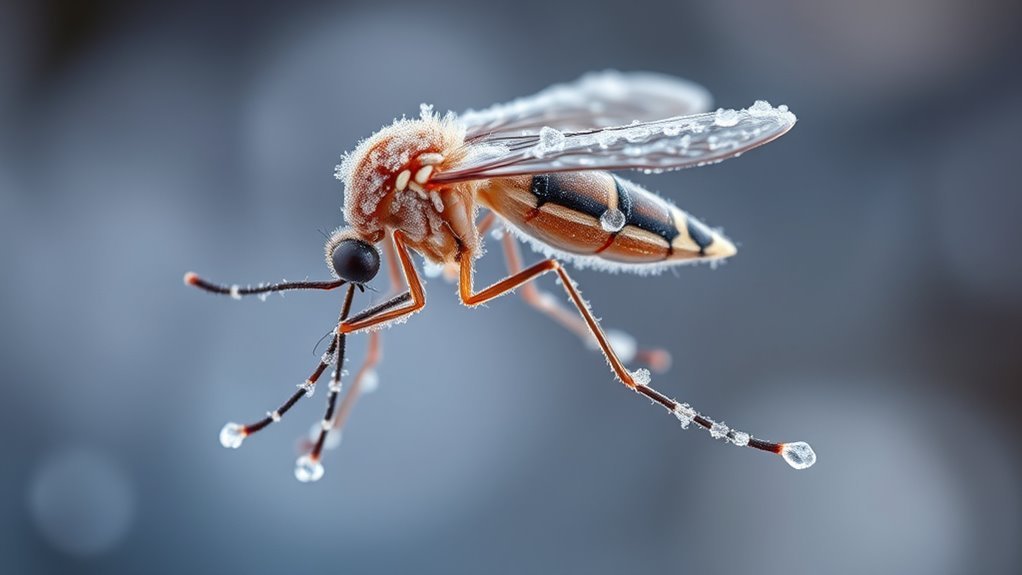
When freezing temperatures hit, ice crystals form inside mosquito cells, tearing apart their delicate membranes.
This damage disrupts their metabolism, making it hard for them to survive.
You’ll see how these physical changes ultimately shut down their essential functions and lead to death.
Ice Crystal Formation
As temperatures fall below freezing, ice crystals start forming inside mosquito cells, damaging their delicate structures.
When water inside the mosquito freezes, it expands and creates these ice crystals, which puncture and rupture cell membranes.
This freezing process causes mechanical stress on the tissues and organs.
If the temperature drops rapidly, larger ice crystals form, increasing the severity of cellular damage.
These destructive ice crystals spread throughout the mosquito’s body, leading to tissue rupture and ultimately death.
You can think of the ice crystals as tiny shards tearing through the mosquito’s insides, making survival impossible.
Understanding this step helps explain why mosquitoes can’t withstand harsh winter conditions and why freezing temperatures effectively reduce their populations.
Cellular Damage Mechanisms
The damage caused by ice crystals goes beyond just puncturing cell membranes.
When freezing temperatures set in, ice crystals form inside mosquito cells, expanding and rupturing delicate membranes and organelles.
This physical disruption causes severe cell damage, ultimately leading to cell death.
As ice forms, it also pulls water out of cells, creating osmotic imbalances that further impair cellular functions.
Rapid freezing compounds the problem by preventing mosquitoes from producing antifreeze proteins that normally protect their cells.
You can visualize the cellular damage mechanisms like this:
- Ice crystals expand, breaking cell membranes
- Organelles get crushed and lose function
- Water loss causes harmful osmotic stress
- Lack of antifreeze proteins leaves cells vulnerable
This cascade of damage compromises tissue integrity, killing mosquitoes in cold weather.
Metabolic Disruption Effects
Although ice crystals physically damage mosquito cells, they also wreak havoc on metabolic functions essential for survival.
When ice crystals form, they puncture cell membranes and organelles, disrupting metabolic processes that keep the mosquito alive.
This physical damage depletes crucial enzymes needed for energy production and biochemical reactions.
As water inside the cells freezes and leaves, cold-induced dehydration causes cells to shrink and lose function.
Enzymes become inactive or denatured in freezing temperatures, halting metabolism entirely.
Without functioning metabolic processes, the mosquito’s cells can’t generate energy or maintain homeostasis.
This cascade of failures leads to cellular death, making it impossible for mosquitoes to survive prolonged exposure to cold.
Ultimately, the metabolic disruption caused by ice crystals is a critical step in how freezing temperatures kill mosquitoes.
Survival Strategies of Mosquito Eggs and Larvae
When temperatures drop, mosquito eggs and larvae employ remarkable survival strategies to endure the cold.
You’ll find that mosquito eggs can overwinter by remaining dormant for months, surviving dry conditions until rain or melting ice rehydrates them.
Larvae also overwinter, often buried in mud, pausing development until warmer temperatures return.
Both stages can withstand freezing by entering suspended development, halting metabolic processes to survive harsh conditions.
By suspending development, mosquito eggs and larvae pause metabolism to survive freezing temperatures.
Here’s how they manage it:
- Mosquito eggs survive dry and frozen conditions by entering dormancy.
- Some species lay winter-hardy eggs submerged under ice.
- Larvae overwinter buried in mud within freshwater habitats.
- Rising water temperatures trigger egg hatching and larval development.
These strategies help mosquitoes bridge the cold season until conditions favor their growth again.
Overwintering Habitats and Shelter-Seeking Behavior
As cold weather approaches, you’ll notice many adult mosquitoes actively seeking shelter indoors or in hidden outdoor spots like logs and animal burrows to survive the harsh conditions.
This shelter-seeking behavior is vital as they move into specific overwintering habitats such as basements, sewer drains, or hollow logs where they can hibernate.
Female mosquitoes enter a state of dormancy called diapause, helping them conserve energy during winter by reducing activity.
Some species lay winter-hardy eggs in soil or containers that remain dormant until conditions improve.
Inside these habitats, mosquitoes often cluster on walls or surfaces, minimizing movement to survive the cold.
Understanding these overwintering habits reveals how mosquitoes endure winter, preparing them for spring’s return.
Impact of Cold Weather on Mosquito Population Dynamics
Because cold weather slows mosquito metabolism and reproduction, you’ll notice their populations decline markedly during colder months.
Cold weather triggers adult inactivity and forces many mosquitoes into diapause, halting their development.
Mosquito mortality rises sharply when temperatures drop below freezing, killing exposed adults and larvae.
Eggs enter a state of dormancy, surviving in frozen or dry conditions until warmth returns.
This cycle dramatically shapes mosquito population dynamics through winter.
- Cold weather reduces mosquito activity and reproduction rates.
- Extended cold snaps increase mosquito mortality across life stages.
- Eggs dormancy allows survival during harsh winter conditions.
- Adult inactivity and diapause suspend lifecycle progression.
Understanding these effects helps explain why mosquito numbers plummet in cold seasons and rebound as temperatures climb.
Frequently Asked Questions
How Do Mosquitoes Survive Cold Temperatures?
You can see mosquitoes survive cold by entering dormancy, hiding in warm shelters, or laying hardy eggs.
Some stay as larvae in protected waters, waiting for warmer weather to become active again and continue their life cycle.
Isn’t it fascinating how they adapt to survive? Their resilience is truly remarkable!
Will Cold Weather Get Rid of Mosquitoes?
Cold weather can help reduce mosquito populations, but it won’t get rid of them completely.
Some mosquitoes survive by hiding or entering dormancy, so you’ll still see them once temperatures rise again in warmer seasons.
What Temperature Do Mosquitoes Start to Die At?
When temperatures dip below 32°F, mosquitoes start dying off rapidly.
You’ll notice they struggle to survive as freezing conditions set in,
making it nearly impossible for them to stay active or reproduce in the cold.
Conclusion
Cold weather acts like a silent winter thief, stealing away mosquitoes’ ability to thrive.
As temperatures drop, you’ll see them enter diapause or freeze, halting their activity and breaking their life cycle.
Their eggs and larvae try to hang on, but the harsh cold often wins.
By understanding these steps, you’ll realize how cold spells naturally keep mosquito populations in check.
This gives you a bit of relief from their buzzing nuisance each year.
In conclusion, cold weather plays a crucial role in controlling mosquito populations.
By inducing diapause or freezing, it disrupts their life cycle and diminishes their numbers.
So, when winter comes, it’s not just a season of cold; it’s also a time when mosquitoes are significantly reduced, providing you a welcome break from their presence.
Embrace the chill as nature’s way of managing these pests!