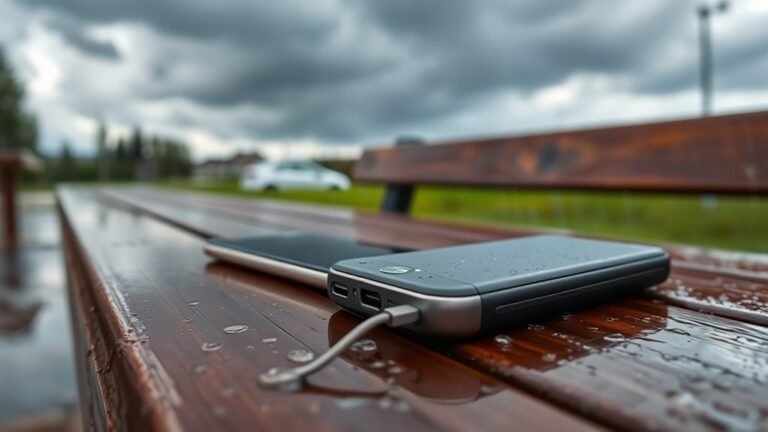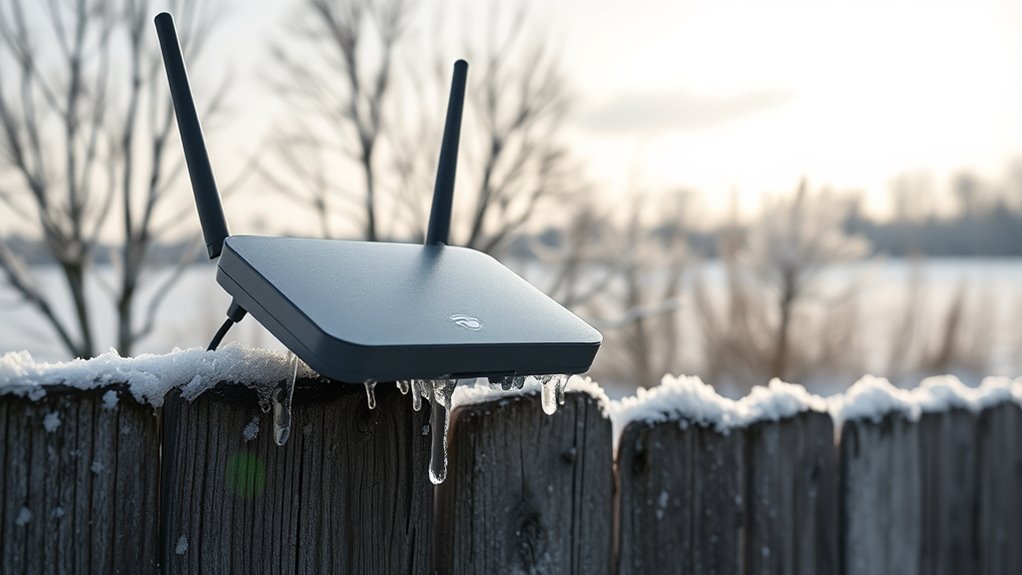
Does Cold Weather Affect WiFi Performance and How to Improve It
Yes, cold weather can definitely affect your WiFi performance.
When temperatures drop, cables can become brittle, batteries may freeze, and ice buildup can block signals.
Additionally, moisture can corrode outdoor equipment, which often leads to slower speeds and dropped connections.
To improve your WiFi performance during chilly days, there are several steps you can take.
First, consider weatherproofing your gear to protect it from the elements.
Also, make sure to clear any snow or ice from antennas to prevent signal blockage.
Using mesh networks or signal boosters can help strengthen weak signals, ensuring better coverage.
Lastly, proper indoor router placement is crucial for maintaining a reliable connection throughout your space.
If you’re curious about more ways to keep your WiFi reliable in cold weather, keep exploring these helpful tips!
How Cold Weather Impacts WiFi Hardware
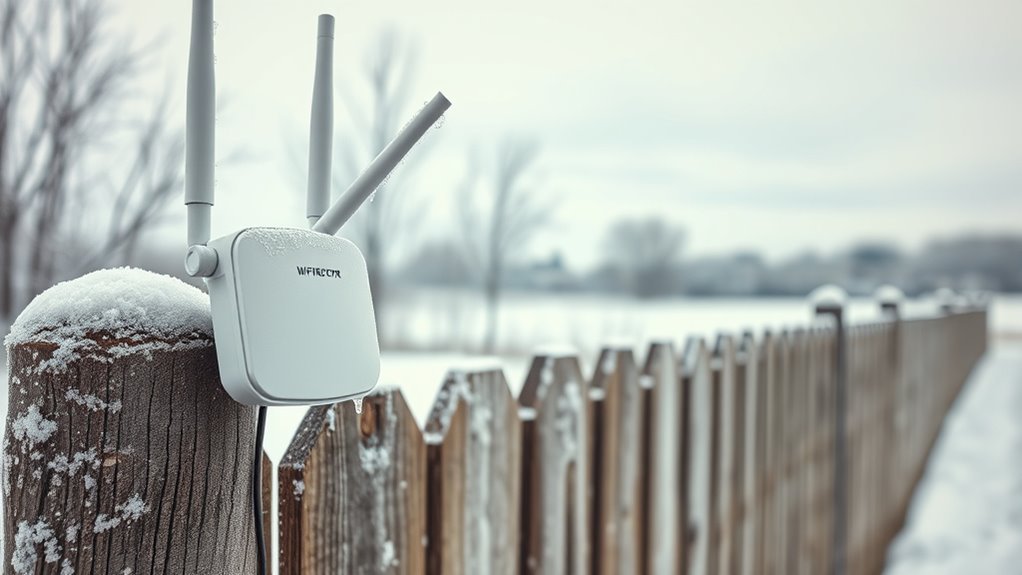
Although cold weather can reduce overheating in your WiFi equipment, it also causes cables and connectors to become brittle and crack. This can lead to signal loss or hardware failure.
When you use outdoor equipment in freezing temperatures, condensation can form inside devices, which increases the risk of hardware failure.
This moisture can corrode sensitive components in your WiFi hardware, damaging performance.
Additionally, cold weather can degrade battery life in portable devices, making them less reliable.
Ice buildup on antennas or satellite dishes can block signals, causing connectivity issues.
Prolonged exposure to low temperatures can slow down your devices or even cause complete failure.
To protect your WiFi hardware, you’ll need to contemplate insulation and waterproofing.
This will help minimize damage from cold weather and maintain strong signal quality.
Effects of Temperature Extremes on Signal Quality
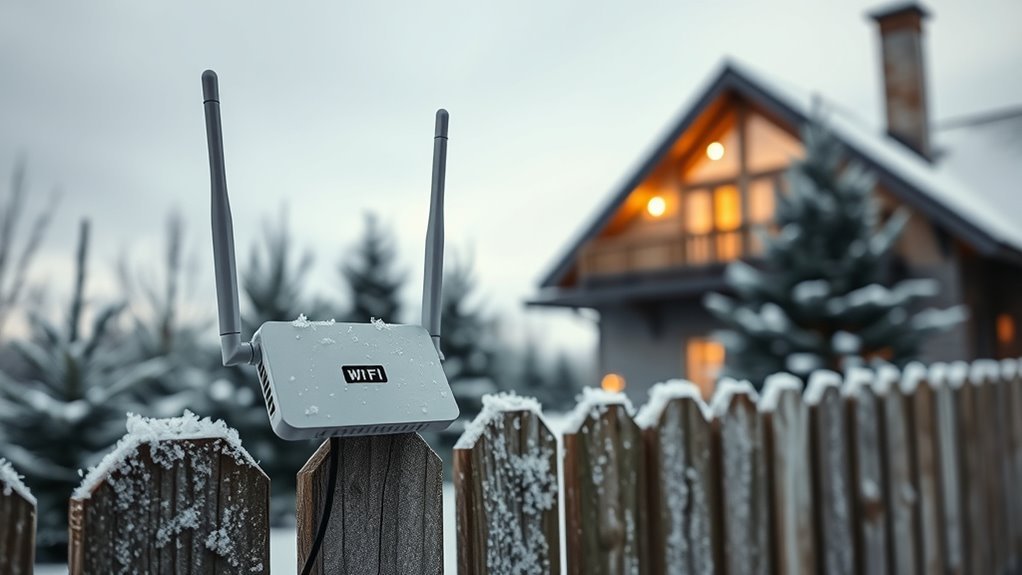
Besides affecting your WiFi hardware, extreme cold also impacts signal quality in several ways.
Cold weather can cause cables to become brittle or crack, leading to signal degradation.
Outdoor WiFi equipment may malfunction or shut down in extreme temperatures if not properly weatherproofed.
Ice buildup on antennas physically blocks signals, while increased wiring resistance weakens signal strength.
| Cause | Effect on Signal Quality |
|---|---|
| Brittle cables | Signal degradation |
| Ice on antennas | Signal blockage |
| Increased wiring resistance | Weaker signal, reduced bandwidth |
| Lack of weatherproofing | Equipment malfunction |
To maintain excellent signal quality, ensure your WiFi equipment is weatherproofed.
Also, consider devices with built-in heating features.
Common WiFi Issues During Winter Months
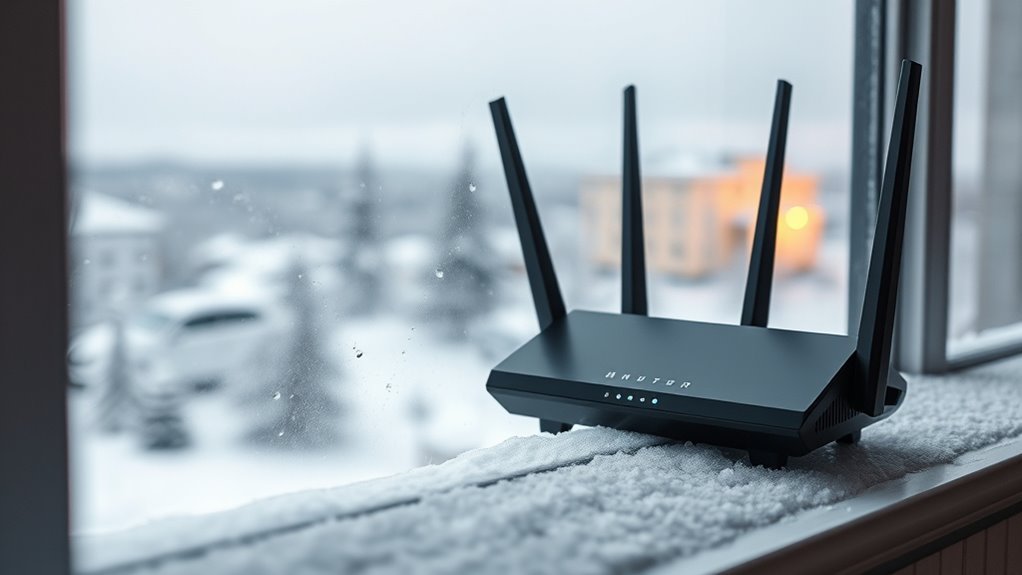
You might notice your WiFi signal weakens when temperatures drop, as cables and hardware become more vulnerable to the cold.
Snow and ice can block signals by accumulating on antennas or dishes, causing interruptions.
Understanding these environmental factors helps you prepare for common connectivity issues during winter months.
Signal Weakness in Cold
When cold weather hits, your WiFi signal can weaken due to several factors.
Outdoor cables and connectors become brittle or crack in cold temperatures, causing signal loss or degradation. Snow and ice buildup on satellite dishes or antennas obstructs the signal, reducing WiFi performance.
Freezing rain can damage outdoor equipment or cause power outages, which indirectly disrupts your connection.
Although some routers may experience thermal shutdowns or reduced efficiency in extreme cold, proper weatherproofing helps maintain stability.
To keep your WiFi strong, regularly check outdoor equipment for weather damage and clear any ice or snow.
Taking these steps ensures your signal remains reliable, even in harsh cold conditions.
Hardware Vulnerability to Cold
Cold weather doesn’t just weaken your WiFi signal—it also puts your hardware at risk.
Outdoor equipment faces serious challenges as brittle materials like plastic casings and insulation contract in freezing temperatures. This brittleness raises the chance of physical damage, such as cracked cables and connectors, which can disrupt your network.
Additionally, condensation can form inside outdoor equipment when temperatures fluctuate, increasing the risk of water damage and eventual hardware failure.
Your router’s electronic components aren’t immune either; cold can impair their performance or even cause shutdowns.
If you rely on outdoor antennas or satellite dishes, freezing can misalign or freeze them, further affecting connectivity.
Protecting your hardware against cold is vital to maintaining stable WiFi during winter months.
Environmental Obstructions Impact
Although winter’s chill can strain your WiFi hardware, environmental obstructions often cause more immediate connectivity issues.
Snow and ice buildup on outdoor WiFi equipment increase signal attenuation, weakening your connection. Falling branches or debris during storms can block line-of-sight signals, leading to signal interference and slower speeds.
If your outdoor hardware isn’t properly weatherproofed, moisture from snow and frost can seep in, causing corrosion or hardware failure.
Additionally, cold temperatures can make cables brittle, raising the risk of physical damage and signal loss.
To maintain reliable connectivity, regularly clear snow from antennas and inspect cables for cracks.
Taking these steps helps minimize environmental impacts and keeps your WiFi running smoothly, even in harsh winter conditions.
Protecting Outdoor Wifi Equipment From Cold Damage
Since outdoor WiFi equipment faces harsh conditions, you need to protect it from cold damage to maintain reliable performance.
Use weatherproof enclosures made of plastic or metal with proper sealing to shield your outdoor equipment from moisture, snow accumulation, and cold winds.
Install antennas and routers in elevated, sheltered spots to minimize wind exposure and prevent snow buildup.
Applying thermal insulation or heating cables can help keep your devices within optimal operating temperatures during freezing spells.
Make sure all connections and cables use waterproof connectors to stop water ingress and freeze damage.
Regularly inspect and clear snow, ice, and debris from your equipment and mounting points.
These steps help avoid physical damage and signal disruption, ensuring your outdoor WiFi stays strong and reliable even in cold weather.
Best Practices for Indoor Router Placement in Cold Climates
Protecting your outdoor WiFi gear from harsh winter conditions is just one part of maintaining a strong connection during colder months.
For ideal indoor router placement, position your router centrally and elevated, away from windows and exterior walls. This helps reduce interference caused by cold weather condensation.
Make sure the area has good ventilation to prevent overheating, especially near heating devices.
Also, avoid placing your router near metal objects or thick insulation. These can weaken signal strength when temperatures cause materials to contract.
Keep your device away from cold drafts or unheated spaces like basements to maintain device stability.
Regularly clean vents and fans to prevent dust buildup that can hamper WiFi performance.
Following these best practices helps you sustain a reliable connection despite cold weather challenges.
Using Insulation and Weatherproofing to Enhance Performance
When you insulate and weatherproof your outdoor WiFi equipment, you keep it running smoothly despite freezing temperatures.
Proper insulation helps maintain temperature control, preventing performance drops caused by cold.
Use weatherproof enclosures and seals on connectors to block moisture ingress, which can freeze and disrupt signal stability.
Wrapping routers and access points in thermal insulation reduces heat loss, shielding them from extreme cold.
Positioning your outdoor equipment in sheltered spots or under protective covers minimizes exposure to snow, ice, and wind, further preserving signal quality.
For harsher conditions, heated enclosures provide added protection by preventing cables and devices from freezing.
Benefits of Mesh Networks and Signal Boosters in Winter
Although winter weather can challenge your WiFi’s reliability, mesh networks and signal boosters help you maintain strong, consistent connections.
Mesh networks provide multiple access points that bypass outdoor obstructions like snow and ice.
Meanwhile, signal boosters amplify weakened signals affected by cold air and moisture.
Together, they enhance WiFi performance and network reliability during harsh winter conditions.
| Feature | Benefit in Winter |
|---|---|
| Mesh Networks | Multiple access points ensure coverage |
| Signal Boosters | Amplify weakened signals |
| Automatic Rerouting | Avoids downtime from damaged nodes |
| Overcomes Attenuation | Compensates for signal loss |
| Improves Reliability | Maintains consistent connections |
Using these tools, you can confidently enjoy uninterrupted WiFi even in extreme cold.
Routine Maintenance Tips to Sustain WiFi Reliability in Cold Weather
You should regularly inspect your outdoor equipment for damage caused by cold weather.
Clear any snow or debris that accumulates.
Make sure cables, connectors, and antennas stay in good condition to avoid signal loss.
Also, keep an eye on your signal strength to catch any issues early and maintain reliable WiFi.
Inspect Outdoor Equipment
Since cold weather can cause ice buildup and snow accumulation, it’s important to inspect your outdoor WiFi equipment regularly. This helps prevent damage and maintain signal quality.
Follow these essential maintenance steps to keep your setup reliable:
- Examine outdoor equipment for ice buildup or any physical damage caused by the cold. Ensure cables and connectors are weatherproofed to avoid freezing or cracking.
- Check the mounting stability of antennas and dishes. Make sure they’re secure and free from ice that can weaken signal strength.
- Consider using heated enclosures or covers designed for outdoor network hardware. They help maintain ideal operating temperatures and prevent freezing issues.
Routine maintenance after extreme cold spells is key. It helps you identify and fix any damage or misalignment promptly, ensuring your WiFi stays strong despite the harsh weather.
Clear Snow and Debris
When snow and ice accumulate on your outdoor WiFi equipment, they can block signals and cause slowdowns.
To maintain strong WiFi signals, regularly clear snow and debris from satellite dishes, antennas, and routers.
Snow buildup causes signal obstruction, reducing performance, so removing it promptly is essential.
Don’t forget to check for fallen leaves, branches, or other debris around your outdoor equipment.
These physical barriers also weaken signals.
Using weather-resistant covers or heaters can help melt snow and keep lines of sight clear.
After heavy snow or ice, make sure to realign your outdoor dishes to optimize signal reception.
Scheduling routine inspections during winter guarantees you catch and address any snow or debris-related issues before they impact your WiFi reliability.
Monitor Signal Strength
Although cold weather can disrupt WiFi signals, regularly monitoring your signal strength helps you catch problems early and maintain reliable connections.
Keep a close eye on your WiFi router’s diagnostics or use third-party apps to track signal strength and spot weather impact.
Don’t forget to inspect outdoor cables and equipment for damage caused by ice or cracks.
Follow these steps to sustain your WiFi reliability in cold weather:
- Check outdoor cables and connectors for cracks or ice buildup that could weaken signals.
- Clear snow from antennas and consider protective covers or heaters to prevent equipment damage.
- Run performance tests regularly during various weather conditions to adjust placement and optimize signal clarity.
Frequently Asked Questions
Why Is My Wi-Fi Not Working in Cold Weather?
Your Wi-Fi isn’t working in cold weather because cold can damage cables or cause ice buildup on antennas, blocking signals.
You should check equipment for damage, clear obstructions, and guarantee devices stay warm and protected.
What Blocks the Wi-Fi Signal the Most?
Walls and metal act like silent gatekeepers, blocking your Wi-Fi signal the most.
You’ll find thick obstructions, large furniture, and water-heavy objects interfere heavily.
Keep your path clear to guarantee your connection flows freely.
Does Temperature Affect Wi-Fi Signal Strength?
Yes, temperature affects Wi-Fi signal strength.
Cold can make cables contract and hardware malfunction.
You should keep devices indoors, use weatherproof gear outside, and regularly check connections to maintain strong, reliable Wi-Fi in cold weather.
Can Extreme Cold Cause Internet Issues?
Yes, extreme cold can cause internet issues by making cables brittle or freezing equipment.
You should weatherproof devices, clear snow from satellite dishes, and guarantee proper placement to keep your connection stable in harsh temperatures.
Conclusion
Just like a winter warrior braves the chill, you can keep your WiFi strong despite the cold.
By protecting your hardware, placing your router wisely, and using insulation or boosters, you’ll conquer those frosty signal drops.
Think of your network as a hearth—when cared for properly, it’ll keep you connected and cozy all season long.
Don’t let winter’s bite freeze your online world; take these steps and surf smoothly through the cold.
In conclusion, cold weather can indeed impact WiFi performance, but with a few simple strategies, you can maintain a strong connection.
Make sure to safeguard your equipment, position your router effectively, and consider using boosters.
By following these tips, you’ll ensure that your online experience remains uninterrupted, no matter how chilly it gets outside. Stay warm and connected this winter!