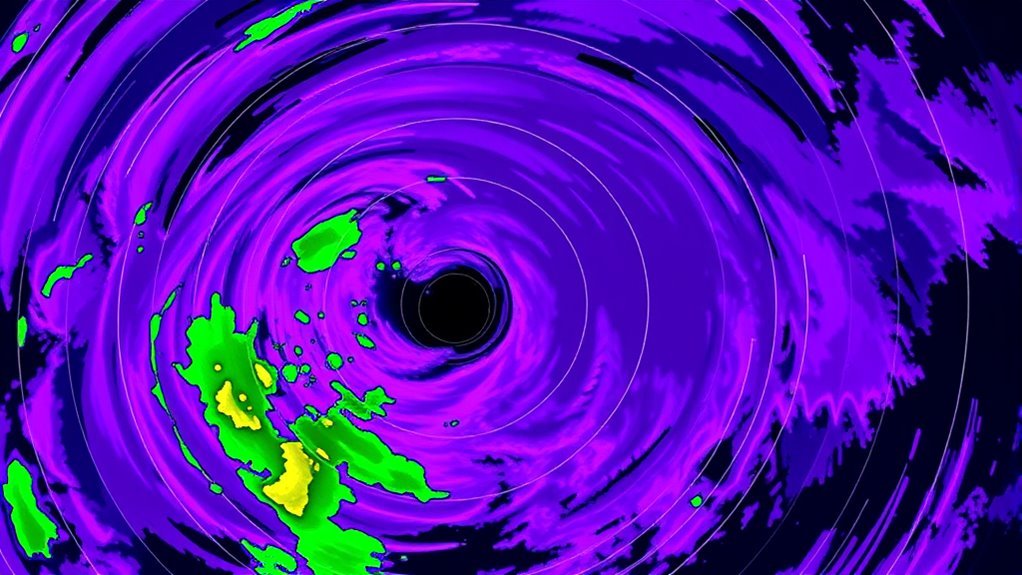
What Does Purple Mean on Weather Radar?
When you see purple on weather radar, it indicates you’re facing severe weather conditions such as large hail, heavy rain, or intense thunderstorms.
This color signals hazardous conditions that require immediate attention and safety precautions.
Purple highlights where storms are at their most powerful and often points to damaging winds or freezing precipitation as well.
It’s crucial to take shelter and stay updated with alerts when you spot purple on the radar.
If you’re curious about why purple stands out and how technology plays a role in identifying these dangers, there’s more to explore ahead.
Understanding Radar Color Codes
Although radar color codes can vary between systems, you’ll often see purple used to signal the most intense and hazardous weather conditions.
When you check weather radar, colors represent different precipitation intensities, with purple typically highlighting severe weather like large hail, heavy snowfall, or intense thunderstorms.
This color stands out because it warns you about extreme conditions that require caution.
In winter, purple might indicate freezing rain or sleet, signaling dangerous travel conditions.
While each radar system might use slightly different color scales, purple consistently marks the highest risk areas.
The Science Behind Purple on Weather Radar

When you see purple on a weather radar, it signals severe weather like hailstorms or intense precipitation.
This color helps you quickly spot hazardous conditions that require your attention.
Understanding how radar interprets these signals can keep you better prepared for extreme weather.
Hailstorm Detection Signals
Since you rely on weather radar to stay safe, understanding the purple areas is essential.
They signal intense storm activity, often indicating large or severe hailstones hitting the ground.
Radar detects hail by analyzing the strength and pattern of return signals.
Hailstones cause higher reflectivity, producing the purple you see on weather maps.
This intense precipitation signature tells meteorologists that a storm is producing damaging hail.
Advanced radar systems differentiate hail from rain by measuring particle size and density.
They mark the most significant hail with purple.
When you spot purple on weather radar, it means the storm is packing serious hail, and you should take precautions.
These hailstorm detection signals help you anticipate dangerous weather and stay informed during severe storms.
Severe Weather Indicators
Why does purple appear on weather radar during severe storms?
Purple signals intense storm activity, often linked to large hail and heavy precipitation.
When radar detects strong bounce-back signals from hail—typically quarter to half dollar size or bigger—it shows up as purple.
This color represents very high reflectivity values, usually exceeding 50 dBZ, making purple a critical severe weather indicator.
Seeing purple means the storm could be producing damaging winds and large hail, posing real danger.
Meteorologists rely on these purple zones to issue warnings and alert you to threatening conditions.
Radar Color Interpretation
How does purple show up on weather radar, and what does it really mean?
When you see purple on radar, it signals intense precipitation—think heavy snow, freezing rain, or severe storms with hail.
Radar uses false color imaging to translate reflectivity values, with purple marking the highest levels.
This means the storm is producing intense weather conditions that could be hazardous.
The radar detects strong bounce-back signals from large hail or dense snow, highlighting these areas in purple to alert you to potential danger.
So, when you spot purple on a weather radar map, know it indicates a storm with powerful precipitation.
This color helps you and meteorologists quickly identify zones of severe weather needing immediate attention.
Types of Weather Associated With Purple Radar Returns
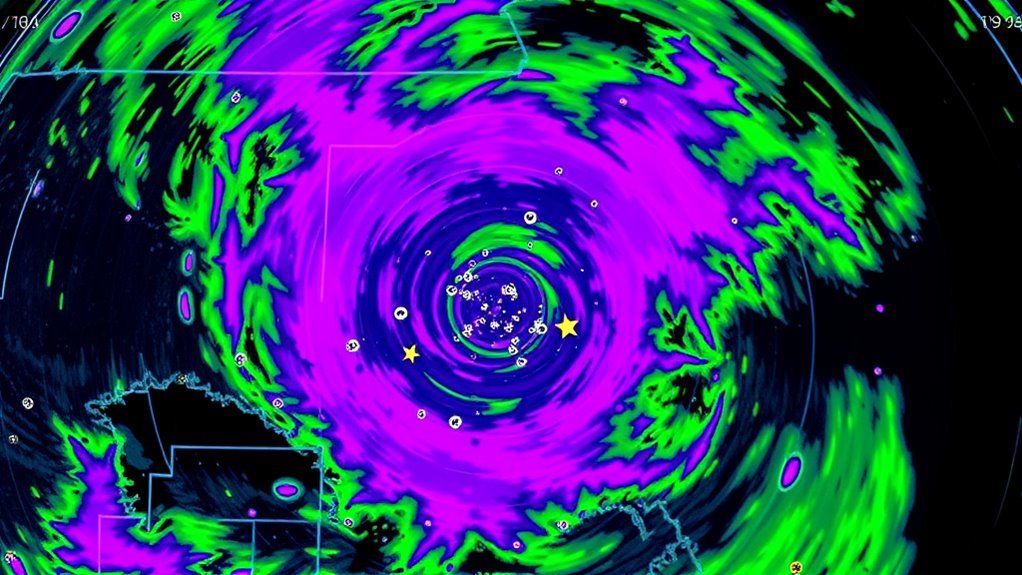
When you see purple on a weather radar, you’re usually looking at intense storm activity like severe thunderstorms or heavy precipitation.
This color often signals areas with freezing rain, sleet, or heavy snow during winter, indicating hazardous conditions you should take seriously.
Purple radar returns highlight the most dangerous parts of a storm, helping you recognize where freezing rain might create slick roads and icy surfaces.
Besides winter threats, purple also points to strong storms with the potential for large hail or damaging winds.
Paying attention to these purple zones can alert you to severe weather warnings, so you can stay safe and prepared when conditions turn severe or icy.
How Purple Indicates Hail and Severe Thunderstorms
Although you might not always notice it, the purple areas on weather radar signal intense storms producing hail that can range from small pellets to dangerous, large stones.
When you see purple, it means a Severe Thunderstorm is likely underway, throwing hailstones that can damage property.
The radar picks up strong reflectivity from these large hail particles, which show up as deep purple zones.
These colors aren’t just for show—they help meteorologists identify where hail is falling or about to fall.
When purple appears, it’s a clear warning that the storm is severe and could produce significant hail.
Differentiating Purple From Other Radar Colors
While radar colors like green and yellow often show lighter precipitation, purple stands out by signaling much more severe weather conditions.
When you see purple on radar, it usually points to intense storm systems or large hail, often quarter size or bigger.
Unlike the softer shades of green and yellow, purple alerts you to potentially hazardous weather that might require immediate attention.
This color helps meteorologists and you quickly spot severe threats amid ordinary rain or drizzle.
Purple’s deep hue marks areas where conditions could escalate, such as severe thunderstorms producing damaging hail.
Interpreting Purple in Winter Weather Conditions
How can you quickly identify dangerous winter weather on radar?
When you see purple areas, it’s a clear sign of freezing rain, sleet, or a mix of winter precipitation.
These purple zones indicate temperatures at or below freezing, which means ice can accumulate on roads, trees, and power lines.
If radar shows purple, expect hazardous travel conditions due to slick surfaces caused by freezing rain.
Sometimes, purple also marks intense winter storms where heavy snow mixes with freezing rain.
This increases the risk of ice buildup.
Meteorologists treat purple on winter radar as a warning for potentially dangerous ice storms or sleet, so you should take safety precautions seriously whenever you spot this color during winter weather events.
The Role of Radar Reflectivity in Weather Analysis
You rely on radar reflectivity to understand how much energy bounces back from precipitation.
This tells you about the size and intensity of the particles.
Different colors on the radar, especially higher reflectivity values like purple, help you quickly interpret storm severity.
Radar Reflectivity Basics
Because radar reflectivity measures the amount of radio energy bounced back by precipitation particles, it gives you a clear picture of storm intensity and rainfall.
Reflectivity values, expressed in decibels, indicate how heavy the precipitation is—higher values mean larger hail or intense rain.
When you look at radar images, reflectivity helps you identify severe weather features like hail cores and heavy rainbands.
Meteorologists rely on the strength of the returned signal to estimate hail size, rainfall rates, and storm severity.
By understanding reflectivity patterns, you can better grasp storm structure and potential dangers.
This basic knowledge is key before you interpret the radar’s colors, which represent varying reflectivity levels and help pinpoint severe weather threats.
Interpreting Radar Colors
Radar colors translate reflectivity values into visual cues that reveal storm intensity at a glance.
When you look at weather radar, purple typically signals very high radar reflectivity, usually above 55 dBZ.
This intense color highlights areas with strong precipitation, often linked to severe weather like large hail or powerful storm cores.
Understanding radar reflectivity helps you recognize zones where dangerous conditions—such as heavy rain or hail larger than a quarter—may occur.
Meteorologists rely on these color cues to issue warnings and keep you safe.
Satellite Support for Radar Observations
While radar provides detailed information about precipitation and storm structure, satellite imagery plays a crucial role in giving you a wider perspective of weather systems from above.
Satellites like GOES-16 detect temperature differences, revealing storm development and low-pressure areas.
They use false color images—purple included—to highlight intense atmospheric activity.
By combining satellite data with radar, meteorologists can confirm weather fronts and track evolving hazards more accurately.
| Feature | Role of Satellites |
|---|---|
| Imagery Types | Infrared, visible, false color |
| Temperature Detection | Identifies atmospheric temperature |
| Activity Highlight | Purple shows severe storms or snowfall |
| System Tracking | Confirms fronts and precipitation |
| Forecast Improvement | Enhances radar data for accuracy |
Satellites truly expand your understanding beyond radar alone.
Safety Measures When Purple Appears on the Radar
When purple shows up on the radar, you need to act fast by seeking shelter indoors and staying away from windows.
Make sure you have an emergency kit ready and find a sturdy, windowless room to wait out the storm.
Staying alert to local weather warnings will help you stay prepared and safe.
Immediate Protective Actions
Because purple on the weather radar signals severe threats like large hail or intense storms, you should immediately seek shelter indoors, away from windows.
Ideally, find the lowest interior part of your building.
Taking protective actions quickly can save your life, especially if tornado warnings accompany the radar.
Stay updated with weather alerts and avoid going outside until the danger passes.
| Protective Action | Reason |
|---|---|
| Seek lowest interior room | Minimizes exposure to debris |
| Avoid windows | Prevents injury from shattered glass |
| Use sturdy shelter | Protects against strong winds |
| Stay informed | Alerts to rapidly worsening conditions |
| Prepare emergency kit | Essential for power outages or injuries |
Emergency Preparedness Tips
Recognizing purple on the radar means you need to act fast and take specific steps to stay safe.
Purple signals severe weather like large hail or intense winter storms, so your emergency preparedness is vital.
First, seek shelter indoors, away from windows, and avoid traveling until conditions improve.
Keep a well-stocked emergency kit ready with essentials such as water, non-perishable food, batteries, and a flashlight in case the storm lasts longer than expected.
Stay alert by monitoring official weather alerts from local authorities or the National Weather Service through apps, radio, or broadcasts.
These real-time updates will guide you on when it’s safe to resume normal activities.
Taking these emergency preparedness steps helps protect you and your loved ones during purple radar events.
Advances in Radar Technology for Severe Weather Detection
As you track severe storms, modern radar technology gives you clearer insights than ever before.
Dual-polarization radar helps you distinguish rain, snow, and hail, so you know exactly what’s falling.
Doppler radar lets you measure wind speed and direction inside storms, giving you early warning of dangerous conditions.
Phased-array radar scans faster and with higher resolution, improving real-time storm monitoring.
Enhanced algorithms analyze reflected signals, highlighting intense activity with purple zones on your radar display—signaling severe weather threats like large hail or heavy snowfall.
False-color imaging further emphasizes these extreme phenomena, making it easier for you to identify and respond to severe weather quickly.
Thanks to these advances, you get more precise, timely information to stay safe during storms.
Frequently Asked Questions
What Does the Purple Mean on Radar?
Purple on radar means you’re looking at intense weather like heavy snow, freezing rain, or severe storms.
You should stay alert since it signals hazardous conditions that might require you to take safety precautions or heed warnings.
Does Purple Mean Heavy Snow?
Yes, purple usually means heavy snow or freezing rain, signaling intense winter precipitation.
When you see purple on radar, expect significant snowfall or icy conditions that could create hazardous travel.
Always remember to exercise extra caution in these situations.
Does Purple Mean Freezing Rain?
You probably hoped purple meant something fun, but nope—it usually means freezing rain.
What Do the Colors Mean on the Weather Radar?
Colors on weather radar show precipitation type and intensity.
Greens mean light rain, yellows moderate, reds heavy rain or storms, and purple signals severe weather like hail or freezing rain.
You can quickly spot dangerous conditions this way.
Conclusion
When you see purple on your weather radar, it’s not just a color—it’s a warning.
Coincidentally, that same shade often signals the most intense storms, like hail or severe thunderstorms, demanding your attention.
By understanding this color, you’re better prepared to act quickly and stay safe.
So next time purple appears, remember: it’s more than a hue; it’s your radar’s urgent way of telling you to take weather threats seriously.
In conclusion, purple on the weather radar indicates severe weather conditions, including intense storms and potential hail.
Recognizing this color can help you react swiftly and ensure your safety.
Stay alert and informed when you spot purple, as it’s a clear signal to take weather threats seriously and prepare for possible severe weather impacts.