How Long to Hang Deer Safely in 60 Degree Weather
You can safely hang your deer for up to three hours in 60°F weather before spoilage risks rise sharply.
At this temperature, bacteria multiply quickly, so prompt gutting and cooling are essential to keep the meat fresh.
Use ice packs inside the cavity and hang in shaded, ventilated spots to slow spoilage.
Hanging longer than three hours increases health hazards and toughness.
To keep your venison safe and tasty, it helps to understand proper handling and cooling techniques.
Understanding Optimal Temperature for Hanging Deer
Although hanging deer at the right temperature is crucial, many hunters overlook how sensitive the process is to heat.
You need to keep the internal temperature of the deer between 35°F and 45°F for proper aging and safety.
If the body cavity doesn’t cool quickly enough, bacteria can grow rapidly, spoiling the meat.
Maintaining this temperature range allows natural enzymes to tenderize the meat while developing flavor.
Proper temperature lets enzymes tenderize meat and enhance its rich flavor during aging.
When the internal temperature rises above 50°F, you risk shortening the safe hanging time to just a few hours.
To avoid this, monitor the deer’s body cavity temperature closely and consider additional cooling steps if necessary.
Keeping the deer within the ideal range ensures your venison stays safe and delicious during the aging process.
Effects of 60 Degree Weather on Venison Quality
When hanging deer in 60°F weather, you need to act quickly because spoilage starts within a few hours.
Temperatures above 50°F speed up bacterial growth, mold, and enzyme activity, which can ruin your venison.
To keep quality high, you should cool or process the carcass within two hours or use ice to slow down these effects.
Temperature Impact on Aging
If you hang a deer in 60°F weather, you need to act quickly because bacterial growth speeds up considerably at this temperature.
The body’s natural enzymes that tenderize meat work best between 34-45°F, but at 60°F, this process slows down while bacteria multiply rapidly.
This means the aging process is compromised, and spoilage can start within 4 to 6 hours.
To preserve meat quality, you should limit hanging time to no more than three hours at this temperature.
After that, bacterial contamination risks increase, and enzymatic tenderization is hindered.
To keep your venison safe and tender, move it to a cooler environment below 40°F as soon as possible.
Temperature control directly impacts how well the deer’s body ages, so don’t delay.
Spoilage Risks Above 50°F
Keeping your venison at 60°F speeds up bacterial growth and puts the meat at serious risk of spoilage within just a few hours.
At this temperature, bacteria multiply rapidly, making it unsafe to hang your deer for more than 3 hours.
The USDA recommends processing or refrigerating game within 1-2 hours when temperatures climb above 50°F to minimize bacterial proliferation and maintain meat quality.
If left too long at 60°F, surface mold and bacterial slime can form within 4-6 hours, further compromising your venison.
To avoid spoilage, act quickly by cooling or processing the meat promptly.
Managing the temperature is vital; hanging deer safely means recognizing that 60°F is too warm for extended aging, putting your venison’s safety and flavor at risk.
Mold and Enzyme Activity
Although 60°F can encourage some mold growth that enhances venison’s flavor, the temperature also slows enzyme activity that tenderizes the meat.
This limits the benefits of aging beyond a day or two. At this temperature, mold can develop within 24 to 48 hours, helping natural aging, but you need to control it carefully to avoid spoilage.
Enzyme activity, which breaks down muscle fibers for tenderness, slows markedly at 60°F. So, you won’t get the same tenderizing effect as you would at the ideal 35-45°F range.
To maximize mold’s positive effects without risking spoilage, hang your deer for only 1-2 days in well-ventilated conditions.
Beyond that, slowed enzyme activity and unchecked mold growth can compromise venison quality rather than improve it.
Risks of Extended Hanging in Warm Conditions
If you hang deer too long in warm conditions, bacteria can multiply quickly, leading to spoilage.
Keeping the meat cool is vital because the internal temperature stays high for hours after the animal is downed.
Don’t risk waiting—process or refrigerate your game promptly to keep it safe and fresh.
Accelerated Bacterial Growth
When you hang a deer in 60°F weather, bacterial growth can start within just 1 to 2 hours after harvest.
The temperature of the meat remains elevated, creating a perfect environment for bacteria to multiply quickly.
If you leave the carcass hanging beyond 3 hours, the risk of spoilage and health hazards rises sharply.
To keep your meat safe, process or cool it promptly.
| Time Hanging | Bacterial Growth | Temperature of Meat |
|---|---|---|
| 0 – 1 hour | Minimal | High |
| 1 – 2 hours | Starting | Elevated |
| 2 – 3 hours | Rapid Increase | Dropping Slightly |
| 3+ hours | Significant Risk | Cooling But Unsafe |
Meat Spoilage Risks
Since 60°F creates an ideal environment for bacteria to multiply quickly, leaving your deer hanging beyond 3 hours without proper cooling puts the meat at serious risk of spoilage.
At this temperature, surface bacteria and natural pathogens can double rapidly, making the meat unsafe in just a few hours.
Meat spoilage happens fast when the temperature stays around 60°F, so you can’t afford to delay processing.
To minimize risks, you need to either hang the deer for a very short time or use cooling methods like adding ice to keep the temperature down.
Ignoring these precautions means the meat will spoil, losing quality and safety.
Always prioritize temperature control to protect your harvest and prevent meat spoilage in warm conditions.
Safe Hanging Duration at 60°F
Although 60°F might seem cool enough, you shouldn’t hang a deer longer than 2 to 3 hours without cooling it down to prevent bacterial growth and spoilage.
When you deer hang at this temperature, prompt action is essential. Cooling within the first hour by ice or refrigeration slows spoilage.
Avoid direct sunlight and ensure airflow and shade to maintain the ideal conditions.
| Time Hanging | Risk Level |
|---|---|
| 0-1 hour | Safe |
| 1-2 hours | Low risk |
| 2-3 hours | Moderate risk |
| Over 3 hours | High risk |
Keep the temperature steady and act quickly to protect your meat’s quality.
Signs of Spoilage to Watch For
If you notice any unusual colors, textures, or smells on your hanging deer, it’s crucial to recognize these as signs of spoilage.
Look out for green or yellow slime on the meat, which signals bacterial growth caused by body heat and environmental conditions.
Discoloration like darkening or graying also indicates spoilage.
Pay attention to texture; slimy or sticky surfaces mean bacterial activity has taken hold.
A strong, foul, sour, or rotten smell is another clear warning that the venison isn’t safe to eat.
Finally, the presence of maggots or insects shows advanced decay and makes the meat unsafe.
Temperature Management Techniques
When hanging a deer in 60-degree weather, you’ll need to keep the temperature consistently below 40°F to prevent spoilage.
One effective technique is placing frozen water jugs or ice directly in the cavity to help regulate the internal temperature and slow bacterial growth.
Always hang the deer in a shaded, well-ventilated spot to minimize temperature fluctuations.
Hang deer in a shaded, well-ventilated area to maintain steady temperatures and ensure quality.
Removing the hide and gutting the deer promptly is vital since it reduces insulation and helps the carcass cool faster.
Make sure to monitor the carcass temperature regularly with a probe thermometer, focusing on the cavity and other key spots, to guarantee it stays within the safe range.
These steps will help you manage temperature effectively and keep your deer safe during the hanging process.
Practical Tips for Hunters in Warm Weather
Since warm weather accelerates bacterial growth, you’ll need to act quickly to keep your deer safe and fresh.
In 60°F conditions, hang your deer no longer than 2-3 hours to prevent spoilage.
To extend safe hanging time, place frozen jugs or ice packs inside the cavity, which helps keep the carcass cool.
Prompt skinning is essential—it cools the meat faster and cuts down on bacteria growth.
Always check your deer for any signs of spoilage, like a bad odor or slimy texture.
If you notice anything off, process it immediately.
Best Practices for Field Dressing and Cooling
You need to field dress your deer within the first hour to remove internal heat and slow bacterial growth.
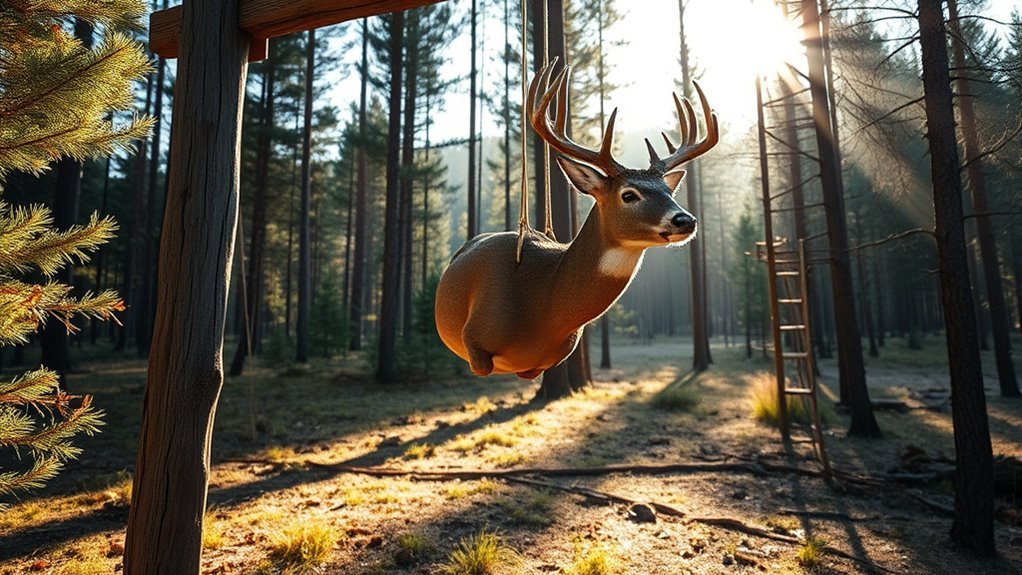
Make sure to hang the carcass in a cool, shaded area with good airflow.
Consider adding ice inside the cavity to keep temperatures below 60°F.
Proper temperature control is key to preserving your meat before processing or refrigeration within a few hours.
Immediate Gut Removal
How quickly do you need to remove the guts after harvesting a deer?
Ideally, you should field dress the deer immediately, especially if it’s a gut shot, to minimize internal bacterial contamination.
Use a sharp knife to carefully open the abdomen and remove all gut contents within the first hour.
This quick action prevents spoilage and helps preserve the meat’s quality.
Once field dressed, keep the carcass out of direct sunlight and in a shaded, cool area during transport.
Prompt gut removal, combined with proper cooling, is essential to maintain freshness.
If possible, remove the hide right away to speed up cooling and avoid moisture buildup, which promotes bacterial growth.
Acting fast here sets the stage for safe, long hang times in 60-degree weather.
Temperature Control Methods
While field dressing removes the internal organs and reduces heat buildup, controlling the temperature of the deer carcass afterward is essential to slow bacterial growth and preserve meat quality.
You should hang the deer in a cool, shaded spot with good air circulation, aiming for an internal temperature between 35-45°F.
Use frozen water jugs or ice packs inside the body cavity to help maintain this temperature, especially in warmer weather.
Regularly check the internal temperature and condition, removing ice as it melts to avoid excess moisture.
| Action | Purpose |
|---|---|
| Immediate gut removal | Reduce internal heat |
| Hang in shade & ventilate | Maintain cooler ambient temperature |
| Use ice packs internally | Regulate internal temperature |
| Monitor temperature | Ensure ideal cooling |
| Remove melted ice promptly | Prevent moisture buildup |
Using Ice and Refrigeration to Preserve Venison
When you use ice inside the carcass cavity, you can keep the internal temperature below 40°F even in 60-degree weather. This helps extend the safe hanging time of your venison.
Placing crushed ice or ice packs inside the body cavity creates a cold environment that lasts up to 24 hours. To maintain this, you’ll need to regularly replace or add ice, which prevents bacterial growth and spoilage.
Using refrigeration or temperature-controlled coolers offers an even more reliable way to preserve your venison. It keeps the meat at a safe 34-38°F for several days.
Wrapping the carcass in plastic or a tarp over the ice minimizes moisture loss and keeps contaminants away. This ensures your meat stays fresh and safe during the cooling process.
Monitoring and Handling During the Hanging Process
To keep your venison safe and fresh during the hanging process, you’ll need to monitor the carcass closely at least twice a day.
Check for temperature, smell, and any signs of spoilage. Proper handling is essential: remove guts promptly and place frozen water jugs inside the cavity to maintain cooler internal temperatures.
Always hang the deer in a shaded, well-ventilated area to avoid heat buildup.
Remember, in 60°F weather, process or refrigerate your meat within 3 hours of hanging to preserve quality and safety.
| Monitoring Focus | Handling Tip |
|---|---|
| Temperature check | Use frozen water jugs inside |
| Smell for spoilage | Remove guts promptly |
| Inspect for insects | Hang in shade, ventilated area |
| Check every 12 hours | Refrigerate within 3 hours |
Frequently Asked Questions
Can You Hang a Deer Overnight in 60 Degree Weather?
You shouldn’t hang a deer overnight in 60-degree weather because bacteria grow quickly.
Instead, you need to process or cool it within 1-2 hours.
Using ice packs if necessary is a good idea to keep the meat safe and fresh.
How Long Can You Let a Deer Hang Before It Goes Bad?
You shouldn’t hang a deer longer than 1 to 3 hours at 60°F before it risks going bad.
Process or cool it quickly, especially within the first 2 hours, to keep the meat safe and fresh.
Staying on top of this is key for maintaining quality!
What Temperature Is Too Cold to Hang a Deer?
You shouldn’t hang deer below 20°F because freezing stops enzymes that tenderize the meat.
If you hang it too cold, you risk ruining the texture and flavor, wasting all your hard work and patience.
What Is the 7 Day Deer Rule?
The 7 Day Deer Rule means you can hang a deer up to seven days in cold, consistent temperatures below 45°F to improve tenderness and flavor.
Warmer temps require shorter hanging times to avoid spoilage.
Conclusion
When hanging a deer in 60-degree weather, you’ve got a narrow window—usually no more than 24 hours—to keep the meat safe and tasty.
Imagine you’re out hunting, and the afternoon warms up unexpectedly.
By using ice packs and moving your deer to a cooler spot quickly, you prevent spoilage.
Staying vigilant and acting fast guarantees your venison remains fresh.
This way, you can enjoy that hard-earned meal without worry.
In conclusion, when dealing with warmer temperatures like 60 degrees, it’s crucial to monitor the time closely.
Use ice packs and find shaded areas to hang your deer to ensure the meat stays safe.
Being proactive in this process will not only preserve the quality of your venison but also enhance your dining experience.
Remember, a few extra steps can make all the difference in enjoying your meal later!