Can Bed Bugs Survive Cold Weather and How to Use Cold to Eliminate Them
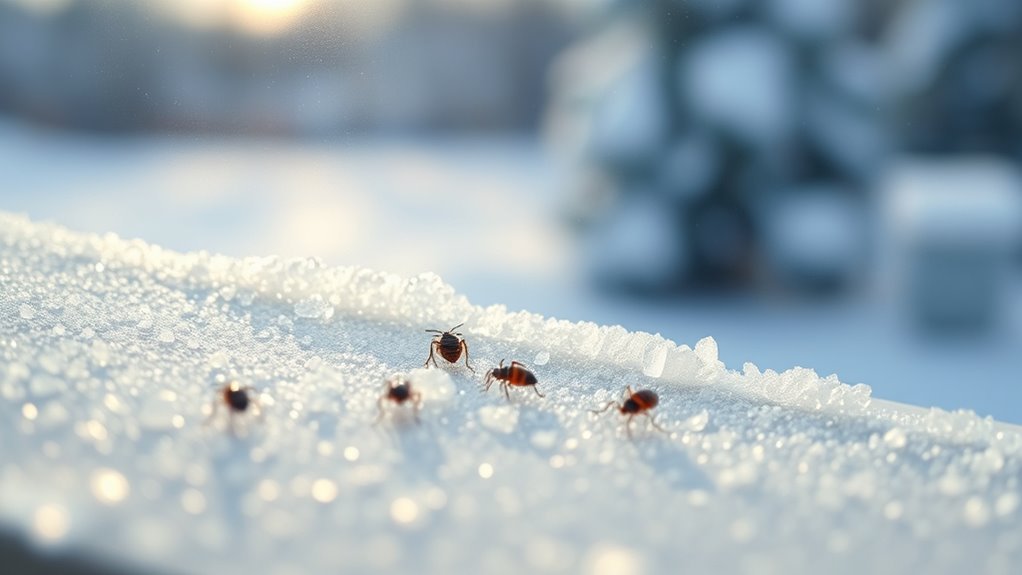
You might think cold weather would kill bed bugs, but the reality is quite different. These pesky pests can survive temperatures just above freezing and can even tolerate short bursts near -13°F.
To effectively eliminate them, you need to expose infested items to 0°F (-18°C) or below for at least 2-4 days.
Sealing your belongings in plastic bags is a smart move as it helps guarantee full cold penetration.
While freezing works well for small items, indoor temperatures usually aren’t low enough to kill bed bugs.
So, understanding the right cold treatment strategy is key to ensuring these bugs are eliminated.
Bed Bug Adaptability to Cold Temperatures
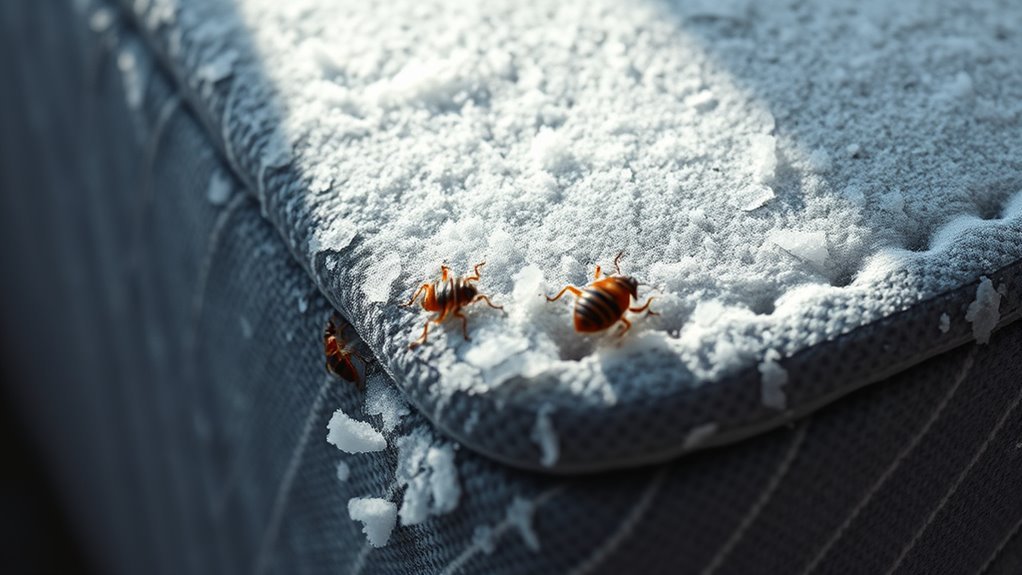
Although bed bugs become less active below 46°F, they can survive in surprisingly cold temperatures.
In fact, they can endure short bursts as low as -13°F. This cold tolerance is impressive and helps them persist in environments you might think are too harsh.
When freezing bed bugs, you’ll need to expose them to extreme cold—below 0°F—for several days to ensure they die.
Their temperature resistance varies by life stage, with bed bug eggs showing remarkable resilience compared to nymphs and adults.
This adaptability is partly due to their ancestors evolving in cooler cave environments.
The Science Behind Bed Bug Cold Tolerance
Understanding why bed bugs withstand cold temperatures requires examining the biological mechanisms behind their survival.
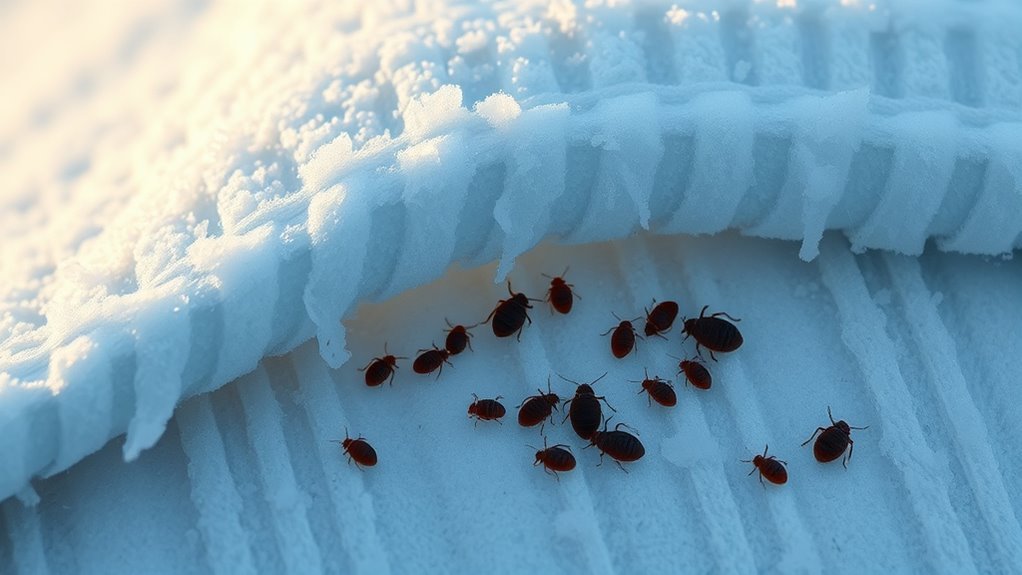
Bed bugs exhibit remarkable cold tolerance due to antifreeze-like substances in their body fluids that lower their freezing point, preventing ice formation.
They use supercooling, a freeze-intolerant adaptation, allowing their bodily fluids to stay unfrozen during short-term exposure to cold.
However, all life stages—eggs, nymphs, and adults—show different levels of resilience, with eggs generally more resistant.
To achieve complete mortality, you’ll need prolonged exposure to temperatures below 0°F (-18°C) for at least 48 to 80 hours.
Research shows that keeping bed bugs at -16°C (3.2°F) for 80 hours ensures 100% mortality across all life stages.
This scientific understanding helps you effectively target bed bugs with cold treatments.
How Cold Weather Affects Bed Bug Survival Indoors
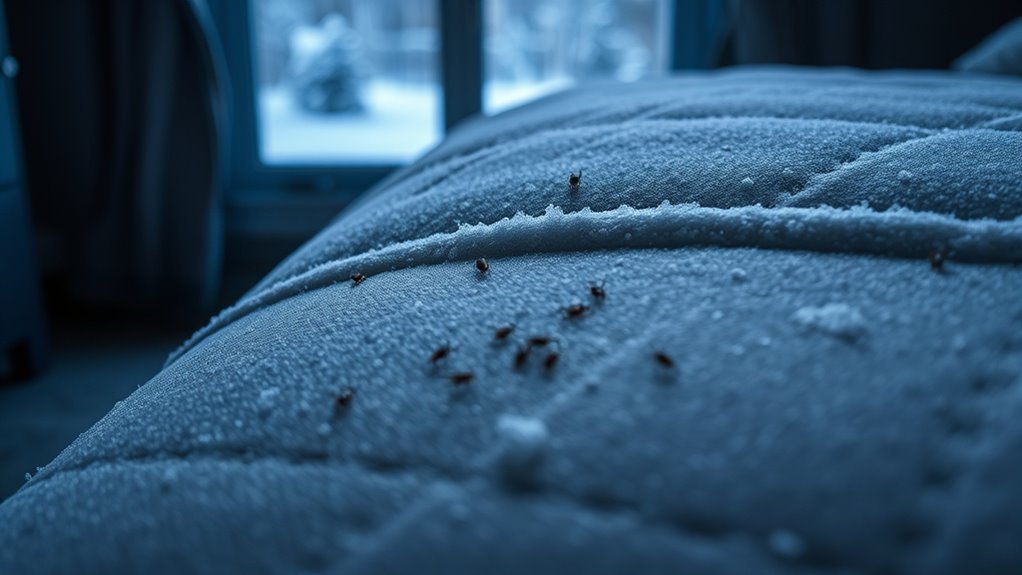
While cold weather can reduce bed bug activity, these pests often survive indoors because typical home temperatures rarely drop low enough to kill them.
In your indoor environment, temperatures usually stay above 46°F, allowing bed bugs to remain active, hide in furniture, and continue reproducing.
Since most homes maintain warmth, cold weather outside doesn’t translate to effective elimination inside.
Bed bugs avoid colder, less accessible areas and cluster near hosts, keeping themselves protected from temperature drops.
To truly eliminate bed bugs using cold, you’d need prolonged exposure below 14°F, which indoor settings don’t provide naturally.
Understanding how temperature influences bed bug survival indoors helps you realize why cold weather alone isn’t enough for elimination without controlled freezing methods.
Using Freezing as a Method to Control Bed Bugs
If you want to eliminate bed bugs without chemicals, freezing offers an effective option.
By freezing infested items at 0°F (-18°C) or below for at least four days, you can kill bed bugs at every life stage, including eggs.
To guarantee success, seal items properly in plastic bags so the cold penetrates fully.
Small belongings like clothing and bedding respond well to this cold treatment, while larger or fragile objects might not be practical.
Maintaining the correct temperature throughout the process is vital, especially inside the core of the item.
Professionals often use specialized cold treatment equipment to guarantee thorough pest control.
Using freezing to kill bed bugs provides a chemical-free, reliable method for managing infestations in suitable items.
Practical Guidelines for Freezing Infested Items
Freezing infested items effectively requires following specific guidelines to guarantee the cold reaches every part of the belongings.
First, seal infested items in plastic bags to prevent re-infestation and protect contents.
Next, freeze them at or below 0°F (-18°C) for 2-4 days to kill all bed bug life stages.
Make sure to confirm your freezer maintains a consistent temperature and that the cold penetrates the entire item, especially the core.
Smaller, non-porous items like clothing and electronics are best suited for freezing.
| Step | Recommendation |
|---|---|
| Sealing | Use airtight plastic bags |
| Freezing Duration | 2-4 days at ≤ 0°F (-18°C) |
| Item Selection | Small, non-porous objects only |
Limitations and Challenges of Cold Treatment for Bed Bugs
Because bed bugs and their eggs can survive brief exposure to extreme cold, you’ll face several challenges when using cold treatment.
Household freezers often don’t reach or maintain the necessary temperature below 0°F (-18°C) for at least four days, which is essential to kill all bed bugs and eggs.
Eggs are especially resilient, sometimes surviving even at -25°C if exposure is too short.
You’ll also struggle to ensure uniform cold exposure, particularly with large or insulated items, risking some bed bugs surviving in warmer spots.
Without precise temperature monitoring—usually requiring specialized equipment—it’s tough to verify if cold treatment is effective.
Integrating Cold Methods With Professional Pest Control
While cold treatments can be effective, you’ll achieve the best results by combining them with professional pest control services.
Professionals use specialized equipment to freeze bed bugs at a temperature as low as 0°F (-18°C) for at least four days, guaranteeing complete elimination.
They also integrate cold treatment into an extensive pest management plan, including inspection and targeted extermination.
| Aspect | Benefit |
|---|---|
| Professional Equipment | Maintains required low temperatures |
| Proper Sealing | Enhances cold penetration |
| Integrated Management | Combines cold treatment with cleaning |
Relying solely on DIY freezing often fails since home freezers may not reach or sustain the necessary temperature.
Partnering with professional pest control ensures thorough and effective bed bug eradication.
Frequently Asked Questions
How Long Does It Take Bed Bugs to Die in the Cold?
Bed bugs die in about four days if you keep them at or below 0°F (-18°C).
Warmer temperatures take longer, so you’ll need to maintain consistent cold to guarantee they don’t survive.
How Did They Get Rid of Bed Bugs in the Old Days?
You’d get rid of bed bugs by exposing bedding to sunlight or fires, using steam or boiling water on infested items,
manually vacuuming, washing with hot water, or placing items outside in freezing weather if it was cold enough.
What Do Bed Bugs Hate the Most?
You’d think bed bugs love cozy darkness, but ironically, they hate bright lights, strong smells like cedarwood and peppermint, and cold temps.
Will Bed Bugs Come Back After Freezing?
Yes, bed bugs can come back after freezing if you don’t freeze the entire infestation thoroughly or miss eggs.
To prevent their return, make sure to treat all areas and items.
Combining freezing with other control methods is essential for effective results.
Conclusion
You might think cold weather is a bed bug’s worst enemy, and to some extent, it is—but these tiny pests are tougher than a winter frostbite.
While freezing can zap those creepy crawlies hiding in your belongings, it’s not a magic wand.
You’ll need to combine cold treatments with professional help to truly send bed bugs packing.
Remember, beating bed bugs is like a chess game—you’ve got to think several moves ahead.
In conclusion, while cold temperatures can help in eliminating bed bugs, they are not a standalone solution.
For effective bed bug control, it’s essential to integrate freezing methods with professional pest control services.
This comprehensive strategy will ensure you effectively combat these resilient pests and reclaim your space.