Do Bed Bugs Die in Cold Weather?
You won’t kill bed bugs with typical cold weather because they survive temperatures above 46°F.
They stay active indoors during winter, making it difficult to eliminate them just by relying on the cold.
To truly get rid of them, you need sustained freezing at or below 0°F for at least four days.
That’s really hard to achieve naturally. Quick drops in temperature won’t do the trick since eggs and hidden bugs resist short cold spells.
Keep going to uncover how different treatments and hiding spots impact your fight against these pests.
Understanding their survival tactics can help you develop a more effective plan to eliminate these unwanted guests.
How Temperature Affects Bed Bug Survival
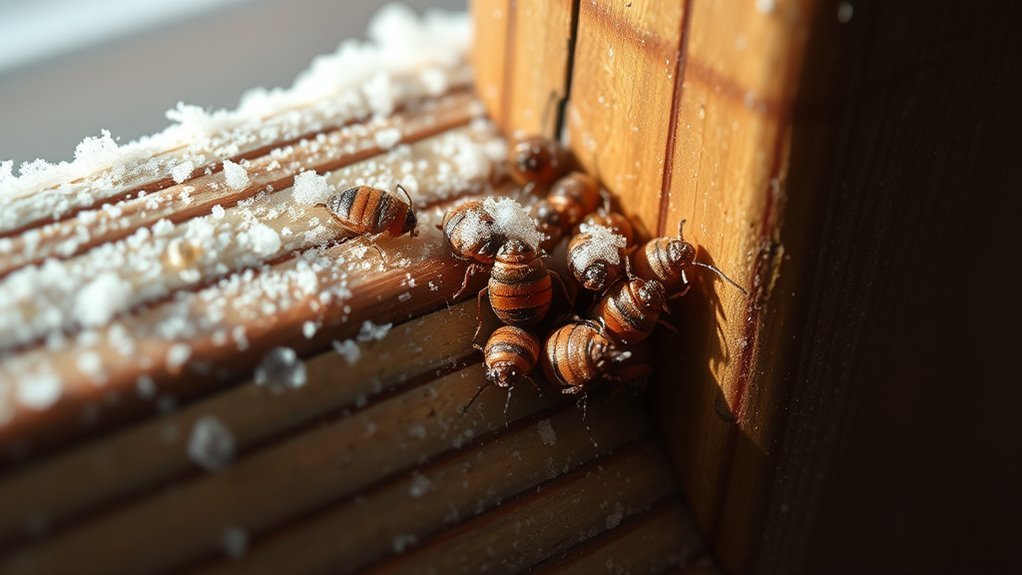
Although bed bugs can survive brief cold spells, they begin to die once temperatures drop below 46°F (8°C).
You need prolonged exposure to freezing temperatures—specifically 0°F (-18°C) for at least four days—to eliminate all life stages, including eggs.
Cold temperatures alone won’t kill bed bugs quickly; instead, extended exposure to freezing temperatures is essential to disrupt egg survival and fully eradicate infestations.
Since indoor environments rarely reach these temperature thresholds naturally, relying on winter cold won’t control bed bugs effectively.
Human activity, such as using professional freezing equipment, guarantees the entire infestation faces lethal cold temperatures.
Understanding how temperature affects bed bug survival helps you recognize why only sustained, intense cold can truly kill bed bugs and prevent their return.
Can Bed Bugs Survive Typical Winter Conditions?
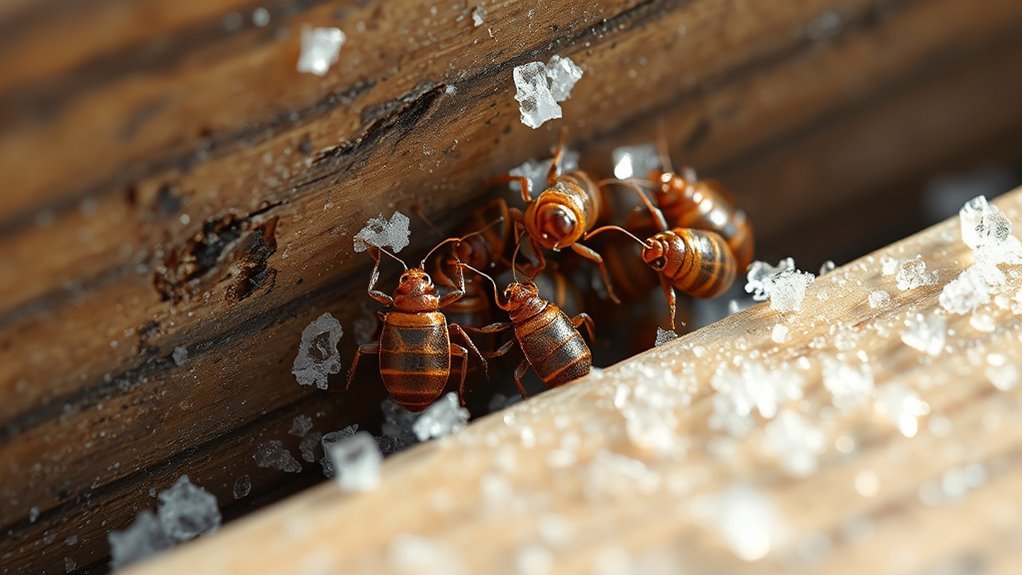
Understanding the temperatures bed bugs can withstand helps explain why typical winter conditions rarely eliminate them.
Bed bugs can survive low temperature ranges, even down to 46°F, and will remain active in heated indoor environments during winter weather.
Most homes don’t reach freezing or below, so these pests continue to survive and feed.
While cold treatment is necessary to kill bed bugs, typical freezing temperatures around 32°F aren’t enough for rapid elimination; it can take weeks to be effective.
Bed bugs can find sheltered spots that provide consistent warmth and blood meals, letting them endure cold conditions for months.
The Effectiveness of Freezing Temperatures on Bed Bugs
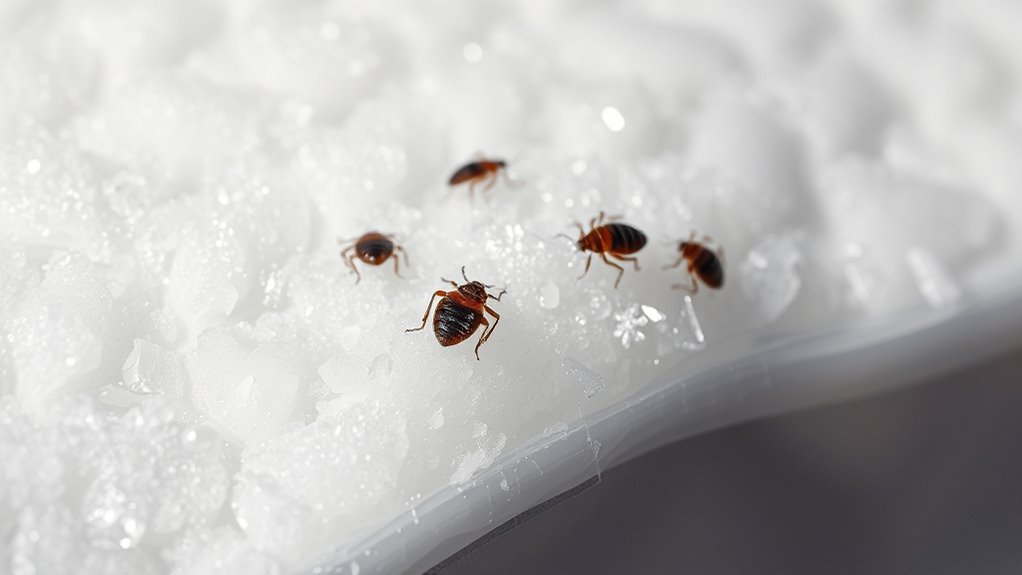
When you want to eliminate bed bugs using freezing temperatures, you need to be aware that simply placing items in a typical home freezer often won’t do the trick.
Bed bugs start to die below 14°F (-10°C), but to kill all life stages—including eggs—you need extended exposure at or below the freezing point of 0°F (-18°C) for at least four days.
Many DIY freezers can’t maintain these cold weather conditions throughout the entire item, especially its core, making complete eradication unlikely.
Professional treatments use specialized equipment that generates much colder temperatures, ensuring all bed bugs freeze thoroughly.
How Heat Treatments Compare to Cold Treatments
If you want to choose between heat and cold treatments for bed bugs, knowing how each method works can help you make the best decision.
Heat treatments kill all bed bug life stages quickly by reaching temperature thresholds of 119°F for adults and above 125°F for eggs, usually in 3-5 hours.
Cold treatments require prolonged exposure to extreme cold—temperatures at or below 0°F for at least four days—to reliably freeze bed bugs and their eggs.
While heat can eliminate bed bugs throughout entire rooms or items faster, cold treatments suit smaller items like clothing due to the need for specialized equipment and longer exposure times.
Both methods depend on maintaining precise temperature thresholds throughout the pest or item to effectively eliminate bed bugs.
Common Hiding Places of Bed Bugs During Cold Weather
Although cold weather can slow them down, bed bugs don’t just disappear—they find cozy spots to stay warm and hidden.
You’ll often find them tucked into mattress seams, box springs, and bed frames where insulation helps maintain heat.
They also seek shelter behind wall trim, electrical outlets, and baseboards, using these cracks and crevices as perfect hiding spots.
Furniture like sofas and armchairs offers upholstered refuge, especially in colder months.
Don’t overlook less obvious places such as behind picture frames or wallpaper, and cluttered areas that provide additional insulation from the cold.
Professional Strategies for Bed Bug Eradication
You’ll find that professionals use a mix of specialized heat treatments and advanced freezing techniques to eliminate bed bugs completely.
These methods include tools that can reach hidden bugs and eggs without damaging your belongings.
Combining these tactics with integrated pest management gives you the best chance to fully eradicate an infestation.
Specialized Heat Treatments
When tackling bed bugs, specialized heat treatments offer a powerful solution by heating infested items to temperatures lethal for all life stages—typically at least 119°F for adults and above 125°F to eliminate eggs.
Unlike relying on cold enough conditions, these heat treatments use high heat to guarantee effective bed bug treatment.
A professional pest control company will:
- Use equipment to evenly distribute heat through infested items and rooms.
- Maintain temperature levels above 125°F for several hours.
- Continuously monitor temperatures with sensors to guarantee thorough eradication.
- Protect your belongings and environment while eliminating bed bugs safely.
This method kills bed bugs quickly and thoroughly, making it a top choice for pest control experts.
Freezing Techniques and Tools
Since bed bugs can survive in many environments, professionals rely on advanced freezing techniques to eliminate them effectively.
These treatment methods use liquid carbon dioxide to create tiny snow particles that rapidly lower temperatures, killing bed bugs at all life stages.
Unlike household freezers, professional cold treatment tools offer precise temperature control, cooling infested items to at least 0°F (-18°C) for four days.
This ensures thorough penetration into cracks and dense materials where bed bugs hide.
Pest control services like Terminix and Orkin employ these residue-free, non-toxic freezing techniques to safely treat delicate belongings, electronics, and furniture.
Integrated Pest Management
Although cold treatments alone can be effective, professionals combine them with heat, chemical applications, and physical removal to guarantee complete bed bug eradication.
Integrated pest management tackles all bed bug infestations by targeting eggs, larvae, and adults through multiple methods.
When using cold treatment, experts maintain temperatures at or below 0°F for at least four days. This ensures thorough eradication.
Precise temperature monitoring tools help confirm lethal cold levels are reached.
Key components of integrated pest management include:
- Cold treatment to freeze all life stages.
- Heat treatments to kill bugs in hidden spots.
- Chemical applications for residual control.
- Physical removal of infested items.
Frequently Asked Questions
How Long Does It Take for Bed Bugs to Die in Cold Weather?
It takes about four days at 0°F (-18°C) to kill bed bugs.
At 14°F (-10°C), a few hours might do it.
But freezing at 32°F (0°C) can take weeks, so you need patience.
What Kills Bed Bugs Instantly?
Imagine a scorching oven or a blast of liquid nitrogen; those extreme heat or rapid freezing moments kill bed bugs instantly.
You’ll need temperatures above 113°F or below -30°F for immediate bed bug extermination.
That’s really hot or super cold!
Can Bed Bugs Survive the Washing Machine?
You can’t rely on the washing machine alone to eradicate bed bugs.
You need hot water at least 113°F and a high-heat dryer cycle to guarantee all bugs and eggs are eliminated effectively.
What Do Bedbugs Hate Most?
You hate biting cold, yet bed bugs detest it more—they can’t survive below 0°F for days.
They also loathe scorching heat, harsh chemicals, and sharp diatomaceous earth.
You can use these against them effectively.
Conclusion
You might think cold weather is a natural enemy to bed bugs, but don’t be fooled—these resilient pests can survive typical winter chills by hiding in warm cracks and crevices.
While freezing temperatures can kill them, it requires sustained exposure that’s hard to achieve on your own.
So, if you want to win this battle, relying on professional heat treatments and expert strategies is your best bet.
After all, when it comes to bed bugs, a cold shoulder isn’t enough.
In conclusion, while cold weather can pose a threat, bed bugs are more adaptable than we often realize.
To effectively eliminate them, it’s crucial to seek professional help and employ thorough treatment methods.
Don’t underestimate their resilience; a strategic approach is essential for a successful bed bug infestation resolution.