Do Cockroaches Survive Cold Weather?
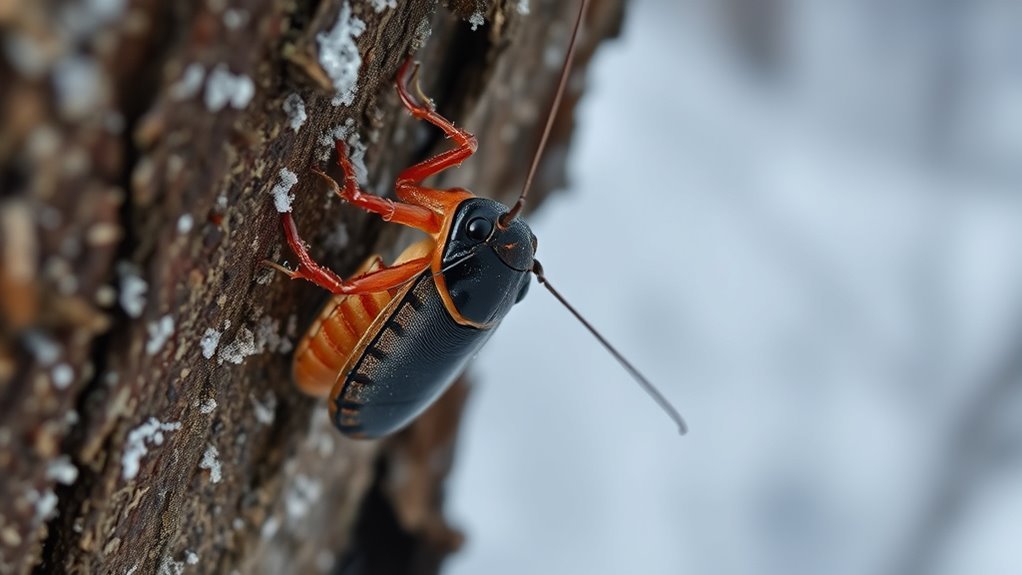
Cockroaches don’t survive well in cold weather because freezing temperatures slow their metabolism and can kill them.
But they’re crafty—they seek warmth indoors, hiding behind appliances, in wall voids, and basements.
Some species enter a hibernation-like state to conserve energy through winter.
Their eggs can resist brief cold, but long freezes reduce survival rates.
If you want to understand how they adapt and what signs to watch for, there’s more insight ahead.
Cockroaches’ Temperature Preferences and Cold Sensitivity
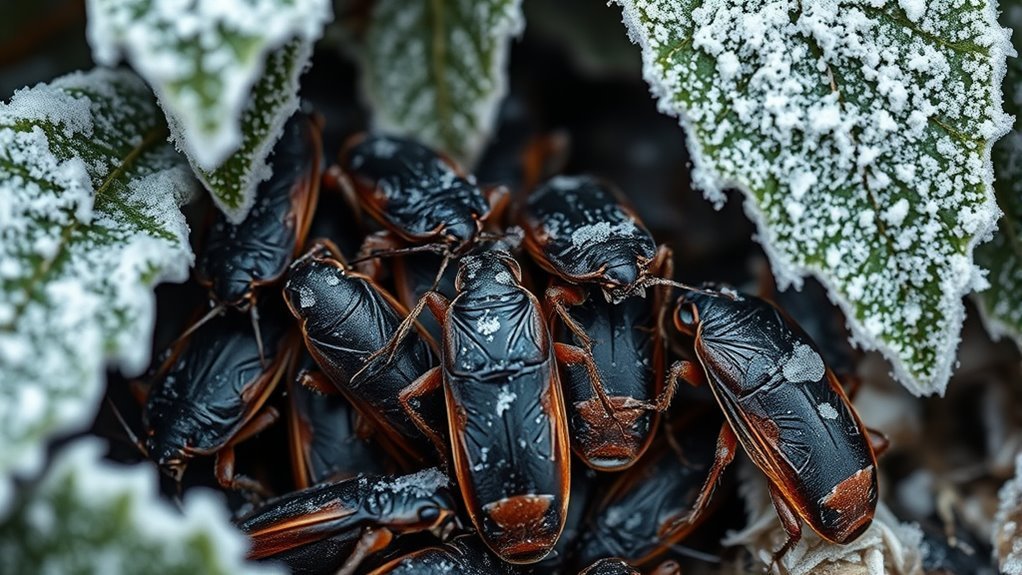
Because cockroaches are cold-blooded, their body temperature changes with their surroundings.
You’ll notice they’re highly sensitive to cold temperatures, which can slow their metabolism and activity. When temperatures drop below 40°F (4°C), cockroaches often enter dormancy to conserve energy.
Most species can’t survive prolonged exposure to outdoor cold weather under 45°F (7°C). That’s why they seek indoor warmth—places like heated wall voids, basements, or spaces near appliances offer the steady heat cockroaches need to survive.
If you want to understand why cockroaches thrive indoors during winter, it’s essential to recognize their temperature sensitivity.
Without access to warmth, these pests can’t maintain their bodily functions and won’t survive harsh cold conditions for long.
How Cockroaches Adapt to Winter Conditions
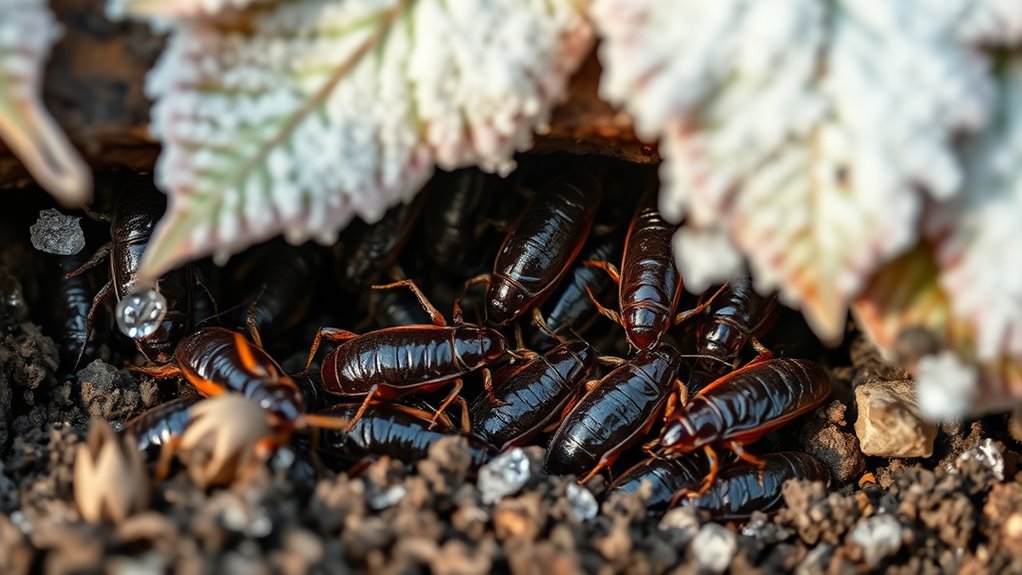
When temperatures fall, cockroaches rely on clever strategies to survive the cold months.
As cold weather sets in and temperature drops below 45°F, they seek indoor shelter in warm spots like basements, wall voids, and behind appliances.
This helps guarantee their winter survival since most cockroach species can’t withstand freezing conditions outdoors.
Many enter diapause, a hibernation-like state where their metabolism slows, conserving energy until warmer conditions return.
If they remain outside, cockroaches hide in moist environments such as leaf piles, decaying wood, or under debris to avoid freezing.
Common Cockroach Species Active During Winter
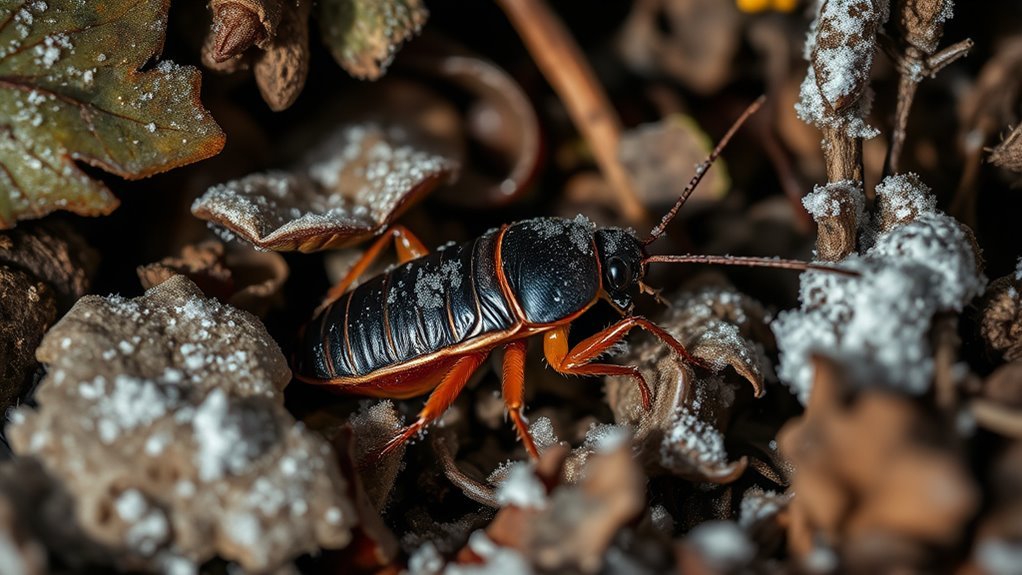
When winter hits, you’ll often find German, American, and Oriental cockroaches seeking shelter indoors.
These species thrive in warm, moist spots like kitchens, basements, and bathrooms.
Knowing where they hide can help you spot and manage them during colder months.
Winter-Active Cockroach Types
Although winter brings colder temperatures, several cockroach species remain active indoors, especially in warm, sheltered areas.
German cockroaches are the most common winter-active cockroach types you’ll find, thriving in kitchens and bathrooms where warmth and food are plentiful.
American cockroaches prefer warm, moist environments and often engage in shelter seeking, moving indoors as cold temperatures set in.
Oriental cockroaches favor damp, cooler spots like basements and crawlspaces but can also survive indoors during winter.
These species rely heavily on indoor survival strategies, including entering diapause, a dormancy that helps them withstand colder periods.
If you want to understand how cockroaches persist through winter, focusing on these three species gives you the clearest picture of winter-active cockroach types and their shelter-seeking behavior.
Indoor Winter Habitats
Understanding where cockroaches settle indoors during winter helps you pinpoint their hiding spots and control them effectively.
Common indoor winter habitats include warm environments like kitchens, bathrooms, basements, and crawlspaces.
German cockroaches thrive in kitchens and bathrooms, while Oriental cockroaches prefer damp areas such as basements.
American cockroaches, usually outdoor dwellers, seek heated indoor spaces to escape the cold.
Cockroaches find shelter in wall voids, behind appliances, and within ceiling spaces, creating ideal cockroach shelter zones.
They don’t truly hibernate but enter a hibernation-like state, reducing activity to conserve energy.
By seeking warm, moist environments, these species ensure their survival during winter inside your home.
Recognizing these habits helps you identify and eliminate indoor winter habitats, keeping cockroach infestations under control.
Typical Hiding Spots for Cockroaches in Cold Weather
Since cockroaches seek warmth during cold weather, you’ll often find them hiding in wall voids behind drywall or ceiling spaces.
These cracks and crevices offer sheltered areas away from the cold.
Cabinets, especially under sinks, provide warmth and moisture, making them prime hiding spots.
Appliances like stoves and refrigerators also create cozy refuges.
Additionally, pipes and drains inside walls serve as protected routes and shelters.
| Hiding Spot | Reason for Preference |
|---|---|
| Wall voids | Warmth and protection |
| Cabinets | Moisture and warmth |
| Appliances | Consistent heat source |
Knowing these typical hiding spots helps you better target cockroach control during cold weather.
Impact of Cold on Cockroach Eggs and Reproduction
While adult cockroaches seek warmth in hidden spots during cold weather, their eggs face different challenges.
Cockroach eggs have some resistance to cold temperatures, but extreme cold can harm their survival and reproduction. Here’s what you should know:
- Cockroach eggs have a protective casing that insulates them, helping them survive mild winter cold.
- Prolonged exposure to temperatures below 32°F usually kills the eggs, though short cold snaps may be tolerated.
- Eggs typically hatch in spring or summer when temperatures rise, restarting the reproduction cycle.
Understanding the temperature sensitivity of cockroach eggs shows why cold winters can reduce infestations but rarely eliminate them.
You’ll find that cockroach eggs’ survival depends largely on how harsh and long the winter cold lasts.
Signs of Cockroach Activity in Winter Months
You might notice small black droppings or egg cases tucked away in cracks and corners during winter.
A musty odor can also signal that cockroaches are active inside your home despite the cold.
Paying attention to these signs helps you catch an infestation early before it gets worse.
Winter Cockroach Indicators
When temperatures drop, cockroaches seek warmth indoors.
So, spotting small black droppings or egg casings can signal their presence during winter.
These winter cockroach indicators help you detect cockroach activity despite cold weather.
Understanding cockroach behavior during survival in winter is key to effective pest control.
Watch for these signs of indoor infestation:
- Unexplained foul odors in hidden areas, hinting at a growing cockroach population.
- Live cockroaches near appliances, pipes, or wall voids, showing ongoing activity.
- Property damage or unusual staining on walls and ceilings, evidence of feeding and hiding.
Recognizing these signs early helps you tackle cockroach problems before they escalate during winter months.
Egg Cases Presence
Because cockroach egg cases, known as oothecae, can survive brief cold spells near freezing temperatures, finding them indoors during winter means roaches are still reproducing.
These cockroach egg cases are more cold-resistant than adult roaches, often sheltering in cracks or crevices where freezing temperatures can’t reach.
While most eggs won’t survive prolonged exposure below 15°F, short cold snaps won’t necessarily destroy them.
If you spot these small, cylindrical, brown or tan oothecae in your indoor environments, it’s a clear sign of ongoing cockroach reproduction.
Egg case detection during winter signals a potential winter infestation, even when adult roaches seem scarce.
Droppings and Odors
Although cockroaches tend to hide during winter, their droppings and odors give away their presence.
You might not see the bugs themselves, but these signs can help you detect a hidden infestation and ongoing activity indoors.
Watch for:
- Cockroach droppings—small, black pellets—accumulating in corners or behind appliances.
- Unpleasant or musty odors, especially in confined spaces, signaling their presence.
- Additional signs like egg cases or live cockroaches alongside droppings confirming winter activity.
Keep in mind, these signs aren’t just nuisances; cockroach droppings and odors can trigger allergy symptoms and respiratory issues.
Detecting them early helps you address an infestation before it worsens during the cold months.
Effective Prevention Strategies for Winter Cockroach Control
To keep cockroaches from invading your home during winter, you’ll need to focus on blocking their entry points and eliminating their basic needs.
Seal cracks around windows, doors, and foundations with caulk or weatherstripping to stop cockroach species from sneaking inside.
Seal all cracks around windows, doors, and foundations to prevent cockroaches from entering your home.
Keep your home clean by wiping crumbs, spills, and food residues promptly, since cockroaches seek easy food sources.
Repair leaks and reduce moisture in bathrooms and basements to deprive them of water.
Store food in airtight containers and remove clutter to limit hiding spots.
Regular inspections are key to winter cockroach control.
While professional pest control treatments are essential for severe infestations, taking these preventive steps will help you prevent a cockroach infestation from developing in the first place.
Professional Pest Control Solutions for Winter Infestations
How can you effectively tackle a persistent cockroach problem during winter?
When cockroaches survive cold weather by seeking shelter indoors, professional pest control becomes essential.
A pest control professional uses targeted treatments designed to eliminate winter infestations that typical DIY methods miss.
Here’s how professionals help with cockroach control:
- Identify hidden nests in wall voids and cracks where cockroaches hide during cold weather.
- Apply specialized products that reach deep infestations, ensuring thorough elimination.
- Provide ongoing strategies for preventing infestations, reducing risks when temperatures rise.
With their expertise, you can regain control of your home and enjoy a pest-free winter!
Frequently Asked Questions
How Cold Is Too Cold for Roaches?
You’ll find roaches struggle to survive below 45°F (7°C).
Prolonged exposure under 15°F (-9°C) is deadly for them.
They seek warmth indoors since they can’t handle freezing temperatures or extended cold spells outside.
What Temperature Is Needed to Kill Cockroaches?
You’d need Arctic-level cold—below 15°F (-9°C)—to kill cockroaches effectively.
Even then, they can survive short spells above freezing, so make sure the temperature stays low long enough to freeze them out completely.
Why Shouldn’t You Kill a Cockroach?
You shouldn’t just kill a cockroach because eggs and hidden colonies remain.
This can lead to reinfestation.
Without addressing their habitat and using professional methods, you’ll face ongoing problems.
Plus, there’s a risk of spreading bacteria from careless handling.
Will Freezing Kill a Cockroach?
If you leave a cockroach outside during a harsh winter night, freezing will kill it.
You can’t expect them to survive long-term ice; their bodies just aren’t built for sustained subzero temperatures.
Conclusion
Just like a stubborn winter traveler, cockroaches find ways to survive the cold.
They hide in warm nooks and slow down but definitely don’t disappear.
You can’t simply wait for winter to send them packing—they adapt, reproduce, and stay active in secret spots.
So, don’t let Jack Frost lull you into a false sense of security.
Stay vigilant with prevention, and if needed, call in the pros to keep these resilient pests from making your home their winter refuge.
In conclusion, cockroaches are remarkably adaptable creatures that can survive cold weather by seeking warmth and hiding away.
Don’t underestimate their ability to thrive even in winter.
Make sure to stay proactive in your pest control measures, as these pests can easily turn your home into their winter haven if you’re not careful.
Remember, prevention is key to ensuring that your home remains cockroach-free during the colder months!