Does Cold Weather Kill Ticks?
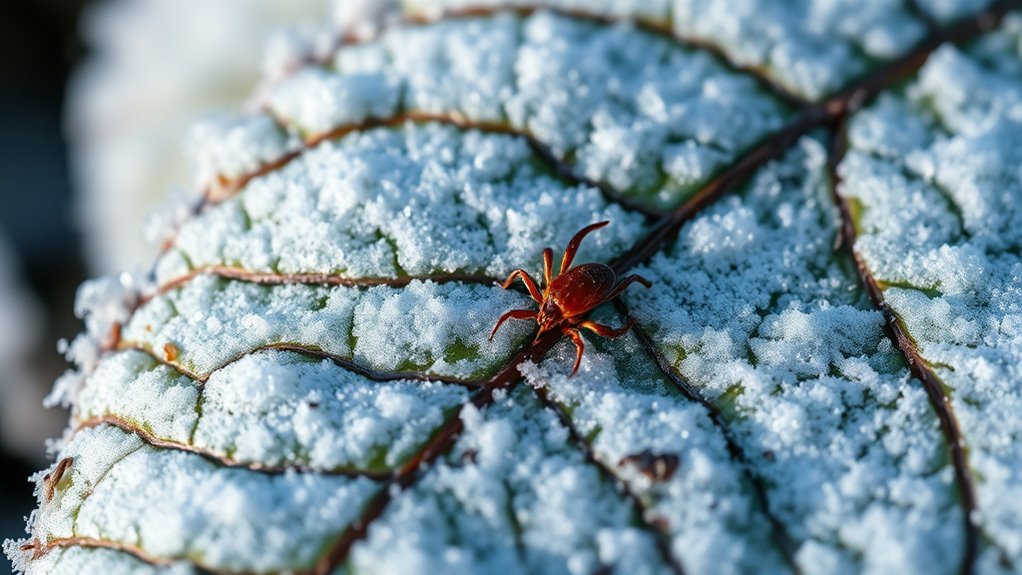
Cold weather alone won’t kill ticks. These resilient creatures survive by finding sheltered spots like leaf litter or soil, where they can escape the cold.
They even produce natural antifreeze compounds that help them endure freezing temperatures.
Believe it or not, ticks can stay active on warmer winter days and can hide beneath snow that insulates them from harsh cold.
These adaptations are crucial for their survival, which is why it’s important to stay cautious year-round.
Keep exploring to understand how ticks stay active through the seasons and what that means for your safety.
Winter Activity of Blacklegged Ticks
How active are blacklegged ticks during winter?
You might be surprised to learn that these ticks don’t completely disappear once cold weather hits.
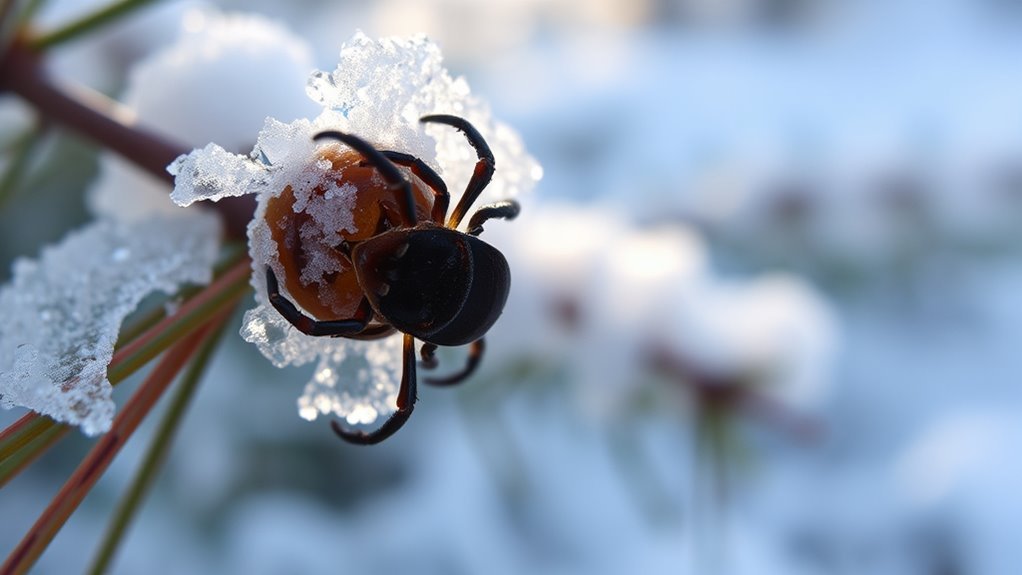
Blacklegged ticks show winter activity on days when temperatures rise above freezing, especially in late fall and early spring.
Blacklegged ticks become active during winter whenever temperatures climb above freezing.
Adult ticks are the main culprits seeking hosts during this time, often climbing vegetation to find a blood meal.
Cold temperatures below 4-5°F for long periods generally kill them, but short freezes rarely do.
Snow and ground cover act as insulation, helping ticks survive winter by shielding them from extreme cold beneath leaf litter and soil.
Survival Strategies of Ticks During Cold Weather
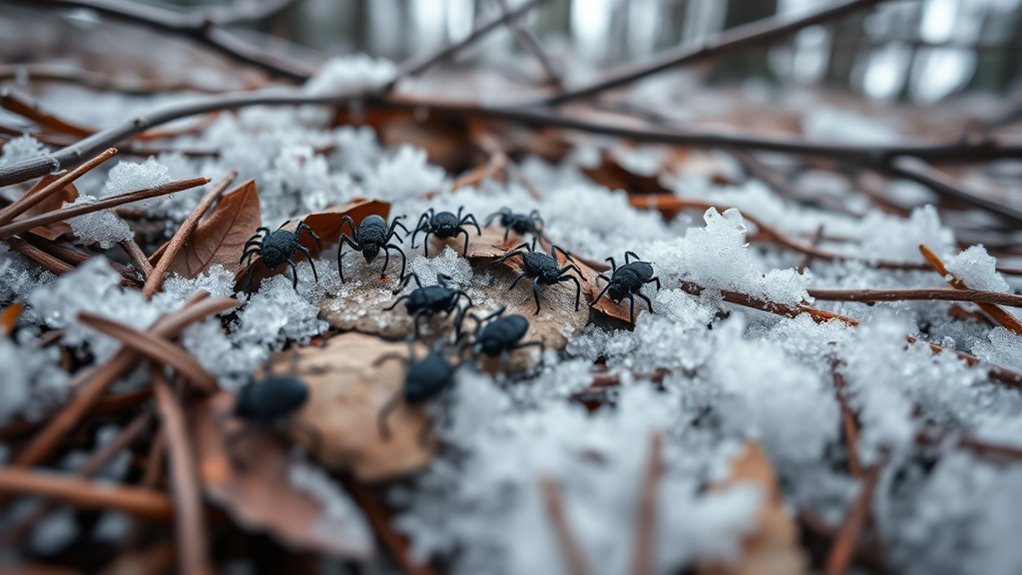
Although cold weather poses challenges, ticks have developed several clever survival strategies to endure freezing temperatures.
For tick survival, they enter a dormant state, sharply reducing metabolic activity to conserve energy. You’ll find them beneath leaf litter or underground, where insulation helps maintain warmer ground temperatures compared to the open air.
These protected habitats are essential in tick ecology during cold weather. Additionally, many ticks produce antifreeze compounds that prevent ice formation in their bodies, boosting their ability to withstand freezing conditions.
Thanks to these adaptations, ticks can survive extended periods at temperatures as low as 4-5°F.
Role of Snow in Tick Insulation and Protection
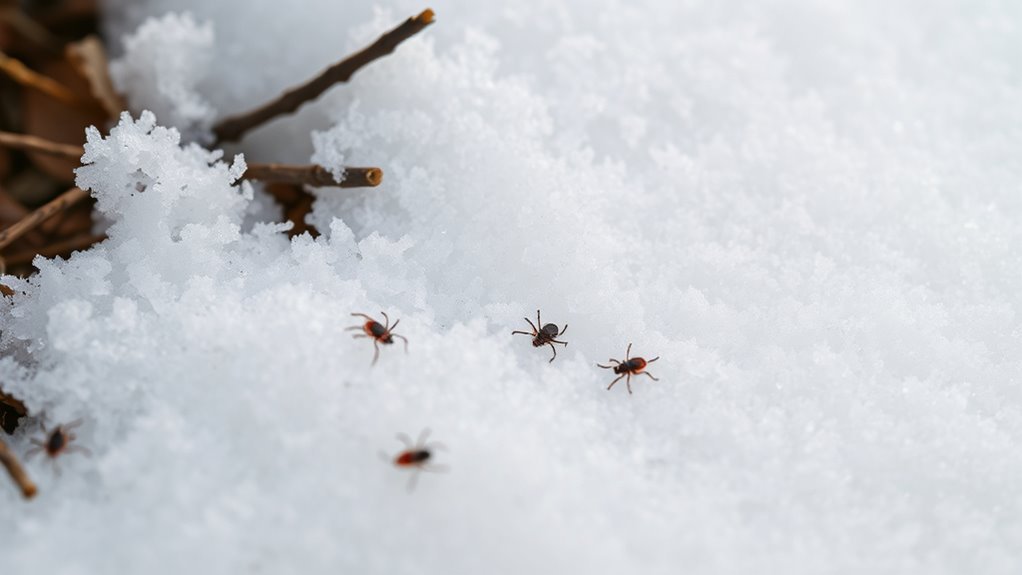
When ticks settle into leaf litter or soil to survive the cold, snow often blankets these hiding spots, playing a key role in their protection.
Snow acts as insulation, keeping ground temperatures near freezing, which is vital for tick survival.
This layer of snow prevents the ground from getting too cold, shielding ticks tucked beneath it from harsh air temperatures.
By maintaining stable ground temperatures, snow creates a safe environment for ticks during overwintering.
Instead of killing them, snow helps adult and nymphal ticks endure the winter months, increasing their chances of reactivating once spring arrives.
Activity Levels of Other Tick Species in Winter
Since research on the winter activity of American dog ticks and lone star ticks is limited, you might notice they seem less active on warm winter days compared to blacklegged ticks.
While blacklegged ticks can remain active in mild winter conditions, American dog ticks and lone star ticks generally show reduced winter activity.
Their tick survival and seasonal behavior during cold weather aren’t well documented, but observations suggest they retreat to sheltered areas rather than questing.
This lower activity likely varies by region and environmental factors, meaning you might encounter them less during winter.
However, because scientific studies are scarce, it’s tough to pinpoint exactly how cold weather affects these species.
Understanding their winter habits better would clarify their role in tick survival through harsh seasons.
Effects of Cold Winters on Tick Populations
You might think cold winters would wipe out ticks, but they have clever survival strategies like hiding in leaf litter and soil.
Snow actually acts as an insulating blanket, protecting them from lethal air temperatures.
Tick Survival Strategies
Although cold temperatures can threaten tick survival, ticks have evolved several strategies to withstand winter’s chill.
You’ll find that their tick survival strategies include entering dormancy during harsh winter conditions, which slows their metabolism and conserves energy.
They seek protected environments like soil pores and thick leaf litter, where snow acts as insulation against freezing cold temperatures.
These microhabitats shield them from prolonged exposure to lethal cold.
Additionally, ticks produce antifreeze compounds that prevent ice crystal formation in their bodies, allowing them to tolerate temperatures that would otherwise be deadly.
Because of these adaptations, cold alone rarely kills ticks in natural settings.
Winter Temperature Impact
When winter temperatures drop to around 4-5°F for more than eight hours, ticks begin to die off.
But short cold spells usually don’t make a big dent in their numbers.
Cold temperatures alone often aren’t enough to control tick populations because of their impressive winter survival tactics.
Here’s why:
- Ticks produce antifreeze-like compounds allowing them to endure freezing temperatures.
- They seek habitat protection by burrowing into leaf litter or soil.
- Snow cover insulates ticks, shielding them from extreme cold.
These factors combine to help ticks withstand harsh conditions.
Even in cold winters, many ticks survive by staying in protected habitats.
Snow’s Protective Role
Since snow acts as a natural insulator, it keeps ground temperatures near freezing and prevents extreme cold from reaching ticks.
When winter weather drops air temperatures drastically, snow’s insulation helps maintain a stable environment beneath the surface.
You’ll find ticks hiding in leaf litter and soil, where snow cover shields them from lethal cold.
This natural buffer increases tick survival, allowing them to overwinter successfully.
| Snow Depth (inches) | Ground Temperature (°F) | Tick Survival Rate (%) |
|---|---|---|
| 0 | 20 | 30 |
| 2 | 28 | 60 |
| 4 | 32 | 85 |
| 6 | 33 | 90 |
Snow’s protective role is vital for ticks facing harsh winter weather.
Influence of Seasonal Changes on Tick Lifecycle
Because seasonal changes directly affect temperature and habitat conditions, they play a crucial role in the tick lifecycle.
You should understand how cold winters and shifting environmental conditions influence tick survival and activity.
Here are three key points to contemplate:
- Tick survival depends heavily on winter temperatures. Prolonged cold around 4-5°F can kill some ticks, but brief cold spells usually don’t impact populations much.
- Snow cover and leaf litter insulate ticks. This allows them to endure harsh conditions and remain dormant until spring.
- Seasonal changes shift tick activity periods. Nymphs become active earlier during warmer years, while adults seek hosts in mild fall and winter days above freezing.
Implications for Tick-Borne Disease Risk and Prevention
You can still encounter ticks and risk bites even in colder months, so staying vigilant year-round is key.
Catching tick bites early helps prevent serious diseases, so check yourself and your pets regularly.
Taking simple prevention steps, like wearing protective clothing and using repellents, reduces your chances of tick-borne illnesses no matter the season.
Year-Round Bite Risk
How can you stay safe from ticks even in winter?
Despite cold weather, ticks survive by hiding in leaf litter or under snow, which insulates them from freezing temperatures.
They remain active on mild days above temperature thresholds, continuing to pose a bite risk year-round.
Lyme disease cases confirm ongoing tick activity in every season, including winter.
To protect yourself, practice consistent tick prevention:
- Check yourself and pets for ticks after outdoor activities, regardless of the season.
- Wear protective clothing and use tick repellents even in winter weather.
- Keep your yard clear of leaf litter and tall grass to reduce tick habitats supporting tick survival.
Early Detection Importance
Early detection plays a crucial role in reducing your risk of tick-borne diseases.
Performing regular tick checks after outdoor activities helps you spot attached ticks early, minimizing pathogen transmission.
Since ticks can infect hosts within hours, prompt removal is critical.
Early detection also means you can catch ticks before they become engorged and seek medical advice quickly if you notice bite signs, reducing disease severity.
| Action | Importance | When to Do It |
|---|---|---|
| Tick Checks | Spot attached ticks early | After outdoor activities |
| Prompt Removal | Limits pathogen transmission | Immediately upon finding ticks |
| Medical Advice | Early treatment reduces severity | At first bite signs |
| Continuous Vigilance | Year-round risk awareness | All seasons, including winter |
Stay vigilant year-round to protect yourself effectively.
Prevention Strategies
Although cold weather might seem like a natural deterrent, ticks often survive winter by sheltering under snow and leaf litter.
This makes year-round prevention essential. Because snow cover insulates ticks from lethal winter temperatures, tick survival remains high, increasing tick activity during warm spells.
To reduce your risk of tick-borne diseases, follow these prevention strategies:
- Wear protective clothing and use EPA-approved repellents even in colder months.
- Conduct thorough tick checks after outdoor activities, especially in wooded or grassy areas.
- Maintain your yard by removing leaf litter and tall grasses that provide shelter for ticks.
Frequently Asked Questions
At What Cold Temperature Do Ticks Die?
Ticks generally die when exposed to temperatures around 4–5°F for at least 8 hours.
But you should know, short cold snaps or snow insulation often let them survive,
so cold alone rarely kills all ticks.
Do Ticks Go Away After a Freeze?
You might picture ticks disappearing after a freeze, but they don’t go away.
They hide in leaf litter or soil, staying dormant until warmth returns.
When temperatures rise, they’re ready to become active again.
Are Ticks Still Out in Cold Weather?
Yes, ticks are still out in cold weather.
They hide in leaf litter or under snow, staying active on mild days above freezing.
They don’t die off; they just wait for warmer temperatures to move again.
Conclusion
You might think cold weather kills ticks, but they survive like hidden embers beneath snow’s insulating blanket.
While freezing temperatures slow their activity, many ticks endure winter by seeking shelter and entering a dormant state.
Understanding their resilience helps you better prepare and protect yourself from tick-borne diseases year-round.
Just as winter doesn’t stop the forest from breathing, cold won’t fully stop ticks from waiting to reemerge when spring arrives.
So, what does this mean for you?
It’s crucial to stay vigilant about tick prevention, even in colder months.
Ticks can still pose a risk, especially as temperatures fluctuate and they become active again.
By being informed about their habits and taking necessary precautions, you can safeguard yourself and your loved ones from tick-borne illnesses all year long.
Remember, ticks may be hiding, but they’re still a threat. Stay prepared and protect yourself!