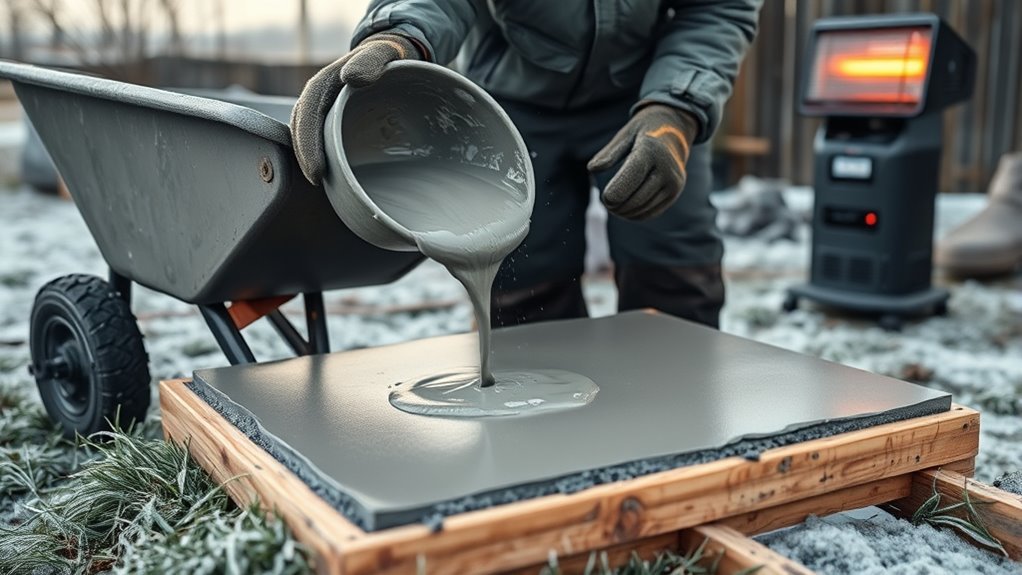
10 Essential Tips to Help You Pour Cement in Cold Weather
To pour cement successfully in cold weather, it’s crucial to choose a concrete mix specifically designed for low temperatures. Look for mixes that include added cement and air-entraining agents to ensure your pour sets correctly.
Before you start, prepare your site thoroughly. Clear away any snow and preheat your materials to avoid freezing.
Also, keep a close eye on both concrete and air temperatures, making sure they stay above 40°F for optimal curing.
Using accelerators can really help speed up the curing process.
Don’t forget to protect your pour with insulation or heated enclosures, especially in frigid conditions.
It’s also wise to extend the curing time to enhance durability.
Safety gear is a must, and consider using insulated forms to keep your concrete warm.
By following these steps, you’ll be well on your way to mastering every stage of the process for a strong, lasting pour.
Select the Right Concrete Mix for Cold Weather
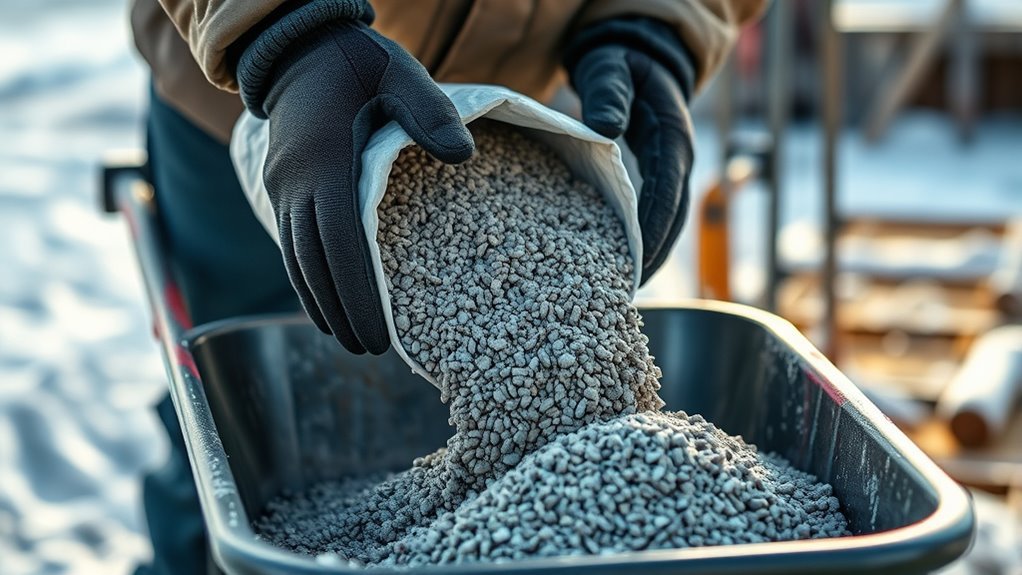
When pouring cement in cold weather, you should select a concrete mix designed to handle freeze-thaw cycles and develop strength quickly.
Choose a mix with at least 4,000 psi compressive strength to ensure durability against freezing and thawing.
Select concrete with a minimum 4,000 psi strength for lasting freeze-thaw durability in cold weather.
Incorporate air-entraining agents, which form tiny air bubbles that improve freeze-thaw resistance by relieving internal pressure.
Opt for Portland cement Type III because it sets faster, promoting early strength development critical in cold conditions.
It’s best to avoid fly ash or slag cement since they slow hydration and generate less heat, increasing the risk of freezing.
Finally, always pick mixes formulated specifically for cold weather to maintain proper hydration and strength gain.
These choices help your concrete cure effectively despite low temperatures, ensuring a long-lasting, resilient finish.
Prepare Site and Materials Before Pouring
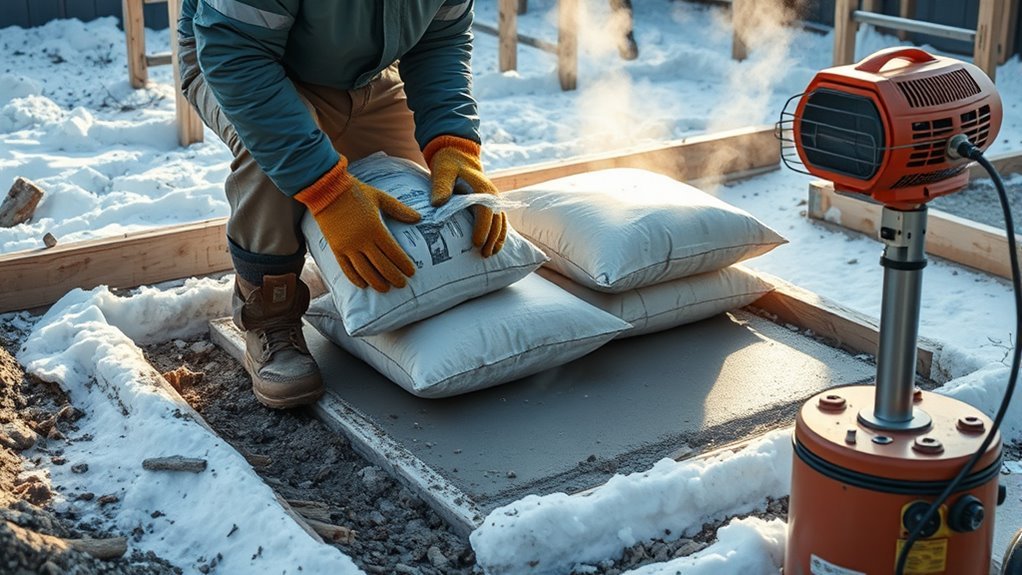
Although cold weather poses challenges, you can guarantee a successful pour by thoroughly preparing the site and materials beforehand.
Start by removing ice, snow, and standing water from the site.
Next, preheat your mixing water to about 140°F and aggregates to 180°F to maintain proper concrete temperature.
Don’t forget to protect workers and fresh concrete with windbreaks or enclosures.
It’s also smart to store tools and materials in heated areas.
Lastly, warm the ground and foundation surfaces to promote better curing and avoid freezing.
| Task | Action |
|---|---|
| Preheat materials | Water @ 140°F, Aggregates @180°F |
| Site preparation | Remove ice, snow, water |
| Protect | Use windbreaks, enclosures |
| Store materials | Indoors or heated spaces |
| Warm surfaces | Ground & foundation before pour |
Monitor Concrete and Ambient Temperatures Closely

Since cold weather can rapidly lower concrete temperatures, you’ll need to monitor both the concrete’s internal temperature and the surrounding environment closely to guarantee proper curing.
Use a reliable thermometer to check the concrete temperature regularly, ensuring it stays above 40°F (4.5°C) during the entire curing process.
Don’t forget to track the ambient temperature, especially during early mornings and late evenings when cold spells often hit.
Also, keep an eye on the ground temperature since frozen soil can chill the concrete prematurely.
Consistent temperature monitoring at multiple points helps you spot temperature fluctuations early.
Maintain detailed temperature logs to adjust your curing methods promptly, preventing freezing-related damage and ensuring your concrete sets correctly despite the cold conditions.
Use Accelerating Admixtures to Speed Up Setting
You can speed up cement setting in cold weather by using accelerating admixtures, which boost hydration and early strength.
Common options include calcium chloride and specialized non-chloride accelerators, each with their own benefits and precautions.
Just be careful with steel reinforcement, as some accelerants may cause corrosion.
Benefits of Accelerators
When pouring cement in cold weather, using accelerating admixtures can substantially speed up the setting process.
These admixtures, often including calcium chloride, boost hydration rates, helping your concrete gain early strength faster.
By reaching 500 PSI quickly, your pour resists freeze damage, which is a vital factor in cold weather concreting.
Accelerators shorten curing times, letting you remove forms in as little as 24 hours while maintaining structural integrity.
This rapid strength gain reduces the risk of long-term issues caused by freezing temperatures.
By incorporating accelerating admixtures, you protect your concrete from cold-related setbacks, ensuring a durable finish even in harsh conditions.
Using these additives smartly helps you complete projects smoothly and safely despite the chill.
Types of Admixtures
Accelerating admixtures like calcium chloride play a key role in speeding up cement setting during cold weather pours.
They reduce curing time and boost early strength, helping concrete resist freeze damage.
However, avoid using calcium chloride with steel reinforcement to prevent corrosion and cracking.
Here’s a quick overview:
| Admixture Type | Effect on Concrete Setting | Notes on Usage |
|---|---|---|
| Calcium Chloride | Speeds setting, boosts early strength | Not for use with steel reinforcement |
| Non-chloride Accelerators | Moderate acceleration, safe with steel reinforcement | Preferred when steel is present |
| Organic Accelerators | Mild effect, eco-friendly | Longer curing times than chlorides |
| Alkali-based Accelerators | Rapid setting, may affect durability | Use cautiously in cold weather |
| Combination Admixtures | Balance speed and durability | Tailor mix for specific conditions |
Choose the right accelerating admixture to optimize strength and curing time in cold weather.
Usage Precautions
Although speeding up cement setting is crucial in cold weather, you must take precautions when using accelerating admixtures.
These additives, like calcium chloride, speed up hydration and the curing process. But using them improperly can cause issues.
For example, avoid combining calcium chloride with steel reinforcement to prevent cracking from rapid thermal expansion.
Always adjust your concrete mix by increasing cement content to generate extra heat, especially when ambient temperatures are low.
Follow manufacturer guidelines carefully to ensure proper dosage and avoid compromising concrete quality.
Additionally, use insulation blankets to maintain warmth and protect the curing process.
Increase Cement Content to Boost Hydration
Since cold weather slows down cement hydration, you can increase the cement content by adding about 100 pounds per cubic yard.
Cold weather slows cement hydration, so add around 100 pounds of cement per cubic yard for better curing.
This generates more heat during curing, which is essential. That extra heat raises the curing temperature, helping the concrete stay above 40°F in those critical early hours.
By boosting the cement content, you also improve the concrete’s strength and density.
This reduces its vulnerability to freezing damage. Plus, increasing cement lowers the water-to-cement ratio, which enhances durability and decreases porosity in cold weather curing.
Adjusting the cement ratio properly guarantees better hydration despite low temperatures.
This leads to a stronger, longer-lasting structure. So, when pouring in cold conditions, increasing the cement content is a smart way to support effective curing and maintain your concrete’s integrity.
Maintain Proper Pouring Schedule and Timing
When you pour concrete in cold weather, timing is crucial to prevent freezing and guarantee proper curing.
You should plan your pouring schedule during mid-morning or early afternoon when ambient temperatures peak. This reduces the risk of freezing.
Monitor the weather forecast closely and avoid pouring during extreme cold spells or when temperatures dip below 20°F (-6°C).
Proper temperature management means extending the pouring duration to ensure the entire area is filled before temperatures drop considerably.
Aim for the initial set to occur when ambient temperatures are above 40°F (4.5°C) to promote early curing.
Timing your pour to maximize daytime warmth helps keep the concrete above critical temperatures during this essential early curing phase.
This way, you can ensure durable and strong results despite the cold conditions.
Protect Concrete With Insulation and Heated Enclosures
Right after pouring, you’ll want to cover the concrete with insulating blankets or place it inside a heated enclosure to keep temperatures steady.
Using materials like foam or polyethylene helps lock in heat and prevents freezing during those critical first days.
These steps not only protect your concrete but also promote proper curing, even when it’s freezing outside.
Insulation Techniques
How can you protect freshly poured concrete from freezing in cold weather?
You need to focus on insulation techniques that maintain proper curing temperature and promote heat retention.
Here’s what you should do:
1. Apply insulating blankets within 24 to 48 hours post-pour.
These moisture-resistant insulation materials minimize heat loss, especially overnight or on windy days.
2. Use heated enclosures or temporary thermal barriers to create a stable environment.
This ensures consistent curing temperature essential for concrete strength.
3. Choose high-quality insulation materials that help prolong the curing process.
This way, concrete can develop full strength even when temperatures drop below freezing.
Heated Enclosure Benefits
To protect your concrete from freezing and guarantee proper curing, heated enclosures offer a controlled environment that maintains temperatures above 40°F (5°C) during the critical first 24 to 48 hours.
These heated enclosures provide reliable temperature control, shielding your concrete from wind chill and cold drafts that can slow curing.
By retaining the heat generated during hydration, they prevent freezing and reduce the risk of thermal cracking caused by rapid temperature swings.
Using heated enclosures also enhances concrete durability by ensuring steady strength development without the need for excessive external heating.
This focused freezing protection helps you achieve ideal curing conditions, shortening set times and improving overall quality.
Incorporating heated enclosures into your cold weather pour strategy is essential for long-lasting, durable concrete results.
Temperature Maintenance Strategies
Although cold weather poses challenges for concrete curing, you can protect your pour by using insulation and heated enclosures to maintain temperatures above 40°F (4.5°C) during the first 24 to 48 hours.
Effective temperature maintenance is key to proper curing concrete. Here’s how to do it:
- Use insulating blankets covered with polyethylene sheets to enhance heat retention and reduce moisture loss.
- Set up temporary heated enclosures or tents with electric or indirect fuel heaters to create a controlled environment that prevents frost and temperature drops.
- Regularly perform temperature monitoring with infrared or dial thermometers to ensure the concrete stays warm enough throughout the critical curing period.
Extend Curing Time and Control Moisture Loss
When temperatures dip below 50°F (10°C), you’ll need to prolong the curing time beyond the usual 28 days to ensure your concrete gains full strength.
Extending curing time is critical because cold slows hydration. Maintaining the proper cure temperature prevents damage.
To control moisture loss, use insulating blankets or heated enclosures to keep the concrete warm and reduce evaporation.
Immediately after finishing, cover the surface with polyethylene sheeting or apply curing compounds to promote moisture retention and form a protective vapor barrier.
Regularly monitor the concrete’s temperature with an infrared thermometer. Make sure it stays above 40°F (4.5°C) to protect from freezing.
These steps help you avoid premature drying, surface cracking, and compromised durability during cold weather curing.
Ensure Worker Safety in Cold Weather Conditions
Maintaining proper curing conditions protects your concrete, but you also need to keep your crew safe while working in cold weather.
Prioritize worker safety by addressing cold stress risks through these key steps:
- Provide protective gear like insulated gloves, boots, and layered clothing to prevent frostbite and hypothermia.
- Implement a strict work/rest schedule that includes frequent breaks in warm areas to reduce cold exposure.
- Continuously monitor environmental conditions, limiting outdoor time when temperatures drop below 20°F (-6.7°C).
Educate your workers on recognizing early cold stress symptoms such as shivering and numbness to act quickly.
Utilize Insulated Concrete Forms for Enhanced Protection
You can use insulated concrete forms (ICFs) to keep your concrete warm and protected during cold weather pours.
ICFs maintain steady curing temperatures, letting you work even when it’s freezing outside.
This method not only guarantees strong concrete but also supports year-round construction without extra heating.
ICF Benefits in Winter
Insulated Concrete Forms (ICFs) offer a reliable solution for pouring cement in cold weather by keeping concrete warm and protected even at temperatures as low as -5°F (-15°C).
When you use insulated concrete forms during winter construction, you benefit from:
- Freeze protection: ICFs prevent freezing and rapid drying, which is crucial for maintaining the hydration heat essential for concrete curing.
- Temperature retention: They maintain consistent internal temperatures, often keeping concrete cores near 100°F for 24 hours, even in cold weather pouring conditions.
- Simplified process: ICFs eliminate the need for extra hoarding or heating around walls. This makes cold weather pouring more efficient and reliable.
Using ICFs really streamlines the process, doesn’t it?
Year-Round Construction Advantages
Although cold weather often slows construction projects, using Insulated Concrete Forms lets you pour concrete reliably even at temperatures as low as -5°F (-15°C).
These insulated forms trap hydration heat generated during the curing process, preventing freezing and rapid drying, which are common issues in cold climates.
By maintaining stable core temperatures, ICFs eliminate the need for additional hoarding or external heating during winter construction.
This means you can keep your schedule on track without costly delays.
Utilizing insulated forms enhances project efficiency, allowing you to build year-round regardless of harsh weather.
Case studies prove that even when outside temperatures drop below freezing, the concrete inside ICFs remains warm enough to cure properly, giving your construction projects a reliable edge in cold environments.
Frequently Asked Questions
How Do You Pour Concrete in Cold Weather?
You pour concrete in cold weather by warming your water and aggregates.
Using rapid-setting mixes with accelerators is also a good idea.
Additionally, insulating the pour helps maintain the right temperature.
It’s important to monitor temperatures closely to guarantee proper curing and strength despite the cold conditions.
What Is the 10/20/30/40 Rule When Making Concrete?
Think of the 10/20/30/40 rule as your concrete’s growth chart.
It signifies your mix should attain 10 MPa by 3 days,
20 by 7, 30 by 14, and 40 MPa by 28 days to guarantee solid strength.
What Tools Will Help Pouring Concrete in Cold?
You’ll want infrared thermometers, portable heaters, insulated blankets, and windbreaks to help when pouring concrete in cold weather.
Heated mixing equipment and warm water will also guarantee your concrete sets properly without freezing.
How Do Builders Pour Concrete in the Winter?
You pour concrete in winter by using heated water and warm aggregates, adding accelerators, and protecting the pour with insulated blankets or heated enclosures.
You’ll also monitor temperature closely to prevent freezing during curing.
It’s crucial to keep the concrete warm enough to set properly.
This way, you ensure a strong and durable finish, even in the cold weather.
Conclusion
You might think pouring cement in freezing temperatures is a recipe for disaster, but with these tips, you’ll actually make cold weather your ally.
By choosing the right mix, protecting your pour, and keeping a close eye on conditions, you’ll dodge the usual winter woes.
So, instead of letting frost slow you down, you’ll prove that even ice can’t chill your concrete game.
Who knew cold weather could work in your favor?
In conclusion, pouring cement in cold weather doesn’t have to be a daunting task.
With the right preparation and techniques, you can turn winter into a productive season for your concrete projects.
Embrace the cold, take the necessary precautions, and watch your cement set successfully.
Remember, with the right mix and care, you can achieve solid results even in freezing temperatures!