What Causes Headaches in Cold Weather?
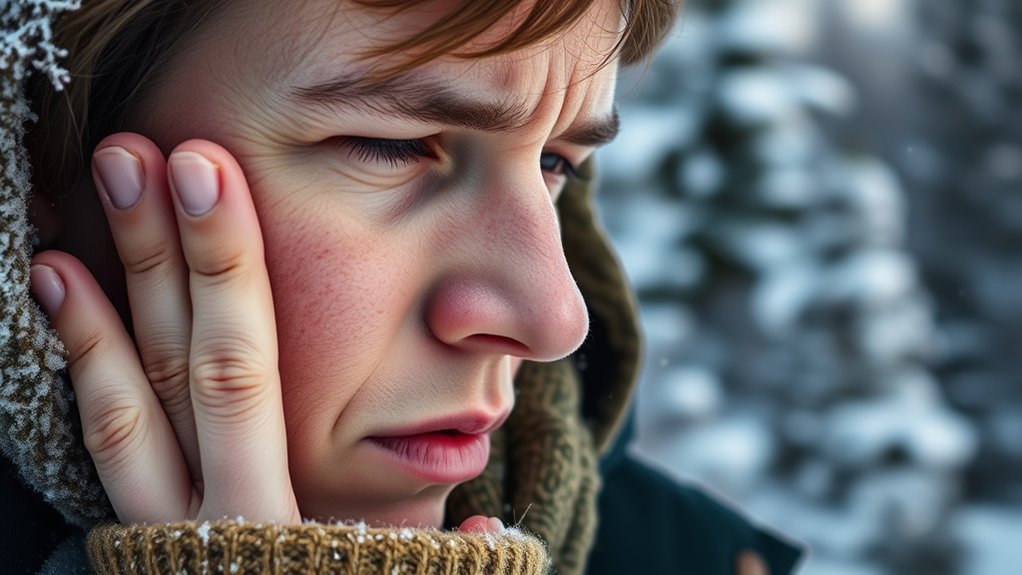
You get headaches in cold weather because chilly air causes your blood vessels to tighten and muscles to tense, raising pressure and pain.
Dry indoor air can irritate your sinuses, while falling barometric pressure before storms triggers headaches by affecting blood flow and nerve sensitivity.
Cold also lowers hydration and sunlight exposure, disrupting your body’s balance and increasing headaches.
If you want to understand what else influences these winter headaches and how to manage them, keep exploring further insights.
How Cold Temperatures Affect Blood Vessels

When cold temperatures hit, your blood vessels in the brain constrict. This cuts down blood flow and raises pressure inside them.
This vasoconstriction reduces blood flow, which increases the pressure within your blood vessels and can trigger headaches.
As blood vessels tighten, muscle tension builds up in your head and neck, adding to the discomfort.
The sudden drop in temperature also sends nerve signals that heighten headache sensations.
You might notice your blood pressure fluctuates due to these changes in blood flow.
Sometimes, after constriction, blood vessels dilate quickly, causing further instability in blood flow and pressure.
This rapid shift can provoke migraines or worsen existing headaches.
Understanding how cold causes blood flow reduction and vasoconstriction helps you manage these chilly-weather headaches better.
The Role of Barometric Pressure Changes

Although you might not notice it, changes in barometric pressure can substantially impact your headache experience, especially in cold weather.
When atmospheric pressure drops, like before storms, the air-filled sinuses in your face expand. This sinus expansion can lead to headache pain.
But it doesn’t stop there—these pressure changes also influence blood vessels in your brain to dilate or constrict, which can worsen headaches.
Rapid barometric pressure shifts increase nerve sensitivity, making you more vulnerable to migraine triggers.
Studies show that falling barometric pressure correlates with a higher frequency of headaches and migraines.
Impact of Dry Indoor Air on Sinuses
Cold weather not only affects the air pressure around you but also changes the air inside your home.
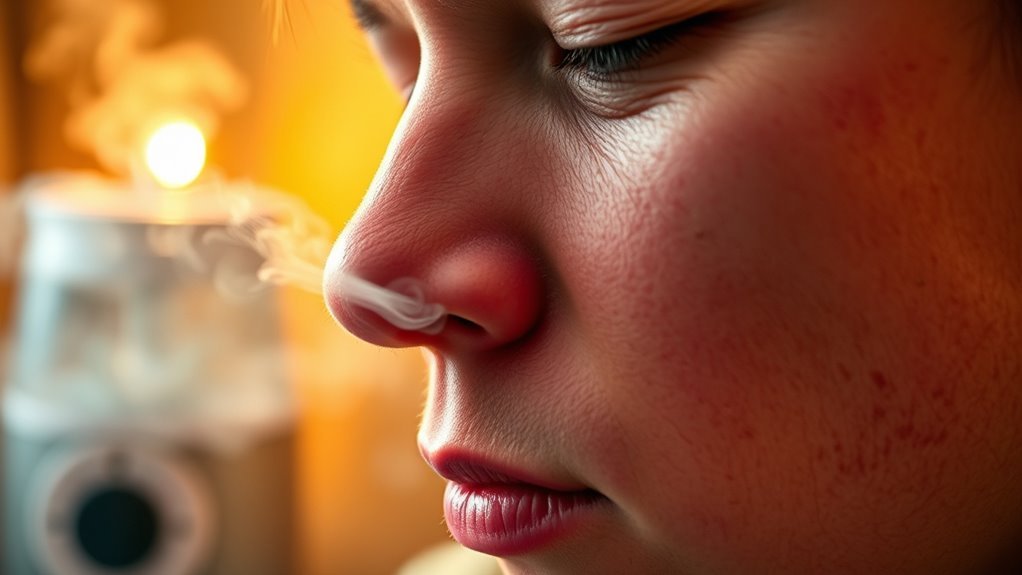
Heating systems produce dry indoor air, lowering humidity and causing dehydration of your nasal passages and mucous membranes.
When these tissues dry out, they become inflamed and swollen, which can lead to sinus congestion.
This increases your risk of sinus headaches.
The dry air also thickens mucus, reducing your sinuses’ ability to trap and clear bacteria and allergens effectively.
This inflammation and impaired function can trigger or worsen sinus pain and pressure.
To combat this, using humidifiers helps maintain moisture in your nasal passages.
This keeps mucous membranes hydrated and reduces sinus-related discomfort during cold weather.
Staying aware of indoor humidity can help you prevent sinus headaches caused by dry indoor air.
Differences Between Sinus and Tension Headaches
Since sinus and tension headaches stem from different causes, recognizing their distinct symptoms can help you manage your pain more effectively.
Sinus headaches arise from inflammation and sinus congestion, often triggered by cold weather’s dry air.
You’ll likely feel facial pain and pressure around your cheeks, forehead, and eyes, sometimes accompanied by nasal congestion or fever.
On the other hand, tension headaches result from muscle tension, especially around your scalp and neck, causing a dull, band-like ache without facial pain or sinus symptoms.
These headaches often come from stress or poor posture rather than sinus issues.
How Seasonal Changes Influence Headache Frequency
You might notice that shorter daylight hours mess with your circadian rhythm, making headaches more common.
Changes in barometric pressure during colder months can also trigger migraines and tension headaches.
Plus, reduced sunlight lowers serotonin, which may increase how often you get headaches.
Reduced Sunlight Effects
How does reduced sunlight during winter months affect your headaches?
When sunlight decreases, your serotonin levels drop, which can increase the frequency and intensity of headaches.
Shorter days also disrupt your circadian rhythm, making it harder to maintain regular sleep patterns—another common headache trigger.
Reduced sunlight exposure often leads to Seasonal Affective Disorder (SAD), which can worsen headache symptoms by elevating stress levels.
Stress itself is a well-known headache trigger, especially for tension headaches and migraines.
Additionally, less sunlight means your body produces less vitamin D, and this deficiency has been linked to more severe headaches in some people.
Understanding these connections can help you manage your headache triggers better during the darker, colder months by prioritizing light exposure and stress reduction.
Barometric Pressure Shifts
Alongside reduced sunlight, shifts in barometric pressure during seasonal changes can considerably impact your headache patterns.
When atmospheric pressure drops suddenly, like before a storm, it causes your sinus cavities to expand or contract. This increases sinus pressure and triggers headaches.
But it’s not just your sinuses that are affected; these weather shifts also change the pressure inside your skull. This can influence migraine severity and headache frequency.
If you’re prone to migraines or tension headaches, you might notice that lower barometric pressure makes your symptoms worse.
Seasonal changes bring rapid fluctuations in barometric pressure, which act as common headache triggers.
Being aware of how these atmospheric pressure changes affect you can help you better manage and anticipate your headaches during colder months.
Disrupted Circadian Rhythms
Although colder months bring festive cheer, they also disrupt your body’s natural circadian rhythms due to shorter daylight hours.
These seasonal changes affect your sleep-wake cycle and hormonal production, increasing headache risk. When your circadian rhythms are off, melatonin levels fluctuate, leading to poor sleep quality and heightened headache susceptibility.
Additionally, sleep disruption lowers serotonin, a key neurotransmitter linked to migraine development. This hormonal imbalance, combined with impaired pain modulation pathways, makes headaches more frequent and intense during winter.
- Shortened daylight alters circadian rhythms and melatonin production.
- Sleep disruption increases headache frequency and intensity.
- Decreased serotonin levels contribute to migraine development.
- Impaired pain pathways raise headache susceptibility.
Understanding this helps you manage cold-weather headaches by prioritizing consistent sleep and light exposure.
Muscle Tension and Headaches in Cold Weather
When cold weather sets in, your neck and shoulder muscles tighten to protect your body from the chill.
This muscle tension can lead to headaches as muscle tightness restricts movement and causes discomfort.
Cold weather triggers muscle contraction, which combined with shivering, increases muscle fatigue.
Poor circulation from constricted blood vessels worsens muscle tightness, intensifying headache pain.
You might feel pressure around your scalp or stiffness in your head as these muscles strain.
Wearing warm clothing helps maintain proper blood flow and reduces unnecessary muscle contraction.
This can lower your risk of tension headaches.
Dehydration as a Winter Headache Trigger
When it’s cold, you might not feel as thirsty, but that can lead to dehydration and trigger headaches.
Dry indoor heating makes this worse by drying out your mucous membranes.
Staying hydrated with water and fluids is key to preventing these winter headaches.
Reduced Thirst Sensation
Since cold weather dulls your sense of thirst, you might not realize you’re drinking less water than your body needs.
This reduced thirst sensation leads to lower water intake, increasing the risk of dehydration—a key headache trigger in winter.
When dehydrated, your blood vessels can constrict or dilate, causing headache pain.
The dry air common in cold months worsens this by drying out mucous membranes, amplifying winter dehydration effects.
To avoid headaches caused by dehydration, pay close attention to your hydration habits even if you don’t feel thirsty.
- Cold weather suppresses your natural thirst signals.
- Dehydration affects brain blood vessels, triggering headaches.
- Dry air intensifies fluid loss through mucous membranes.
- Forgetting to drink water is common in cold climates and raises headache risks.
Dry Indoor Heating
Although you might not notice it, dry indoor heating during cold months lowers humidity levels, which can quickly lead to dehydration—a common cause of winter headaches.
When humidity levels drop, your nasal passages and mucous membranes dry out, increasing inflammation and sinus pressure.
This irritation can impair mucus drainage, making you more prone to sinus-related headaches.
Dehydration caused by dry indoor air also reduces blood volume, which raises pressure in the vessels of your head and neck, triggering headaches.
By understanding how dry indoor heating contributes to these issues, you can better recognize why headaches strike more often in winter.
Using humidifiers to maintain indoor humidity helps protect your nasal passages and mucous membranes, reducing sinus pressure and lowering the risk of dehydration-induced headaches during cold weather.
Importance of Hydration
Because cold weather often dulls your thirst signals, you might not realize how easily dehydration can set in. This can make headaches more likely.
Dry indoor heating further dries out your nasal passages, worsening fluid loss.
Maintaining proper hydration is key to preventing headaches linked to dehydration. When you keep your fluid balance in check, you reduce the risk of blood vessel constriction that triggers tension headaches or migraines.
So, focus on consistent water intake, even when you don’t feel thirsty.
To support your hydration in cold weather, remember to:
- Drink water regularly throughout the day.
- Include herbal teas to boost fluid intake.
- Avoid excessive caffeine and alcohol, which cause dehydration.
- Use a humidifier to combat dry indoor heating and support fluid balance.
Staying hydrated helps minimize headaches caused by winter dehydration.
Effects of Reduced Sunlight on Headache Patterns
When winter shortens daylight hours, your body’s serotonin levels drop. This can trigger headaches and migraines.
Reduced sunlight also disrupts your circadian rhythms, leading to poor sleep and worsening headache patterns.
Lower vitamin D production from less sun exposure links to more frequent headaches.
Seasonal Affective Disorder (SAD) often accompanies these changes, increasing pain and stress, which further contribute to headaches.
| Factor | Effect on Headache Patterns | Resulting Symptom |
|---|---|---|
| Reduced Sunlight | Decreased serotonin & vitamin D | Migraines & tension |
| Disrupted Circadian Rhythms | Poor sleep quality | Increased headache frequency |
| Seasonal Affective Disorder | Elevated stress levels | Heightened headache pain |
Understanding these links helps you recognize how reduced sunlight affects your headaches.
Managing Stress and Headaches During Winter
Winter often brings added stress from holiday preparations, travel, and financial pressures.
These factors can tighten your muscles and trigger tension headaches.
Stress can cause muscle tightness, leading to the onset of tension headaches during winter months.
Managing stress during winter is key to reducing headache frequency.
Disrupted routines, like irregular sleep and missed meals, only heighten stress and headaches.
Plus, limited sunlight lowers serotonin, which increases migraine risk.
To keep stress and headaches in check, you should adopt consistent habits and stress-reduction techniques.
First, maintain a regular sleep and meal routine to stabilize your body’s rhythm.
Incorporate daily exercise to boost serotonin and relieve tension.
Also, practicing meditation or deep breathing can really help calm your mind and reduce stress.
Lastly, set realistic expectations for holiday tasks to avoid emotional overload.
Taking small steps can make a big difference!
When to Seek Medical Advice for Cold Weather Headaches
If your headaches intensify, persist, or don’t improve with self-care, you should seek medical advice promptly.
Pay close attention to the severity and frequency of cold weather headaches.
Especially if they occur more than three times a week or disrupt your daily activities.
You must also seek medical advice immediately if headaches come with neurological symptoms like vision changes, weakness, or confusion.
These signs can indicate serious issues requiring urgent evaluation.
If you have underlying conditions such as migraines, sinus infections, or high blood pressure, regular check-ins with your healthcare provider are essential during winter.
Keeping a headache diary helps track patterns and triggers.
This enables your healthcare provider to diagnose accurately and tailor treatment plans effectively.
Don’t ignore persistent or severe headaches—your health depends on timely care.
Frequently Asked Questions
How to Get Rid of a Headache From Cold Weather?
You can get rid of a cold weather headache by applying a cold compress, staying hydrated, and wearing warm clothes.
Using a humidifier can also help, as it adds moisture to the air, which can alleviate headaches.
Additionally, practicing relaxation techniques like deep breathing can ease muscle tension and reduce pain effectively.
Is It Common to Get Headaches When It’s Cold?
Think of your head as a weather vane—yes, it’s common to get headaches when it’s cold.
Your body reacts to chilly air and pressure shifts, so you might feel pain flare up more often than usual.
Conclusion
Cold weather can really throw a wrench in your comfort, triggering headaches through changes in blood vessels, dry air, and shifting barometric pressure.
You might notice your headaches acting up more in winter, especially if dehydration or stress creeps in.
Remember, understanding these triggers helps you stay ahead of the game.
If your headaches become severe or persistent, don’t hesitate to seek medical advice—sometimes, it’s better to be safe than sorry.
—
In conclusion, cold weather can lead to headaches due to various factors like blood vessel changes and dry air.
It’s essential to stay hydrated and manage stress levels during the colder months.
By recognizing these headache triggers, you can take proactive steps to alleviate discomfort.
If your headaches persist or worsen, consulting a healthcare professional is crucial for your well-being.
Don’t let winter headaches impact your daily life—stay informed and prepared!