3 Tips to Minimize Weather Risks in Construction
You can minimize weather risks in construction by planning activities around historical and forecasted weather patterns to avoid delays and hazards.
Implementing real-time onsite weather monitoring systems is a great way to stay updated on local conditions and adjust work promptly.
Ultimately, prioritize safety by establishing clear communication channels and training your team to respond swiftly to weather alerts.
Following these tips can keep your project on track and your crew safe.
Explore further strategies to manage weather challenges effectively!
Plan Construction Activities Around Weather Patterns
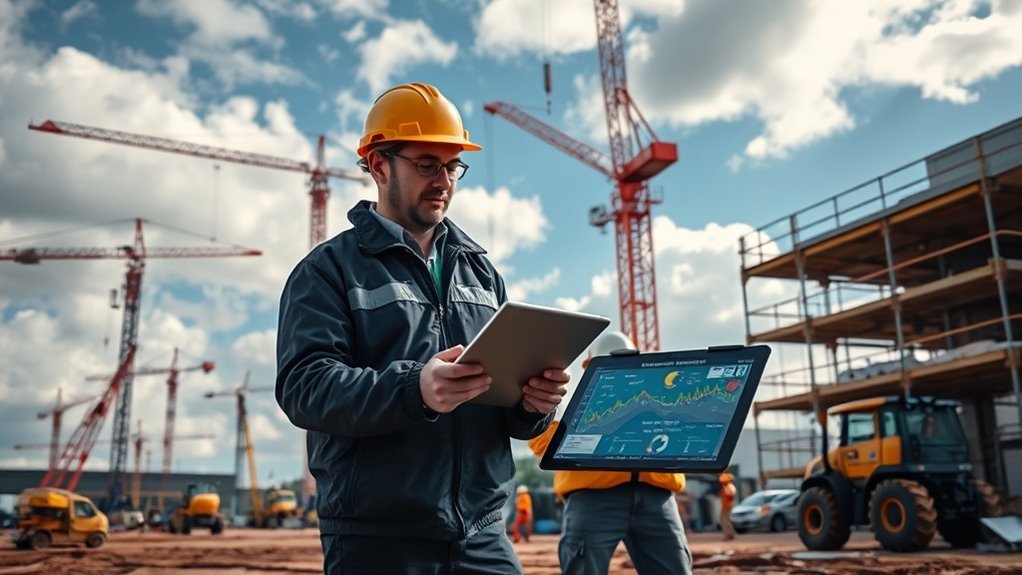
When you plan construction activities around weather patterns, you can substantially reduce delays and risks.
Start by using historical weather data to identify seasonal trends. This allows you to schedule critical outdoor activities like concrete pouring during dry, mild periods.
Incorporate weather forecasts into your construction scheduling to adjust work sequences proactively. This helps you avoid high-risk times such as heavy rain or extreme heat.
Effective seasonal planning helps you minimize weather delays and maintain smooth project timelines.
Always build contingency buffers into your schedule for unexpected weather disruptions.
Collaborate with local weather experts for insights on regional climate challenges.
Consistent weather monitoring supports risk management by informing timely decisions.
Implement Real-Time Weather Monitoring Systems
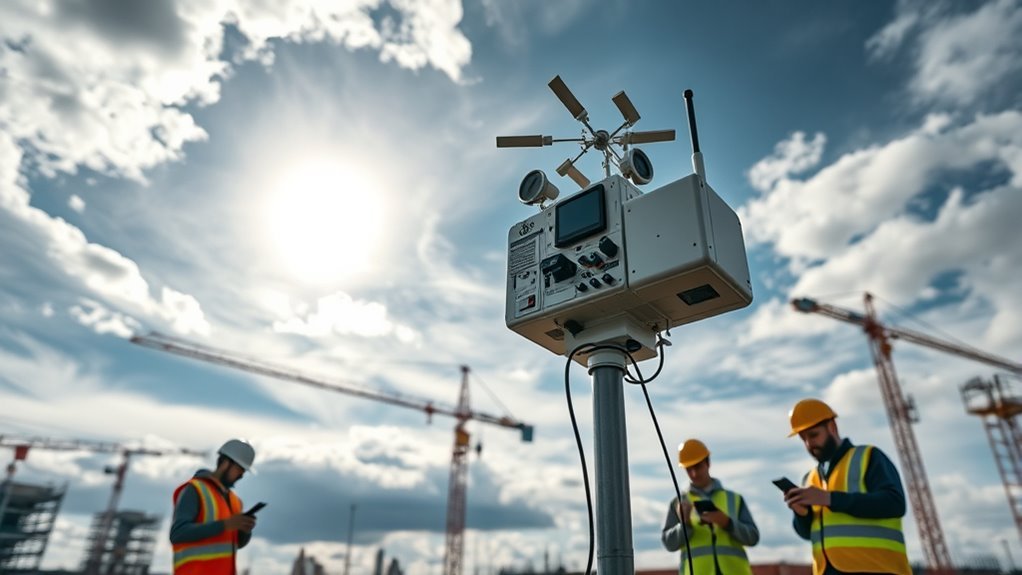
Although planning around weather patterns is essential, implementing real-time weather monitoring systems takes your risk management to the next level.
Installing weather stations on construction sites gives you accurate weather data on wind, temperature, humidity, and precipitation.
Real-time weather alerts help you react quickly to changing weather conditions, reducing weather risks and enhancing site safety.
Integrating weather forecasting tools with your construction project management improves scheduling and coordination.
Plus, tracking weather conditions supports documentation for delays and safety incidents.
| Feature | Benefit | Impact on Construction Project |
|---|---|---|
| Weather Stations | Accurate local weather data | Informed decision-making |
| Real-Time Alerts | Immediate warnings | Faster response to hazards |
| Weather Forecasting | Predicts severe weather | Better schedule adjustments |
| Data Integration | Combined project insights | Optimized resource allocation |
| Weather Condition Logs | Records for documentation | Supports dispute resolution |
Prioritize Safety and Communication During Weather Events
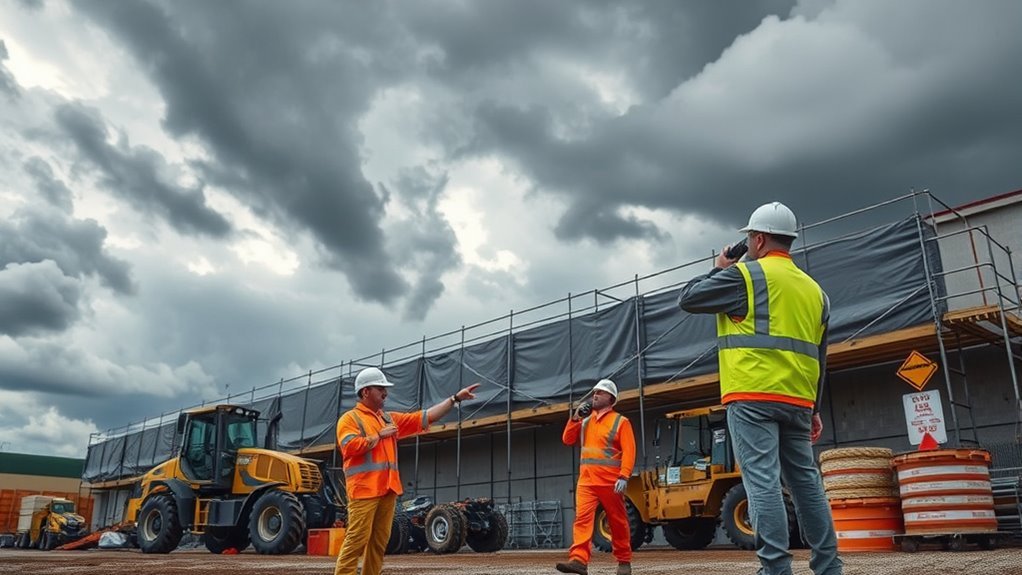
Since weather events can change rapidly, clear communication channels and effective warning systems are essential to keep everyone informed in real time.
Clear communication and timely warnings are vital for real-time updates during rapidly changing weather conditions.
Using real-time data and weather alerts, you can promptly notify your construction team about hazardous conditions, which helps minimize risk and avoid costly delays.
It’s also crucial to train your workers to recognize weather-related hazards and follow safety protocols—especially during high winds or extreme heat.
Set safety thresholds, like stopping work when wind speeds exceed 50 km/h or temperatures become unsafe, to prioritize worker protection.
In your project management, emphasize ongoing communication to ensure everyone understands when to pause or resume tasks.
Providing necessary shelter, hydration, and protective gear during adverse weather will help maintain safety.
Frequently Asked Questions
How Can Weather-Resistant Materials Reduce Construction Delays?
Using weather-resistant materials helps you avoid delays by ensuring your project withstands rain, wind, and temperature changes.
This means fewer repairs and interruptions, so you can keep your construction on schedule despite unpredictable weather.
By choosing the right materials, you set your project up for success, even when Mother Nature decides to throw a curveball.
It’s all about minimizing those unexpected hiccups that can derail your timeline.
What Insurance Options Cover Weather-Related Construction Damages?
You can get builder’s risk insurance or all-risk policies to cover weather-related damages.
These protect your construction site from storms, floods, or wind damage, helping you avoid costly delays and repairs.
Don’t skip them!
How Do Weather Conditions Affect Concrete Curing Times?
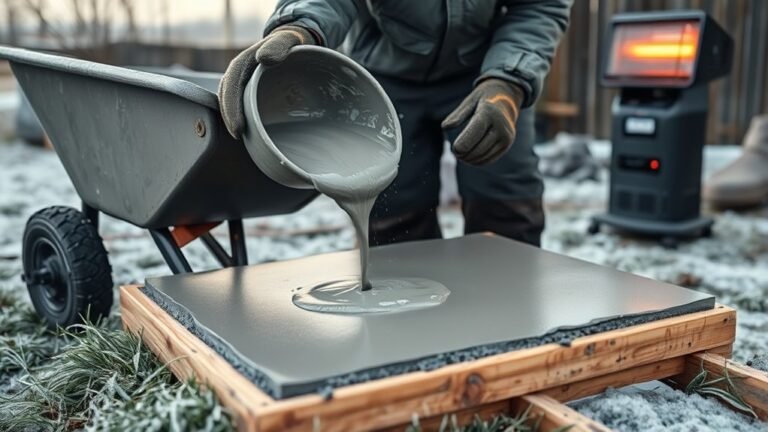
When you pour concrete during cold weather, curing slows dramatically.
For example, a project in Minnesota delayed completion because freezing temperatures extended curing times by weeks.
This forced you to adjust schedules and use additives to speed curing.
What Training Helps Workers Handle Extreme Weather Safely?
You should get training on recognizing weather hazards, using protective gear, and emergency response.
Courses on heat stress, cold exposure, and proper hydration help you stay safe and effective when working in extreme weather conditions.
It’s really important to understand these concepts so you can be prepared for anything Mother Nature throws at you!
How to Protect Construction Equipment From Sudden Weather Changes?
“Better safe than sorry.”
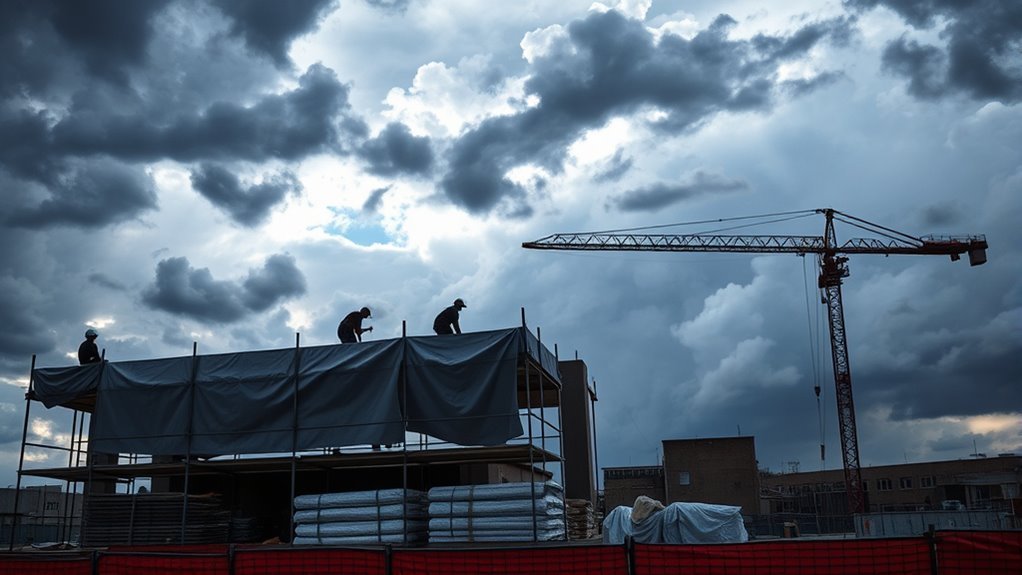
You should cover your equipment with tarps and store it in sheltered areas.
Also, perform regular maintenance checks.
Additionally, secure loose parts and monitor weather forecasts closely to act before sudden changes hit.
Conclusion
By planning your construction around weather patterns, you’re laying a strong foundation against nature’s surprises.
With real-time monitoring, you hold the weather’s pulse in your hands, ready to act when storms loom.
Prioritizing safety and communication turns your team into a well-oiled machine, weathering any storm together.
Embrace these tips, and you’ll not just build structures—you’ll build resilience, standing tall no matter what the skies throw your way.
—
In conclusion, understanding weather patterns is crucial for minimizing risks in construction.
By utilizing real-time monitoring, you can proactively manage potential weather challenges.
Additionally, fostering a culture of safety and open communication within your team ensures that everyone is prepared to tackle any situation.
With these strategies, you’re not just constructing buildings; you’re creating resilient frameworks that can withstand whatever Mother Nature has in store.