How to Do Catfish Bite in Cold Weather
To get catfish to bite in cold weather, focus on deep holes, ledges, and structures where they hang out suspended 2 to 12 feet off the bottom.
Using fresh, small bait like shad or bluegill is key. Keep the bait lively to attract those slower fish that are typically less active in colder temperatures.
Cover multiple depths with lighter tackle and slower retrieves to match sluggish bites.
Layer up with warm gear for comfort, and don’t forget to stay patient.
There’s more to mastering winter catfishing success just ahead!
Understanding Catfish Behavior in Cold Water
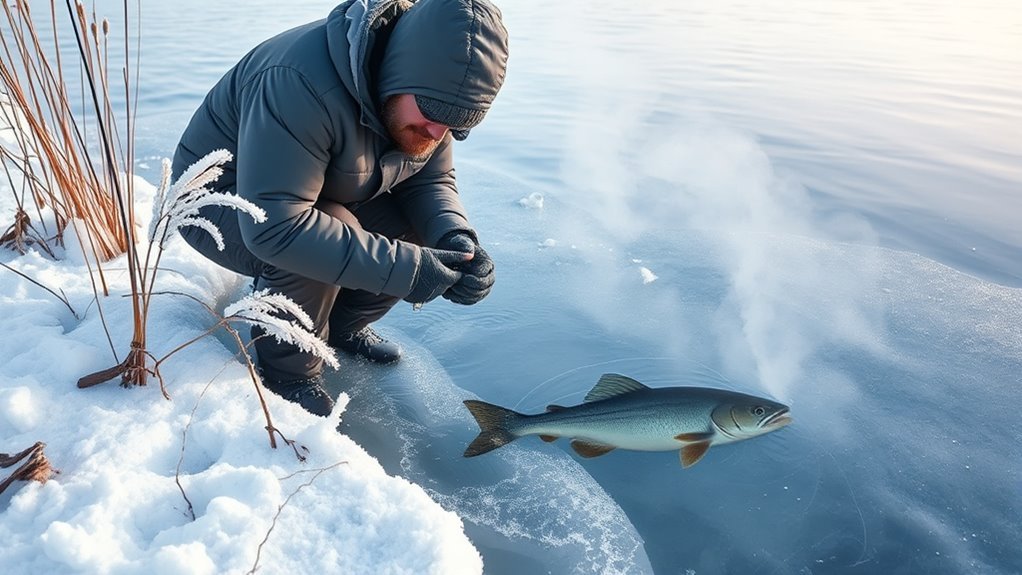
Although catfish slow down in cold water, understanding their behavior can help you improve your chances of a bite.
Catfish slow down in cold water, but knowing their habits can boost your fishing success.
When water temperature drops below 50°F, catfish behavior changes drastically—they become sluggish and feed less frequently, often suspending 2 to 12 feet off the bottom.
Knowing this, you can adjust your fishing tactics accordingly.
Flathead catfish, for example, tend to gather around specific spots like deep holes or blow down trees in winter.
These insights offer key fishing tips: focus on these areas and wait patiently for subtle strikes.
While bait selection plays a vital role, it’s important to remember catfish prefer smaller, natural baits during cold water months.
Selecting Effective Baits for Winter Catfishing
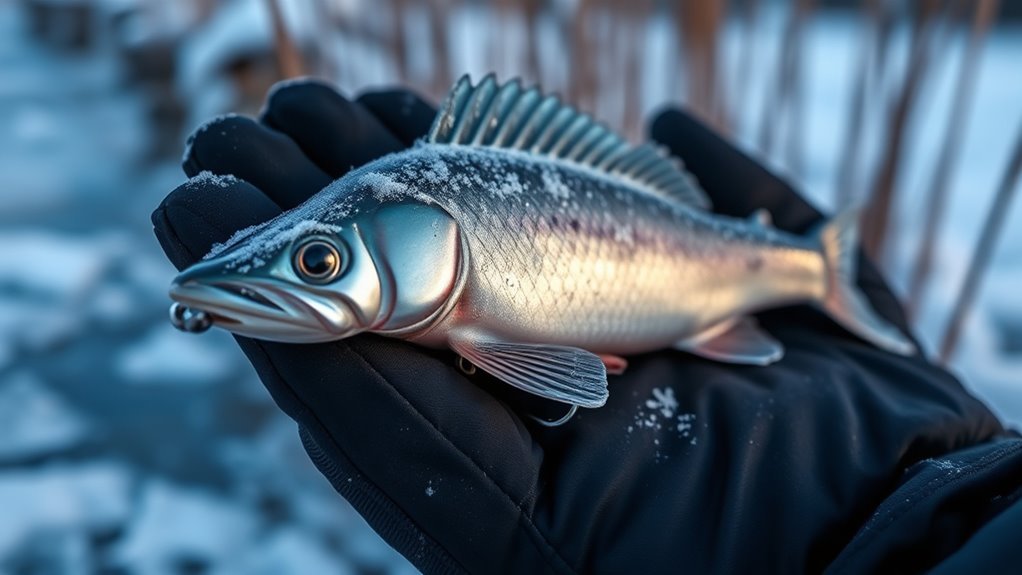
You’ll want to focus on fresh native baits like shad, bluegill, or skipjack herring to match what catfish naturally eat in winter.
Keeping your bait small and lively helps, since cold water makes catfish prefer smaller, more natural meals.
Let’s look at how to prepare and choose the best bait for these chilly conditions.
Fresh Native Baits
Choosing fresh native bait like shad, bluegill, or skipjack herring gives you a clear advantage when catfishing in cold weather.
This fresh bait closely mimics what winter catfish naturally feed on, making it much more effective than frozen or store-bought alternatives.
Using native bait ensures a stronger bait scent and natural movement that triggers bites even in colder water.
Pay attention to bait size: during winter, smaller baits around 2-3 inches work best since catfish prefer smaller prey.
Keep these points in mind for your bait selection:
- Native bait like shad stays lively up to 30 minutes in cold water, increasing strike chances.
- Fresh bait offers a scent profile frozen bait can’t match.
- Smaller bait size aligns with winter catfish feeding habits, improving your catch rate.
Bait Preparation Tips
When preparing bait for winter catfishing, focus on freshness and size to match catfish’s slower metabolism.
Use fresh bait like native shad, gizzard, or skipjack herring instead of frozen or freezer-burned options, which lose effectiveness in cold water.
Small baitfish around 2-3 inches work best; cutting them in half helps with matching bait to catfish’s sluggish feeding habits.
Live bait is especially valuable since it remains active longer in cold conditions—shad can stay lively for 25-30 minutes, increasing your chances of a bite.
Avoid old or improperly stored fish food, as freshness plays a vital role in attracting catfish during winter.
Prioritize high-quality, natural bait that closely mimics their primary winter diet for the best results.
Seasonal Bait Preferences
Winter catfish favor smaller, natural baits that closely resemble their usual diet, such as cut shad, bluegill, or skipjack herring.
When selecting winter bait, focus on live bait whenever possible. It stays lively and boosts fish activity more than frozen options.
Using small bait, typically 2-3 inches, matches the catfish’s slowed metabolism and feeding habits in cold water.
Cutting your bait in half can also improve your chances by making it easier for sluggish catfish to swallow.
Keep these tips in mind for seasonal bait preferences:
- Prioritize fresh, native baitfish like cut shad or gizzard herring.
- Use live bait to maintain natural movement and attract bites.
- Reduce bait size to match decreased fish activity in cold conditions.
Utilizing Technology to Locate Winter Catfish
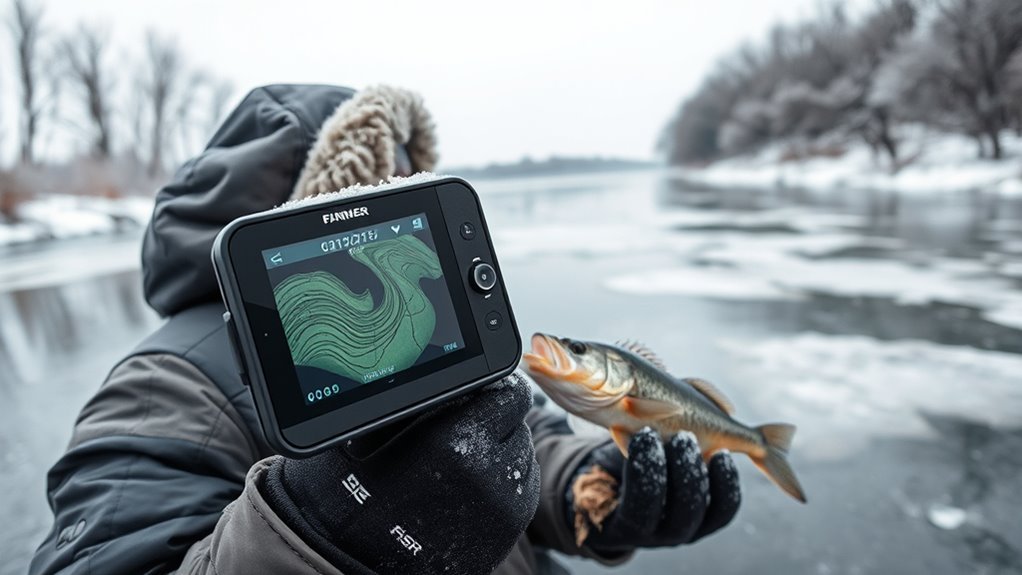
You can use sonar and fish finders to pinpoint where catfish gather under the ice, especially near baitfish schools.
Lake mapping software on your GPS helps locate deep holes and structures where catfish like to rest in cold water.
Pair these tools with underwater cameras to visually confirm catfish hiding near debris or ledges for a smarter winter fishing strategy.
Sonar and Fish Finders
Although cold water can slow catfish activity, sonar and fish finders give you a clear advantage by pinpointing their locations and movement patterns.
These tools help you detect winter catfish even when low water temperatures reduce their activity.
Sonar provides detailed structure detection, revealing ledges, drop-offs, and breaks where catfish often gather.
To maximize your success, focus on these techniques:
- Use high-resolution fish finders like Lowrance or Humminbird for precise depth and movement data.
- Track baitfish schools, as they attract winter catfish in cold water.
- Employ underwater cameras with your sonar to visually confirm catfish presence and behavior.
Lake Mapping Software
Building on the advantages sonar and fish finders offer, lake mapping software takes your ability to locate catfish in cold water a step further.
Programs like Navionics and LakeMaster provide detailed bathymetric charts that reveal deep water areas, underwater features, and contour lines where winter catfish tend to gather.
You can mark and save your hot spots, making it easier to return to productive locations like creek mouths and channel ledges.
Using lake mapping software on your smartphone or GPS lets you navigate precisely to these key winter holding areas.
Underwater Camera Use
When you deploy underwater cameras, you gain real-time visuals of catfish behavior and habitat. This helps pinpoint active spots during cold weather.
These cameras let you observe fish activity closely. So, you can adjust your rigging and bait presentation based on what’s working.
By seeing how catfish react, you reduce guesswork and improve your chances of a bite.
Using underwater cameras, you can:
- Identify flatheads and channel cats near structures like logs or beaver dams.
- Locate schools of baitfish that attract catfish in cold water.
- Fine-tune rigging and bait placement to match fish behavior.
Embracing this technology helps you fish smarter. It makes every cast count when catfish slow down in winter.
Targeting Ideal Structures and Ledges
Since catfish tend to cruise along structure breaks, you should focus on deep holes and ledges, especially in lakes over 50 feet deep.
Target ledges where baitfish gather, and drop bait just off the deep side of these breaks.
Current plays a key role—concentrate on spots where it slows or creates slack water behind rocks or fallen trees.
Drill multiple holes at varying depths along ledges, starting deep, to increase your chances.
Proper bait placement near these features maximizes feeding opportunities.
| Structure Breaks | Current Effect | Bait Placement |
|---|---|---|
| Deep holes | Slows/slack water | Off deep side of ledges |
| Ledges | Creates eddies | Near rocks and trees |
| Drop-offs | Reduces flow | Along depth variations |
Adjusting Presentation and Tackle for Cold Conditions
Although cold weather slows catfish activity, you can still entice bites by adjusting your tackle and bait presentation to match their sluggish behavior.
In cold water fishing, a slow retrieve is key—keep your bait movement minimal to mimic dormant prey.
Opt for lighter tackle and smaller hooks to match the catfish’s less aggressive strikes.
Also, use softer-tip rods to better detect subtle bites.
- Use heavier weights to keep bait just off the bottom, where catfish often suspend in cold conditions.
- Reduce reel drag to let fish hook themselves gently, minimizing missed bites.
- Maintain a slow, deliberate bait presentation for maximum appeal during winter.
These tackle adjustments and bait presentation tweaks improve your chances of success despite the cold.
Collaborating and Covering Multiple Depths
How do you increase your chances of landing catfish in cold weather?
By collaborating and covering multiple depths.
Drill several holes along ledges or drop-offs and spread your rods across shallow to deep water.
Use fish finders to locate bait and catfish schools, then place lines accordingly.
Covering a range of depths helps you quickly adjust as fish move vertically with temperature changes.
Working with others to fish different depths simultaneously maximizes coverage and success.
| Depth Range | Rod Placement | Catfish Activity |
|---|---|---|
| Shallow (0-5 ft) | Near shore vegetation | Light feeding |
| Mid (5-15 ft) | Drop-off edges | Moderate activity |
| Deep (15+ ft) | Deep hole or ledge | Active but slow |
| Varies | Multiple holes | Best coverage |
Preparing Proper Gear and Clothing for Winter Fishing
When you head out for catfishing in cold weather, preparing the right gear and clothing is essential to stay comfortable and safe.
Focus on winter clothing that includes moisture-wicking base layers to keep sweat off your skin.
Start with moisture-wicking base layers to stay dry and comfortable during cold-weather catfishing.
Then, add insulating layers and a windproof outer shell for warmth and protection. Proper gear preparation guarantees you avoid hypothermia and frostbite during long hours outdoors.
Key items to bring include:
- Insulated, waterproof boots with good traction to keep your feet dry and steady on icy terrain.
- Warm gear like insulated hats, gloves, and wool socks to protect your extremities.
- Hand warmers or heated gloves for extra insulation during freezing temperatures.
This layered approach, using moisture-resistant materials, maximizes insulation while preventing moisture buildup.
Frequently Asked Questions
How to Get Catfish to Bite in Cold Water?
You’ll want to fish slowly using small, natural bait like cut fish.
Target deep holes or structures, keep your bait suspended, and use lighter tackle to detect subtle bites from cold, sluggish catfish in chilly water.
What’s the Best Bait to Use for Catfish in the Winter?
Did you know catfish prefer live bait 70% more in winter?
You’ll want to use small, live shad or cut shad—they stay lively in cold water and dramatically boost your chances of a successful catch.
What Time of Day Do Catfish Bite in the Winter?
You’ll find catfish biting best between 10 a.m. and 3 p.m., when the water warms up.
On sunny days, late afternoon or just before sunset can also work, especially near warm spots or cover.
Do Catfish Bite During a Cold Front?
You probably won’t get much action during a cold front since catfish bite rates can drop by over 50%.
They slow down and hide deep, so focus on slow presentations and natural bait to improve your chances.
Conclusion
Just like a seasoned explorer braving the Arctic chill, you’ll conquer winter catfishing by understanding their cold-water habits and choosing the right bait.
With technology as your compass and patience as your shield, you’ll reveal secret depths and hidden structures.
Dress warmly, adjust your tackle, and don’t hesitate to cover multiple spots.
Remember, every cold bite is a victory—your own tale of perseverance written in icy waters.
Keep casting; the reward’s worth it.
In conclusion, winter catfishing can be a thrilling experience if you know what to do. Understanding catfish behavior in cold weather, selecting effective bait, and being prepared with the right gear are essential.
Embrace the chill, stay patient, and explore various fishing spots.
Each cast could lead to that rewarding catch you’re after. So gear up, take on the icy waters, and enjoy the adventure of winter fishing!