
Does Cold Weather Make Arthritis Pain Worse?
Yes, cold weather can make your arthritis pain worse. Many people with arthritis find that their symptoms flare up during colder months.
When temperatures drop, the fluid in your joints thickens, causing stiffness.
Additionally, cold weather tightens blood vessels and nerves, which can reduce circulation and increase inflammation.
You might also experience more discomfort due to changes in barometric pressure before storms, as this can lead to swelling in joint tissues.
As a result, it’s common to notice increased joint pain, swelling, and muscle tightness on cold or damp days.
But don’t worry; there are ways to ease this pain and keep your joints comfortable all winter.
How Cold Weather Affects Joint Health

Although cold weather might seem harmless, it can actually make your arthritis symptoms worse by affecting how your joints function.
When the temperature drops, synovial fluid in your joints thickens, leading to stiff joints and increased joint pain.
Cold weather also constricts nerves and blood vessels, reducing circulation and increasing inflammation around affected areas.
Cold weather narrows nerves and vessels, slowing circulation and boosting inflammation in affected joints.
As circulation slows, muscle spasms become more frequent, adding to discomfort.
You might notice that your arthritis symptoms flare up during colder months because these changes heighten joint sensitivity.
While barometric pressure plays a role, the direct impact of cold temperatures on your joint tissues and muscles markedly contributes to your discomfort.
Understanding these effects helps you manage arthritis pain more effectively during chilly days.
The Role of Barometric Pressure in Arthritis Pain

When barometric pressure drops, your joint tissues can expand, increasing pain and stiffness.
This change in atmospheric pressure affects your joint receptors, which detect barometric fluctuations and can heighten pain severity in arthritis sufferers.
As the pressure falls, tendons and ligaments also expand, adding stress to already burdened joints.
You might notice more joint pain and swelling during these weather changes, especially before storms when pressure drops rapidly.
Rising humidity often accompanies low barometric pressure, worsening joint swelling and discomfort.
Though temperature plays a role, it’s the shifts in barometric pressure that directly influence how your arthritis feels.
Understanding this connection helps you anticipate flare-ups and manage symptoms more effectively during changing weather patterns.
Common Symptoms Experienced During Winter Months
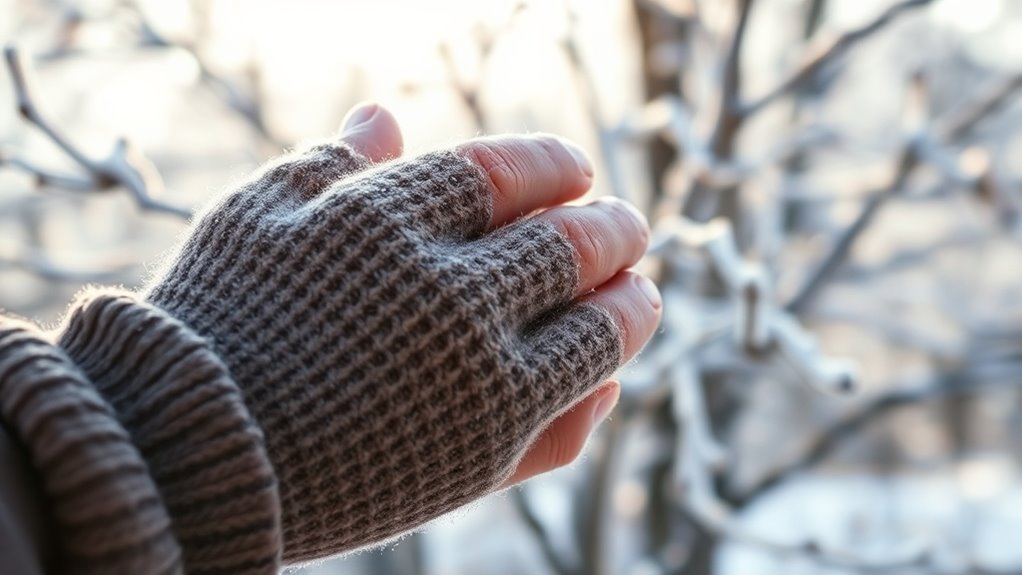
Since cold and wet weather often worsens arthritis symptoms, many people notice increased joint pain, stiffness, and swelling during the winter months.
You may feel heightened joint discomfort as cold weather triggers inflammation and muscle tightness.
Changes in barometric pressure also cause joint capsule swelling, making pain signals stronger.
These symptoms tend to worsen on rainy, snowy, or overcast days, limiting your mobility and daily activities.
| Symptom | Impact on You |
|---|---|
| Joint Pain | Sharp or aching, worsens with cold |
| Stiffness | Reduced movement, harder mornings |
| Swelling | Visible puffiness, joint tenderness |
| Muscle Tightness | Increased discomfort, less flexibility |
Recognizing these common symptoms helps you better understand your arthritis during winter months.
Effective Strategies to Alleviate Cold Weather Joint Pain
Dealing with increased joint pain and stiffness during cold weather can be challenging, but you can take practical steps to ease your discomfort.
Prioritize warmth by wearing layered clothing and using heat therapy like warm compresses or paraffin dips to reduce inflammation and improve circulation.
Keep joints warm with layers and heat therapy to ease inflammation and boost circulation.
Staying active with low-impact exercises such as stretching or swimming helps maintain joint mobility and decreases stiffness.
Incorporate omega-3 fatty acids into your diet to combat inflammation naturally.
Also, ensure you get enough vitamin D through food or supplements to support joint health in winter.
These strategies collectively alleviate joint pain caused by cold weather, helping you stay comfortable and mobile despite the chilly conditions.
Lifestyle Adjustments for Managing Arthritis in Winter
Although winter can intensify arthritis symptoms, adopting specific lifestyle adjustments can help you manage pain and maintain mobility during the colder months.
Start by wearing warming clothing like thermal garments and insulated layers to keep joints warm and reduce joint discomfort.
Incorporate heat therapy using heating pads or warm compresses to relax muscles and improve circulation.
Engage in low-impact exercise and flexibility exercises indoors, such as yoga or swimming, to maintain joint flexibility despite the cold.
Including omega-3 fatty acids in your diet is also beneficial, as they can decrease joint inflammation and support overall joint health.
Don’t forget to monitor your vitamin D levels and supplement if needed, as it plays a key role in bone strength and may reduce arthritis flare-ups.
Staying active indoors and managing inflammation helps you face winter with less pain.
Frequently Asked Questions
How to Calm Down Arthritis Flare Up?
To calm down an arthritis flare-up, you should apply warm compresses, do gentle stretches, and stay hydrated.
Eating anti-inflammatory foods can also help ease your symptoms.
Additionally, wearing layered clothing will keep you comfortable, especially when temperatures fluctuate.
Consider low-impact exercises like yoga to reduce pain and improve joint mobility.
Where Is the Best Place to Live for Arthritis?
You’ll find the best place for arthritis relief in warmer, sunnier climates like California, Florida, or the Southwest.
These areas offer mild winters and stable temperatures, helping reduce joint stiffness and flare-ups for better comfort.
Living in such climates can make a significant difference in managing arthritis symptoms.
What Is the Best Pain Killer for Arthritis?
Think of NSAIDs as your shield against arthritis pain—they reduce inflammation and ease discomfort effectively.
You’ll find ibuprofen or naproxen work best, but always check with your doctor to tailor the right relief for you.
What Is the Fastest Way to Relieve Arthritis Pain?
You can relieve arthritis pain fastest by applying heat to relax muscles, taking NSAIDs like ibuprofen, and gently stretching stiff joints.
Elevate and rest affected areas to reduce swelling and prevent further irritation quickly.
These methods can help you feel more comfortable and improve your joint function.
It’s always a good idea to listen to your body and not push yourself too hard!
Conclusion
Think of your joints like a car in winter—when the temperature drops, the engine might stiffen up, making it harder to drive smoothly.
Studies show nearly 70% of arthritis sufferers report increased pain in cold weather.
But just like warming up your car before a trip, you can ease your joint discomfort.
Staying active, dressing warmly, and adjusting your routine are all effective strategies.
With these approaches, you’ll keep moving comfortably, no matter how chilly it gets outside.
In conclusion, cold weather can indeed worsen arthritis pain for many individuals.
By incorporating simple strategies like gentle exercise and appropriate clothing, you can help manage your discomfort.
Remember, staying warm and active is key to maintaining joint health during the colder months!