How Do Fleas Die in Cold Weather Step-by-Step
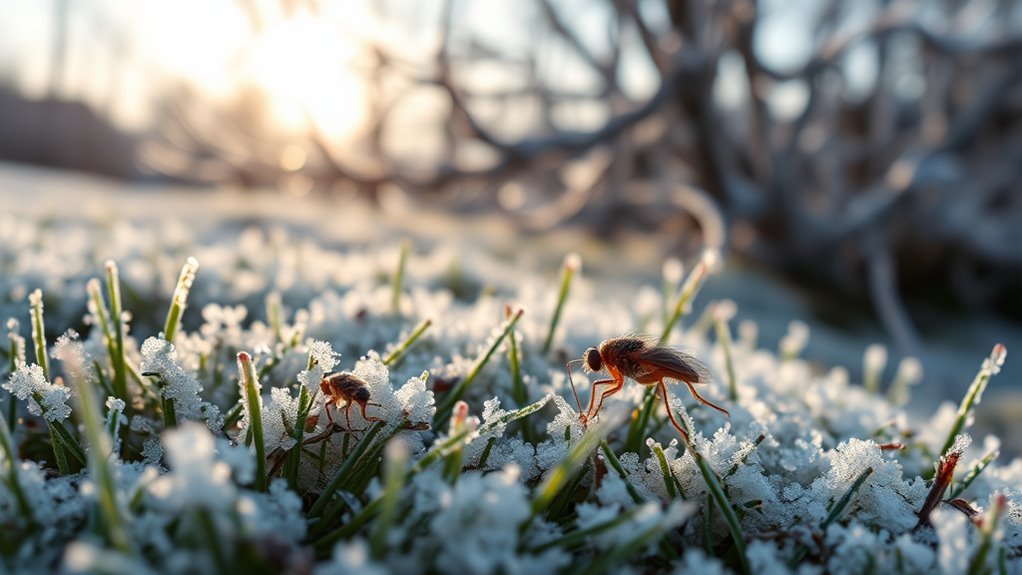
When temperatures drop below freezing for several days, flea eggs and larvae often die because cold halts hatching and dries out their environment.
Pupae inside cocoons can survive short cold spells but usually perish after prolonged freezes.
Adult fleas struggle outdoors in the cold but survive by hiding on pets or in insulated shelters.
Wildlife also carries fleas through winter, keeping populations alive.
To fully understand how fleas manage cold and what you can do, keep exploring these survival steps.
The Flea Life Cycle and Temperature Sensitivity
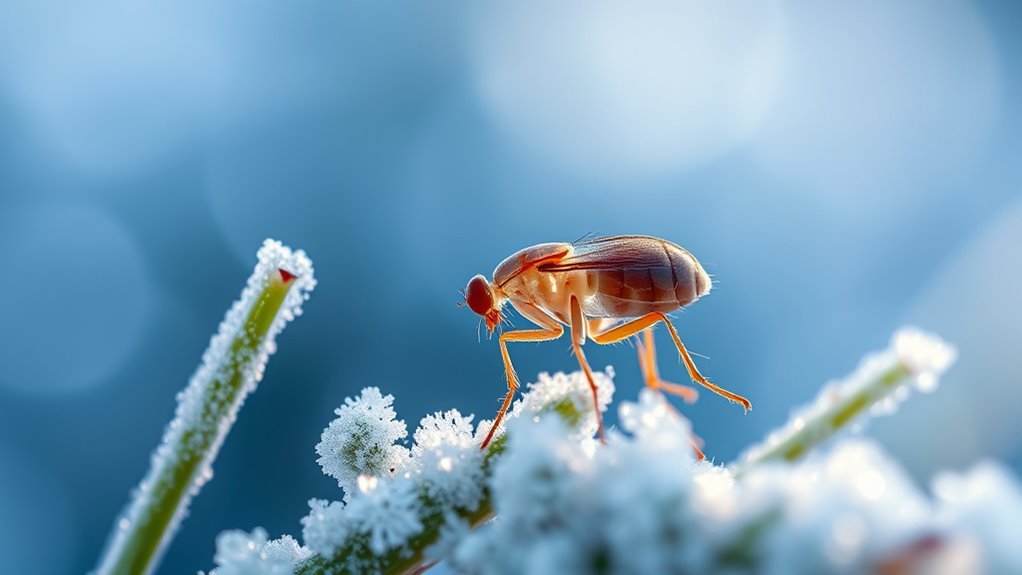
Although fleas go through four distinct life stages—egg, larva, pupa, and adult—each responds differently to cold temperatures.
Understanding the flea life cycle helps you grasp their temperature sensitivity.
Flea eggs can stay dormant for weeks or months, safely tucked away in protected environments, making them largely unaffected by cold.
Flea eggs remain dormant for months in protected areas, largely unaffected by cold temperatures.
Larvae, however, are more vulnerable to freezing but often survive in sheltered spots like soil or bedding where temperatures remain stable.
Pupae endure extended cold periods inside their cocoons, waiting for warmth or movement to trigger their emergence.
Adult fleas are the most sensitive stage; if exposed to temperatures below 32°F (0°C) for about five days, they usually die.
How Cold Temperatures Affect Flea Eggs and Larvae
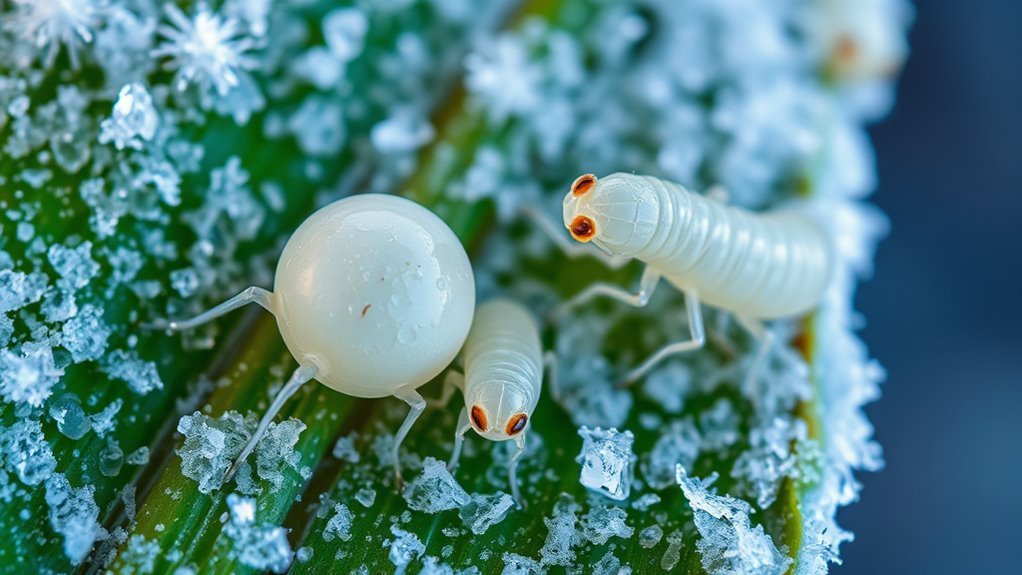
You’ll find that flea eggs are highly sensitive to cold and often won’t survive prolonged exposure to freezing temperatures.
Larvae face similar challenges, usually needing a protected environment to stay alive when it gets chilly.
Understanding these survival factors helps explain why flea populations decline during cold weather.
Egg Sensitivity to Cold
When temperatures drop below freezing, flea eggs struggle to survive. Prolonged exposure to cold can either kill them or halt their development.
Flea eggs laid outdoors are especially vulnerable. You see, repeated freeze-thaw cycles can significantly reduce their viability.
Cold temperatures often cause the eggs to enter a state of dormancy, which delays hatching until conditions improve.
On the other hand, indoor warmth usually protects flea eggs throughout the winter.
| Condition | Effect on Flea Eggs | Key Factor |
|---|---|---|
| Below 32°F (0°C) | Eggs often die or freeze | Prolonged exposure |
| Freeze-thaw cycles | Damage reduces viability | Repeated cycles |
| Outdoor environment | High susceptibility | Exposure to elements |
| Dormancy | Development pauses | Cold temperatures |
| Indoor warmth | Eggs survive winter | Stable temperatures |
Larvae Survival Factors
Since flea larvae thrive in dark, humid environments, cold temperatures pose a serious threat by drying out their surroundings and slowing their development.
When temperatures drop below 32°F (0°C), flea larvae struggle to survive as the environmental conditions become too harsh.
Cold temperatures inhibit the hatching of flea eggs, preventing new larvae from emerging.
Even if eggs manage to hatch, the larvae rarely survive more than a few days to weeks in freezing conditions.
The lack of moisture in cold environments further reduces their survival chances.
Overall, cold weather markedly delays the development of flea eggs and larvae.
Prolonged exposure to freezing temperatures leads to high mortality rates, making it difficult for flea populations to sustain themselves during winter months.
The Impact of Freezing on Flea Pupae and Cocoons
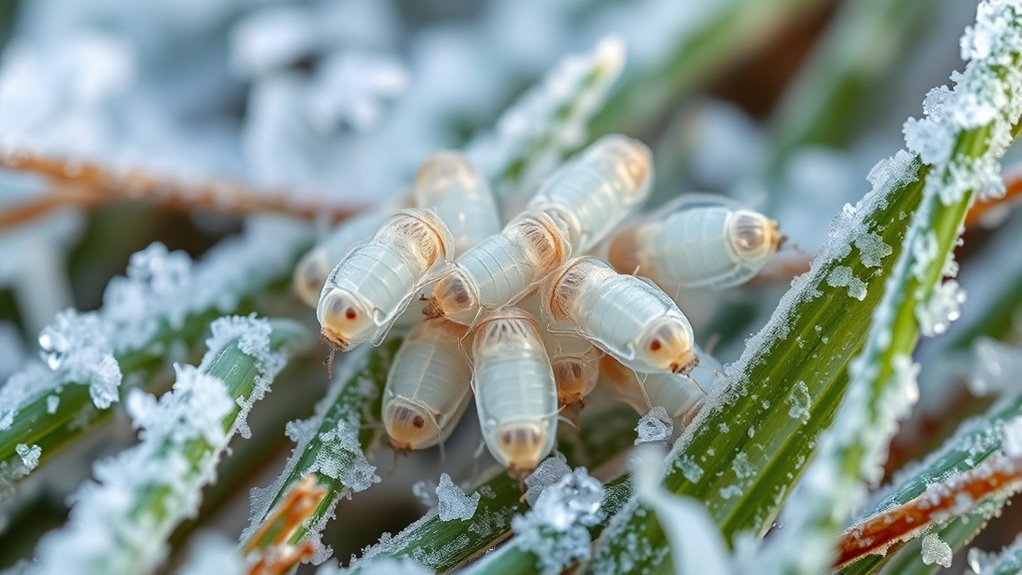
You’ll find that flea pupae enter a dormant state inside their protective cocoons, allowing them to tolerate cooler temperatures for weeks.
However, when freezing conditions persist, those pupae can’t survive the cold for long.
Understanding how freezing impacts these stages helps you anticipate and control flea populations during winter.
Flea Pupae Dormancy
Although flea pupae can stay dormant inside their cocoons for up to 30 weeks at mild temperatures around 52°F (11°C), freezing conditions below 32°F (0°C) for several days can harm or kill them.
You should know that flea pupae enter dormancy to survive cold weather, slowing their development until conditions improve. Their cocoons act as a protective barrier, insulating them from short-term cold spells and increasing their chances of survival.
However, prolonged exposure to freezing temperatures usually damages the pupae inside, preventing adult fleas from emerging. While cold weather can delay flea emergence, it’s the extended freezing that poses the real threat.
Understanding this dormancy and the impact of freezing temperatures helps explain why controlling fleas during winter requires targeting multiple life stages.
Cocoon Temperature Tolerance
Understanding how flea pupae tolerate temperature extremes helps clarify why their survival hinges on the cocoon’s protective qualities.
The flea cocoon acts as a shield, giving flea pupae some temperature tolerance during cold weather. While mild cold slows the emergence of adult fleas, it rarely kills the pupae inside.
However, prolonged exposure to freezing temperatures below 32°F (0°C) for over five days usually damages both the cocoon and pupae, preventing adult fleas from emerging.
Key points on cocoon temperature tolerance include:
- Flea pupae can survive up to 30 weeks around 52°F (11°C) within their cocoons.
- Freezing temperatures lasting more than five days typically kill pupae and damage the flea cocoon.
- The cocoon offers better protection than eggs or larvae against cold weather but has limits.
Freezing Effects on Pupae
When flea pupae face freezing temperatures, their survival depends heavily on how long the cold lasts and how low it drops.
The flea cocoon’s silk layer insulates the pupae, allowing them to endure short cold spells without harm.
However, in outdoor environments, prolonged exposure to temperatures below 32°F (0°C) over several days can cause them to die.
Sudden or repeated freeze-thaw cycles increase their vulnerability.
To effectively kill flea pupae, the temperature usually needs to drop below 0°F (-18°C) and stay there for 24 to 48 hours.
Survival of Adult Fleas in Winter Conditions
If adult fleas can find a warm host or a sheltered spot, they’ll survive even harsh winter conditions.
Adult fleas rely on a protected environment to extend their flea lifespan during cold months.
While outdoor temperatures below 32°F for over five days usually kill them, those nestled on pets or inside indoor environments often persist.
Their winter survival depends less on the cold outside and more on access to warmth and shelter.
In colder weather, adult fleas become less active but can still feed and reproduce if conditions are just above freezing.
Key factors for adult fleas’ winter survival include:
- Availability of warm hosts like pets or wildlife
- Shelter within indoor or protected environments
- Ability to reduce activity while maintaining feeding
Role of Indoor and Outdoor Environments in Flea Survival
Adult fleas manage to survive winter mainly by finding warmth, but the environments around them play a big role too.
Indoor environments typically maintain temperatures above 46°F, which allows flea eggs, larvae, and pupae to survive year-round. This warmth and humidity create ideal conditions for the flea life cycle to continue indoors despite cold outdoor temperatures.
Outdoor fleas struggle to survive prolonged cold unless they find sheltered spots like animal dens or areas under snow.
You can’t overlook temperature regulation and environmental control to limit flea survival. Regular cleaning and maintaining moderate indoor temperatures help prevent fleas from thriving both indoors and in outdoor sheltered areas.
Understanding how these environments affect flea survival helps you effectively manage and reduce flea populations during winter.
How Wildlife and Pets Influence Flea Presence in Cold Weather
Although cold weather limits flea activity, wildlife and pets keep flea populations alive and active around your home.
Wildlife like raccoons, opossums, and stray cats carry fleas into outdoor areas year-round.
Raccoons, opossums, and stray cats carry fleas outdoors throughout the year, maintaining flea populations despite cold weather.
These outdoor animals nest in warm, protected places such as burrows, sheds, or dense foliage, where body heat keeps fleas viable despite low temperatures.
As outdoor temperatures fluctuate, fleas can become active again, increasing the risk of infestation on your pets.
Key factors influencing flea presence in cold weather include:
- Wildlife nesting in insulated outdoor burrows and dens
- Fleas surviving due to stable body heat in wildlife habitats
- Outdoor animals acting as carriers, re-infesting pets when conditions improve
Understanding this helps you recognize why flea risks persist even in cold months.
Strategies for Preventing Flea Infestations During Winter
Since fleas can remain active despite cold weather, you need to take proactive steps to prevent infestations during winter.
Regularly applying veterinarian-recommended flea prevention products year-round helps stop fleas before they multiply.
To prevent eggs and larvae from thriving indoors, vacuum frequently and wash pet bedding in hot water at least 60°C.
Using targeted flea sprays that attack multiple life stages further reduces infestation risks inside your home.
Outside, maintain yard hygiene by trimming grass and using natural repellents like rosemary or lavender to keep fleas from establishing.
Monitor your pets closely for any flea activity and consult your vet promptly to catch infestations early.
These strategies work together to prevent winter flea problems effectively, keeping your home and pets comfortable all season.
Frequently Asked Questions
How Long Do Fleas Need to Be in the Cold to Die?
You’ll need to expose fleas to freezing temperatures below 32°F for at least several days to weeks to kill all stages.
Adults die faster, around five days below 46°F, but eggs and larvae take longer.
What Kills 100% of Fleas?
Think of fleas like stubborn icicles; only extreme cold kills them all.
You’ll need sustained freezing below 0°F to eliminate every flea stage—eggs, larvae, pupae, and adults.
This ensures 100% flea death without exception.
Will Fleas Go Away on Their Own in Winter?
No, fleas won’t just go away on their own in winter.
They survive in warm spots like your home or pets.
You’ll need treatment to fully get rid of them since cold alone won’t kill every stage.
What Time of Year Do Fleas Die Off?
Fleas typically die off during late fall and winter when temperatures drop below freezing for several days.
You’ll notice their numbers decline most in cold, harsh climates.
But they can survive year-round in milder or indoor environments.
Conclusion
Now that you know how cold weather disrupts the flea life cycle—from eggs to adults—you’re better equipped to outsmart these pesky invaders.
Just like a knight in shining armor fending off dragons, you can protect your home by managing indoor warmth and keeping pets treated.
Remember, though fleas may try to survive winter’s chill, strategic prevention guarantees they don’t stand a chance.
Stay vigilant, and say goodbye to fleas until spring!
With the right precautions, such as consistent heating and effective flea treatments for your furry friends, you can ensure your home remains a flea-free zone.
Cold weather may hinder their survival, but it’s your proactive measures that truly seal the deal.
So gear up for winter and keep those annoying fleas at bay until the warmer months arrive!