Why Is Viscose Good for Hot Weather?
You’ll find viscose great for hot weather because it’s lightweight, breathable, and feels soft against your skin.
Its semi-synthetic fibers allow air to flow while absorbing moisture, so sweat dries quickly, keeping you cool and comfy.
The fabric’s natural drape also helps with ventilation and prevents heat buildup.
While it has some downsides, you’ll discover easy care tips and comparisons to help you make the most of viscose when temperatures rise.
Understanding the Composition of Viscose

Although viscose originates from natural sources like eucalyptus, beech, and pine wood pulp, it undergoes a chemical process that transforms the cellulose into a semi-synthetic fiber.
You start with cellulose, a natural polymer found in wood pulp, which is dissolved using chemicals like sodium hydroxide and carbon disulfide during production.
This chemical process creates a viscous solution that’s spun into fibers and regenerated into a soft, silky fabric called viscose.
Because viscose combines natural cellulose with chemical treatments, it’s classified as semi-synthetic rather than purely natural.
Viscose blends natural cellulose with chemical processes, making it a semi-synthetic fabric rather than completely natural.
This unique composition gives viscose fabric qualities that support breathability and moisture management.
These features make it a sustainable choice for warm climates.
Understanding its makeup helps you appreciate why viscose is favored for hot weather clothing.
The Breathability Features of Viscose Fabric
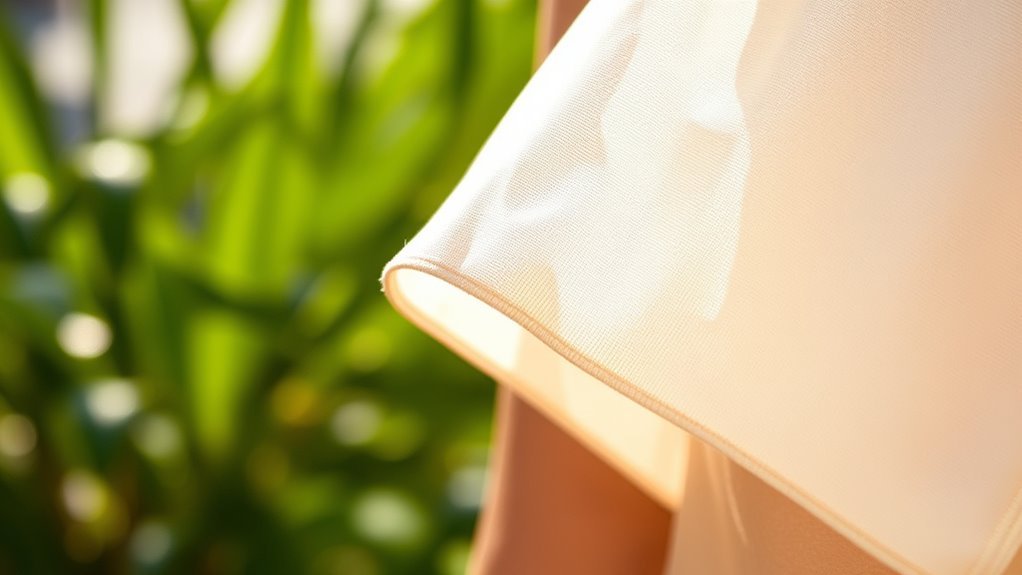
When you wear viscose fabric in hot weather, you’ll notice how well it breathes and manages moisture.
Its breathability comes from the fabric’s unique structure, allowing it to wick moisture away and promote airflow. This helps regulate body temperature and keeps you feeling cool.
Viscose fabric excels in three key ways:
- Its lightweight and natural drape enhance ventilation, reducing heat retention on your skin.
- Nanopores in the fibers facilitate continuous airflow, improving moisture management.
- The silky texture supports cooling by letting heat and moisture escape efficiently.
Thanks to these breathability features, viscose keeps you comfortable even in humid conditions.
It provides excellent moisture management and ventilation without weighing you down.
Moisture Absorption and Sweat Management

Beyond its breathability, viscose stands out for its impressive moisture absorption and sweat management.
You’ll appreciate how its porous fibers wick sweat away from your skin, absorbing up to 14% of its weight in moisture.
This moisture-wicking ability promotes sweat evaporation, keeping your skin dry and enhancing thermal comfort.
Viscose’s quick drying feature supports body temperature regulation by releasing moisture efficiently.
Thanks to these properties, it prevents clamminess, ensuring you feel fresh and comfortable even in humid conditions.
| Property | Benefit | Impact on Comfort |
|---|---|---|
| Moisture Absorption | Wicks sweat from skin | Maintains skin dryness |
| Porous Fibers | Enhances sweat evaporation | Improves breathability |
| Quick Drying | Speeds moisture release | Supports thermal comfort |
| Moisture-Wicking | Draws moisture away | Prevents clamminess |
| Sweat Management | Regulates perspiration | Aids body temperature regulation |
Temperature Regulation in Warm Conditions
Since viscose can absorb up to 14% of its weight in moisture, it helps you regulate your body temperature effectively in warm conditions.
Viscose absorbs moisture up to 14% of its weight, aiding effective body temperature regulation in warmth.
Its nanoporosity allows airflow through the fibers, enhancing ventilation and creating a cooling effect.
Viscose wicks sweat away from your skin, speeding up evaporation and preventing overheating.
Its lightweight, breathable texture promotes thermal comfort all day long.
Here’s how viscose supports temperature regulation:
- Moisture absorption and wicking keep you dry by pulling sweat away from your body.
- Airflow through nanoporosity enables constant ventilation, letting heat escape.
- Breathable, lightweight fabric feels cool against your skin, improving thermal comfort.
With viscose, you stay cooler and more comfortable in hot weather thanks to effective moisture management and enhanced airflow.
Comparing Viscose to Other Popular Summer Fabrics
Although many fabrics claim to keep you cool in summer, viscose stands out for its breathability and moisture-wicking abilities.
Made from natural cellulose, viscose promotes excellent airflow and quick-drying, which enhances thermal regulation when temperatures rise.
Unlike synthetic fabrics such as polyester, viscose feels softer and more comfortable against your skin.
It offers a silk-like softness that’s ideal for hot weather.
Compared to cotton, viscose dries faster and maintains its softness even when wet.
This helps reduce discomfort in humid conditions.
When blended with cotton, viscose creates a lightweight, cooling fabric that maximizes ventilation.
If you want breathable, moisture-wicking, and quick-drying clothing that supports natural thermal regulation, viscose is a smart choice over many popular summer fabrics.
Advantages of Viscose for Summer Clothing
Viscose offers several advantages that make it a top pick for summer clothing.
When you choose viscose fabrics for your summer wear, you enjoy a blend of comfort and style that keeps you cool all day.
Here’s why you’ll love it:
- Breathable and airy: Viscose allows excellent airflow, so your skin breathes easily. This makes it perfect for hot weather.
- Moisture-wicking and cooling: It absorbs moisture efficiently, preventing clamminess. This helps you stay dry and fresh throughout the day.
- Lightweight and soft: The fabric feels luxuriously soft against your skin and won’t weigh you down. This ensures all-day comfort, no matter what you’re doing.
These qualities make viscose a smart, comfortable choice for summer.
It combines luxurious softness with practical cooling benefits.
Potential Drawbacks of Wearing Viscose in Heat
Why might wearing viscose in hot weather sometimes feel uncomfortable? Its fabric properties include high moisture retention—up to 14%—which causes swelling and clinging against your skin in humid conditions.
This hampers breathability, so instead of staying cool, you may feel sticky and damp.
Viscose also has low wet strength; when wet, it loses about 50% of its durability, making it prone to tearing or deforming after washing or prolonged wear.
Its slow drying time means the fabric stays heavy and clammy longer, reducing overall comfort and impairing thermal regulation.
Sustainable Practices in Viscose Production
When you choose sustainably produced viscose, you support methods that recycle chemicals through closed-loop systems, cutting down on waste and pollution.
Sustainable viscose production relies on eco-friendly practices that reduce environmental impact and promote water and energy efficiency.
Here’s how it works:
- Responsible forestry ensures wood pulp comes from renewable resources certified by FSC or PEFC, protecting ecosystems.
- Recycled cellulose from textile waste or bamboo helps minimize resource consumption.
- Biodegradable chemicals replace toxic substances, making production safer for the planet.
Best Care Tips to Maintain Viscose Quality
If you want your viscose garments to stay soft and retain their shape, you’ll need to handle them with care.
Always hand-wash viscose in cold water using a gentle detergent to prevent fiber damage.
Avoid wringing or twisting the fabric, as this can cause fiber weakening and distortion.
After washing, lay flat or hang your viscose items on a padded hanger to dry.
Make sure to avoid sunlight, which can fade colors and weaken fibers.
When ironing, use low heat and a pressing cloth to smooth wrinkles without harming the fabric.
Proper storage is also essential—fold or hang your viscose clothing in a cool, dry place to maintain its quality.
Following these steps will help your viscose pieces last longer and look great in hot weather.
Frequently Asked Questions
Is Viscose Too Hot for Summer?
Viscose isn’t too hot for summer when it’s dry, since it feels cool and breathable.
But if you’re in high humidity, it can cling and feel heavy.
What Are the Disadvantages of Viscose?
Viscose can be a ticking time bomb in your wardrobe.
It soaks up moisture, loses strength when wet, and dries slowly.
Plus, it clings uncomfortably.
You’ll find it less durable and breathy, especially in humid or hot weather conditions.
What Is the Coolest Fabric for Hot Weather?
Linen is the coolest fabric for hot weather because it breathes well,
absorbs moisture quickly, and dries fast.
You’ll stay dry and comfortable thanks to its lightweight, airy fibers
and excellent ventilation.
Is Viscose Breathable Like Cotton?
You know what they say, “Don’t judge a book by its cover.”
Viscose is breathable like cotton, but it lets slightly less air through.
Still, it absorbs moisture well, keeping you comfy in warm weather.
Conclusion
So, why choose viscose for hot weather?
Because it’s breathable, absorbs moisture well, and helps regulate your body temperature, keeping you cool and comfortable.
While it has a few drawbacks, its lightweight feel and natural fiber origins make it a great summer fabric.
With proper care, you’ll enjoy its benefits for a long time.
Isn’t staying cool and stylish in the heat exactly what you want?
In conclusion, viscose is an excellent choice for hot weather due to its breathability and moisture-wicking properties.
It keeps you feeling fresh while adding a touch of elegance to your summer wardrobe.
By opting for viscose, you get the best of both worlds—comfort and style.
So, when the temperatures rise, remember that viscose can help you stay cool and fashionable all season long!