How Long Can You Hang a Deer in 70 Degree Weather?
You should hang a deer for no more than 24 hours at 70°F to avoid rapid spoilage and bacterial growth.
At this temperature, meat can deteriorate quickly, developing foul odors and sliminess.
To extend safe hanging time, keep the carcass cool with ice packs, hang it in a shaded, ventilated spot, and remove internal organs promptly.
Following these tips helps preserve quality, but there’s more to know about managing warm weather conditions to protect your deer meat.
Keeping the meat in optimal conditions is essential, especially when temperatures rise.
Implementing these strategies can make a significant difference in ensuring your deer meat remains fresh and safe to consume.
Understanding the Impact of High Temperatures on Deer Meat
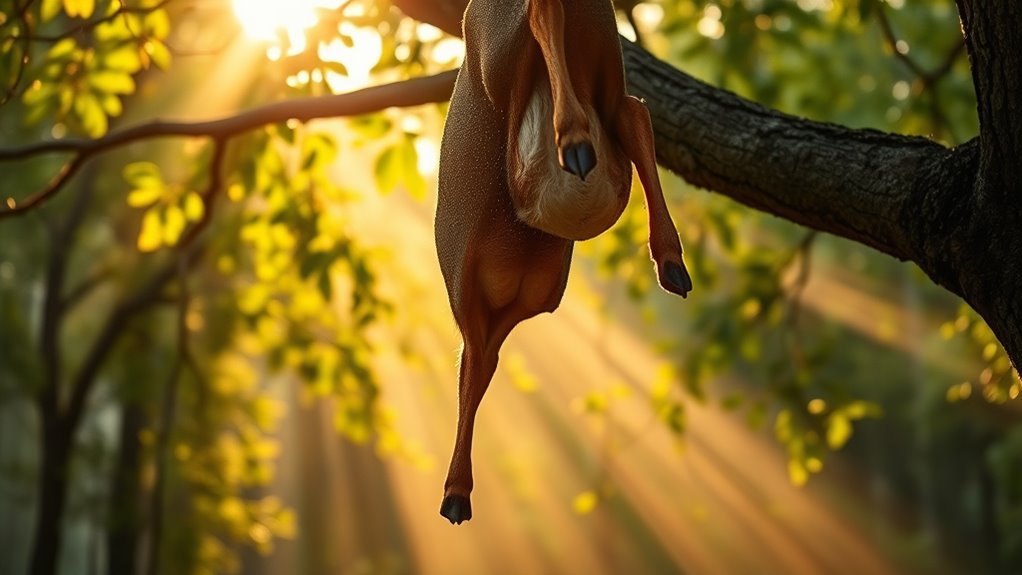
Although many hunters are enthusiastic to hang their deer soon after the kill, you need to understand that at 70°F, deer meat can spoil within 24 hours if not properly cooled.
At this temperature, bacterial growth speeds up quickly, making the meat unsafe to eat after about a day.
Bacterial growth accelerates rapidly at 70°F, rendering the meat unsafe to consume after roughly 24 hours.
If you hang your deer in 70-degree weather without adequate cooling, you risk rapid decay and spoilage.
To extend the safe hanging time, you’ll want to use proper icing and cooling methods, which can help keep the meat fresh for up to 36 hours.
Ultimately, to protect the quality and safety of your deer meat, plan to process or refrigerate it within 24 hours when temperatures are around 70°F.
Ideal Temperature Range for Hanging Deer
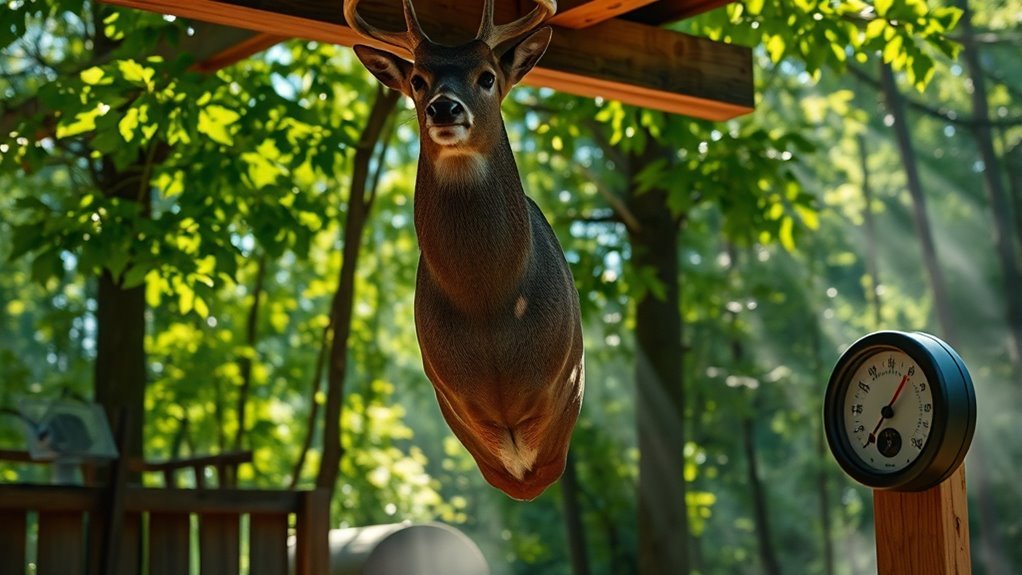
When hanging a deer, keeping the temperature between 35°F and 45°F creates the best environment for aging the meat properly.
This range supports natural processes that tenderize the meat while minimizing spoilage risks.
Here’s what you need to know about the ideal temperature for hanging deer:
- Temperatures below 45°F slow bacterial growth, extending safe aging time.
- A range of 33°F to 40°F allows aging to continue up to 7-10 days.
Proper temperature encourages beneficial mold that enhances flavor.
Consistent cool conditions prevent rapid spoilage and decay.
On the flip side, temperatures above 45°F accelerate spoilage, compromising meat quality.
Risks of Hanging Deer in 70 Degree Weather
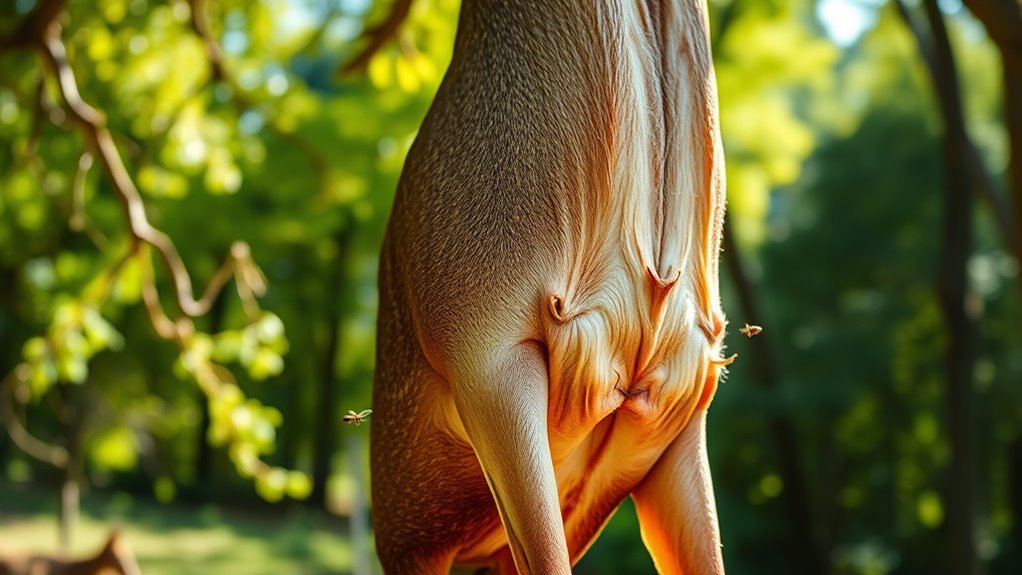
If you hang a deer in 70-degree weather, you risk rapid bacterial growth that can spoil the meat within a day.
The deer’s internal temperature starts high and takes hours to drop below 50°F, allowing bacteria to multiply quickly.
Hanging beyond 24 to 36 hours increases spoilage, leading to foul odors, sliminess, and unsafe meat.
For your safety, process or refrigerate the deer within 24 hours to avoid these risks.
| Time Hanging | Risk Level | Signs of Spoilage |
|---|---|---|
| 0-12 hours | Low | Fresh meat |
| 12-24 hours | Moderate | Slight odor, cooling |
| 24-36 hours | High | Sliminess, foul odor |
| 36+ hours | Very High | Visible decay, unsafe |
Techniques to Keep Deer Meat Cool When Hanging
Keeping deer meat cool while hanging is key to preventing spoilage, especially in warmer weather.
To effectively hang deer and maintain a safe temperature, you need to control heat exposure and promote airflow.
Here are some essential techniques to keep your deer meat cool:
- Place ice in the cavity using frozen water jugs to keep the internal temperature below 50°F.
- Hang deer in a shaded, breezy area or an insulated shed to reduce heat buildup.
- Wrap the carcass with heavy blankets, tarps, or insulated covers to retain cold temperatures.
- Regularly replace or replenish the ice in the cavity, especially during warm daytime hours.
- Elevate the deer at least 15 feet to improve airflow and deter scavengers, aiding consistent cooling.
These steps help you safely hang deer in warmer conditions by managing temperature and preventing spoilage.
How Long Is Safe to Hang Deer at 70 Degrees?
You shouldn’t hang a deer at 70 degrees for more than 24 to 36 hours.
The spoilage risks rise quickly at this temperature.
The warmer weather speeds up bacterial growth and it also affects how the meat ages.
Using cooling strategies like cavity icing can help.
However, acting within that 24 to 36 hour timeframe is essential to keep the meat safe.
Spoilage Risks at 70°F
Because temperatures around 70°F encourage rapid bacterial growth, you shouldn’t hang a deer longer than 12 to 24 hours without proper cooling.
At this temperature, spoilage risks rise quickly, making attentive attention to hanging deer vital. Here’s what you need to know:
- Hanging deer over 24 hours at 70°F leads to rapid spoilage due to high internal meat temperature.
- Proper cooling methods like cavity icing can extend safe hanging to about 36 hours.
- Ice packs or frozen jugs inside the cavity help keep meat under 40°F and slow decay.
- Fluctuating temperatures around 70°F increase spoilage risks, so process the meat promptly.
- Without cooling, bacterial growth accelerates, making the meat unsafe to eat.
Managing temperature carefully prevents spoilage and ensures your deer stays safe to consume.
Temperature Impact on Aging
Although 70°F might seem mild, hanging your deer at this temperature requires caution since bacterial growth speeds up.
This limits safe aging to 12 to 24 hours.
At temperatures above 50°F, bacteria and mold multiply rapidly, increasing the risk of spoilage.
So, you can’t leave your deer hanging too long without compromising safety.
Beyond 24 hours, the temperature accelerates contamination, making the meat unsafe to consume.
To maintain safety and quality, you need to process or cool the meat within that 12 to 24-hour window.
Ignoring this can lead to spoilage that ruins your harvest.
Cooling Strategies and Timing
Managing the temperature of your deer carcass at 70°F calls for smart cooling strategies to keep the meat safe and fresh.
Without extra cooling, hanging time should be limited to 12-24 hours to prevent spoilage.
To extend safe hanging time, consider these tips:
- Place ice packs or frozen jugs inside the carcass cavity to keep internal temperature low.
- Hang the deer in a shaded, well-ventilated area to maintain airflow.
- Use heavy blankets or tarps to slow temperature rise, but don’t rely on them alone.
- Monitor the internal temperature closely; once it rises above 40°F, bacteria multiply quickly.
- Remove the deer promptly if the temperature control fails to avoid spoilage.
Effective cooling directly impacts hanging time and meat quality at 70 degrees.
Signs of Spoilage to Watch for in Warm Conditions
When you hang a deer in 70-degree weather, you need to watch for clear signs of spoilage to avoid consuming unsafe meat.
Warm conditions speed up bacterial growth, so you must check the meat often.
Look for discoloration, foul odors, slimy textures, insects, or dried patches.
These signs of spoilage mean the meat is no longer safe.
| Sign | Description | What It Means |
|---|---|---|
| Greenish Discoloration | Meat turns greenish | Advanced spoilage |
| Foul Odor | Sour smell intensifies | Bacterial growth |
| Slimy Texture | Sticky or slick surface | Spoilage developing |
| Insects | Maggots or bugs present | Decomposition started |
| Dried Patches | Dark, crusty areas on meat | Dehydration and spoilage |
Best Practices for Processing Deer After Hanging
Keeping a close eye on spoilage signs is only part of the process; you also need to handle the deer properly after hanging to maintain the meat’s quality.
When you hang deer in 70-degree weather, controlling temperature is vital for meat safety.
Here’s how to process it effectively:
- Remove internal organs, especially heart and lungs, within 30 minutes to slow bacteria growth.
- Hang deer in a shaded, well-ventilated spot at least 15 feet off the ground for airflow.
- Use ice packs or frozen jugs inside the cavity to keep the temperature down.
- Regularly check and replace ice to maintain a cold environment.
- Process the meat within 24-36 hours to minimize spoilage and guarantee safe consumption.
Following these steps helps preserve your deer’s flavor and safety after hanging.
Hunter Tips for Managing Deer Meat in Warm Weather
Although warm weather poses challenges, you can still preserve your deer meat’s quality by taking specific precautions.
When you hang overnight in 70°F conditions, aim to process the deer within 24 hours to avoid spoilage.
To extend this, place ice or frozen jugs inside the cavity; this can safely stretch hanging time to 36 hours by keeping internal temps low.
Wrap the carcass with tarps or blankets to retain cold and slow bacterial growth.
Elevate the deer at least 15 feet and ensure good airflow to reduce scavenger risks and help cool the meat.
Don’t forget to remove guts promptly and regularly check or replace your ice.
These steps will help you manage deer meat effectively during warmer weather.
Frequently Asked Questions
What Is the 7 Day Deer Rule?
The 7 Day Deer Rule means you can hang a deer for up to seven days if you keep it at or below 40°F.
You’ve got to guarantee the temperature stays low to age the meat safely.
How Long Can You Let a Deer Hang in Cold Weather?
Cold conditions consistently control contamination, letting you hang your deer for 7 to 10 days.
You’ll want to watch temperature, airflow, and dryness closely to keep the meat fresh and flavorful throughout the chilling period.
How Long Does It Take for a Deer to Spoil in 50 Degree Weather?
In 50-degree weather, your deer will start to spoil after about 3 days.
Keep it cool with good airflow and cavity icing to stretch hanging safely up to 4 days before noticeable spoilage appears.
At What Temperature Does Deer Meat Start to Spoil?
Deer meat starts to spoil once it rises above 40°F because bacteria multiply quickly.
You’ll notice spoilage signs faster as temperatures climb,
so keep the meat cool to prevent it from going bad prematurely.
Conclusion
Hanging your deer in 70-degree weather demands diligence and decisiveness.
While warmth can quickly wilt the window for safe hanging, watching for warning signs like weird smells or slimy surfaces saves your savory success.
Stick to swift, smart strategies to stave off spoilage and savor succulent, safe meat.
Remember, managing meat means mastering moisture and minimizing mishaps—your careful commitment creates culinary confidence.
To sum it up, hanging a deer in warmer weather requires close attention.
Keep an eye out for any signs of spoilage, and act quickly to ensure you maintain the quality of your harvest.
The key is to stay vigilant and make informed decisions to enjoy delicious, safe meat.
With the right approach, you can confidently handle your game and keep it hearty and healthy.