How Long Can You Hang a Deer in 40 Degree Weather?
You can hang a deer safely at around 40°F for about 1.5 to 2 days to achieve good tenderness without risking spoilage.
To ensure the best results, keep the temperature steady between 35°F and 40°F. Hang the deer in a shaded, well-ventilated area or a cooler.
Avoid temperature swings over 40°F, as they can speed up bacterial growth.
If you’re curious about how hanging position, hide management, and airflow affect the quality of the meat, there’s more to explore!
Ideal Temperature Range for Hanging Deer
Although hanging deer in cold weather requires careful attention, maintaining an ideal temperature between 32°F and 40°F guarantees the meat ages properly and stays safe.
Properly hanging deer in cold weather ensures safe, well-aged, and tender meat.
When you hang deer, keeping the temperature steady within this range is vital. If it climbs above 40°F, spoilage speeds up, while dropping below 32°F can freeze the meat and stop the aging process.
Aging the meat works best when temperatures consistently stay between 33°F and 40°F for several days. This allows natural enzymes to tenderize the meat without encouraging bacterial growth.
Fluctuations outside this range risk improper curing and reduced meat quality. By controlling the environment carefully, you maximize tenderness, flavor, and safety.
This way, your hanging deer experience results in premium venison.
Optimal Hanging Duration at 40 Degrees
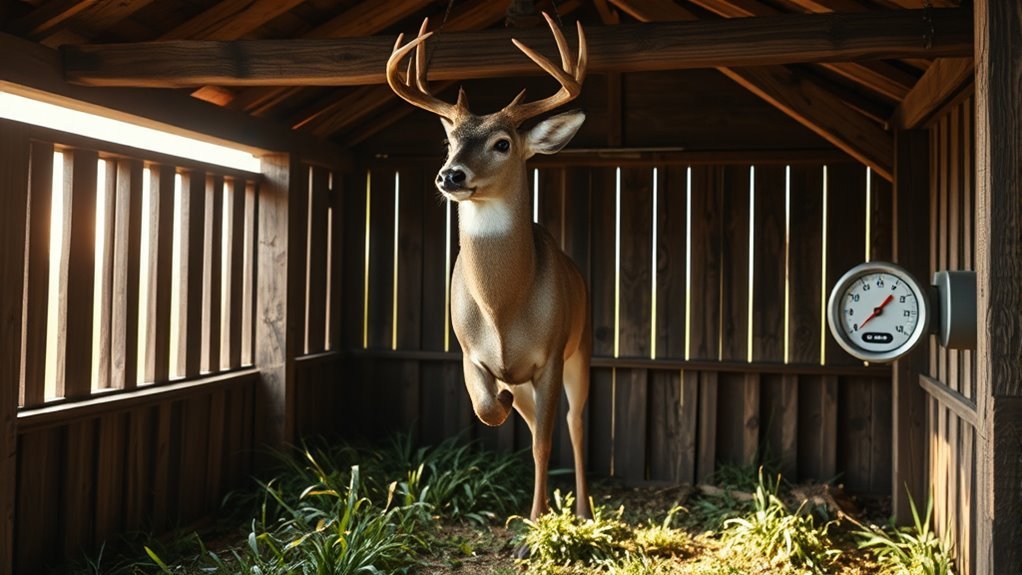
You should hang your deer for about 1.5 to 2 days at 40°F to balance aging and freshness.
The steady temperature helps slow bacterial growth, allowing the meat to tenderize safely.
Just keep an eye on the carcass if you plan to extend hanging up to 3 days to avoid spoilage.
Recommended Hanging Time
When hanging a deer at 40°F, aim to keep the duration between 24 and 48 hours to maintain meat quality and prevent spoilage.
This hanging time guarantees the meat ages properly without developing off-flavors or bacterial growth.
Hanging beyond two days at this temperature raises the risk of spoiling, so it’s important not to extend the process unnecessarily.
Make sure the area has good ventilation and controlled humidity to avoid drying out the meat or encouraging harmful bacteria.
Also, check the deer regularly during this period for any signs of spoilage.
Sticking to these guidelines will help you enjoy tender, safe venison without compromising flavor or safety.
Temperature Impact on Aging
Since temperature plays an essential role in meat aging, maintaining a steady 40°F allows you to hang a deer for 5 to 6 days to develop ideal tenderness and flavor.
At this temperature, the aging process slows enough to enhance the meat without encouraging spoilage.
You shouldn’t hang the meat beyond 7 days at 40°F, as bacterial growth risks spoilage.
Also, keeping temperature fluctuations above 40°F to a minimum is critical since warmer conditions accelerate deterioration.
For the best results, aim for consistent temperatures between 35 and 40°F and guarantee proper ventilation and humidity control.
This balance helps prevent the meat from drying out or spoiling while you hang it, giving you tender, flavorful venison every time.
Effects of Temperature Fluctuations on Meat Quality
Although consistent temperatures below 40°F help preserve deer meat quality, fluctuations above this threshold can quickly accelerate bacterial growth and spoilage.
When you experience temperature fluctuations, even brief rises above 40°F trigger enzymatic activity that deteriorates the meat’s tenderness and flavor.
These swings can also cause uneven aging, leading to patches where meat from drying occurs, affecting texture negatively.
Rapid shifts from cold to warmer temps break down muscle fibers, resulting in off-flavors and less desirable cuts.
To keep your deer hanging safely, you want to avoid these temperature changes as much as possible since they shorten the safe hanging window and increase spoilage risk.
Maintaining steady cold conditions is essential for preserving both taste and quality during the aging process.
Best Locations for Hanging Deer in Warm Weather
When hanging a deer in warm weather, you want to choose a shaded, well-ventilated spot like a shed or garage to keep temperatures steady around 35-40°F.
Avoid direct sunlight or open outdoor areas where heat can spoil the meat quickly.
If possible, use a controlled cooler environment to extend the hang time safely.
Shaded Well-Ventilated Areas
If you want to hang your deer safely in warm weather, choosing a shaded, well-ventilated spot is crucial.
A shaded area with good air circulation helps keep the temperature steady around 40°F, slowing bacterial growth and preserving meat quality for 1-2 days.
Ideal locations include shaded sheds, open-sided barns, or covered porches that block direct sunlight while allowing airflow.
Make sure the area is free from dust, insects, and scavengers to avoid contamination.
Regularly check the temperature and airflow to ensure the environment stays ideal.
Key points for shaded, well-ventilated areas:
- Use locations that block direct sun but allow good air movement.
- Keep the site clean and protected from insects and animals.
- Monitor temperature consistently near 40°F.
- Choose structures like open barns or covered porches for best results.
Controlled Cooler Environments
Since consistent temperature and ventilation are crucial for preserving deer meat, controlled cooler environments like walk-in coolers or dedicated meat rooms offer the best conditions for hanging your deer in warm weather.
These spaces maintain steady temperatures between 33-40°F and provide proper airflow, which reduces humidity and prevents spoilage.
When you use a controlled cooler, you can safely hang your deer for a week or even up to 10 days without risking meat quality.
The consistent environment prevents temperature fluctuations that could cause drying or spoilage.
If you want the finest results, avoid makeshift setups and opt for a walk-in cooler or a well-monitored meat room.
This way, your deer ages ideally, ensuring tenderness and flavor while safely extending your hang time.
Managing Humidity and Airflow During Aging
Although aging deer in 40-degree weather provides a cool environment, you still need to manage humidity and airflow carefully to guarantee the meat ages properly.
Maintaining moderate humidity around 60-70% prevents the meat from drying out too fast, while good airflow promotes even drying and discourages mold or bacteria.
Moderate humidity and good airflow ensure even drying and prevent mold during meat aging.
You can use fans or natural ventilation to regulate humidity and keep fresh air circulating.
Regularly monitoring these conditions ensures the meat develops the right tenderness and flavor without spoiling.
Key points to manage humidity and airflow:
- Keep humidity between 60-70% to avoid drying out or excess moisture.
- Use fans or vents to maintain consistent airflow.
- Ensure air circulates evenly around the hanging deer.
- Check conditions often to prevent mold and spoilage.
Handling Tenderloins During the Hanging Process
When you hang a deer, handling the tenderloins carefully is essential because they dry out and spoil faster than other cuts.
Located inside the cavity below the ribs, tenderloins are more vulnerable to drying out during the hanging process.
It’s best to remove them promptly after field dressing to preserve quality.
Leaving tenderloins on the carcass during extended hang times increases the risk of spoilage and bacterial growth since these muscles are small and tender.
Many hunters choose to cook tenderloins fresh or freeze them separately instead of hanging them with the rest of the deer.
Removing tenderloins before you hang the deer also improves air circulation around the carcass, helping maintain overall meat quality during aging.
Head Position: Hanging Deer Head Up vs. Head Down
Deciding whether to hang a deer head up or head down comes down to your personal preference and the specific tasks you find easier during processing.
When you hang my deer, both positions let gravity help with blood drainage and skinning.
Hanging head up often makes skinning and butchering simpler, while hanging head down can reduce the risk of stomach contents contaminating the meat during aging.
Neither position drastically affects meat quality if you cool and handle the carcass properly.
Proper cooling and handling matter more than whether you hang the deer head up or down.
- Head up aids easier access for skinning and butchering.
- Head down helps prevent contamination from stomach contents.
- Both positions allow effective blood drainage.
- Choice depends on what feels more convenient to you during processing.
Deciding to Hang With Hide on or off
If you want to protect your deer meat from drying out and contamination while hanging in 40-degree weather, leaving the hide on is a solid choice.
Keeping the hide on helps shield the meat from dirt, insects, and oxidation, preserving moisture and improving tenderness during aging.
However, if you hang a deer with the hide off, you’ll get better airflow and quicker cooling, which can be helpful if temperatures fluctuate or are warmer.
In 40-degree conditions, both methods work fine for short-term hanging, so you’ll want to decide based on your local environment and personal preference.
Ultimately, whether you keep the hide on or off, proper hanging will guarantee you get quality meat ready for processing.
Using Refrigerators and Coolers for Controlled Aging
You’ll want to keep your refrigerator between 33-40°F to control the aging process without spoilage.
Setting up your cooler with ice packs and proper drainage helps maintain that ideal temperature and prevents water buildup.
Don’t forget to hang the meat on racks and open the fridge a couple of times daily to keep air circulating and moisture low.
Refrigerator Temperature Control
While aging deer meat, maintaining your refrigerator between 37-40°F (3-4°C) is key for safe hanging and proper flavor development.
Keeping a consistent temperature prevents spoilage and helps the meat tenderize correctly.
You should remove the deer’s hide and open the chest cavity to assist with cold air circulation inside the refrigerator.
Regularly check the interior temperature with a reliable thermometer to avoid fluctuations that could risk the meat’s quality.
And remember, it’s important to process and package the meat within 3-7 days for ideal safety and taste.
- Set refrigerator temperature between 37-40°F (3-4°C)
- Remove hide and open chest cavity for better cooling
- Monitor temperature regularly with a thermometer
- Process and package meat within 3-7 days
Cooler Setup Tips
Though aging deer in a refrigerator offers precise temperature control, using a well-prepared cooler can provide an excellent environment for controlled aging.
To let hang your deer properly, guarantee the cooler stays consistently below 40°F, ideally between 32°F and 40°F.
Space the carcass on racks or hooks so it can hang long with air circulating around all surfaces.
Maintain humidity around 85-90% to avoid excessive drying or bacterial growth.
Drain excess blood and moisture regularly, and consider covering the deer with breathable materials like burlap to preserve the ideal environment.
Air Circulation Importance
Setting up your cooler or refrigerator correctly sets the stage, but maintaining good air circulation is what truly keeps your deer aging properly.
Without proper airflow, moisture builds up, increasing spoilage risk and uneven drying.
To guarantee successful dry aging, you need to allow air to flow freely around the carcass, promoting consistent tenderness and flavor.
Keep these points in mind:
- Use racks or hooks to elevate the deer, enabling even air circulation on all sides.
- Maintain a steady temperature between 35-40°F with good ventilation to minimize bacterial growth.
- Open doors regularly to refresh air and reduce excess humidity inside the cooler.
- Avoid blocking airflow around the meat to prevent mold and uneven drying.
Following these steps helps you achieve ideal dry aging results every time.
Signs of Properly Aged vs. Spoiled Deer Meat
If you want to guarantee your deer meat is safe and tasty, you need to recognize the signs of properly aged vs. spoiled deer meat.
Properly aged deer meat at 40°F shows a dark red or black exterior with a firm, dry texture and a moist, darker interior.
Properly aged deer meat has a firm, dry exterior with a moist, darker interior at 40°F.
It has a mild, gamey, or earthy aroma without any foul odors.
In contrast, spoiled deer meat develops a slimy or sticky surface, a strong sour or rotten smell, and may show greenish discoloration.
Spoiled meat often feels mushy and may ooze or produce a slimy film, signaling bacterial growth.
Frequently Asked Questions
Will a Deer Spoil Overnight in 40 Degree Weather?
No, your deer won’t spoil overnight at 40 degrees if you hang it properly.
Just keep it shaded, ventilated, and cool.
Check for any off smells or slimy texture before processing it the next day.
Is 40 Degrees Cold Enough to Hang a Deer?
You’d think 40 degrees freezes time, but it’s just cold enough to hang a deer safely for a short while.
Keep it well-ventilated and shaded, or spoilage might crash your party faster than you expect.
How Long Can Deer Hang at 40?
You can hang a deer at 40°F for about 3 to 7 days safely.
Just make sure to keep the temperature steady.
Also, guarantee good airflow, and watch for any signs of spoilage to protect the meat quality.
How Long Can Deer Meat Last in 50 Degree Weather?
You can hang deer meat about 24 hours in 50°F weather before spoilage risks rise.
Make sure to keep it shaded and ventilated, then process or refrigerate it quickly to stay safe and fresh.
Conclusion
When you hang a deer at 40 degrees, you can safely age it for about 3 to 5 days to enhance tenderness without risking spoilage.
For example, imagine you’re processing a buck after a cool fall hunt. By hanging it in a well-ventilated shed with stable temperature and moderate humidity, you preserve flavor and texture perfectly.
Just remember, fluctuating temps or poor airflow can turn good meat bad quickly. So, monitor conditions closely.
In conclusion, hanging a deer in 40-degree weather is a great way to improve the meat’s quality. Just keep an eye on the environment to ensure it remains stable. This way, you can enjoy tender, flavorful meat while minimizing any risk of spoilage. Aging your deer properly is key to a successful hunt, so don’t overlook these important factors!