
Does Weather Affect Sciatica and How Can You Manage Pain?
Yes, cold weather can worsen your sciatica by causing muscle stiffness and nerve irritation that increase pain.
Lower temperatures reduce blood flow and tighten muscles around the sciatic nerve, making symptoms flare up.
To manage this, keep warm with layered clothing and use heat therapy. Stretch gently before activity to ease tightness as well.
Staying active with low-impact exercise also helps maintain flexibility.
If you want to know how lifestyle changes and proper care improve your comfort during colder months, keep exploring these tips.
How Cold Weather Influences Sciatica Symptoms

When cold weather sets in, your muscles contract and stiffen, increasing pressure on your sciatic nerve.
This muscle stiffness, combined with reduced blood flow, tightens your muscles further, making nerve compression and pain worse.
Muscle stiffness and reduced blood flow tighten muscles, increasing nerve compression and worsening pain.
The cold air can irritate your sciatic nerve directly, intensifying discomfort.
Shivering and changes in posture during colder months may also add to the pressure, aggravating symptoms.
For effective pain management, you’ll want to focus on strategies that reduce inflammation and maintain circulation.
Regular exercise, even light stretching, helps keep your muscles flexible and eases tension around the nerve.
Layering up to stay warm and using heat therapy can also minimize muscle stiffness.
This can lower pressure on the sciatic nerve and improve your overall comfort during cold weather.
Physiological Effects of Winter on Muscles and Nerves
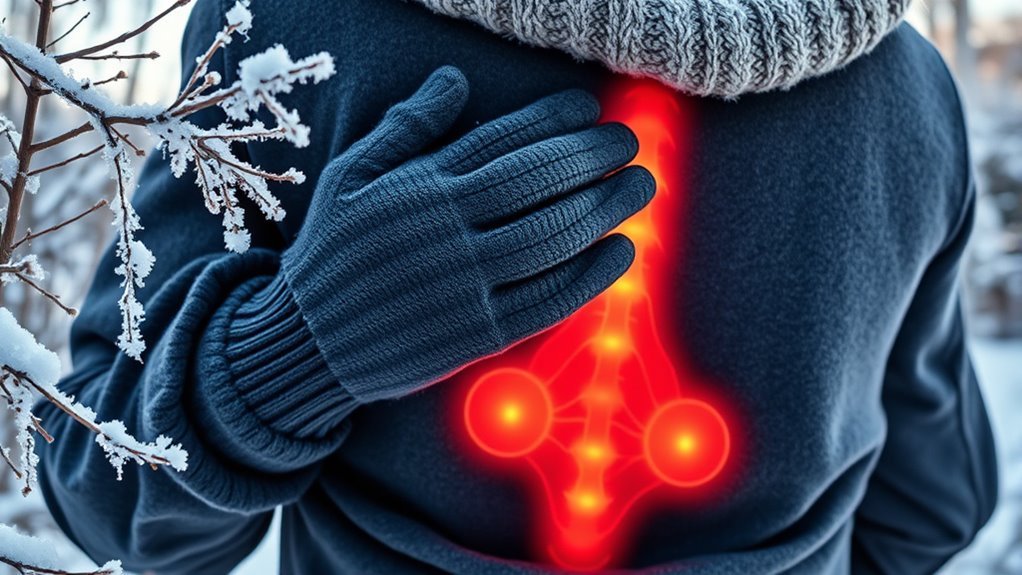
When winter hits, your muscles tend to stiffen up as cold temperatures reduce blood flow.
This makes movement more difficult.
This stiffness can increase tension around your nerves, heightening their sensitivity and discomfort.
Understanding these changes helps you better manage sciatica pain during colder months.
Muscle Stiffness in Cold
Because cold temperatures reduce blood flow, your muscles contract and become stiffer, especially in the lower back.
This muscle stiffness during cold weather is common in the winter months and can increase muscle tension, making movement more difficult.
Reduced circulation limits muscle flexibility and slows recovery, which raises the risk of strains and sprains.
When your muscles tighten, they can press against nerves, worsening sciatica pain.
For effective pain management, it’s important to keep your muscles warm and loose.
Wearing appropriate clothing, warming up before activity, and gentle stretching can help maintain blood flow and muscle elasticity.
Nerve Sensitivity Changes
Cold weather doesn’t just tighten your muscles; it also affects how your nerves respond, especially the sciatic nerve.
When muscle stiffness sets in due to reduced blood flow, your nerves become more sensitive.
This increased nerve sensitivity means that even minor nerve irritation can trigger significant pain.
Cold weather reduces circulation, leading to inflammation and heightened nerve irritation, which lowers your pain threshold.
Additionally, muscle stiffness can compress the sciatic nerve, worsening discomfort.
Changes in air pressure during winter further amplify nerve responsiveness, making pain management more challenging.
To manage this, focus on maintaining warmth and improving blood flow through gentle movement and stretching.
This can help reduce inflammation and ease nerve sensitivity during colder months.
Common Sciatica Triggers During Winter Activities

When you’re out in the cold, your muscles stiffen, making you more prone to sciatica flare-ups.
Shoveling snow puts extra strain on your lower back, which can worsen nerve compression.
Plus, slippery icy surfaces increase your risk of falls that might trigger or intensify your pain.
Cold-Induced Muscle Stiffness
If you spend time outdoors during winter, you might notice your muscles tightening up more than usual.
Cold weather causes muscles to contract, leading to muscle stiffness that can worsen sciatica pain.
This muscle tightness reduces flexibility and increases the risk of injuries during winter activities.
Additionally, decreased blood flow in cold conditions limits mobility and intensifies discomfort in your lower back and legs.
To manage pain effectively, it’s important to layer warm clothing to keep muscles relaxed.
Also, performing gentle indoor stretches before and after going outside can be really helpful.
By addressing cold-induced muscle stiffness proactively, you can protect your muscles from tightening excessively.
This also helps reduce the chances of aggravating your sciatica symptoms during the colder months.
Taking these steps helps you stay comfortable and active despite the chill.
Snow Shoveling Risks
Although snow shoveling might seem like a routine winter task, it can put significant strain on your lower back and worsen sciatica pain.
The combination of physical exertion and cold temperatures increases muscle stiffness, making your sciatic nerve more vulnerable to irritation.
To protect yourself during snow shoveling, consider these key points:
- Use proper lifting techniques to avoid sudden spinal injuries or disc herniation from bending and twisting motions.
- Take frequent breaks to prevent muscle stiffness and reduce pressure on your lower back.
- Dress warmly and stay mindful of your limits to minimize the impact of cold temperatures on muscle flexibility.
Slippery Surface Hazards
Why do icy and wet surfaces pose such a threat to your sciatica during winter activities?
Slippery surfaces and icy conditions dramatically increase your risk of falls, which can worsen sciatica by causing sudden trauma or muscle strains.
When you slip on ice or snow, you risk injuring yourself further, potentially leading to herniated discs or nerve compression that trigger sciatica pain.
Snow and ice can also hide hazards, making it harder to maintain your balance and increasing injury risk.
To protect yourself, wear proper footwear with deep treads for better grip and move cautiously on icy surfaces.
Staying alert to slippery surfaces and using the right footwear helps you avoid falls and manage your sciatica pain effectively during winter.
Effective Strategies to Stay Warm and Reduce Pain
When you keep your body warm, you help reduce muscle stiffness and nerve irritation that worsen sciatica pain.
Cold weather tightens muscles, increasing discomfort. But applying heat therapy can ease stiffness and improve flexibility.
Staying warm during outdoor activities and physical activity is essential for managing pain effectively.
Here are three strategies to keep your muscles warm and reduce sciatica pain:
- Wear layered, thermal clothing with hats, gloves, and scarves to maintain warmth and prevent muscle tightness in cold air.
- Use heating pads or warm compresses before physical activity to relax muscles and reduce injury risk.
- Maintain a comfortable indoor temperature to support blood flow and minimize muscle tension.
These steps help control sciatica symptoms by protecting your muscles from cold-related stiffness.
Importance of Exercise and Movement in Cold Conditions
To keep your sciatica pain in check during colder months, you need to stay active and move regularly.
Low-impact exercise and gentle stretching improve circulation and maintain flexibility in your lower back and legs.
This prevents muscles from tightening and reduces nerve compression.
Always warm up before outdoor activity to prepare your muscles and lower injury risk.
Avoid long periods of inactivity, which worsen stiffness and pain.
| Exercise Type | Benefit | Example Activity |
|---|---|---|
| Low-impact | Reduces stiffness | Walking, swimming |
| Stretching | Improves flexibility | Gentle yoga |
| Movement | Maintains muscle strength | Light aerobics |
Regular movement keeps your muscles strong and helps manage sciatica discomfort during cold weather.
Dietary and Lifestyle Adjustments to Support Sciatica Relief
Although managing sciatica pain often focuses on exercise, adjusting your diet and lifestyle plays a crucial role in reducing inflammation and supporting nerve health.
Making targeted dietary adjustments can markedly boost your sciatica relief efforts. Here’s how you can start:
- Incorporate anti-inflammatory foods like omega-3 rich fish, turmeric, and ginger to reduce nerve inflammation and promote healing.
- Prioritize hydration by drinking 8-10 glasses of water daily to support nerve health and prevent muscle stiffness.
- Maintain a healthy weight through balanced eating and consistent exercise to decrease pressure on the sciatic nerve, easing pain.
When to Seek Professional Help for Winter Sciatica Management
If your sciatica pain worsens during the colder months or after being exposed to cold weather, you should seek medical advice promptly.
Professional help is vital if your winter sciatica symptoms worsen or if you notice neurological signs like numbness or weakness.
Imaging tests such as an MRI may be necessary to assess nerve compression.
Discuss personalized treatment options with your healthcare provider to manage your pain effectively.
Urgent intervention is essential if you experience sudden severe pain or loss of bladder control.
| Symptom | Action Required | Urgency Level |
|---|---|---|
| Worsening pain | Schedule evaluation | Moderate |
| New neurological signs | Seek immediate consultation | High |
| Severe sudden pain | Emergency intervention | Urgent |
Frequently Asked Questions
What to Do During Sciatica Flare Up?
During a sciatica flare-up, rest comfortably.
Apply heat or cold packs to the affected area.
Take anti-inflammatory meds as needed, and be mindful of your body.
Avoid heavy lifting or sitting too long, as this can aggravate the pain.
Slowly reintroduce gentle stretches to ease pain and promote healing.
Take it easy and listen to your body during this time.
Can Weather Make Sciatica Worse?
You bet weather can make sciatica worse—cold stiffens muscles and icy conditions add fuel to the fire.
You’ll want to bundle up, stay active indoors, and watch your step to keep pain at bay.
What Aggravates Sciatica the Most?
You aggravate sciatica most by sudden twisting, prolonged sitting or standing, heavy lifting, and poor posture.
Cold weather stiffens muscles, increasing irritation.
Avoid these triggers, move gently, and maintain good posture to manage your pain effectively.
What Vitamin Deficiency Causes Sciatica?
You might experience sciatica-like pain from deficiencies in vitamins B12, D, B1, or E.
These vitamins support nerve health, so make sure you’re getting enough through diet or supplements.
Doing so can help manage your symptoms effectively.
Conclusion
So yes, cold weather can turn your sciatica into a drama queen, flaring up just to remind you who’s boss.
But don’t just curl up like a frozen burrito—stay active, bundle up, and tweak your diet like your spine’s begging for mercy.
If pain’s throwing a winter tantrum that won’t quit, don’t play hero—call in the pros.
Because, honestly, your sciatic nerve deserves better than a seasonal soap opera.
In conclusion, weather can indeed affect sciatica, especially when the temperatures drop. Staying active, dressing warmly, and adjusting your diet can help manage the pain. If these strategies don’t work and your sciatica symptoms persist, seeking professional help is crucial. Remember, prioritizing your health and wellbeing is essential to avoid allowing sciatica to control your life. Don’t let seasonal changes turn your discomfort into a drama—take action and find relief!