How Does Sudden Weather Change Affect Battery Performance?
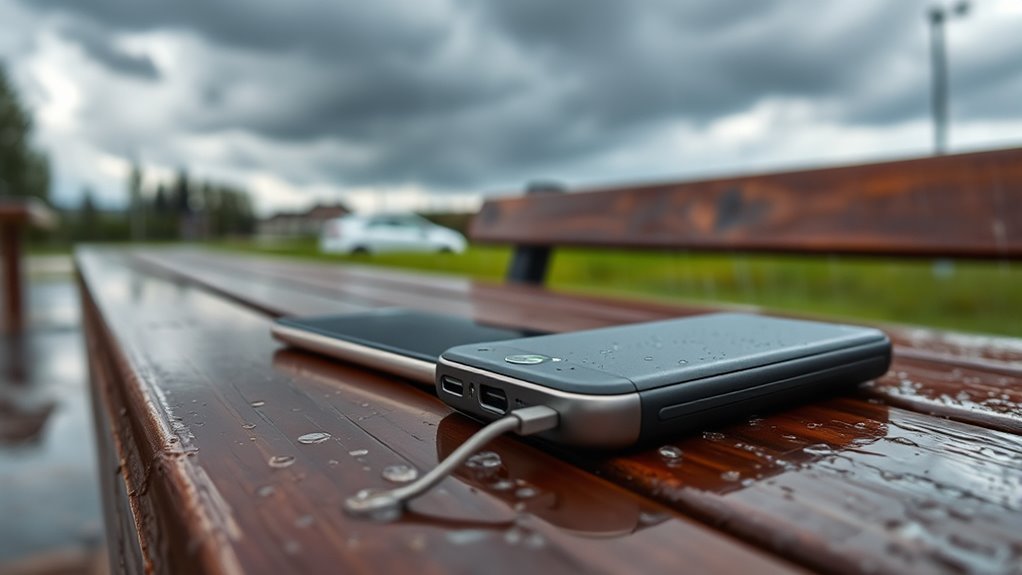
Sudden weather changes can have a significant impact on battery performance. When temperatures drop, the chemical reactions within the battery slow down, reducing its efficiency.
Conversely, extreme heat can accelerate degradation, leading to a shorter lifespan.
Rapid temperature swings create internal stress within the battery, which can result in damage and decreased capacity.
Additionally, moisture from humidity can corrode terminals and may even trigger shorts.
These environmental shifts can severely shorten your battery’s lifespan and impair its overall performance.
However, by understanding how both temperature and moisture affect batteries, you can discover practical strategies to protect them.
Taking the right precautions can help extend your battery’s efficiency, no matter what the weather throws your way.
Effects of Cold Weather on Battery Chemistry
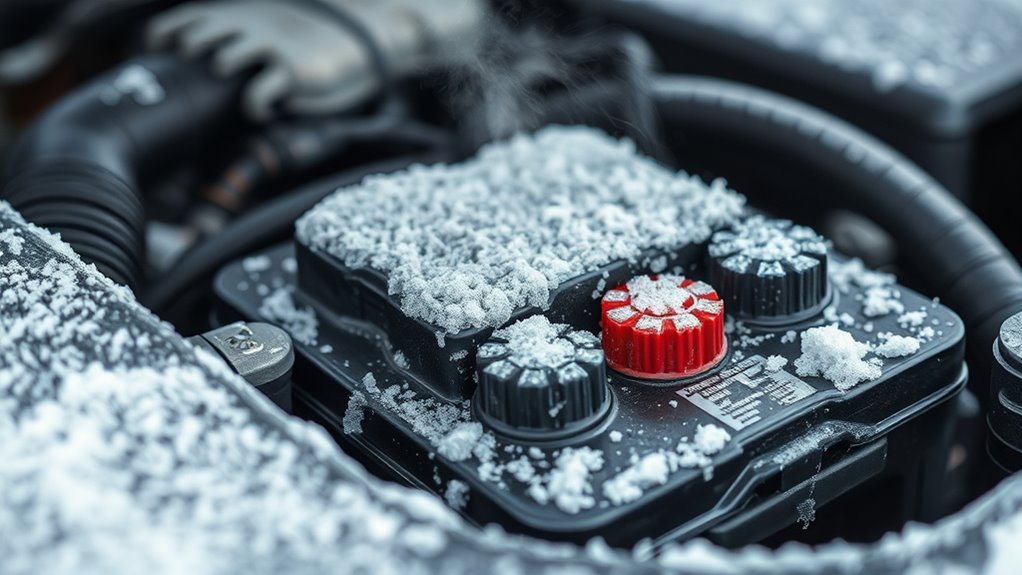
When temperatures drop, cold weather slows down the chemical reactions inside your battery. This reduces ion mobility and overall performance.
This slowdown increases the internal resistance, causing voltage drops that decrease the power your device can draw.
You might also notice capacity loss because the electrolyte thickens, making it harder for ions to flow freely during charging and discharging.
If you charge your lithium-ion battery in the cold, lithium plating can occur, damaging the cell permanently.
That’s why temperature regulation is vital. Keeping your battery above freezing helps maintain its efficiency and prevents degradation.
By managing temperature effectively, you reduce capacity loss and guarantee your battery performs reliably even in chilly conditions.
This way, you can avoid the pitfalls that cold weather can cause to its chemistry.
How High Temperatures Influence Battery Lifespan

Although you might not notice it right away, high temperatures speed up chemical reactions inside your battery.
This causes its internal components to degrade faster. When the temperature rises above 25°C, battery degradation accelerates, shrinking your battery lifespan considerably.
High temperatures encourage the growth of the Solid Electrolyte Interphase (SEI) layer, which consumes active lithium and reduces capacity.
Prolonged exposure can lead to physical damage like swelling, cracking, and electrolyte breakdown, further impairing performance.
To protect your battery, effective thermal management is vital, as it helps control temperature and slows degradation processes.
By understanding how high temperatures influence battery lifespan, you can take steps to avoid excessive heat exposure and extend the life of your battery.
This way, you ensure it performs reliably even in warmer conditions.
The Role of Temperature Fluctuations in Battery Performance

Because batteries experience expansion and contraction during sudden temperature swings, they undergo thermal stress that can damage internal components over time.
These temperature fluctuations disrupt the chemical reactions inside, slowing them down in cold conditions and increasing internal resistance when it’s hot.
This imbalance accelerates the growth of the solid electrolyte interphase (SEI) layer, which consumes active lithium and shortens your battery lifespan.
Furthermore, rapid temperature changes can compromise the electrolyte and electrode stability, raising the risk of internal shorts and capacity loss.
Frequent fluctuations also challenge the battery management system’s ability to maintain ideal conditions, reducing performance and safety.
To preserve battery lifespan, you need to minimize exposure to sudden temperature swings and understand how thermal stress impacts the delicate chemistry within.
Moisture and Humidity Impact on Battery Durability
You’ll notice that sudden moisture can cause corrosion on battery terminals, which increases resistance and lowers performance.
High humidity also harms insulation and can lead to condensation inside the battery, creating internal shorts.
Understanding these risks helps you protect your battery’s durability during weather changes.
Corrosion Risks From Moisture
How does sudden humidity affect your battery’s durability?
Moisture rapidly builds up on your battery terminals, causing corrosion that weakens electrical connections.
This corrosion increases resistance, leading to voltage drops and energy loss.
Moisture can also seep inside sealed batteries, causing internal damage by degrading electrode materials and risking short circuits.
| Risk Factor | Impact on Battery |
|---|---|
| Moisture on terminals | Corrosion and poor contact |
| Internal moisture | Electrode degradation |
| Terminal corrosion | Voltage drop and energy loss |
| Condensation inside | Short circuits, damage |
| Lack of maintenance | Accelerated lifespan loss |
Regularly check and clean terminals.
Also, ensure proper sealing to minimize corrosion risks.
This will help keep your battery reliable despite sudden weather changes.
Humidity Effects on Insulation
Although sealed batteries resist moisture better than open ones, high humidity can still penetrate insulation and compromise your battery’s durability.
When humidity levels rise, moisture seeps into the insulation materials surrounding terminals and internal components. This infiltration creates a conducive environment for corrosion, which damages the insulation’s protective properties.
As corrosion develops, it weakens electrical connections and increases internal resistance, diminishing battery performance.
Over time, compromised insulation can lead to capacity loss and safety risks.
To protect your battery, it’s essential to regularly inspect and maintain seals, ensuring insulation remains intact against humidity.
Condensation-Induced Internal Shorts
When sudden weather changes cause temperature swings, condensation can form inside your battery. This creates moisture that raises the risk of internal shorts.
This moisture buildup results from rapid temperature fluctuations that cause water vapor to condense on internal surfaces. Over time, this condensation promotes corrosion of terminals and components, degrading performance.
High humidity worsens the issue by encouraging conductive films that create unintended electrical pathways. This increases the chance of internal shorts, which can bridge circuits and cause battery failures.
To protect your battery, it’s essential to guarantee proper sealing and ventilation. This minimizes condensation and moisture buildup.
Preventative Measures for Battery Care During Sudden Weather Shifts
Since sudden weather shifts can severely impact battery performance, you need to take proactive steps to protect your device’s battery.
Effective temperature management is vital to minimize thermal stress caused by rapid temperature changes, which can physically damage battery components.
When cold weather hits, preheat or store your batteries in insulated environments to maintain ideal chemical reactions. This helps prevent lithium plating that reduces capacity.
During sudden heat waves, make sure your storage batteries are properly cooled. This slows down harmful chemical reactions that can accelerate degradation.
Using temperature monitoring and controlled heating or cooling systems helps you keep your batteries within safe operating ranges.
Comparing Battery Types Under Variable Weather Conditions
When sudden weather shifts hit, you’ll notice lead-acid batteries struggle with voltage drops and faster degradation.
AGM batteries handle cold better but still lose efficiency under extreme temperatures.
In contrast, LiFePO4 batteries shine with strong resilience, maintaining reliable performance from freezing cold to scorching heat.
Lead-Acid Battery Vulnerabilities
Although lead-acid batteries have long been a reliable choice, they really struggle with sudden weather changes.
Temperature fluctuations directly impact their capacity and lifespan. Cold weather reduces output, while heat speeds up internal degradation, causing premature failure.
Unlike AGM batteries, traditional lead-acid types are more prone to electrolyte freezing or boiling. This can risk damage and leaks, which is definitely something to be cautious about.
You should also watch for increased self-discharge rates in hot climates, which can further shorten battery life.
Here’s what sudden weather shifts do to lead-acid batteries:
- Lower capacity in cold conditions
- Accelerated internal degradation in heat
- Higher self-discharge rates
- Risk of electrolyte freezing or boiling
- Physical damage or leakage due to temperature swings
This vulnerability makes lead-acid batteries less ideal for volatile weather environments.
AGM Battery Performance Traits
While traditional lead-acid batteries face significant challenges with sudden weather changes, AGM batteries offer a more resilient alternative.
Thanks to their sealed design, AGM batteries handle temperature swings better by minimizing risks like leakage and gas emission.
You’ll notice that in cold weather, AGM batteries maintain stronger performance because their chemical reactions slow down less than in flooded types, reducing capacity loss.
When the heat rises, AGM batteries resist overheating and thermal damage, which helps extend their lifespan.
Their stable internal structure also boosts vibration resistance, making them reliable during rapid weather shifts.
LiFePO4 Weather Resilience
Because LiFePO4 batteries feature built-in temperature protections and a chemically stable design, they deliver consistent performance even in extreme weather conditions ranging from -4℉ (-20℃) to 158℉ (70℃).
You’ll notice their temperature resistance outperforms traditional lead-acid and AGM batteries, which often suffer capacity loss and voltage drops during sudden weather shifts.
Thanks to their chemical stability, LiFePO4 batteries maintain efficiency and lifespan despite rapid temperature fluctuations.
This performance resilience makes them ideal when weather turns unpredictable.
Imagine how LiFePO4 batteries handle:
- Freezing cold snaps without losing charge
- Scorching heat without overheating
- Sudden temperature swings without capacity drop
- Prolonged exposure to extreme weather with stable output
- Built-in systems preventing damage from thermal stress
You can rely on LiFePO4 for steady power in any climate.
Best Practices for Maintaining Battery Efficiency Year-Round
To maintain battery efficiency year-round, you should regularly monitor voltage and perform maintenance checks, especially when weather changes suddenly.
Sudden temperature shifts can accelerate chemical reactions inside your battery, impacting discharge rates and overall performance.
To combat thermal stress, store batteries in climate-controlled environments or use insulation and thermal packs to shield them from rapid temperature fluctuations.
Keep terminals clean and free from corrosion, as temperature swings speed up corrosion processes.
Adjust your charging routines based on current weather—make sure your battery is fully charged before extreme cold or heat hits.
Using a battery management system with temperature sensors can help you detect and prevent damage caused by sudden weather changes.
This way, you can ensure your battery stays reliable no matter the season.
Frequently Asked Questions
Can Weather Affect Battery?
Yes, weather can affect your battery’s performance.
Sudden temperature changes reduce capacity, increase internal resistance, and trigger protective limits.
You’ll notice shorter runtimes and faster degradation, especially in extreme cold or heat conditions.
What Is the 80 20 Rule for Batteries?
You use 80% of a battery’s capacity; you protect its lifespan.
You push past 80%, and you risk rapid degradation.
The 80/20 rule means most battery life is within that first 80% of capacity.
Can Heavy Rain Affect a Car Battery?
Yes, heavy rain can affect your car battery by causing moisture to seep into terminals.
This can lead to corrosion and poor contact.
You’ll want to keep it sealed and maintained to prevent damage and guarantee reliable performance.
Why Is My Car Battery Struggling in the Cold?
Your car battery struggles in the cold because low temperatures slow chemical reactions and increase internal resistance, reducing power.
Cold also thickens the electrolyte, hindering ion flow.
Conclusion
When sudden weather changes hit, your battery’s performance can take a hit too. Cold slows chemical reactions, heat speeds up wear, and moisture adds another challenge.
But don’t throw in the towel just yet! You can keep your battery running smoothly by staying proactive with care and choosing the right type for your needs.
Remember, a stitch in time saves nine. Tackling these issues early keeps your power strong all year round.
In conclusion, sudden weather changes can significantly impact battery performance, making it essential to be proactive. By understanding how temperature and moisture affect your battery, you can take the necessary steps to maintain its efficiency.
Choose the right battery for your environment and perform regular maintenance. This way, you can ensure your battery remains reliable, regardless of the weather. Keeping your battery in top shape means you’ll always have the power you need!