Do Ducks Like Cold Weather and How to Care for Them
Ducks naturally handle cold weather well thanks to their waterproof feathers and dense down insulation, which keep them warm.
However, to ensure their comfort and health during winter, you’ll want to provide a dry, windproof shelter with good ventilation. This prevents drafts and moisture buildup, which can be harmful to your ducks.
It’s also essential to monitor their water supply, making sure it doesn’t freeze by using heated or insulated containers.
In addition to water, boosting their energy with nutrient-rich feed is crucial during colder months.
Keep in mind that some breeds may require extra warmth, so tailoring your care to their specific needs is important.
If you want to protect your ducks through winter’s challenges, there’s plenty more to explore.
How Ducks Naturally Adapt to Cold Weather
Although cold weather can be harsh, ducks have natural adaptations that help them stay warm.
Their waterproof feathers, coated with oil from a gland near the tail, keep water out and prevent heat loss.
Underneath, a dense layer of down feathers provides excellent insulation, trapping warmth close to their bodies.
Ducks also maintain a higher body temperature—around 105-106°F—which boosts their resilience against the cold.
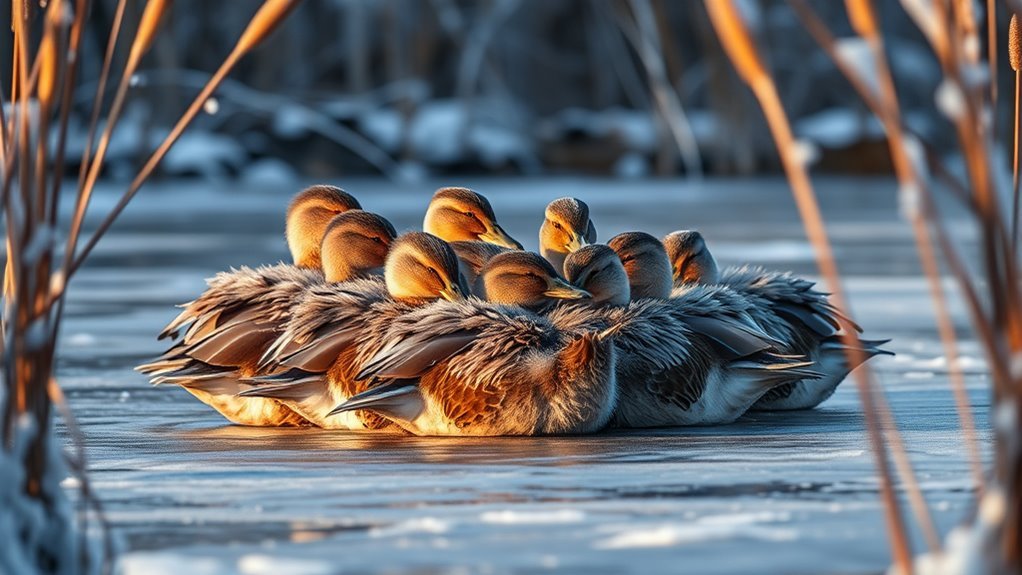
You’ll notice they tuck their feet and bills against their bodies to conserve heat further.
Plus, their legs and feet use a counter-current heat exchange system, minimizing heat loss when standing on ice or swimming in cold water.
These clever adaptations allow ducks to thrive in chilly environments without losing much heat.
Ideal Shelter and Bedding for Winter Ducks
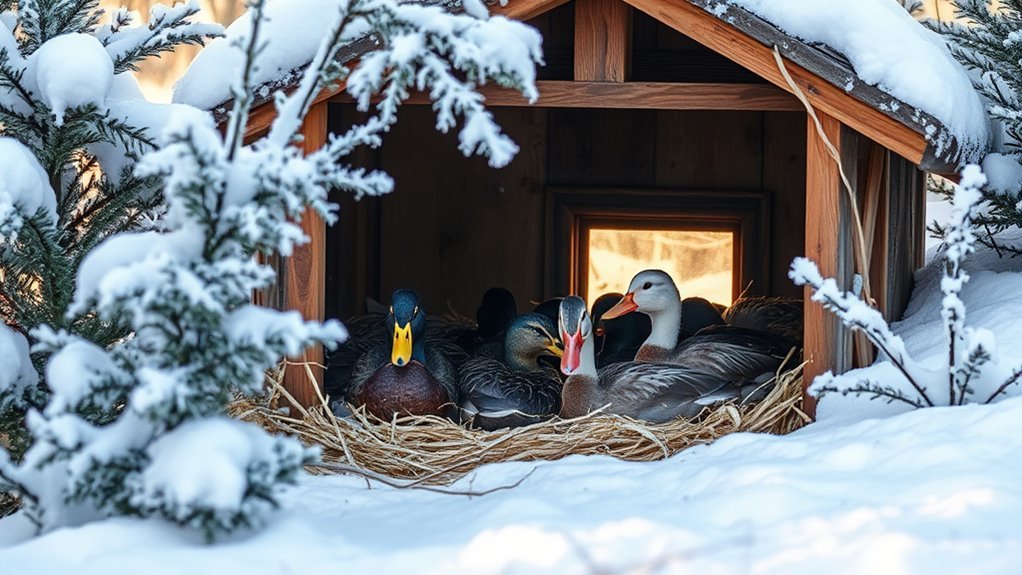
When winter arrives, providing your ducks with a dry, windproof shelter becomes essential to keep them warm and healthy.
To protect them from cold drafts, seal gaps and cracks but maintain proper ventilation by placing vents high up. This balance ensures fresh air without chilling your ducks.
Seal drafts yet keep vents high for fresh air without the chill to keep ducks warm.
Use thick, soft bedding like straw, shavings, or hay, piled generously so ducks can burrow and retain heat.
Elevate the shelter slightly to prevent water pooling, keeping the structure waterproof and dry.
Incorporate slatted floors or drainage to reduce moisture buildup, preserving bedding quality.
Managing Water Supply During Freezing Temperatures
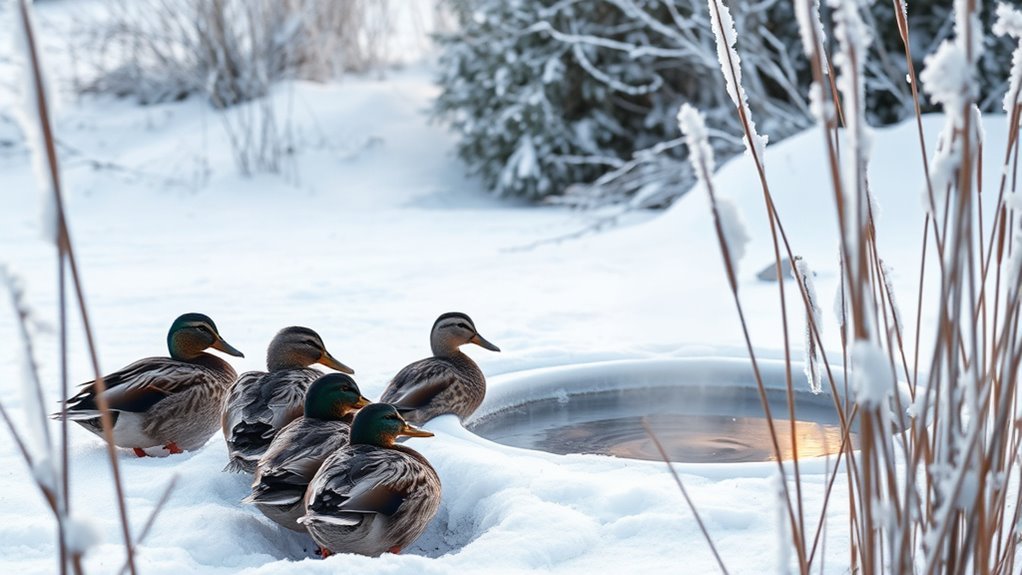
When temperatures drop, you’ll need to keep your ducks’ water from freezing to make certain they stay hydrated and healthy.
Heated water bowls or insulated containers can help maintain liquid water even in extreme cold.
Regularly checking and cleaning their water supply prevents ice buildup and keeps the water fresh.
Preventing Water Freezing
To keep your ducks hydrated during freezing weather, you’ll need to prevent their water sources from freezing solid.
Frozen water can block access to drinking water, so it’s essential to monitor their water supply daily.
Start by elevating water containers and placing them in shaded or sheltered areas to slow freezing.
You can also replace frozen water with fresh, unfrozen water regularly to ensure continuous hydration.
While heated water bowls help, there are other ways to manage water sources without relying solely on them.
Installing freeze-proof hoses or heated systems can maintain steady water flow, but you should focus on preventing freezing through good placement and frequent checks.
Adding warm water during cold snaps also keeps water accessible for your ducks.
Heated Water Solutions
Although cold weather can quickly freeze outdoor water sources, heated water solutions guarantee your ducks always have access to fresh, unfrozen water.
You can keep their water supply flowing smoothly even in freezing temperatures by using these effective methods:
- Use heated water bowls with built-in thermostats to prevent water from freezing, ensuring your ducks stay hydrated 24/7.
- Install a freeze-proof hose or heated water line to continuously refill outdoor water sources without worrying about ice buildup.
- Employ submersible pond heaters or de-icers in larger water bodies to keep a drinking and bathing area ice-free.
These methods will help you ensure your ducks are comfortable and healthy all winter long!
Maintaining Clean Water
Keeping your ducks’ water from freezing is only part of the challenge; maintaining clean, fresh water during freezing temperatures demands regular attention.
You should use a freeze-proof waterer or heated water bowls to keep water sources liquid and accessible.
Change or refill the water multiple times daily to ensure your ducks always have clean water.
Elevate containers off the ground and place them in shaded, sheltered spots to reduce exposure to cold winds, which can speed up ice buildup.
Regularly inspect all water sources for ice buildup and promptly remove or break any ice to keep water accessible.
Installing heated waterers or freeze-proof hoses further helps maintain a continuous supply of fresh, unfrozen water, ensuring your ducks stay healthy and hydrated all winter long.
Nutrition and Feeding Strategies for Cold Months
When temperatures drop, you’ll want to boost your ducks’ daily caloric intake by offering energy-rich grains like cracked corn and oats. This will help them generate body heat.
Proper nutrition is vital during the winter months, so adopt feeding strategies that support their health and energy needs in cold weather.
Here are three essential tips to keep in mind:
- Supplement their diet with chopped greens, vegetables, and occasional treats like chia seeds. This will strengthen their immunity.
- Add ½ to 1 teaspoon of brewer’s yeast daily. It can boost their immune system and help prevent infections.
- Include a weekly splash of apple cider vinegar in their water. This promotes gut health and resistance to illness.
Consistent, ample feeding helps your ducks stay healthy and active throughout winter.
Protecting Ducks From Predators in Winter
To keep your ducks safe in winter, focus on a secure coop design with predator-proof fencing that extends underground.
Always monitor your ducks closely, especially during outdoor foraging in risky areas.
If you spot any predator threats, don’t hesitate to relocate your ducks to a safer indoor space temporarily.
Secure Coop Design
Although winter brings added challenges, securing your duck coop against predators is essential for their safety.
A secure coop guarantees your ducks stay warm and protected, giving you peace of mind.
Focus on coop security by using predator-proof materials and thoughtful design.
Here are three key steps to enhance predator safety in your coop:
- Use hardware cloth with 1-inch or smaller openings. Extend it into the ground to block digging predators.
- Lock all doors and access points tightly every night. This keeps intruders out while your ducks sleep.
- Regularly inspect the coop for holes or weak spots. Repair them quickly to maintain a secure coop environment.
Prioritizing these details will protect your ducks through the coldest months.
Predator-Proof Fencing
Securing your duck enclosure with predator-proof fencing plays a crucial role in keeping your ducks safe throughout winter.
Use hardware cloth with 1-inch or smaller openings to prevent raccoons, foxes, and other predators from reaching inside.
Bury wire mesh at least 12 inches deep to stop digging predators like mink and feral cats.
Reinforce the perimeter with sturdy fencing and consider adding an overhang or roof to protect from aerial predators such as hawks and owls.
Always securely lock all doors and access points, checking for gaps or holes predators could exploit.
Regularly inspect the enclosure for signs of predator activity and promptly repair any damage.
These steps ensure a secure environment that effectively protects your ducks from predators during the harsh winter months.
Monitoring and Relocation
While predators remain a constant threat during winter, you can keep your ducks safe by regularly monitoring their enclosure for any signs of vulnerability.
Careful predator protection is vital when caring for ducks in cold weather. Check for holes or gaps that predators like raccoons or foxes could exploit.
Secure all doors with locks or latches. If you spot any danger, don’t hesitate to act quickly.
To protect your ducks effectively:
- Inspect the enclosure daily for damage or signs of intrusion.
- Use hardware cloth with small openings and bury it underground to block digging predators.
- Relocate ducks indoors temporarily if threats arise until you fix the area.
Consistent monitoring and timely relocation ensure your ducks stay safe and comfortable all winter.
Ventilation and Humidity Control in Duck Housing
If you want to keep your ducks healthy and comfortable during cold weather, you need to focus on proper ventilation and humidity control in their housing.
Good ventilation means installing high-mounted vents that promote airflow without causing cold drafts that stress your ducks.
Controlling humidity is just as important; excess moisture can build up, leading to frostbite and respiratory problems.
Regularly check the bedding for dampness and replace it to reduce moisture and improve air quality inside the coop.
Proper ventilation also helps prevent ammonia buildup from droppings, protecting your ducks’ respiratory health during cold months.
Breed-Specific Winter Care Considerations
Because different duck breeds have unique traits and tolerances, you’ll need to adjust their winter care accordingly.
Understanding breed-specific winter care helps you keep your ducks comfortable and healthy through the cold months. Focus on their feather density and adaptability to design proper shelter and care routines.
- Muscovy ducks are highly adaptable but need a dry shelter that’s windproof to stay safe during freezing temps.
- Silver Appleyard and Pekin ducks have dense feathers that insulate well. But Pekins especially require accessible unfrozen water and dry shelter.
- Khaki Campbells are more sensitive to cold and benefit from extra warmth and protection to maintain egg production.
Tailoring care based on these factors guarantees your ducks thrive despite winter’s challenges.
Handling Extreme Cold and Emergency Measures
Adjusting care for different breeds sets a strong foundation, but extreme cold demands extra precautions to keep your ducks safe.
When temperatures plunge below 20°F, provide ample insulation with dry bedding and windproof coverings to shield them from harsh cold weather.
Avoid heat lamps due to fire risks; instead, focus on creating a draft-free, well-insulated shelter.
In emergency measures, have portable shelters ready and ensure water doesn’t freeze by using heated containers.
If you notice signs of hypothermia like shivering or lethargy, move the affected duck to a warm, dry spot.
Offer gentle warming and hydration immediately.
Preparing these steps in advance helps your ducks withstand extreme cold safely and comfortably through winter’s toughest conditions.
Frequently Asked Questions
How to Care for Ducks in Cold Weather?
You should provide ducks with dry, windproof shelter, fresh unfrozen water, and extra high-energy food.
Keeping their bedding clean and warm is essential for their comfort.
Also, make sure to monitor their health regularly and guarantee good ventilation to help them thrive in cold weather.
What Temperature Is Too Cold for Ducks?
You’ll find temperatures below 20°F (-6°C) are too cold for ducks without extra care.
At those levels, they risk frostbite and hypothermia.
What Do Ducks Do When It Is Cold?
When it’s cold, ducks tuck their feet and bills into their bodies.
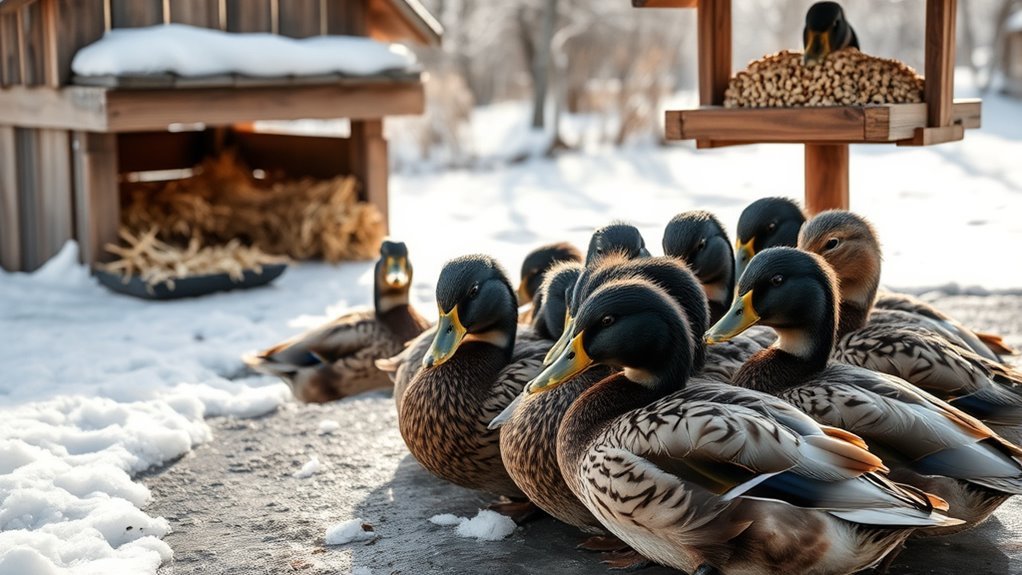
They huddle together for warmth and seek shelter from wind or snow.
If there’s unfrozen water available, they continue foraging or swimming, especially if you provide heated bowls.
Do Ducks Need a Shelter in the Winter?
You definitely want to give your ducks a cozy hideaway in winter.
They appreciate a dry, windproof shelter with insulation and ventilation, plus thick bedding to keep their feathers happy and prevent cold stress during chilly nights.
Conclusion
You might think ducks dislike cold weather, but coincidentally, they’re built for it with natural adaptations that keep them cozy.
When you provide proper shelter, bedding, and nutrition, you’re not just surviving winter—you’re helping your ducks thrive.
Remember, managing water and protecting them from predators matter just as much as warmth.
So, as the temperature drops, you’re not just caring for ducks—you’re mastering winter together, one quack at a time.
In conclusion, ducks are surprisingly well-equipped for cold weather.
With the right care, including adequate shelter and nutrition, your ducks will not only endure the winter but flourish during it.
Don’t forget about water management and predator protection, as these are essential for their overall well-being.
So, bundle up and enjoy the season with your ducks—because together, you can make the most of winter!