What Cold Weather Temperature Do Cockroaches Like?
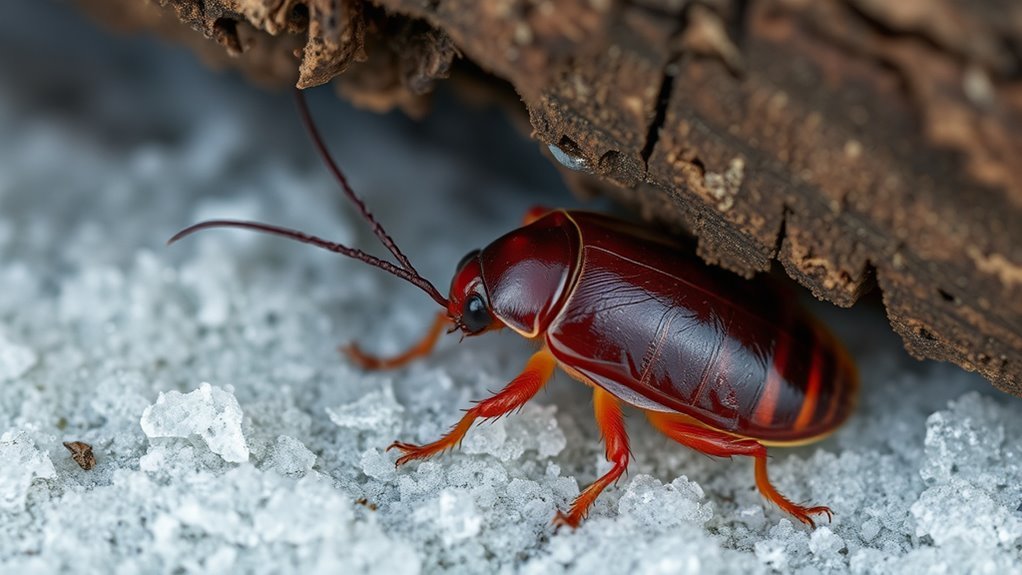
Cockroaches prefer temperatures above 50°F because their activity and survival drop sharply below that.
When it’s colder than 45°F, most species struggle to stay alive, and their eggs fail to hatch in prolonged cold.
You’ll find them seeking warm indoor spots, especially in winter.
Different species tolerate cold differently, but all avoid freezing or near-freezing conditions.
If you want to understand how cold affects their behavior and where they hide during winter, keep exploring.
Cockroach Temperature Preferences and Survival Limits
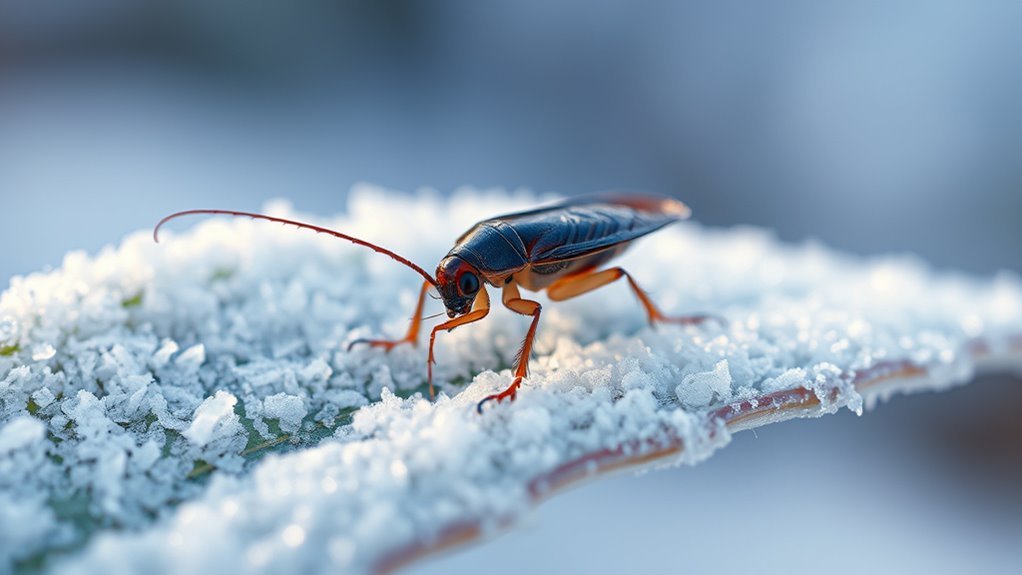
Although cockroaches can tolerate a range of temperatures, they generally avoid anything below 45°F (7°C), which proves fatal for most species.
You’ll notice German cockroaches struggle to survive below 50°F (10°C), with their survival limits dropping sharply in cold weather.
In contrast, Oriental cockroaches tolerate cold temperatures better and can linger near 40°F (4°C) longer.
Cockroach eggs are even more vulnerable; most can’t survive below 50°F (10°C), leading to high mortality during cold spells.
Understanding these temperature preferences helps you target pest control effectively, especially during colder months when cockroaches seek warmer indoor spots.
Effects of Cold Weather on Cockroach Activity
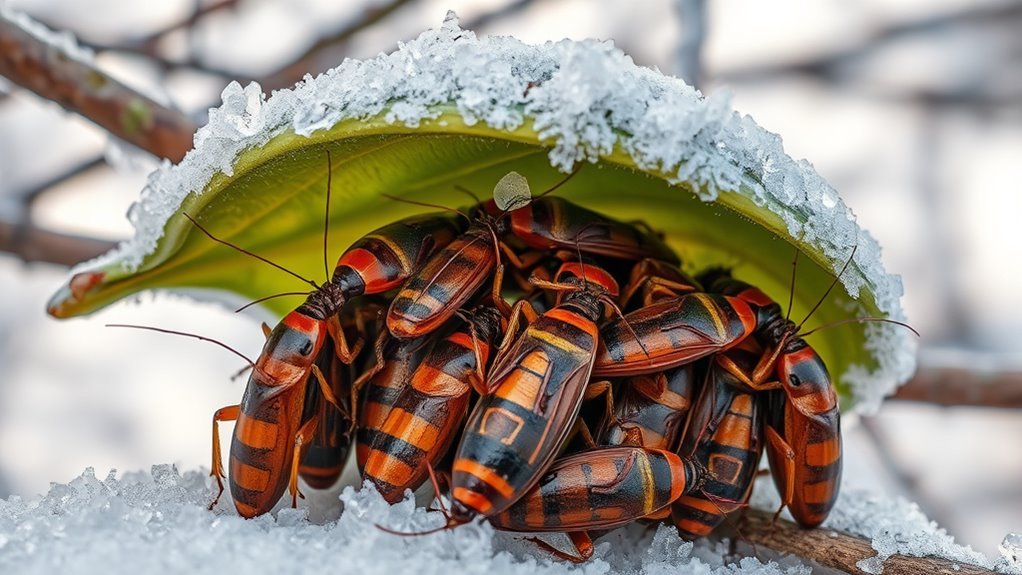
When cold weather hits, you’ll notice cockroaches slow down considerably as their movement reduces.
They start seeking out warm indoor spots to stay active and survive the chill.
Understanding this behavior helps you predict where they might hide during winter.
Reduced Cockroach Movement
Since temperatures drop below 44°F (7°C), you’ll notice cockroaches markedly reduce their activity.
Cold temperatures cause a sharp decline in their metabolic rate, leading to dormancy and reluctance to leave hiding spots.
As temperature drops, their activity levels plummet, especially during inclement weather.
Prolonged exposure to cold can increase mortality rates.
Here’s a quick overview:
| Temperature Range (°F) | Activity Levels | Behavior |
|---|---|---|
| Above 55 | High | Active, frequent movement |
| 50 – 55 | Moderate | Reduced movement |
| 44 – 50 | Low | Enter dormancy, minimal movement |
| Below 44 | Very Low | Stay hidden, metabolic rate slows |
| Prolonged <44 | Near Zero | High mortality rates |
You’ll see cockroaches stay put, minimizing movement to conserve energy in cold weather.
Seeking Warm Indoor Spots
As outdoor temperatures dip below 50°F, cockroaches actively seek warm indoor spots like wall voids, behind appliances, and under sinks to stay comfortable.
When the temperature drops, their behavior shifts to finding hiding places that offer stable warmth and insulation.
These warm indoor spots in heated environments help cockroaches maintain body heat and avoid diapause.
You’ll often find them in:
- Wall voids that retain heat and provide shelter
- Cracks and cabinets offering consistent warmth
- Behind appliances where insulation traps heat
- Under sinks near plumbing that stays warm
Cold Tolerance of Different Cockroach Species
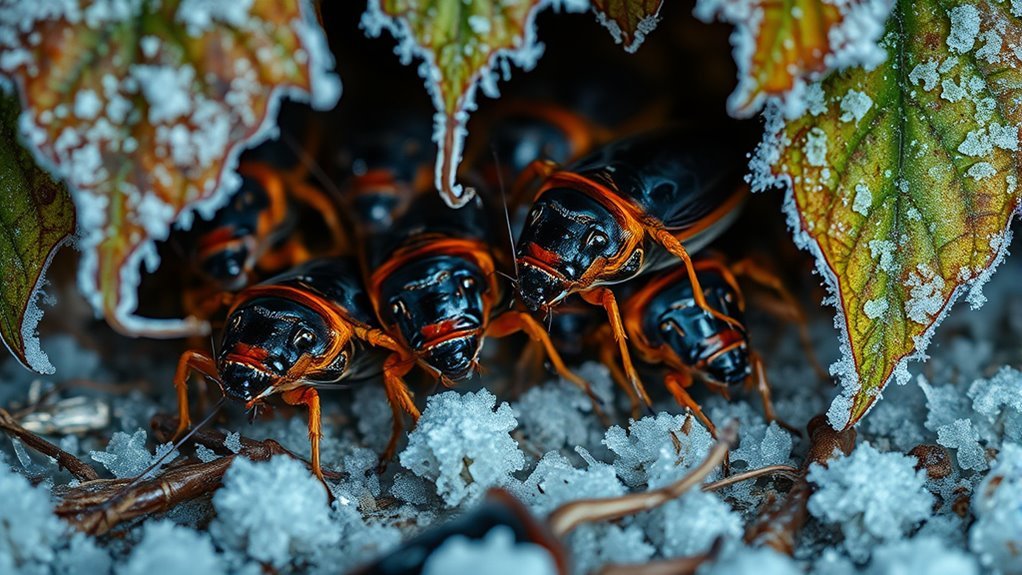
You’ll notice that different cockroach species have varying cold survival limits.
For instance, German cockroaches struggle below 50°F, while Oriental cockroaches can tolerate temperatures down to 45°F.
Most species can’t handle prolonged exposure to temperatures under 45°F, which often proves deadly.
Understanding these thresholds helps explain their behavior and survival during cold weather.
Species Cold Survival
Although cockroaches generally prefer warm environments, different species show varying levels of cold tolerance.
Understanding species cold survival helps you grasp how they handle extreme cold and lethal temperatures.
German cockroaches survive briefly near 50°F (10°C) but perish below 45°F (7°C).
This shows they have limited temperature survival.
Oriental cockroaches tolerate colder conditions better, enduring temperatures around 45°F (7°C) or slightly lower longer than others.
American cockroaches favor warmth and rarely survive exposure below 50°F (10°C) for hours.
Cockroach eggs exhibit greater cold tolerance and resistance than adult cockroaches.
However, they still struggle with prolonged temperatures under 50°F (10°C).
Knowing these differences in cold tolerance among cockroach species informs pest control strategies during colder months.
Temperature Thresholds
When temperatures drop below 45°F (7°C), most cockroach species can’t survive for long. German cockroaches die quickly under 50°F (10°C).
Oriental cockroaches tolerate cold temperatures better, surviving near freezing. However, even they struggle with freezing temperatures below 32°F (0°C).
Cockroach eggs show more resilience than adult cockroaches, but they still rarely withstand extended exposure below 50°F (10°C).
These temperature thresholds highlight why permanent outdoor exposure during winter is usually fatal for cockroaches.
To guarantee their survival, they seek indoor heated environments, avoiding harsh cold.
Understanding these limits is vital for effective winter pest control since freezing temperatures naturally reduce populations.
Survival of Cockroach Eggs in Low Temperatures
Because cockroach eggs tolerate cold better than adults, you might assume they easily survive winter.
However, prolonged exposure below 50°F (10°C) substantially reduces their chances.
Cockroach eggs show notable resilience, but they face high mortality when cold exposure extends.
Understanding these temperature thresholds helps explain their winter survival limits.
Most cockroach eggs can’t survive prolonged low temperatures under 50°F.
Some species’ eggs can endure short periods near freezing (32°F) but not for long.
Cold exposure below 60°F increases egg mortality, which limits infestations in colder climates.
When temperatures rise, surviving eggs hatch, fueling ongoing cockroach infestation.
Knowing this, you’ll see why cockroach eggs don’t thrive after harsh winters, emphasizing the role of cold in pest control.
Indoor Hiding Spots During Winter Months
Since cockroaches seek warmth during winter, they often hide indoors in places like wall voids near plumbing and electrical wiring.
You’ll find them in basements, crawlspaces, and under sinks—dark, damp areas that serve as perfect warm hiding spots.
Cluttered spaces with paper and fabric also provide excellent indoor hiding spots, making it easier for roaches to survive cold months.
| Indoor Hiding Spot | Reason for Preference |
|---|---|
| Wall voids | Near plumbing & wiring |
| Basements | Dark, damp environment |
| Crawlspaces | Limited disturbance |
| Under sinks | Moisture & warmth |
| Cluttered spaces | Concealment & insulation |
Knowing these spots helps you understand where cockroaches cluster during winter.
Strategies to Prevent Winter Cockroach Infestations
Although cockroaches seek warmth during winter, you can keep them out by sealing cracks around windows, doors, and foundations.
This is a key step in winter cockroach control, as sealing cracks blocks common cockroach entry points.
To further prevent infestations, focus on these strategies:
- Reduce clutter to eliminate hiding spots, and store food in airtight containers to cut off food sources.
- Repair leaks and control indoor moisture to make your home less inviting.
- Install door sweeps and weatherstripping to create effective temperature barriers.
- Schedule professional pest control treatments for thorough elimination and ongoing prevention.
Frequently Asked Questions
What Temperature Is Too Cold for Roaches?
You’ll find roaches can’t handle temperatures below 45°F (7°C).
They become inactive and die quickly under 32°F (0°C).
Are Cockroaches Active in Cold Weather?
You won’t see cockroaches dancing in winter’s icy ballroom; they slow down and hide when it’s cold.
But if you keep your home warm and stocked with food, they’ll stay active and sneaky indoors.
Will a Cold House Get Rid of Roaches?
No, a cold house alone won’t get rid of roaches.
They’ll hide in warm spots, and temperatures must drop below freezing for long periods to kill them.
Combine cold with pest control for effective results.
Conclusion
You might think cold weather will keep cockroaches away, but they actually prefer temperatures between 70°F and 85°F.
They can survive colder spells by hiding indoors. Even if it’s freezing outside, cockroach eggs and adults find warm spots inside your home to stay active.
So, don’t rely on winter alone to solve your infestation. Taking proactive steps indoors is key to keeping these pests under control year-round.
In conclusion, while cold temperatures may not deter cockroaches, understanding their preferred living conditions is crucial.
To effectively manage and prevent a cockroach infestation, focus on maintaining a clean environment and sealing potential entry points in your home.
Being proactive will help ensure that these resilient pests don’t take over your living space, regardless of the season.