Can Dogs Sense Bad Weather?
Yes, your dog can sense bad weather long before you do. They have an incredible ability to detect falling barometric pressure through their sinuses and skin, which allows them to pick up on changes that signal an approaching storm.
Dogs can also hear distant thunder rumbles that are inaudible to humans. Additionally, they can smell rain or ozone in the air, giving them a heads-up about incoming weather.
Many dogs are sensitive to changes in static electricity, which can make them feel restless or anxious. You might notice your furry friend pacing, whining, or even hiding as these early warnings manifest.
If you’re curious about why dogs react this way and how you can help them cope, there’s much more to explore on this fascinating topic!
How Dogs Detect Changes in Barometric Pressure
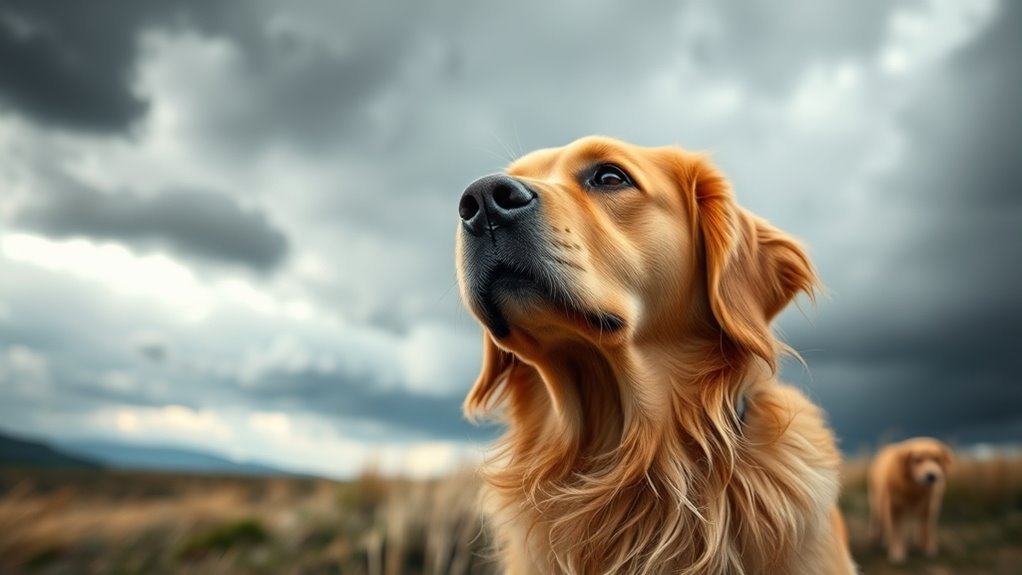
Although you might not notice it, dogs can detect drops in barometric pressure that often signal approaching storms.
Dogs can sense falling barometric pressure, alerting them to storms before we even notice.
Their ability comes from specialized receptors located in their sinuses and skin, which are extremely sensitive to changes in atmospheric pressure.
When barometric pressure falls, dogs pick up on this subtle shift before most people do.
You might see your dog becoming restless, pacing, or even seeking shelter as they respond to these changes.
This sensitivity helps dogs anticipate weather shifts, giving them time to prepare or find safety.
It’s an evolutionary trait that enhances their survival, allowing them to adapt quickly to their environment.
The Role of Dogs’ Acute Hearing in Storm Awareness
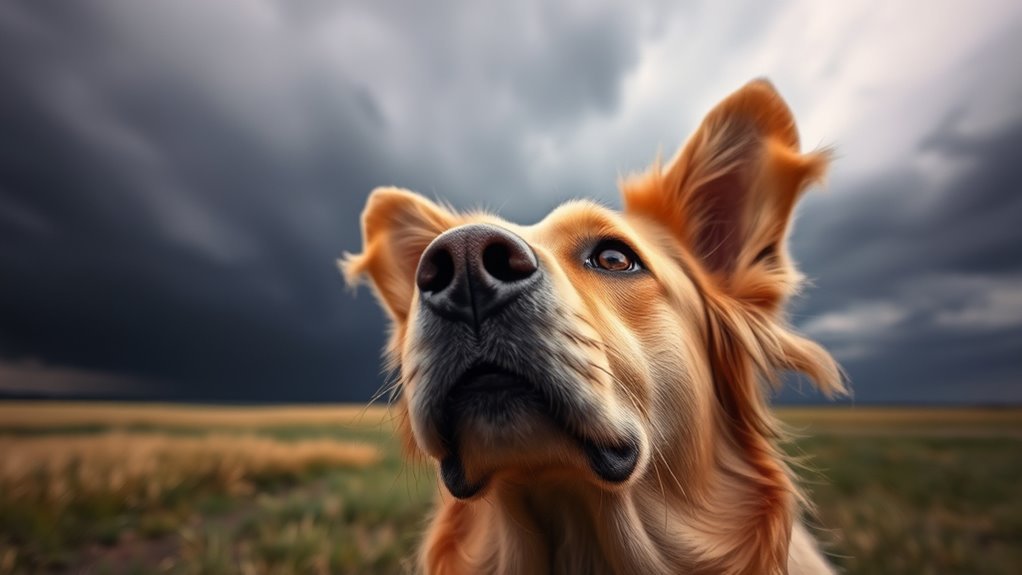
Because dogs can hear sounds at frequencies far below what humans detect, they often notice the distant rumble of thunder long before you do.
Their acute hearing lets them sense storms approaching, picking up subtle atmospheric noises that signal weather changes.
When a storm nears, dogs may become restless or anxious as they respond to these faint sounds.
This heightened auditory ability makes dogs natural early warning systems, alerting you even when the sky looks clear.
Here’s how dogs use their hearing to sense storms:
- Detect faint thunder rumbles miles away.
- Hear low-frequency atmospheric vibrations.
- Sense subtle wind shifts and rustling.
- React behaviorally to approaching storm sounds.
- Alert owners before visible storm signs appear.
Your dog’s ears are finely tuned to nature’s warnings.
Dogs’ Ability to Smell Rain and Ozone Before Storms
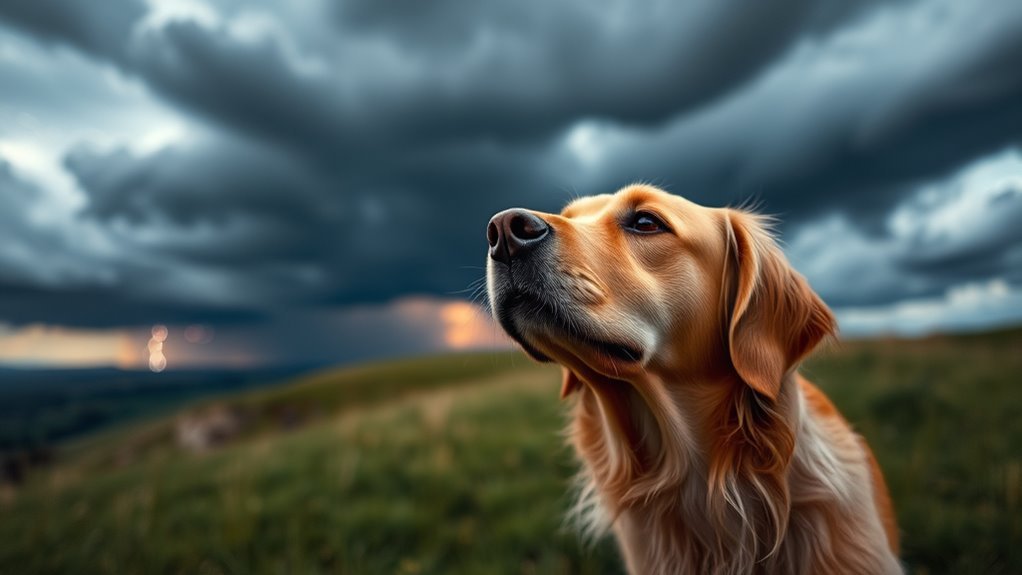
You might not realize it, but dogs can actually smell rain approaching thanks to their keen noses picking up moisture in the air.
They also detect the unique scent of ozone, which forms during lightning strikes before a storm hits.
This sharp olfactory sense lets them pick up on weather changes long before you do.
Rain Scent Detection
When a storm is brewing, dogs pick up on scents that you might miss, like the fresh smell of rain and the sharp ozone produced by lightning.
Their incredible rain scent detection lets them sense these changes well before you do, thanks to their powerful noses.
This ability helps dogs anticipate storms and act accordingly, often showing alert behaviors beforehand.
Here’s what makes rain scent detection fascinating:
- Dogs can smell rain approaching minutes before it arrives.
- Their noses detect subtle chemical changes in the air.
- They sense ozone created by lightning during storms.
- This early warning helps them find shelter or comfort.
- Rain scent detection is key to their weather awareness.
Your dog’s nose truly works like a natural weather sensor!
Ozone Smell Awareness
Although storms might seem sudden to us, dogs can pick up on the faint ozone scent produced by lightning long before the first drop falls.
This ozone smell awareness is a key reason dogs often act restless or seek shelter well before you notice any weather change.
Their highly sensitive olfactory receptors detect ozone, rain, and humidity early, giving them a natural weather alert system.
When you see your dog hiding or pacing, it might be because they’ve sensed the ozone in the air signaling an approaching storm.
This ability helps dogs stay safe by anticipating bad weather hours in advance.
Olfactory Storm Signals
Because dogs have a highly developed sense of smell, they can detect the faint odors of rain and ozone that often precede storms.
These olfactory storm signals alert your dog to weather changes long before you notice.
Their noses pick up low concentrations of rain-related scents and the unique ozone smell produced by lightning.
This natural warning system triggers behaviors like restlessness or seeking shelter.
Here’s what makes olfactory storm signals so fascinating:
- Detect rain and ozone scents from far away
- Sense weather changes hours before storms arrive
- Ozone smell linked to lightning alerts dogs early
- Natural olfactory warning prompts pre-storm behavior
- Dogs’ noses are far more sensitive than humans’
Your dog’s keen nose helps them anticipate storms through these subtle olfactory storm signals.
Understanding Dogs’ Sensitivity to Static Electricity
You might notice your dog acting restless or trembling before a storm, and static electricity in the air could be why.
Dogs can feel these tiny electrical charges through their fur and skin, which sometimes causes discomfort or even static shocks.
Paying attention to these behaviors helps you understand how sensitive your dog is to changing weather conditions.
Static Electricity Effects
When static electricity builds up in the air before a storm, your dog can actually feel it through their fur and skin.
This sensation comes from atmospheric ionization and lightning discharges that create a tingling or slight shock.
Your dog’s sensitivity to static electricity means they often react physically before you notice any weather change.
You might observe:
- Fur standing on end or small shocks when touched
- Rubbing against surfaces to dissipate static
- Restlessness or increased alertness
- Seeking grounded areas like tile floors
- Shaking or pawing at themselves to relieve discomfort
Behavioral Reactions
Dogs often show clear behavioral reactions to the static electricity they sense before a storm.
You might notice your dog pacing restlessly, seeking out grounded areas, or rubbing and scratching themselves more than usual.
These behavioral reactions stem from the tingling sensations static electricity causes in their fur, leading to discomfort.
Some dogs even exhibit head tremors or frequent head-shaking as they respond to these atmospheric changes.
When you observe these signs, it’s your dog’s natural way of perceiving the electrical shifts in the environment.
Understanding these behavioral reactions helps you realize that your dog isn’t just anxious—they’re reacting to real physical sensations linked to upcoming bad weather.
Paying attention to these cues can prepare you both for storms ahead.
Common Behavioral Signs of Storm Anticipation in Dogs
Although the signs can vary, many dogs start pacing, whining, or seeking close contact with their owners well before a storm hits.
Many dogs begin pacing, whining, or cuddling with their owners long before a storm arrives.
You’ll notice these behavioral cues as early warnings that your dog senses bad weather approaching.
Besides pacing and whining, dogs may show increased panting, trembling, or even try to hide.
Some might become restless or attempt to escape, recognizing changes in the atmosphere.
You might also observe barking at the sky or scratching at doors as they react to the impending storm.
Here are common behavioral signs to watch for:
- Pacing back and forth
- Whining or vocalizing more than usual
- Seeking close contact or cuddling
- Trembling or panting intensely
- Hiding or scratching at doors
Recognizing these cues helps you comfort your dog during storms.
Evolutionary Reasons Behind Dogs’ Storm Sensing Skills
Since survival often depended on sensing danger early, your canine companion’s sharp senses have evolved to detect subtle environmental changes signaling storms.
Dogs’ ancestors relied on acute hearing and a strong sense of smell to detect shifts in barometric pressure, static electricity, and atmospheric odors—key signals of approaching bad weather.
These evolutionary traits weren’t just random; they were naturally selected because they helped dogs avoid danger and find shelter before storms hit.
When barometric pressure drops, your dog can sense it even before humans notice, giving them an edge in preparing for severe weather.
Techniques to Help Anxious Dogs During Storms
When storms roll in, your anxious dog can benefit greatly from techniques that reduce stress and create a sense of safety.
If a storm is coming, you can help your dog stay calm by setting up a comforting environment and using tools designed to ease anxiety.
Try these methods:
- Play soft music, white noise, or a fan to mask storm sounds.
- Use snug-fitting storm shirts or anxiety wraps for gentle pressure.
- Offer high-value treats, puzzle toys, or engaging activities to distract.
- Create a cozy safe space with familiar items like a crate or small room.
- Stay calm yourself and avoid fussing to prevent reinforcing fear.
Using Dogs’ Behavior to Predict Weather Changes
If you pay close attention to your dog’s behavior, you might notice signs that hint at approaching weather changes before you see any clouds or hear thunder.
Dogs can sense shifts in atmospheric pressure and pick up scents like rain or ozone, prompting early reactions.
Observing these behaviors helps you predict storms early.
| Behavior | Weather Indicator |
|---|---|
| Pacing | Storm approaching |
| Trembling | Drop in barometric pressure |
| Seeking shelter | Rain or lightning nearby |
| Hiding | Impending bad weather |
| Attempting escape | Severe storm warning |
Managing and Supporting Dogs With Storm Anxiety
Although dogs can sense approaching storms, their heightened awareness often leads to anxiety and distress.
To help your dog manage storm anxiety, it’s important to create a calm environment and be proactive when you know a storm is coming.
Use the weather forecast or listen to TV or radio updates to anticipate bad weather.
Here’s how you can help your dog:
- Keep your dog in a safe, quiet space with familiar items.
- Provide distractions like toys or treats to redirect focus.
- Use calming aids or pheromone diffusers.
- Train and desensitize your dog gradually to storm sounds.
- Consult your veterinarian for severe anxiety or medication options.
Watching for signs that your dog may show stress is key to providing timely support.
Always check the Privacy Policy when using products or services.
Frequently Asked Questions
How Long Before a Storm Can a Dog Sense It?
You can expect your dog to sense a storm anywhere from minutes up to a few hours before it arrives.
Their keen senses pick up on pressure changes and smells well before you notice any weather shifts.
Isn’t it fascinating how in tune they are with nature?
Can Dogs Sense if a Tornado Is Coming?
Yes, you’ll notice your dog sensing a tornado before it hits.
They detect changes in pressure, hear distant thunder, and smell ozone.
Often, they show restlessness or seek shelter, giving you an early warning to stay safe.
What Is a Silent Killer in Dogs?
Imagine a thief sneaking in silence—that’s a silent killer in dogs.
It’s diseases like heartworm or cancer that hide symptoms until they’re severe.
You need regular vet visits to catch these dangers early and protect your dog.
What Is the 90/10 Rule for Dogs?
The 90/10 rule means 90% of your dog’s weather sensing comes from their natural senses like smell and hearing.
While only 10% depends on what they’ve learned about weather patterns from experience.
Isn’t that fascinating? Dogs have such incredible abilities!
Conclusion
You might swear your dog has a superpower, sensing storms before you even see a cloud!
Their incredible hearing, nose, and sensitivity to tiny changes make them like furry weather radar.
When they start pacing or hiding, it’s not just nerves—they’re predicting nature’s next move.
So next time your dog acts up before a storm, listen closely.
They might just be the best meteorologist you’ve ever had, fur and all!
In conclusion, dogs have an amazing ability to sense bad weather.
Their keen senses allow them to detect changes in the environment that we might miss.
Whether it’s the sound of thunder or the smell of rain, our furry friends can be surprisingly accurate weather forecasters.
So pay attention to your dog’s behavior during stormy weather—they could be giving you a heads-up about what’s coming!