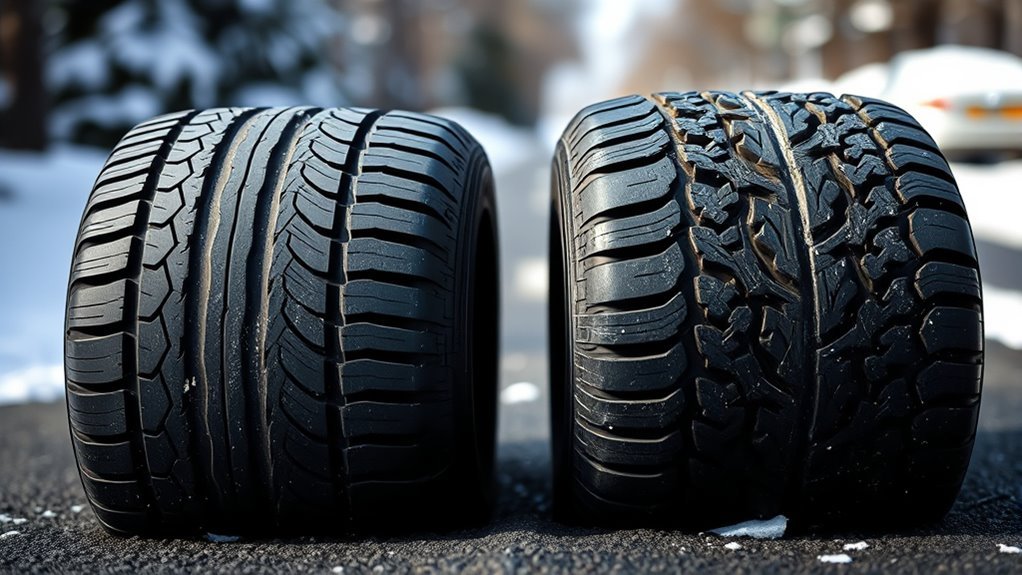
5 Key Differences Between All-Season and All-Weather Tires
You’ll notice five key differences between all-season and all-weather tires.
All-weather tires carry a 3PMSF snow certification, which proves their winter grit. This certification is something all-season tires lack.
Additionally, all-weather tires feature aggressive treads and specialized rubber compounds that provide better traction in cold, snowy, and icy conditions.
While all-season tires may last longer in warm climates, all-weather tires are designed to handle a broader temperature range.
They also meet stricter legal standards for winter performance, ensuring enhanced safety during those colder months.
So, keep exploring to discover how these features impact your driving safety and cost. You might be surprised by what you learn!
Definition and Certification Standards
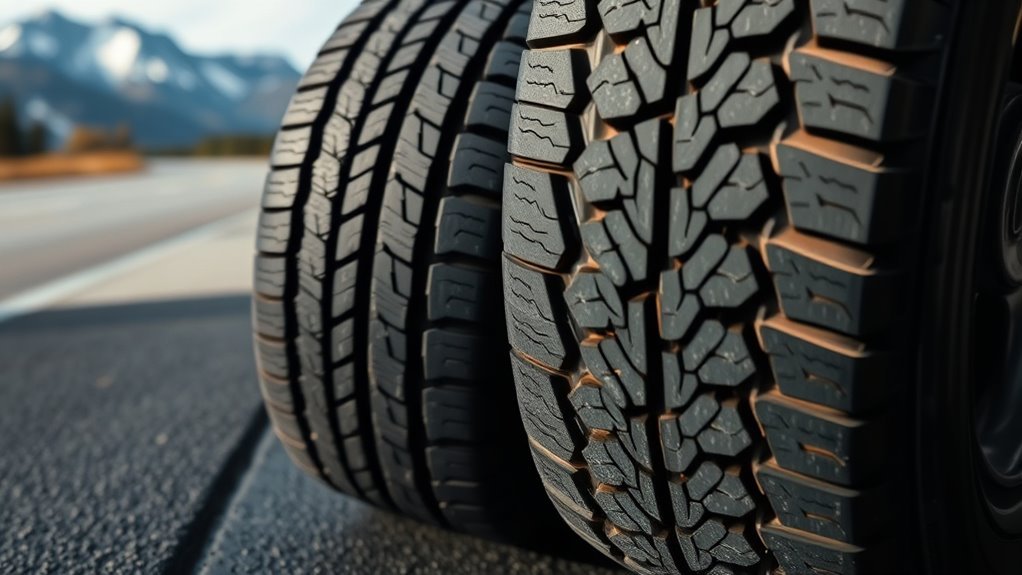
What sets all-season and all-weather tires apart starts with their definitions and certification standards.
All-season tires are designed for year-round use but lack specific certification for severe winter conditions.
On the other hand, all-weather tires meet the Three-Peak Mountain Snowflake (3PMSF) certification standards, which means they perform well in snow and ice.
The 3PMSF symbol, awarded by the Rubber Manufacturers Association, indicates that a tire passes standardized snow traction tests.
This certification helps you identify tires with proven winter traction capabilities, unlike typical all-season tires.
While all-season tires balance tire performance across various conditions, all-weather tires focus on enhanced winter driving.
They bridge the gap between all-season and dedicated snow tires.
Understanding these certification standards guarantees you choose the right tire for your winter needs.
Tread Design and Traction Capabilities
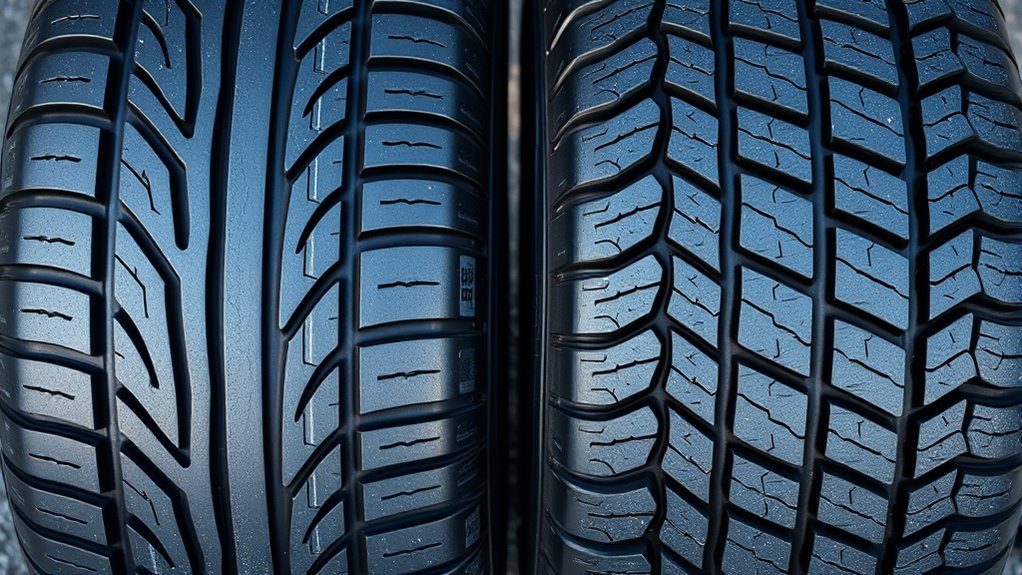
Although both all-season and all-weather tires aim to provide reliable traction, their tread designs differ considerably to meet distinct performance needs.
All-season tires feature a balanced tread pattern with moderate siping, offering versatile traction on dry, wet, and light snow surfaces.
All-season tires provide versatile traction with a balanced tread and moderate siping for varied road conditions.
In contrast, all-weather tires have more aggressive tread patterns, with deep grooves and increased siping that enhance performance in snow and traction on ice.
Their larger, jagged tread blocks include specialized bite edges that notably boost grip and meet the 3PMSF standard for severe snow.
While all-weather tires prioritize winter traction without compromising wet traction or dry road handling, all-season tires focus on a smoother, more uniform tread design suited for general driving conditions.
Understanding these differences helps you choose the right tire for your driving needs.
Temperature Range and Weather Performance
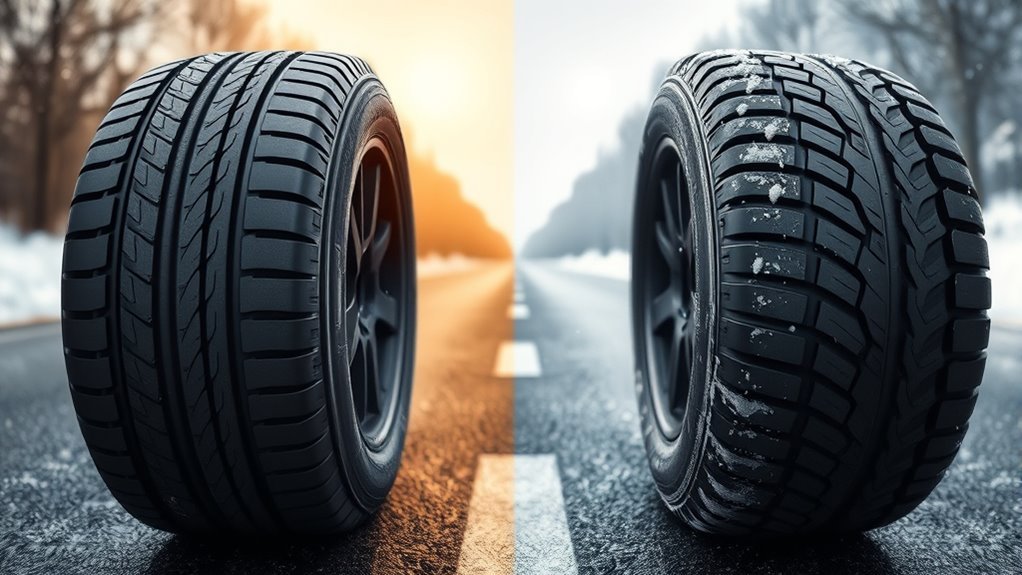
Because temperature greatly affects tire performance, choosing between all-season and all-weather tires depends on the climate you drive in.
All-season tires perform best above 45°F but tend to harden and lose grip in cold weather and freezing temperatures.
Their rubber compounds aren’t designed for winter conditions, which reduces grip in cold and snow traction.
In contrast, all-weather tires use specialized rubber compounds that maintain tire flexibility across a wider temperature range.
This keeps the tread design pliable, ensuring better winter performance in snow, slush, and ice.
If you regularly face harsh winter conditions, all-weather tires provide superior grip in cold and freezing temperatures, thanks to their enhanced tire flexibility and 3PMSF rating.
Legal Requirements and Safety Ratings
Understanding how tires perform in different temperatures naturally leads to contemplating their legal status and safety credentials.
If you want tires certified for winter use, look for the 3PMSF symbol. This symbol is carried by all-weather tires to prove they meet strict tire certification and testing standards for severe snow conditions.
This certification ensures superior snow traction, braking, and handling, meeting legal requirements in regions that mandate winter tires.
In contrast, all-season tires typically lack 3PMSF certification and formal safety ratings for winter use. They focus instead on balanced tire performance year-round.
Choosing all-weather tires means you comply with legal requirements. Plus, you benefit from tested safety ratings designed specifically for severe snow.
This gives you confidence and legality when driving in harsh winter conditions.
Cost and Longevity Considerations
When choosing between all-season and all-weather tires, you’ll notice that all-weather tires usually come with a higher upfront cost.
This is due to their advanced materials and specialized tread patterns designed for severe conditions.
If you live in a region with warm weather, all-season tires often offer better longevity since their harder rubber compounds resist wear over a longer duration.
While all-weather tires might wear faster in such climates, their investment pays off by eliminating the hassle and cost of seasonal tire changes and winter tire purchases.
For drivers facing variable weather, all-weather tires can be more cost-effective overall despite a shorter lifespan.
Ultimately, your choice depends on balancing initial cost against durability and convenience to find the best fit for your driving conditions and budget.
Frequently Asked Questions
Should I Buy All-Weather Tires or All-Season Tires?
You should buy all-weather tires if you face frequent snow and icy roads, as they offer better winter traction.
Choose all-season tires if your winters are mild and you want a more affordable option for year-round use.
What Is the Downside of All-Weather Tires?
The downside of all-weather tires is they can be pricier, deliver a firmer ride, and create more road noise.
Plus, their traction might drop in extreme cold, and they may not meet severe winter standards.
Can I Use All-Weather Tires in Winter?
Sure, you can use all-weather tires in winter—if you enjoy skating on ice with style.
They handle moderate snow well, but if winter’s a beast, you’ll want real winter tires to stay safe and sane.
Who Makes the Best All-Weather Tires?
You’ll find Michelin’s CrossClimate2 tops all-weather tires for snow traction and durability.
Pirelli, Nokian, General Tire, and Continental also make strong options.
Each brand excels in different conditions to keep you safe year-round.
Conclusion
Choosing between all-season and all-weather tires is like picking the right tool for your journey’s canvas.
All-season tires paint a broad, steady stroke through mild conditions.
On the other hand, all-weather tires dance boldly through winter’s icy grip and summer’s heat.
Understanding their unique traits helps you steer safely and confidently, no matter the forecast.
So, trust your grip on the road and let your tires be the brush that colors your drive with safety and performance.
In conclusion, both all-season and all-weather tires have their advantages depending on your driving needs.
If you face varied weather conditions throughout the year, all-weather tires may be the better choice.
However, for milder climates, all-season tires can provide adequate performance.
Ultimately, knowing the differences can enhance your driving experience and keep you safe on the road.