What Does Concrete Set in Cold Weather?
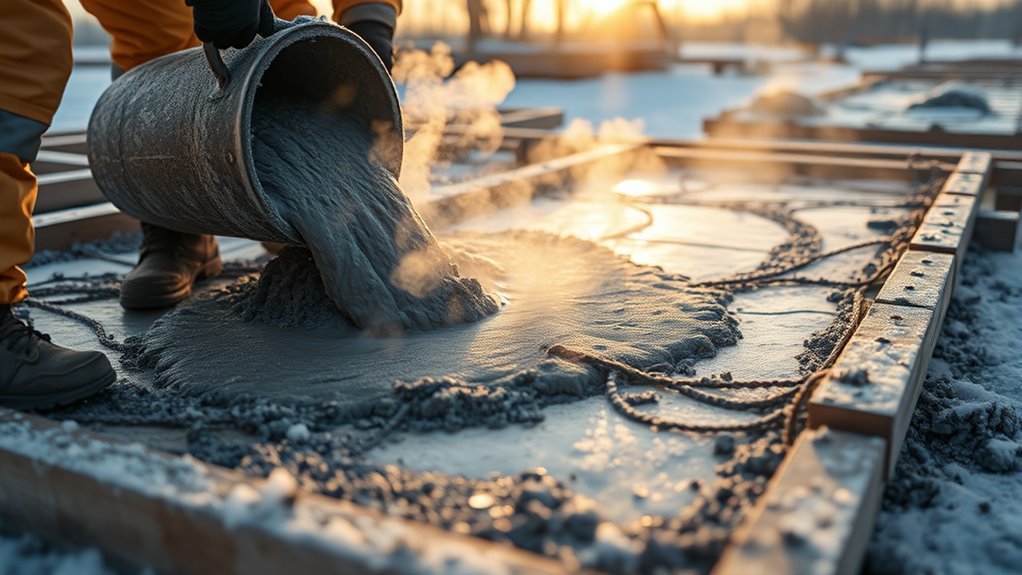
When you set concrete in cold weather, it’s crucial to understand that the hydration process slows down significantly when temperatures dip below 40°F. This means that your concrete will take longer to harden, which can impact its overall strength and durability.
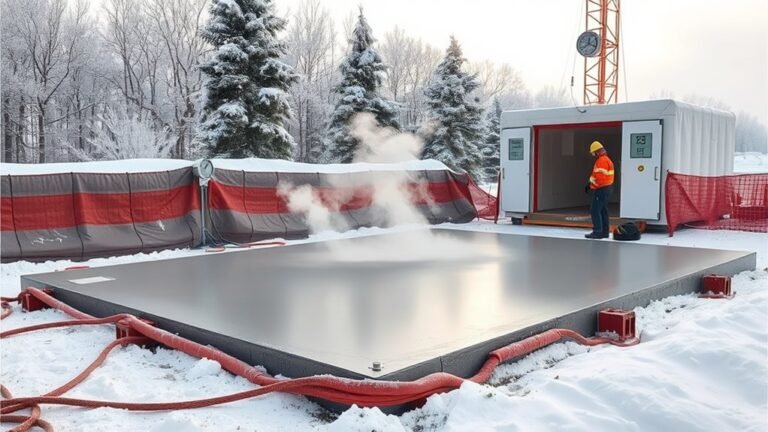
To protect your concrete from freezing temperatures, especially before it gains strength, you’ll want to use insulating blankets or consider mixing warm water into your concrete.
It’s important to be extra cautious when pouring concrete in temperatures below 50°F. If the concrete freezes too early in the curing process, it can lead to serious damage and reduced durability.
By keeping these factors in mind, you can find effective ways to ensure your concrete cures properly, even in chilly conditions.
How Cold Weather Affects Concrete Setting
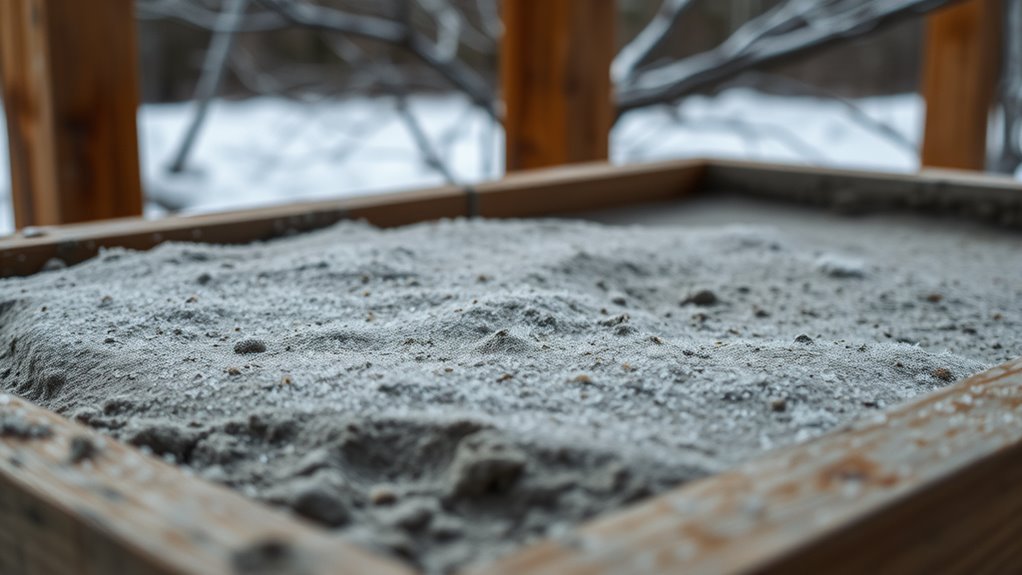
Although concrete can set in cold weather, the hydration process slows down considerably as temperatures drop below 40°F.
This extends the time it takes to harden.
In cold weather concreting, lower concrete temperature reduces the hydration reaction rate, delaying the initial set and overall setting time.
You’ll notice that strength gain is much slower.
If freezing temperatures occur before the curing process completes, the water in the mix can freeze, damaging the concrete’s structure.
To protect your pour, you need to manage temperature carefully.
Using insulating blankets or heating ingredients helps maintain suitable concrete temperature.
This ensures the hydration reaction continues smoothly, allowing the concrete to achieve proper strength despite cold conditions.
Without these precautions, your concrete might never fully set or reach its designed durability.
Temperature Thresholds for Safe Concrete Pouring
Managing concrete temperature is vital to guaranteeing it sets properly, especially when conditions turn cold.
You should know the temperature thresholds for safe concrete pouring to avoid issues during winter conditions.
Ideally, pour concrete when the ambient temperature is above 50°F, particularly during the crucial first 48 hours of curing temperatures, to promote early strength.
Pouring concrete below 40°F risks freezing temperatures that can compromise your concrete placement.
If you must pour between 40°F and 50°F, use protective measures like insulation, heating, or enclosures to maintain proper curing temperatures.
Avoid pouring if freezing temperatures are expected within 24 hours, as this severely impacts concrete’s integrity.
Understanding these thresholds helps you manage cold weather challenges and guarantees your concrete sets strong and durable.
Identifying and Preventing Concrete Freezing
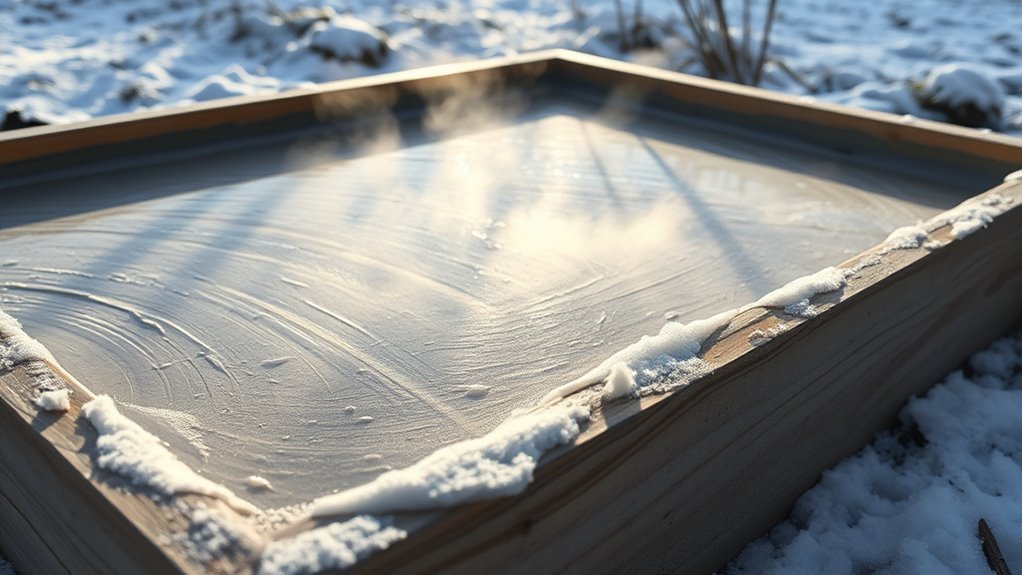
If your concrete reaches 32°F before gaining enough strength, typically within the first 24 hours, it risks freezing and losing durability.
Concrete freezing during cold weather curing shows signs like surface ice crystals, peeling flakes, or a chalky texture.
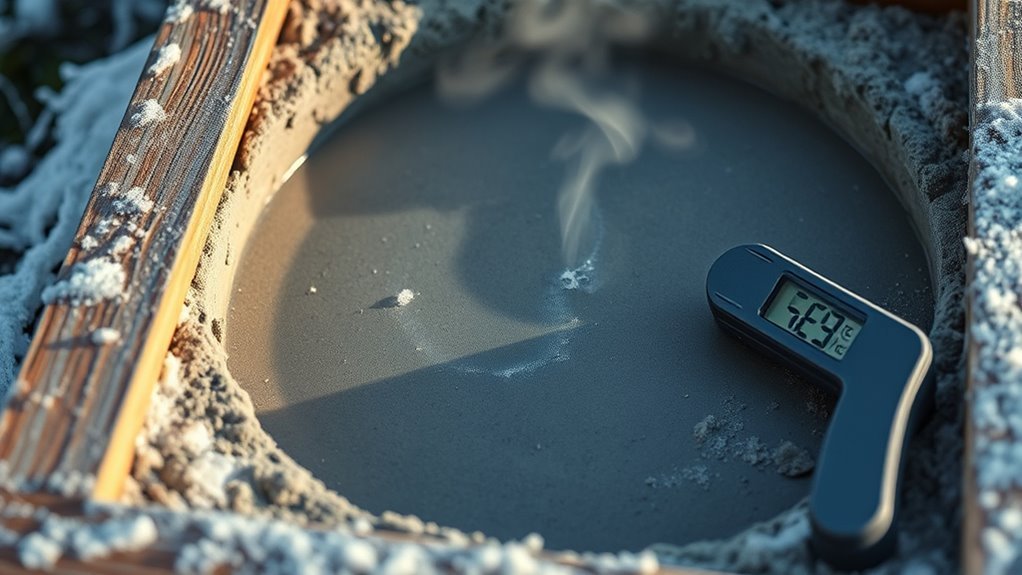
To avoid damage, you need to monitor concrete temperature closely using temperature sensors or infrared thermometers.
These tools help you track freezing temperatures during the critical early strength gain phase.
Taking protective measures is essential for preventing freezing; insulating blankets are a common solution to maintain adequate heat around the concrete.
Proper concrete curing in cold conditions relies on these precautions to ensure the concrete sets properly without compromise.
Techniques to Protect Concrete in Cold Conditions
When you pour concrete in cold weather, protecting it quickly is essential to prevent freezing and guarantee proper curing.
To protect concrete during winter temperatures, apply insulating blankets or thermal covers within 30 minutes of finishing the pour. These materials help retain heat and reduce heat loss.
Use warm water around 65°F and warmed aggregates to speed up the curing process and prevent freezing.
You can also erect temporary enclosures or windbreaks to shield concrete from cold winds.
Applying curing compounds that lock in moisture and provide insulation further safeguards the concrete.
Maintaining a consistent temperature above 50°F for at least 48 hours is critical to ensure proper setting and avoid freeze damage.
These techniques work together efficiently to protect concrete in cold conditions.
Optimizing Concrete Mixes for Low Temperatures
Because cold weather slows the hydration process, you’ll need to optimize your concrete mix to guarantee timely setting and strength development.
For cold weather concrete, start by using warm water or hot water—around 65°F—to speed initial hydration in low temperatures.
Incorporate accelerators like calcium chloride or non-chloride admixtures to boost early strength and reduce setting times.
Switching to Type III cement, known for faster setting, also helps concrete cure efficiently despite cold conditions.
Consider concrete mix adjustments such as increasing cement content or using specialized cold-weather mixes to further enhance performance.
Pair these mix strategies with proper curing practices to maintain warmth and moisture.
This ensures your concrete gains strength quickly and reliably even when temperatures drop.
Frequently Asked Questions
How Cold Is Too Cold for Concrete to Cure?
You shouldn’t let concrete cure below 40°F because it diminishes.
Below 32°F, it risks freezing and damage.
Keep it above 41°F for 48 hours to ensure proper strength and avoid weakening.
Can Concrete Freeze After 3 Days?
Yes, concrete can freeze after 3 days if the temperature drops below 32°F and it hasn’t gained enough strength.
You’ll need proper curing and insulation to protect it during this vulnerable period.
Can Concrete Be Set up in Cold Weather?
Yes, you can set concrete in cold weather, but you’ll need to heat ingredients, use admixtures, and insulate the pour.
Keep it above 41°F for 48 hours to prevent freezing and guarantee proper strength development.
What Happens if Concrete Is Allowed to Freeze Within the First 24 Hours?
If concrete freezes within the first 24 hours, it won’t cure properly.
You’ll end up with weak, cracked, or damaged concrete that can lose up to 50% of its strength.
This can risk costly repairs or replacement.
Conclusion
You might worry that pouring concrete in cold weather will always lead to weak, damaged results.
But with the right precautions, that’s not true.
By understanding temperature thresholds, preventing freezing, and using optimized mixes, you can guarantee your concrete sets properly even in low temperatures.
Taking these steps lets you work confidently year-round.
You’ll avoid delays and costly repairs while achieving strong, durable concrete no matter the weather.
In conclusion, pouring concrete in cold weather doesn’t have to be a gamble.
With the right strategies, you can ensure successful results, even in chilly conditions.
Keep temperature thresholds in mind, prevent freezing, and utilize optimized mixes.
These actions will not only enhance the strength of your concrete but also provide peace of mind, allowing you to continue your projects without weather-related interruptions.