What Do Roaches Like in Cold Weather?
Roaches dislike cold weather and actively seek warmth, moisture, and sheltered spots to survive the winter chill.
You’ll often find them hiding in warm places like behind appliances, inside wall voids, basements, or near plumbing where it’s cozy and damp.
Although they slow down in cold temperatures, they remain alive by grouping together or entering a dormant state when it drops below 44°F.
To effectively keep these pests away and protect your home during the colder months, it’s essential to understand their habits and explore prevention tips further.
Staying informed on how roaches behave in cold weather can help you take the necessary steps to prevent an infestation.
Let’s dive deeper into what attracts them and how you can keep your living space roach-free!
Cockroaches’ Temperature Preferences
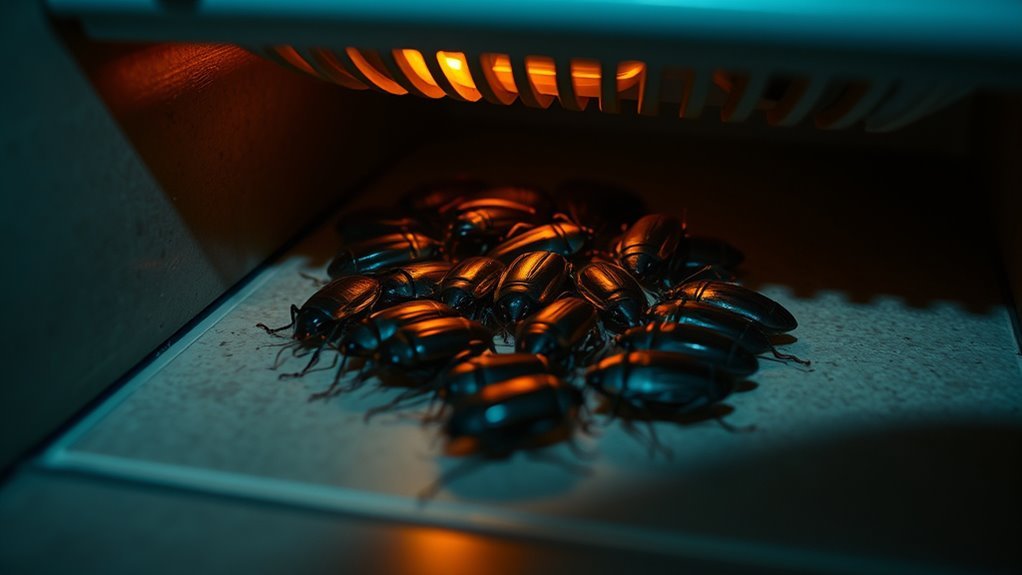
Although cockroaches prefer warm temperatures, you’ll find them slowing down considerably as the weather cools.
Since they’re cold-blooded, they depend entirely on external heat sources to maintain their body temperature. When it gets cold, their metabolism drops, and their activity decreases markedly.
Being cold-blooded, cockroaches rely on external heat; cold slows their metabolism and activity significantly.
You’ll notice cockroaches seeking out warm spots indoors, like behind appliances or inside wall voids, where the temperature stays higher.
Once temperatures fall below 44°F, they might enter a dormant state called diapause to conserve energy.
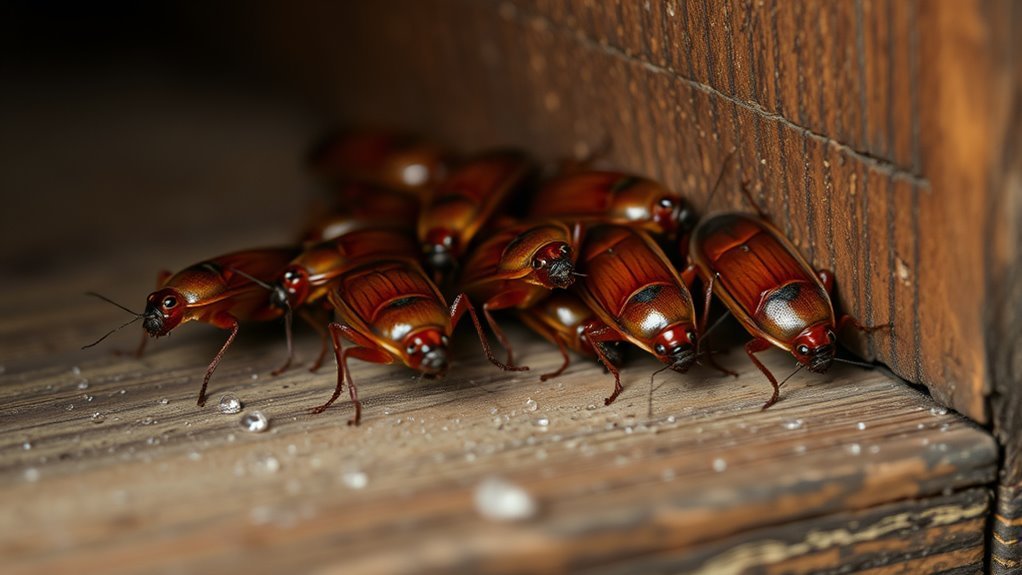
In cold conditions, cockroaches group together or hide in hot spots to keep from getting too cold.
Understanding their temperature preferences helps you see why they become less active and seek warmth as the cold weather sets in.
How Cockroaches Survive Winter Conditions
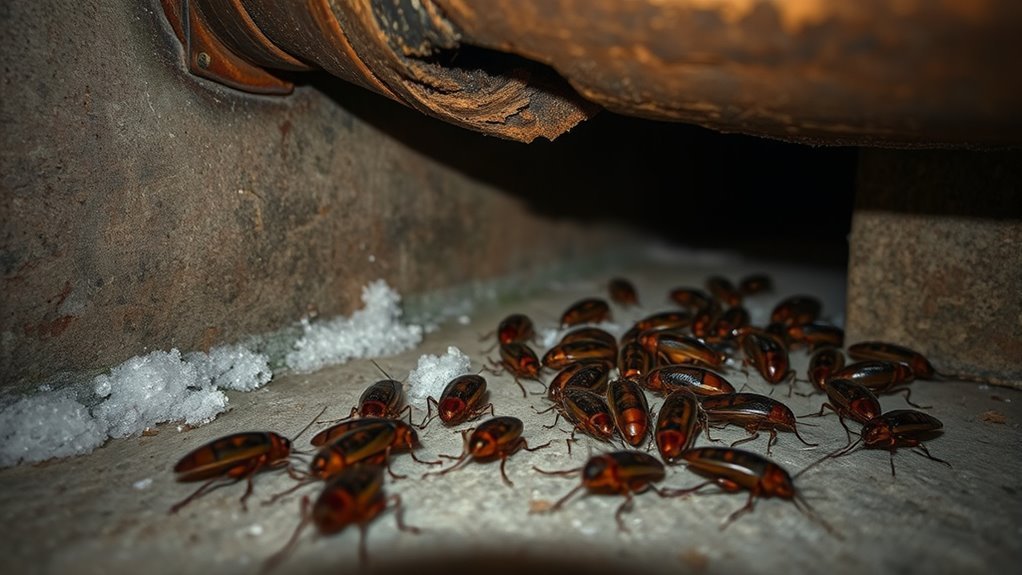
When temperatures drop, cockroaches enter a dormant state called diapause to survive the cold.
You’ll find them seeking warmth and moisture indoors, hiding in places like basements and appliances.
Understanding their cold-weather adaptations and indoor survival strategies helps explain how they stay active or dormant through winter.
Cold Weather Adaptations
How do cockroaches manage to survive the harsh winter months?
They enter a state of dormancy called diapause when cold temperatures drop below 40°F, slowing their metabolism and activity.
This hibernation-like state helps them conserve energy until conditions improve.
| Adaptation | Description |
|---|---|
| Diapause | Reduced metabolic activity |
| Shelter seeking | Wall voids, basements, appliances |
| Cold tolerance | Survive brief exposure to 32°F |
| Egg resilience | Eggs withstand cold temperatures |
| Migration behavior | Move indoors to escape harsh cold |
These adaptations allow cockroaches to endure winter’s chill and maintain populations despite the cold.
Indoor Survival Strategies
Since cold weather limits their outdoor survival, cockroaches rely on indoor spaces to stay alive during winter.
When temperatures drop, they seek warmth in hidden spots like wall voids, behind appliances, and plumbing areas.
You’ll often find them in insulated, moisture-rich environments such as basements and crawl spaces, which provide the perfect indoor survival conditions.
Their metabolic activity slows notably as it gets colder, helping them conserve energy and reduce movement.
Warmth, moisture, and accessible food inside your home allow cockroaches to persist through the winter months despite the chill outside.
Understanding these indoor survival strategies can help you identify and address cockroach hiding spots before they become a bigger problem in cold weather.
Dormancy and Activity
Cockroaches survive cold weather by entering a state called diapause, which acts like hibernation.
This dormancy kicks in when temperatures drop below about 40°F, slowing their metabolic rate and drastically reducing activity like feeding, mating, and moving.
You won’t see them scurrying around much during this time. Instead, they retreat to warm, insulated spots indoors—think wall voids, basements, or behind appliances—to ride out the cold.
While adult cockroaches struggle to survive prolonged freezing, their eggs hold up a bit better but still can’t handle extended exposure below 32°F.
So, during winter, cockroaches mostly stay inactive, conserving energy until conditions improve.
Understanding this dormancy and reduced activity helps you grasp how these resilient pests endure winter’s chill inside your home.
Cockroach Species That Thrive in Cold Weather
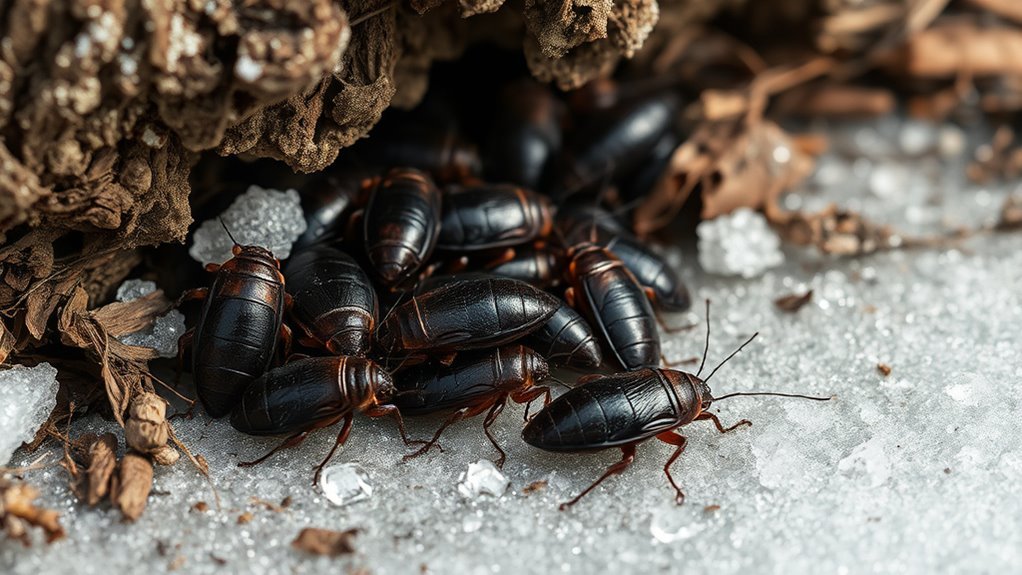
Although cold weather poses challenges for many insects, several cockroach species have adapted to thrive despite dropping temperatures.
You’ll find that German cockroaches flourish indoors year-round, unaffected by outdoor cold since they breed continuously in warm environments.
Oriental cockroaches stand out as some of the hardiest, often overwintering in damp, sheltered spots like basements and sewers.
American cockroaches usually hibernate outdoors but invade heated homes during cold snaps to stay warm.
When temperatures dip below 40°F, some species enter diapause, reducing activity to survive the cold.
Overall, cockroaches seek indoor environments offering warmth, moisture, and food during winter.
Understanding which species thrive in cold helps you better manage infestations when temperatures drop.
Cockroach Behavior and Activity During Winter
You might think cold weather stops roaches, but they actually slow down and enter a dormant state called diapause.
When temperatures drop below 44°F, they seek warm indoor spots like wall voids and appliances to survive.
Even in winter, their eggs resist the cold, waiting to hatch once things warm up.
Winter Roach Activity
When temperatures drop below 40°F, roaches enter a hibernation-like state called diapause to survive the cold.
As cold-blooded insects, their winter roach activity slows dramatically.
They seek warm, insulated spots like basements or behind appliances to avoid freezing.
Though outdoor roaches become less active, indoor warmth allows them to stay active, feed, and reproduce.
| Winter Roach Activity | Description |
|---|---|
| Diapause | Dormant state during cold weather |
| Shelter Seeking | Hide in warm, insulated areas |
| Activity Level | markedly reduced outdoors |
| Indoor Survival | Remain active if warmth exists |
Knowing this helps you understand how roaches adapt during winter to survive harsh conditions.
Indoor Roach Survival
Since indoor temperatures stay relatively warm during winter, cockroaches can remain active and continue breeding despite the cold outside.
When temperatures drop below 40°F, roaches outside enter diapause, a hibernation-like state. But inside, they thrive in warm, moist environments.
For indoor roach survival, they hide in wall voids, cabinets, appliances, and pipes, where heat and food are available.
These protected spots shield them from harsh cold and let them slow their metabolism less drastically compared to outdoor roaches.
If you struggle with roach infestations during winter, it’s because your home offers stable warmth and moisture.
This allows them to stay active year-round. Understanding this helps you target their hiding places and disrupt their indoor roach survival before they multiply further.
Cold Weather Behavior
How do cockroaches behave during freezing temperatures?
When cold weather hits, cockroaches enter a state called diapause, which is like a hibernation-like dormancy that helps them survive harsh conditions.
Below 40°F, they drastically reduce their activity and metabolism, slowing reproduction but not dying off.
You’ll find them hiding in warm, sheltered spots like wall voids, cracks, and insulated indoor areas to maintain enough heat.
If you keep your home warm and provide moisture and food, these pests stay active even in winter.
Understanding this behavior is key to controlling infestations year-round.
Common Winter Hiding Spots for Cockroaches
Although cold weather drives cockroaches to seek warmth, they don’t just disappear.
You’ll often find them hiding in wall voids, ceilings, and behind appliances. These warm areas provide perfect hiding spots during chilly months.
Cockroaches also thrive in cabinets, drawers, and pantry spaces where darkness and heat converge.
Appliances like stoves, microwaves, and dishwashers stay warm enough to shelter them undisturbed.
Besides these, cracks and gaps around pipes or foundation vents serve as entry points and additional hiding spots inside your home.
Cluttered storage areas such as basements, attics, and crawl spaces offer ample concealment as well.
Knowing these common winter hiding spots can help you target roach-prone areas effectively and keep your home pest-free all season.
Health Risks Associated With Winter Cockroach Infestations
When cockroaches invade your home during winter, they don’t just cause a nuisance—they also pose serious health risks.
Cockroaches produce allergens through their feces, saliva, and body parts, which increases allergen exposure indoors.
This can trigger allergic reactions and asthma attacks, especially if you or your family members have sensitivities.
Studies show that 23% to 60% of urban asthma sufferers react to cockroach allergens.
For children, early exposure raises the risk of developing asthma and respiratory problems.
Winter infestations worsen these issues since cockroaches seek shelter inside, elevating allergen levels.
To protect your health, minimizing allergen exposure is essential.
While pest control and sanitation are key, understanding the health risks linked to winter cockroach infestations helps you stay vigilant and safeguard your home environment.
Preventive Measures to Deter Cockroaches in Cold Months
Since cockroaches seek warmth during cold months, you can deter them by sealing cracks and gaps around windows, doors, and your home’s foundation to block their entry points.
Seal cracks around windows, doors, and foundations to block cockroaches seeking warmth during cold months.
Make sure to install door sweeps on exterior doors to prevent these pests from slipping inside.
Besides sealing cracks, keep your home dry by fixing leaks and improving ventilation, especially in basements and crawl spaces where roaches love to hide.
Remove food sources by promptly cleaning crumbs, spills, and pet food, particularly in kitchens and pantries.
Regularly inspect your home for signs of cockroaches and maintain these preventive measures consistently.
Taking these steps creates an inhospitable environment that discourages cockroach activity during cold months, helping you keep your home pest-free all winter long.
The Role of Professional Pest Control in Winter
Because cockroaches seek hidden warmth during winter, professional pest control plays a crucial role in identifying and treating their common hiding spots like wall voids, cracks, and basements.
When you hire experts, they conduct thorough inspections to locate cockroach entry points and nesting sites that you might miss.
They use targeted treatments like bait stations, residual sprays, and dusts tailored to the infestation’s severity and location.
Early intervention through professional pest control not only eliminates existing roaches but also prevents larger winter infestations by addressing populations before they grow.
By tackling these pests proactively, you reduce health risks linked to allergens that cockroaches spread during cold months.
Relying on pest control specialists ensures your home stays protected when roaches seek refuge from the cold.
Tips for Maintaining a Roach-Free Home Year-Round
To keep your home roach-free throughout the year, you need to stay vigilant about sealing cracks and gaps where these pests can enter.
Cockroaches can slip through tiny openings around doors, windows, and foundations. So, sealing these entry points helps keep them out.
Maintain a clean home by promptly wiping up crumbs, spills, and food residues, especially in the kitchen and dining areas. This will help reduce attractants.
Also, fix leaks and use dehumidifiers to cut moisture, as cockroaches thrive in damp places like basements and under sinks.
Store food in airtight containers and take out garbage regularly to remove food sources.
Finally, schedule regular professional pest control treatments to detect and eliminate hidden roach populations. This ensures your home stays roach-free year-round.
Frequently Asked Questions
What Temperature Is Too Cold for Roaches?
You’ll find roaches can’t survive temperatures below 15°F (-9°C) for long.
When it drops under freezing, most adults die or enter dormancy.
Does Keeping House Cold Keep Roaches Away?
You can lower roaches’ activity by keeping your house cold. This slows their movement and reduces their reproduction.
But you won’t fully eliminate them because they hide in warm, protected spots.
They can survive even harsh temperatures.
How to Get Rid of Roaches in Winter?
You can get rid of roaches in winter by sealing entry points and eliminating food and water sources.
Keeping your home clean is also essential.
Using bait stations or professional insecticides can be very effective.
Regular treatments target their hiding spots effectively indoors.
What Do Roaches Hate Most?
You’d think roaches love peppermint, but they hate it most—along with citrus peels and loud noises.
They avoid bright lights and strong smells, so keep those around if you want to make their life miserable.
Conclusion
Just like shadows retreat from the cold light of winter, roaches seek warmth and shelter when temperatures drop.
By understanding their secretive dance with the cold, you hold the key to keeping your home a fortress against these persistent intruders.
Embrace prevention as your shield and vigilance as your torch, guiding you through the darker months.
Remember, a roach-free home is not just a space—it’s your sanctuary, glowing bright despite winter’s chill.
Keeping your home roach-free requires awareness and action.
Seal any cracks and crevices, and keep food stored securely.
Regular cleaning and monitoring can make a big difference.
So, as winter approaches, make sure your home is ready to fend off these unwanted guests.
With the right strategies in place, you can enjoy a cozy, roach-free environment all season long!