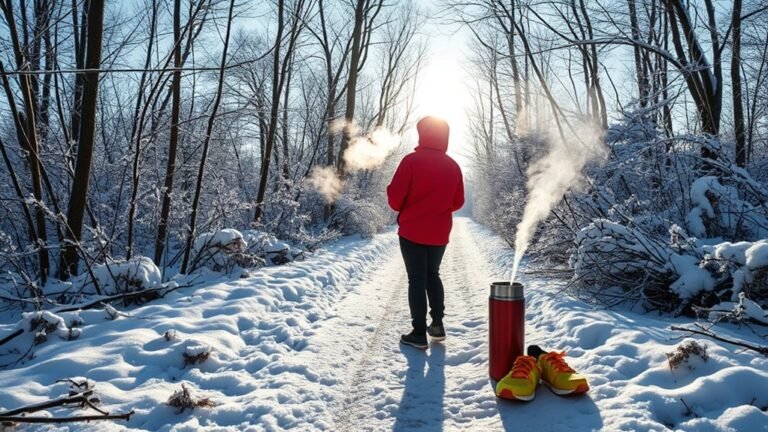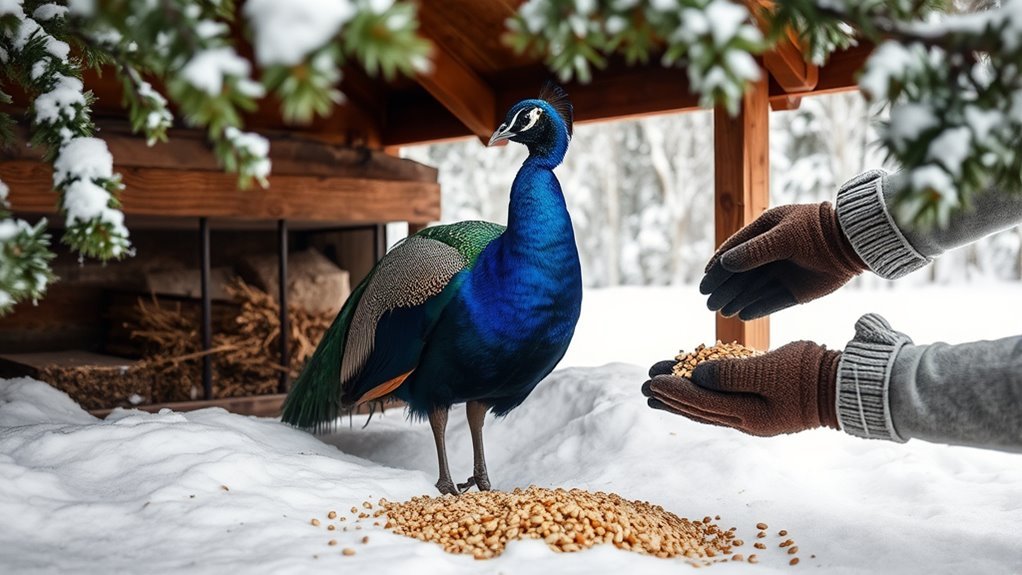
Helping Peacocks Live and Thrive in Cold Weather
To help your peacocks thrive in cold weather, it’s essential to provide them with insulated shelters. These shelters should include elevated perches to keep them dry and warm.
Using safe heat sources, like thermostatically controlled lamps or heated perches, is crucial, especially for young peachicks who need extra warmth.
Make sure to keep their water unfrozen by using heated bowls.
It’s also important to protect them from drafts and moisture to ensure their comfort.
Don’t forget to monitor their health closely to prevent frostbite or burns.
As you explore deeper care strategies, you’ll discover even more ways to support your birds through the challenges of winter.
Understanding Peafowl Cold Weather Sensitivities
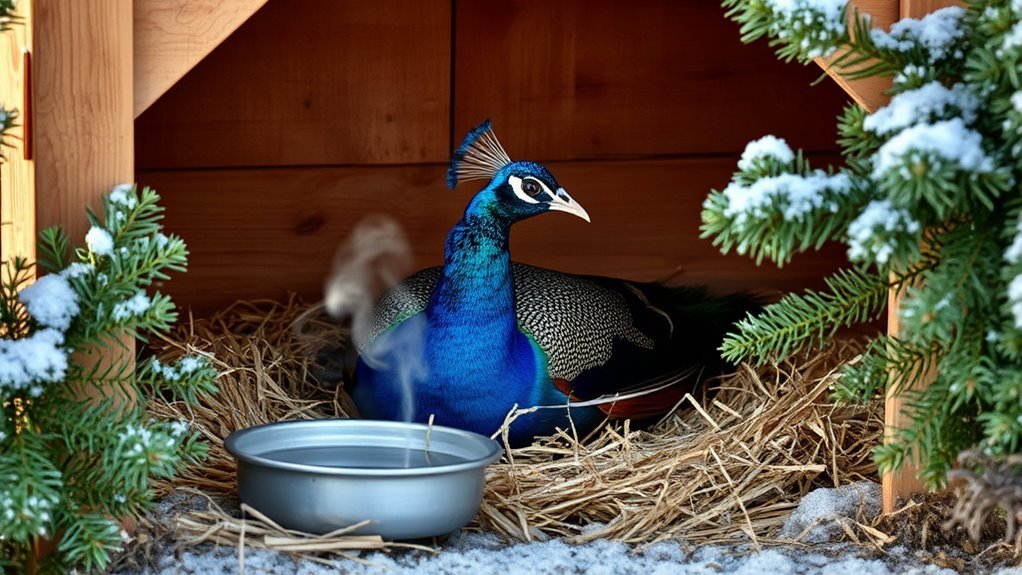
Although peafowl are known for their vibrant plumage, they aren’t equally equipped to handle cold weather.
Java peafowl, in particular, are less cold-hardy than Indian Blue peafowl and need extra care when temperatures drop.
If you’re raising peafowl, be aware that cold weather can cause frostbite on their feet and wattles, especially if it’s damp.
Young peachicks are even more vulnerable, requiring supplemental heat and protection until their feathers fully develop.
Young peachicks need extra warmth and care until their feathers grow in fully.
While keeping them warm is vital, you also have to avoid overheating perches or heat lamps, as these can burn their toes.
Understanding these cold weather sensitivities helps you provide the right environment to keep your peafowl safe and healthy through winter’s chill.
Shelter and Housing Solutions for Winter
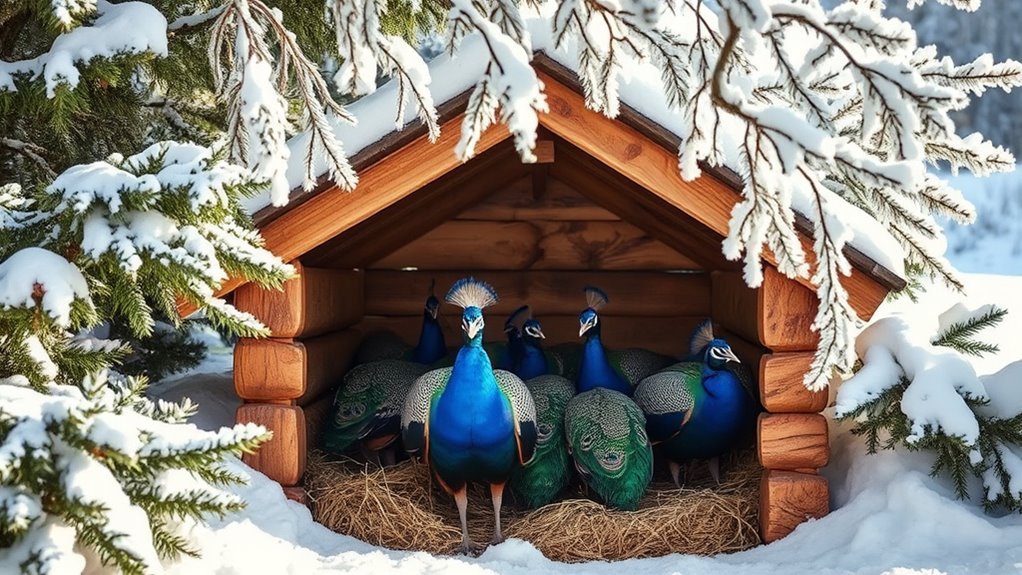
When temperatures drop, you need to provide your peacocks with a well-insulated shelter or heated coop that shields them from freezing conditions and harsh winter winds.
Effective shelter and housing solutions for winter include proper ventilation to prevent moisture buildup, which can cause frostbite and respiratory problems.
Make sure to keep the shelter dry, free from snow or ice buildup, and check regularly for drafts or leaks that compromise warmth.
Incorporate elevated perches inside the shelter so your peacocks stay off cold, damp ground.
While heat lamps or radiant heaters can help, use them cautiously to avoid burns or overheating, especially for sensitive breeds like Java peafowl.
Managing Heat Sources and Avoiding Injuries
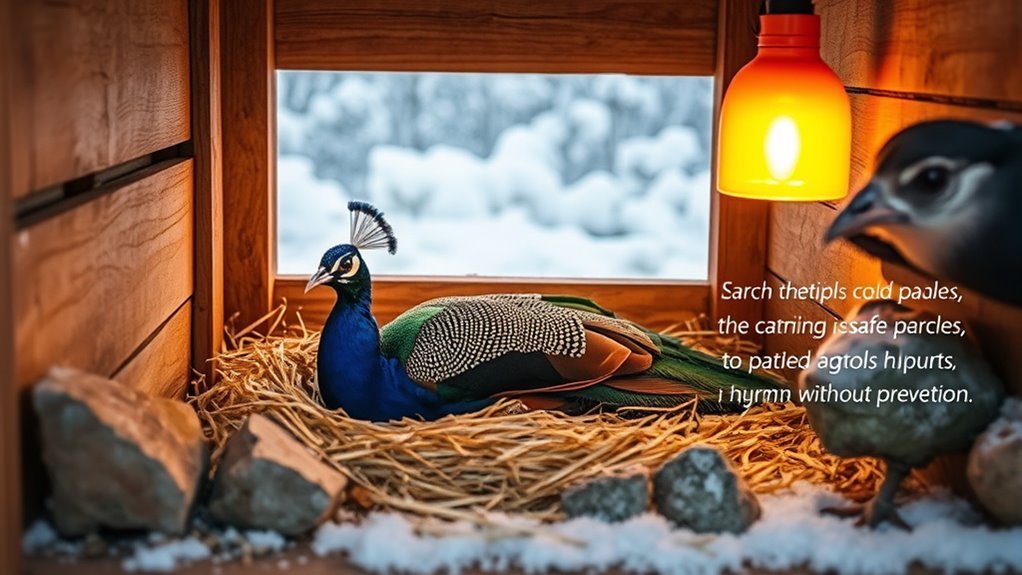
You need to keep heat lamps and perches at safe temperatures, around 90°F, to protect your peacocks from burns and frostbite.
Use thermostatically controlled devices and non-conductive materials to maintain consistent warmth without overheating.
Regularly check and monitor temperatures to spot any signs of injury and adjust heat sources immediately.
Safe Heat Lamp Use
Keeping your peacocks warm during cold weather requires careful management of heat lamps to prevent injuries and hazards.
When using heat lamps for your Java peafowl, follow these essential steps to guarantee safe and effective keeping warm:
- Set heat lamps to maintain around 70°F (21°C) and monitor temperatures regularly to avoid overheating.
- Use thermostat-controlled heat lamps for consistent warmth and to minimize burn risks.
- Position lamps at least 2-3 feet away from your birds and any flammable materials.
- Inspect lamps daily for damage or flickering, and never leave them unattended during storms or high winds.
Preventing Perch Burns
How can you protect your peacocks from perch burns during cold weather?
In colder climates, managing heat sources carefully is vital to avoid injuries. Heated perches can exceed 90°F, causing serious tissue damage or toe loss.
Use a thermometer to keep perch temperatures between 70-75°F, ensuring safety. Insulate perches with foam or rubber to evenly distribute heat and prevent hot spots.
Regularly inspect your birds for signs of burns—redness, swelling, or missing toes. If you spot any issues, adjust or turn off heat sources immediately.
Installing thermostats and timers on heat lamps helps maintain consistent, safe temperatures. This also prevents accidental overheating.
Monitoring Temperature Levels
When managing heat sources for peacocks, monitoring temperature levels closely guarantees injuries and ensures their comfort.
You need to keep a sharp eye on the temperature to avoid cold stress or burns. Here’s how you can do it effectively:
- Use a reliable thermometer to regularly check heat sources like heat lamps or heated perches.
- Keep heat lamps at a safe distance to prevent burns on feet and feathers.
- Adjust or turn off heat sources immediately if temperatures exceed 85-90°F, especially for young birds.
- Install thermostats or temperature controllers to maintain consistent warmth and avoid sudden fluctuations.
Caring for Young Peachicks During Cold Seasons
Why do young peachicks need extra care during cold seasons?
They’re less hardy and highly vulnerable to chilly temperatures.
You must provide additional warmth until they develop full feathers.
A heated indoor enclosure or brooder is essential, along with heat lamps or infrared heaters to prevent frostbite and health issues.
Peahens naturally brood their young, keeping them warm under their wings during cold nights.
Regularly monitor temperature and weather conditions to ensure safety.
| Care Aspect | Recommended Action |
|---|---|
| Warmth | Heated enclosure or brooder |
| Heating Methods | Heat lamps or infrared heaters |
| Natural Care | Peahen brooding under wings |
| Monitoring | Frequent temperature checks |
| Protection Goal | Prevent frostbite and illness |
Nutrition and Hydration in Low Temperatures
Maintaining proper nutrition and hydration is essential for peacocks during cold weather to keep their energy up and prevent dehydration.
You can support your peacocks by focusing on these key points:
- Provide fresh, unfrozen water at all times; check regularly to prevent freezing.
- Use heated water bowls or waterers to ensure constant hydration.
- Offer warm, supplemental foods like grains soaked in warm water to boost energy.
- Avoid salty or saline foods, as they can cause dehydration in cold conditions.
Behavioral Adaptations and Roosting Practices
You’ll notice peacocks roost high outdoors to stay safe and warm during cold nights.
They often choose sheltered spots that protect them from wind and harsh weather.
In winter, peacocks also tend to stick together more, using social behavior to help conserve heat.
Roosting Habits Outdoors
Although peacocks naturally roost high in trees or on elevated perches to avoid ground predators, you can improve their comfort in cold weather by providing sheltered outdoor roosts.
Roosting outdoors helps them conserve body heat, which is vital during chilly nights.
To optimize their winter roosting habits, consider these steps:
- Place roosts in windproof, sheltered spots to block harsh weather.
- Use covered perches to protect from rain and snow.
- Ensure roosts are high enough to keep peacocks safe from predators.
- Encourage early evening roosting so they settle before temperatures drop.
Social Behavior in Winter
How do peacocks adapt their social behavior to survive winter’s chill?
Peafowl adjust their social behavior in winter by forming small flocks or pairs to keep them warm through shared body heat.
They roost higher in trees or on elevated perches, which not only protects them from predators but also helps conserve warmth.
During colder months, peafowl become less active and spend more time resting in sheltered areas to reduce exposure to harsh weather.
Though their vocalizations decrease, they still use calls and body language to maintain social bonds.
Proper social grouping and choosing suitable roosting sites are essential for reducing stress and ensuring peafowl’s well-being.
Understanding these behavioral adaptations helps you support peacocks through winter effectively.
Community Resources and Shared Winter Care Tips
When caring for peacocks in cold weather, tapping into online communities and social media groups can provide valuable winter care tips tailored to your needs.
These community resources offer videos, articles, and firsthand experiences that help you protect your birds from frost and cold stress. Engaging with others helps you adapt best practices for your climate.
Here’s what you can find:
- Recommendations for insulated shelters to keep peacocks warm.
- Ideas for heated perches that prevent cold-related discomfort.
- Tips on ensuring access to unfrozen water sources.
- Support through shared feedback and answers to your questions.
Frequently Asked Questions
How Cold Is Too Cold for Peacock Bass?
You shouldn’t let peacock bass experience water below 60°F, as it stresses them and slows activity.
Anything under 50°F risks cold shock and death.
Keep their environment warm to protect their health and essentialness.
How to Save a Peacock?
To save a peacock, you’ll want to provide a warm, sheltered space.
Make sure it has fresh water and watch for signs of distress.
Avoid exposure to extreme cold.
Acting quickly can make all the difference.
Conclusion
You’ll see your peacocks fluff their feathers, seek cozy shelters, and huddle close to stay warm.
You’ll provide safe housing, manage gentle heat sources, and offer nourishing food and water.
You’ll watch young peachicks grow strong, encourage natural roosting, and share tips with fellow caretakers.
By understanding, preparing, and caring, you’ll help your peacocks not just survive—but thrive—through cold weather.
Turning winter’s chill into a season of comfort and life is possible with a little effort.
With the right support and care, your peacocks will not only endure the cold but flourish.
So, keep an eye on them, ensure their environment is cozy, and they’ll reward you with their beauty and grace.
Let’s make this winter a joyful and healthy experience for your feathered friends!