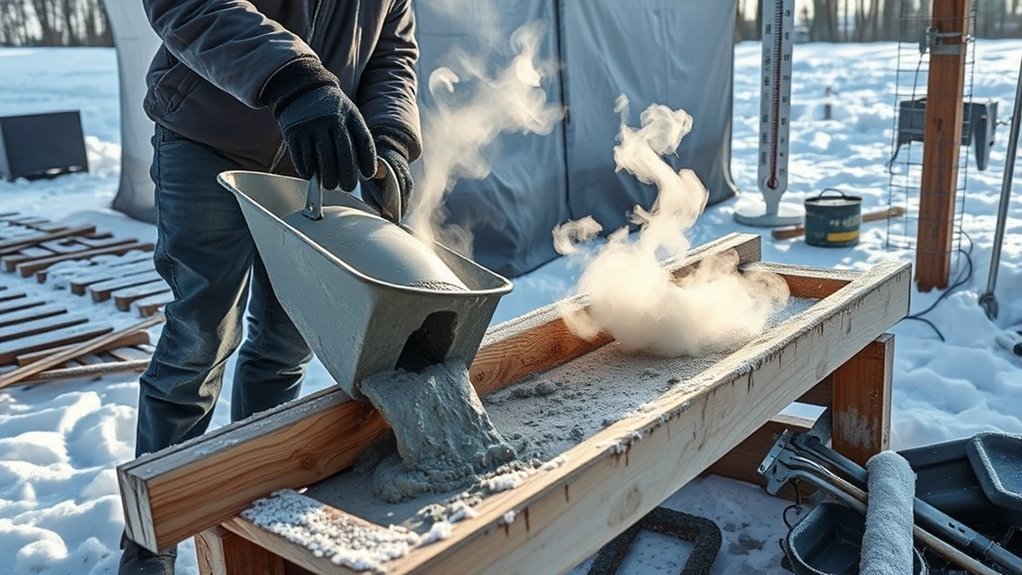
How Concrete Should Be Poured in Cold Weather: Step-by-Step Guide
When pouring concrete in cold weather, it’s crucial to take specific steps to ensure the best results. Cold temperatures can adversely affect the curing process, so preparation is key.
First, clear any snow and ice from the area where you will be pouring. Ensure that the ground is thawed and maintains a temperature above 40°F.
Next, preheat your water and aggregates to around 55°F. This step is essential as it helps in preventing the concrete from cooling down too quickly.
Also, consider using mixes that contain cold-weather admixtures. These additives are designed to accelerate the setting time of the concrete.
When you pour the mix, make sure its temperature is between 50°F and 75°F.
After pouring, it’s important to cover the concrete with insulated blankets immediately. This helps retain heat and protects the setting surface.
Lastly, keep a close eye on the temperature and moisture levels. This monitoring is vital to prevent freezing and to ensure the strength of the concrete.
Keep following for detailed steps to protect your concrete in the cold!
Understanding Concrete Setting in Cold Temperatures
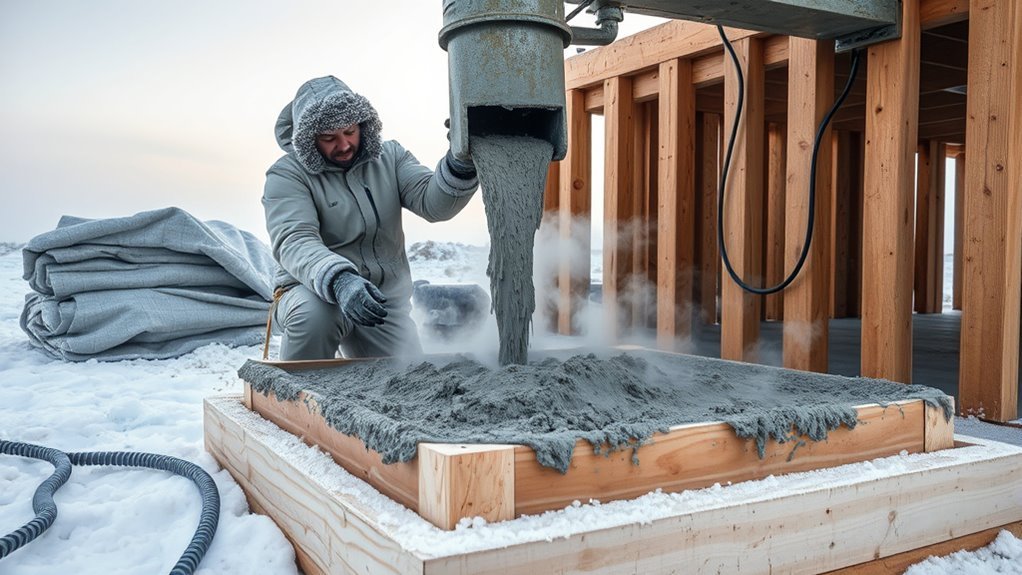
Although concrete can set in cold weather, you need to understand that the chemical hydration process slows considerably once temperatures drop below 50°F.
The concrete temperature plays a vital role in the curing process. Hydration reactions reduce in speed, which delays strength gain.
If temperatures fall below freezing, hydration can stop completely, risking weak and brittle concrete.
During the initial 24 hours, this is especially critical—freezing can cut ultimate strength by up to 50%.
However, if you mix and protect concrete properly, it can still reach a minimum of 500 psi within 24 hours, even in cold weather.
Identifying Safe Temperature Ranges for Pouring Concrete
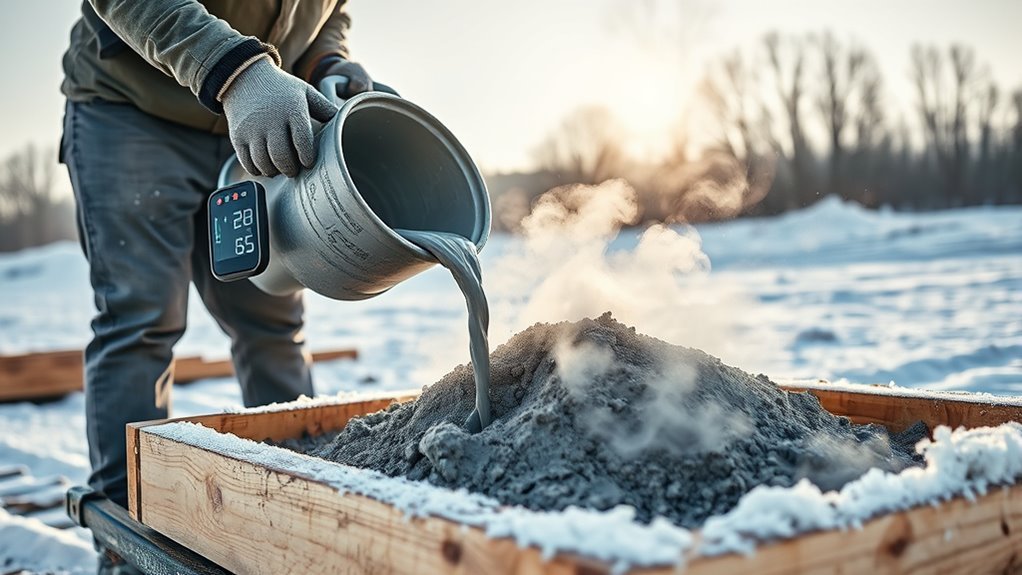
When you pour concrete, it’s essential to keep the ambient temperature above 40°F (4.5°C) for proper setting and curing.
Pouring below this temperature risks freezing, which can weaken the concrete and disrupt the curing process.
To identify safe temperature ranges, consider these key points:
- Maintain the concrete mix temperature between 50°F and 75°F during placement. This helps optimize hydration.
- Ensure the ground temperature is also above 40°F. This avoids cold pockets that could cause cracks.
- If temperatures fall between 20°F and 40°F, use protective measures like insulating blankets. These can help prevent freezing during curing.
Preparing the Site and Ground for Cold Weather Pouring
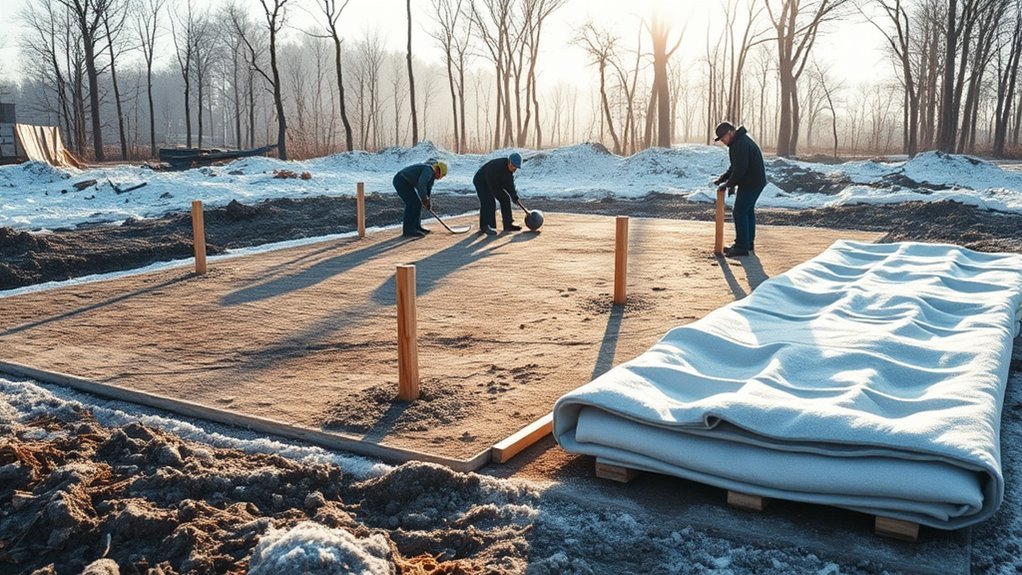
Before you pour concrete in cold weather, make sure to remove all snow and ice from the site.
Thaw the ground to the proper depth and keep it dry.
Maintain the ground’s temperature above freezing using heaters or insulation.
This will help guarantee your concrete cures properly without damage from frost or moisture.
Removing Snow and Ice
How do you guarantee a solid foundation for concrete pouring in cold weather?
Effective snow removal and ice clearance are vital for proper site preparation. You must ensure the site is free from snow, ice, and moisture before starting.
Focus on these three key steps:
- Clear all snow and ice from forms, reinforcement, and surrounding ground to avoid weakening the concrete bond.
- Remove any cold pockets and excess moisture to prevent uneven curing and cracking.
- Maintain the ground above freezing temperatures until the concrete cures to protect against early freeze damage.
Thawing and Drying Ground
Although cold weather poses challenges, you can guarantee a solid concrete pour by thoroughly thawing and drying the ground.
Start by removing all snow, ice, and frozen material from the site, forms, and reinforcement.
Use ground heaters or insulated blankets to thaw the ground to a depth of 12-18 inches, ensuring it stays above freezing.
It’s essential to keep the soil dry, as moisture can lead to cracks from freeze-thaw cycles.
After thawing, maintain insulation around the prepared ground and formwork to protect it from cold air, wind, and precipitation until the concrete gains strength.
This careful preparation creates a stable, dry base that supports proper curing.
In turn, this helps your concrete achieve lasting durability in cold conditions.
Ground Temperature Maintenance
To guarantee your concrete sets properly in cold weather, you’ll need to maintain the ground temperature at or above 50°F throughout the pouring process.
This prevents cracks and ensures ideal curing temperatures. Here’s how you can maintain the right ground temperature:
- Use insulated blankets or heated ground heaters to keep the subgrade warm and prevent freezing.
- Remove all snow, ice, and frost from the site and let the ground dry completely to avoid water contamination.
- Continuously monitor ground temperature with thermal sensors, ensuring it stays above freezing for at least 48 hours post-pour.
Selecting and Preparing the Right Concrete Mix
When pouring concrete in cold weather, you’ll want to select a mix designed to set quickly and resist freezing.
Choose a cold-weather concrete mix that includes accelerators like calcium chloride or non-chloride alternatives to speed up setting times.
For effective temperature control, guarantee the concrete mix starts at about 55°F for pours under 12 inches and 50°F for thicker sections.
This helps promote proper hydration.
Incorporate air-entraining admixtures to enhance freeze-thaw resistance, especially if you’re working in freezing climates.
Using rapid-setting or high-early-strength mixes helps reduce curing time, minimizing cold weather risks.
Additionally, prepare your mix with warm water and preheated aggregates to maintain the ideal initial temperature.
This ensures the concrete cures efficiently and withstands harsh conditions.
Preheating Materials and Equipment Before Pouring
Before you start mixing, make sure to preheat your aggregates and water to at least 55°F. This step helps the concrete hydrate properly.
Don’t forget to warm all your tools and equipment that will touch the concrete. This prevents rapid heat loss.
Keeping everything warm sets the stage for a stronger, more reliable pour in cold weather. It’s a simple but effective way to ensure better results!
Preheat Aggregates and Water
Although cold weather poses challenges for concrete pouring, preheating your aggregates and water can markedly improve the process.
By raising the temperature of these materials, you speed up hydration and reduce setting time, ensuring a stronger early cure.
Here’s what you need to focus on:
- Preheat aggregates and water to around 65°F (18°C) to get the concrete mix temperature to at least 55°F (13°C) for thinner pours.
- Use heated water combined with warmed aggregates to prevent premature freezing and maintain consistent curing conditions.
- Cover preheated materials with thermal blankets or insulated covers to retain temperature during mixing and pouring.
This approach helps maintain the right temperature, avoiding delays and improving the final concrete strength in cold conditions.
Warm Tools and Equipment
Since cold temperatures can rapidly cool your concrete mix, you should preheat all tools, forms, and equipment to at least 65°F to prevent heat loss during pouring.
Using heated tools and warm equipment helps maintain temperature control, which is essential for proper curing.
Warm your formwork and reinforcement with portable heaters or thermal blankets to provide necessary thermal protection, reducing the risk of thermal shock.
Employ construction heaters or ground warming devices to thaw frozen ground and keep substrate temperatures steady.
Regularly check temperatures with infrared thermometers or sensors to guarantee everything stays within the ideal range.
Techniques to Prevent Concrete From Freezing
When pouring concrete in cold weather, you need to take specific steps to prevent it from freezing and compromising its strength.
Effective freeze prevention requires careful temperature control and protective measures right after placement.
Here are three key techniques to keep your concrete safe:
- Use insulated blankets or thermal covers immediately after pouring to trap heat and maintain the concrete’s temperature.
- Mix with heated water and aggregates to keep the concrete above 50°F during placement.
- Employ cold-weather admixtures like accelerators and air-entraining agents to speed setting and boost freeze-thaw resistance.
Additionally, consider proper formwork and portable heaters to shield the concrete from harsh elements and maintain a warm environment.
These steps ensure your concrete cures properly without freezing.
Monitoring Temperature and Moisture During Curing
You need to track concrete temperature regularly with sensors or thermometers to keep it above 50°F during curing.
Measuring moisture content using meters at specific intervals helps you guarantee the concrete stays properly hydrated.
Adjust curing conditions as needed by applying wet coverings or compounds to prevent drying and cracking.
Temperature Tracking Methods
Although cold weather poses challenges for concrete curing, you can effectively monitor temperature and moisture to guarantee proper strength development.
Using reliable temperature tracking methods helps you maintain ideal conditions during curing.
Here’s how to stay on top of it:
- Deploy digital temperature sensors like Giatec’s SmartRock to get real-time core temperature readings. This ensures curing data accuracy.
- Use weather monitoring stations to track ambient air and ground temperatures continuously. This allows you to adjust your curing approach proactively.
- Utilize data logging tools and mobile apps to compile and analyze temperature and moisture measurement trends remotely. This enables timely interventions.
Moisture Content Measurement
Since moisture levels directly impact concrete curing, monitoring moisture content alongside temperature is essential during cold weather pours.
You should use moisture meters like Kett’s HI520-02 to non-destructively measure moisture content at intervals such as 4-8 hours, 24 hours, and throughout the curing process.
Tracking these levels helps ensure proper hydration, which is critical for achieving the desired strength and durability.
Remember, concrete must reach a minimum strength of 500 psi before removing protections, and moisture content readings confirm adequate hydration.
Consistently checking moisture content prevents freezing and surface issues caused by too much or too little moisture.
Curing Condition Adjustments
When curing concrete in cold weather, it’s crucial to keep a close eye on temperature and moisture. This helps you make timely adjustments to protect the integrity of the pour.
You need to maintain ideal curing conditions to support the hydration process and prevent damage.
So, here are some key steps to follow:
- Use temperature monitoring tools and moisture meters to track conditions at intervals like 4, 8, and 24 hours after pouring.
- Make sure to keep the concrete temperature above 50°F for at least 48 hours. You can adjust this with insulating blankets or curing compounds as needed.
- Don’t forget to document all data and changes to confirm the concrete reaches the required strength before proceeding.
Following these steps will help ensure a successful curing process!
Applying Protective Measures and Insulation
To protect your concrete from cold temperatures, immediately cover it with insulated blankets or thermal covers right after pouring.
Use high R-value insulated blankets, like R-7.0, especially when temperatures drop below 10°F.
Choose high R-value blankets, such as R-7.0, for effective protection below 10°F.
Make sure to secure coverings tightly, extending beyond slab edges to reduce heat loss and block wind-driven cooling.
When ambient temperatures fall under 20°F or winds exceed 5 mph, supplement insulation with heated enclosures to maintain steady curing temperatures.
Regularly check surface and internal concrete temperatures using sensors or infrared thermometers to confirm your protective measures work effectively.
This careful application of insulation and protective measures ensures the concrete cures properly, preventing freezing and maintaining strength despite cold weather challenges.
Proper Timing for Form Removal and Post-Pour Care
After securing your concrete with insulation and protective covers, you’ll need to focus on the right timing for form removal and post-pour care.
Proper form removal depends on the concrete reaching a minimum strength, usually after five days in cold weather, but longer curing is better.
To guarantee successful curing concrete, follow these steps:
- Maintain temperature above 41°F for the first 24-48 hours using insulation or heat to prevent freezing.
- Keep concrete moist with coverings or curing compounds to provide moisture protection and promote hydration.
- Regularly perform temperature monitoring and check moisture levels to confirm the concrete’s readiness before removing forms or exposing it to harsh environments.
This approach helps avoid damage and ensures durable, well-cured concrete in cold conditions.
Using Cold-Weather Admixtures to Enhance Concrete Performance
Although cold weather can slow concrete setting, using cold-weather admixtures lets you speed up the process and guarantee early strength development.
By adding agents like calcium chloride or non-chloride accelerators, you help the concrete reach the critical 500 psi within 24 hours, even when temperatures dip below 50°F.
To boost concrete performance further, combine these admixtures with air-entraining additives, which improve freeze-thaw resistance and durability during winter curing.
Keep in mind, proper dosage is key; too much can cause excessive heat and cracking, while too little won’t speed setting adequately.
Using cold-weather admixtures not only enhances early strength but also gives you more flexible scheduling and reduces the need for extra heating or insulation on cold days.
Frequently Asked Questions
How to Pour Concrete in Cold Weather?
You should thaw the ground and forms.
Use warm water and aggregates, and add accelerators.
Pour quickly, then cover the concrete with insulated blankets to keep it warm.
Monitor temperature until it gains enough strength.
What Is the 10/20/30/40 Rule When Making Concrete?
The 10/20/30/40 rule indicates you maintain concrete above 10°F for 24 hours.
Then, keep it at 20°F after 20 hours for safe handling.
Next, it should be at 30°F by 30 hours.
Finally, ensure it reaches 40°F at 40 hours to guarantee proper strength and durability.
What Is the Code for Pouring Concrete in Cold Weather?
You follow ACI 306 for cold-weather concrete pouring, keeping temperatures above 50°F.
It’s important to prevent freezing in the first 24 hours, and using insulation or heating can really help with that.
You’ll also want to monitor moisture and temperature to guarantee proper curing and strength.
What Are the Rules for Cold Weather Concreting?
Imagine pouring concrete in freezing temps—you’ve got to safeguard it with blankets and use accelerators.
You can’t let it freeze before reaching 500 psi in 24 hours.
You’ll also monitor temps constantly to ensure proper curing.
Conclusion
Pouring concrete in cold weather might feel like facing winter’s chill head-on, but with the right steps, you’ll conquer it like a seasoned explorer.
By preparing your site, choosing the right mix, and protecting your pour, you’ll make certain your concrete sets strong despite the frost.
Just as a gardener shields delicate blooms from a late freeze, your careful attention will help your project thrive—even when the cold tries to slow you down.
In conclusion, pouring concrete in cold weather requires thoughtful preparation and execution.
By selecting the appropriate concrete mix and taking protective measures, you can ensure your concrete sets correctly and remains durable.
So, embrace the challenge of cold-weather pouring, and your hard work will pay off with a strong, lasting finish.