How to Help Chickens Handle Cold Weather
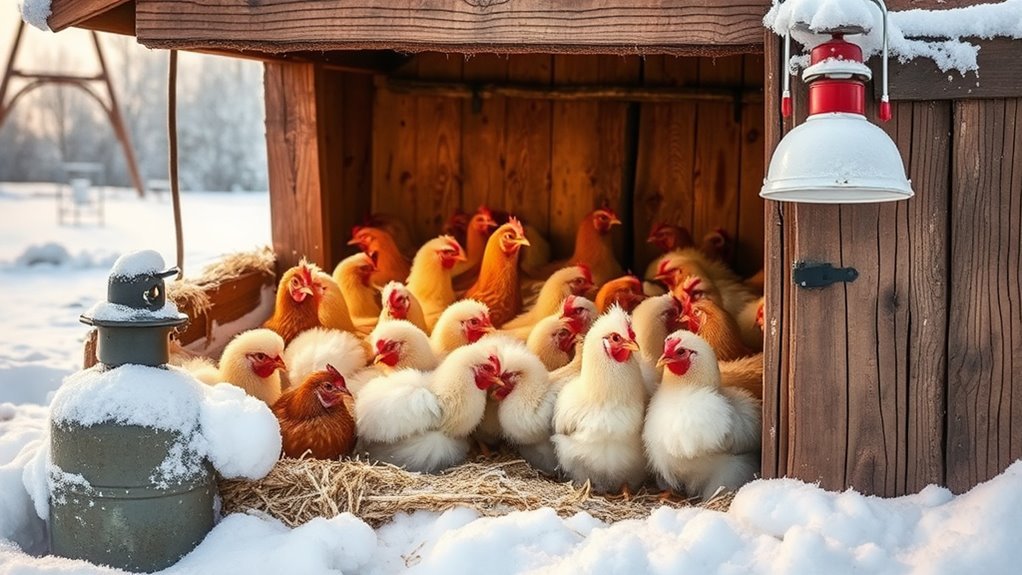
To help your chickens handle cold weather, it’s essential to create a cozy environment for them.
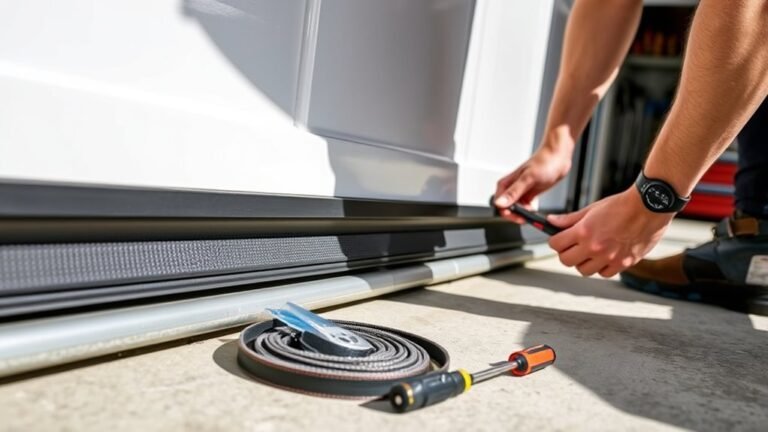
Start by keeping their coop well-insulated and draft-free but also ensure it’s properly ventilated to avoid moisture buildup.
Feeding your chickens extra high-protein and energy-rich food will help them maintain warmth and overall health during the chilly months.
Don’t forget about their hydration! Provide fresh, unfrozen water using heated bowls or insulation to keep them hydrated.
Another tip is to apply petroleum jelly on their combs to prevent frostbite.
Encouraging natural behaviors like huddling and roosting can also make a big difference in their comfort levels.
With these simple steps, you’re setting your flock up for comfort and safety all winter long.
And remember, there’s always more you can do to optimize their cold-weather care!
How Chickens Stay Warm Naturally
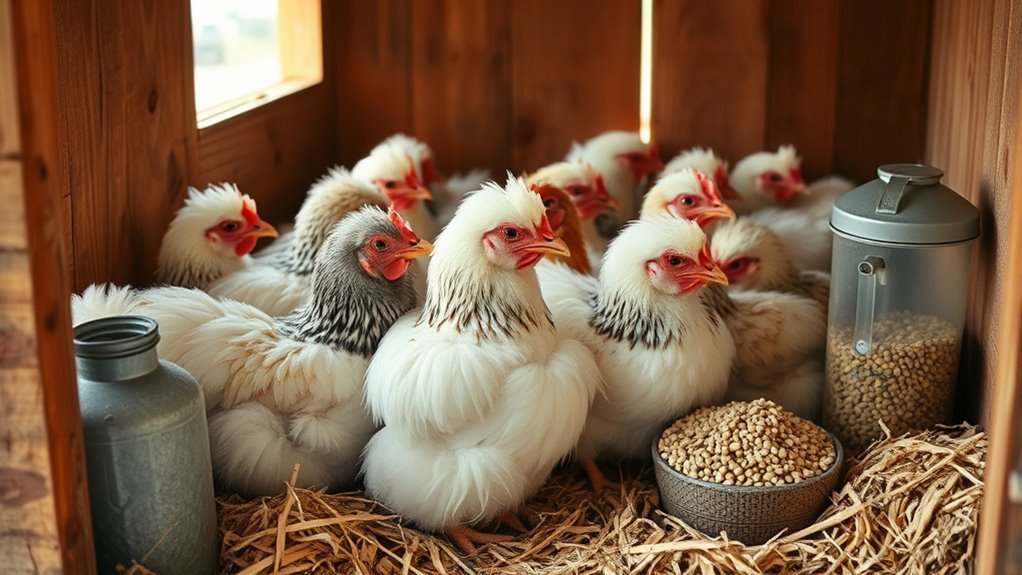
Although chickens can’t put on sweaters, they naturally stay warm by trapping air between their feathers, which acts as insulation against the cold.
This feather insulation helps chickens keep warm by holding in their body heat, much like a natural thermal blanket.
You’ll notice they hunch or draw their necks close to their bodies, minimizing heat loss.
At night, hens tuck their heads under their wings while roosting to retain body heat even more effectively.
Chickens also stand on one leg to reduce exposure since their feet have less blood flow and get cold quickly.
Plus, they cuddle together, sharing warmth through social bonding, which further helps the flock stay comfortable in chilly weather.
Understanding these natural habits can help you support your chickens better during cold spells.
Preventing and Managing Frostbite
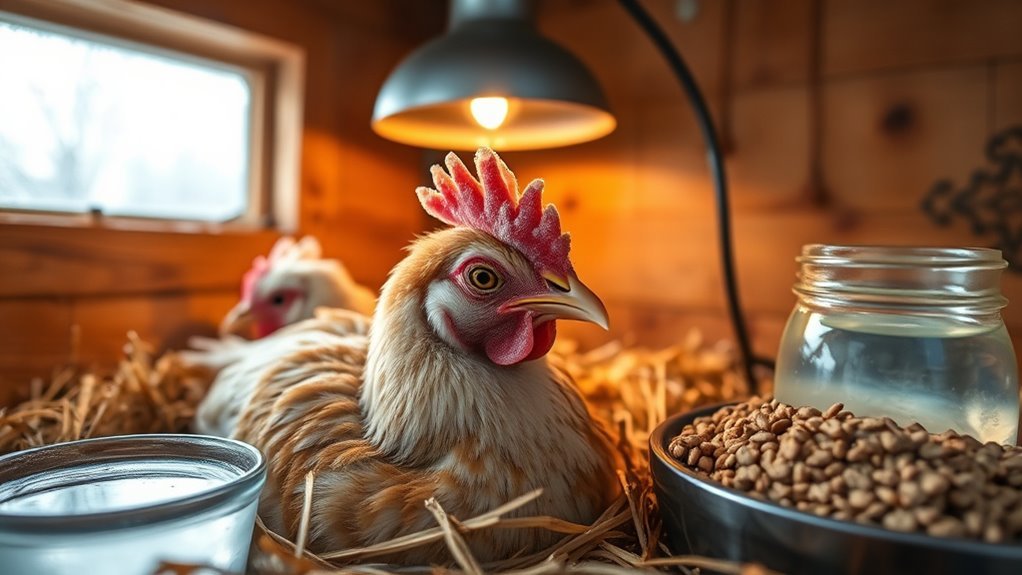
Since frostbite can cause serious damage to your chickens’ combs and wattles during freezing weather, you should take proactive steps to safeguard them.
Apply a thin layer of petroleum jelly or frostbite ointment to create a barrier against frostbite, especially on large or serrated combs, which are more vulnerable.
Make certain your coop has proper insulation and is draft-free to maintain warmth.
Inspect combs regularly for black or bluish spots to catch frostbite early.
| Risk Factor | Prevention Tip | Winter Care Benefit |
|---|---|---|
| Exposed Comb | Apply petroleum jelly | Protects from freeze damage |
| Drafty Shelter | Improve insulation | Warmer microclimate |
| Prolonged Cold | Regular comb inspections | Early frostbite detection |
These steps help manage frostbite effectively during harsh winter.
Feeding Strategies for Winter
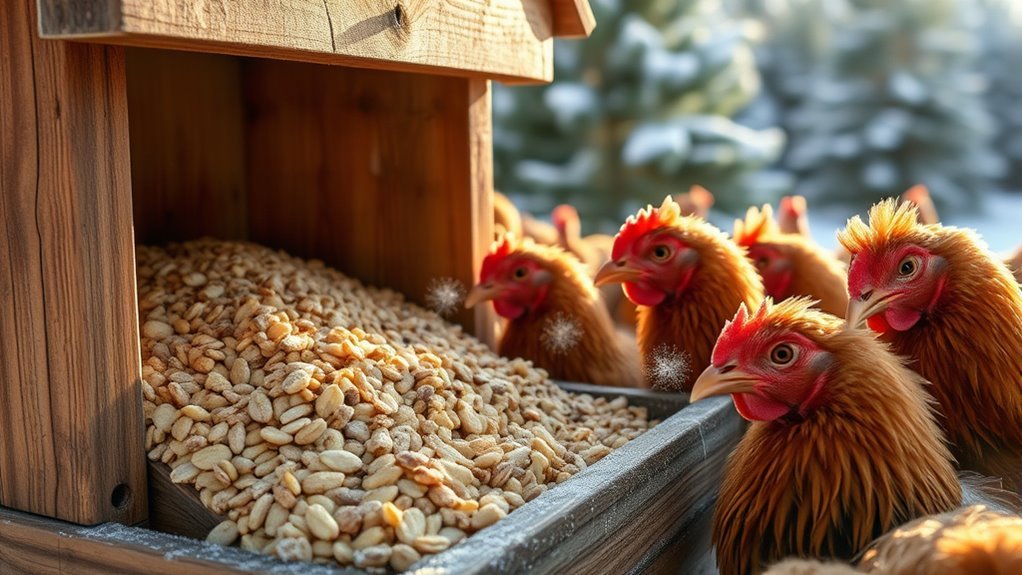
When temperatures drop, your chickens need more calories to keep warm—often up to 1.5 times their usual intake.
Adjust your feeding routine by offering high-protein feeds like layers mash or pellets containing 14-20% protein to support feather growth and overall health.
Incorporate energy-dense treats such as cracked corn or sunflower seeds, which help your flock generate extra body heat overnight.
While scratch grains are tempting, keep them as occasional treats. This helps maintain a balanced diet and prevents nutritional gaps.
Always provide fresh, unfrozen water daily, as hydration is vital during winter.
Proper feeding strategies not only boost your chickens’ cold-weather resilience but also guarantee they stay healthy and active throughout the chilly months ahead.
Keeping Water From Freezing
How do you guarantee your chickens always have access to fresh water during freezing temperatures?
Start by using heated water bowls or poultry-specific de-icers to prevent water from freezing.
These tools keep the water liquid, ensuring your flock stays hydrated.
To further slow heat loss, insulate water containers with foam or straw, which helps maintain the temperature longer.
You can also install a thermostatically controlled water system that circulates or warms water above freezing.
Place water containers inside the henhouse or near heat sources, protecting them from snow and wind exposure.
Finally, refresh and clean water frequently during cold spells to avoid ice buildup and maintain water quality.
With these steps, your chickens will never have to go thirsty despite the cold.
Insulation and Ventilation for Winter Coops
Although keeping your coop warm is essential during winter, you also need proper insulation and ventilation to protect your chickens from cold drafts and moisture buildup.
Striking the right balance helps maintain a healthy environment inside the coop. Here’s what you should focus on:
- Use thick wall materials and deep litter bedding for effective insulation that retains heat.
- Install low and high-level vents to allow moist air to escape without letting cold winds create drafts.
- Seal gaps around windows, doors, and ventilation openings to keep the coop draft-free while allowing fresh air exchange.
Additionally, consider windbreaks like tarps around the coop to reduce wind chill.
Proper insulation combined with controlled ventilation prevents moisture buildup and respiratory problems in your flock.
Frequently Asked Questions
How Cold Is Too Cold for a Chicken?
You’ll find chickens struggle below -20°C (-4°F) without proper shelter and insulation.
If temperatures drop too low, they risk frostbite and health issues,
so you’ll need to provide extra warmth and protection during extreme cold.
What Is the 90/10 Rule for Chickens?
Think of the 90/10 rule as your chicken’s winter lifeline:
90% depends on your shelter and care, while only 10% relies on breed.
You’ve gotta focus on insulation and dry bedding to keep them cozy and safe.
Make sure their coop is well-constructed and draft-free.
Regularly check for any signs of moisture or dampness.
A little effort goes a long way in ensuring their comfort during the cold months!
Can Chickens Survive Winter Without Heat?
Yes, your chickens can survive winter without heat if their coop is well-insulated, draft-free, and dry.
They’ll rely on their natural feathers and huddling to stay warm.
Can Chickens Sleep Outside in the Cold?
You’ll see chickens nestled close, feathers fluffed against chilly air—they can sleep outside in the cold if their coop stays cozy, draft-free, and dry.
Just provide shelter, roosts, and bedding to keep them warm and safe.
Conclusion
By taking these steps, you’ll help your chickens weather the winter like pros.
Think of your coop as a cozy blanket, wrapping your flock in warmth and safety.
Keep their water flowing, feed them hearty meals, and protect their combs from frostbite.
With proper insulation and ventilation, your chickens won’t just survive the cold—they’ll thrive.
Even the harshest winter days can turn into a comfortable season for your feathered friends.
To sum it up, providing a warm, safe environment is key for your chickens during winter.
Make sure they have fresh water and nutritious food to maintain their energy.
Lastly, don’t forget about frostbite protection for their combs.
With these simple yet effective strategies, your chickens will not only endure the cold but will also be happy and healthy all winter long.