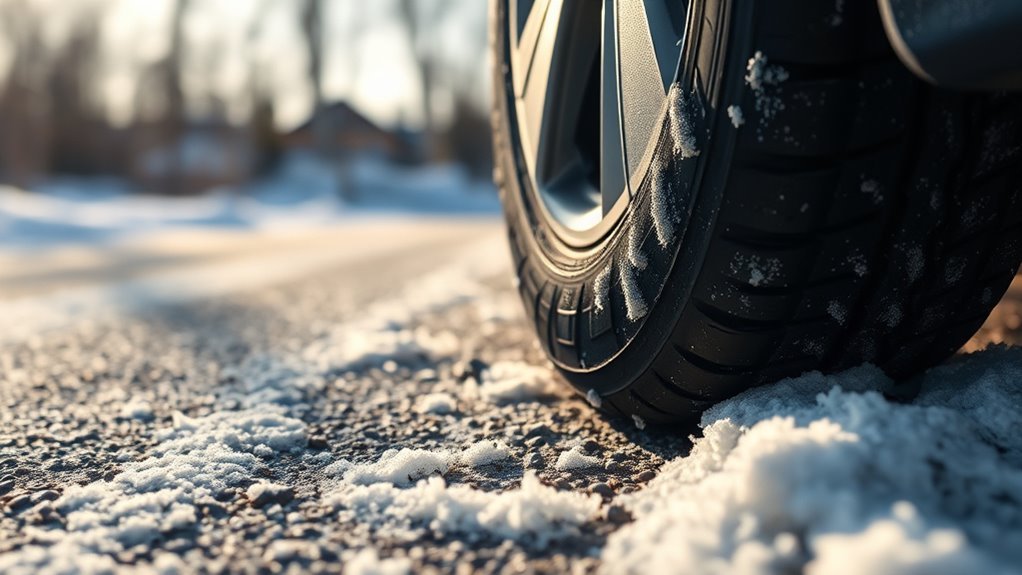
Why Does Tire Pressure Decrease in Cold Weather?
You’ll notice your tire pressure drops in cold weather because the air inside contracts as temperatures fall.
This drop can lower pressure by about 1 to 2 PSI for every 10°F decrease.
Cooler air molecules slow down and take up less space, which reduces the pressure inside your tires.
Low pressure can affect safety, fuel efficiency, and tire wear.
That’s why it’s so important to check and adjust your tires regularly during cold months.
Keep going to uncover how to protect your tires and maintain ideal performance.
How Temperature Affects Tire Pressure
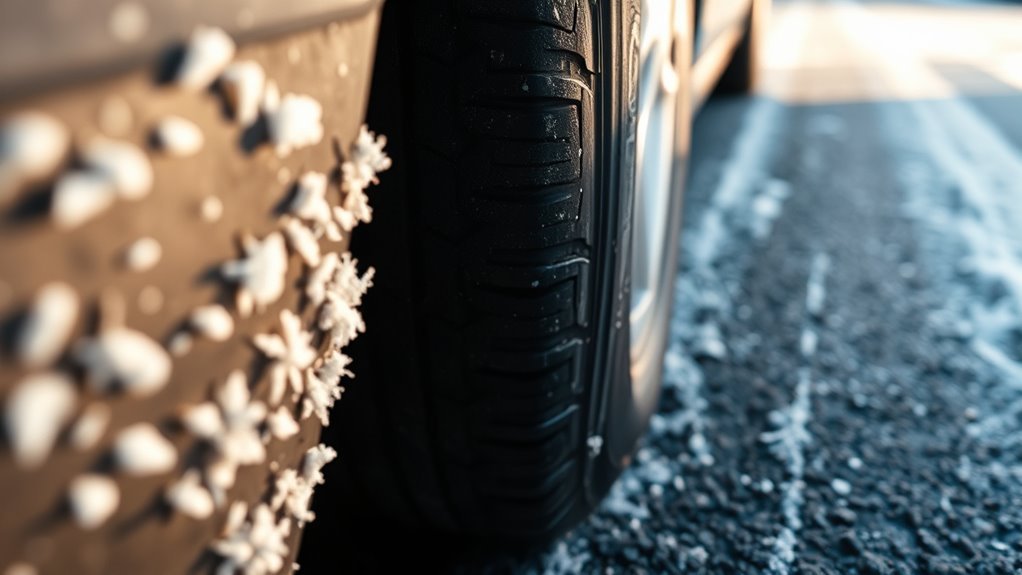
Although the temperature drops, your tire pressure decreases because cold air contracts inside the tires.
As temperatures fall, tire pressure drops due to the contraction of cold air inside your tires.
In cold weather, air molecules slow down and compress, causing a volume decrease inside the tire.
This air contraction results in a drop in tire pressure, typically about 1 to 2 PSI for every 10°F temperature drop.
You can easily check this change using a tire pressure gauge or rely on your tire pressure monitoring system for real-time readings.
Lower tire pressure affects how your vehicle handles and increases tire wear over time.
Keeping an eye on your tire pressure during temperature drops helps you maintain *ideal* PSI, ensuring safety and prolonging tire life despite the challenges cold weather brings.
Reasons Behind Tire Pressure Drop in Cold Weather
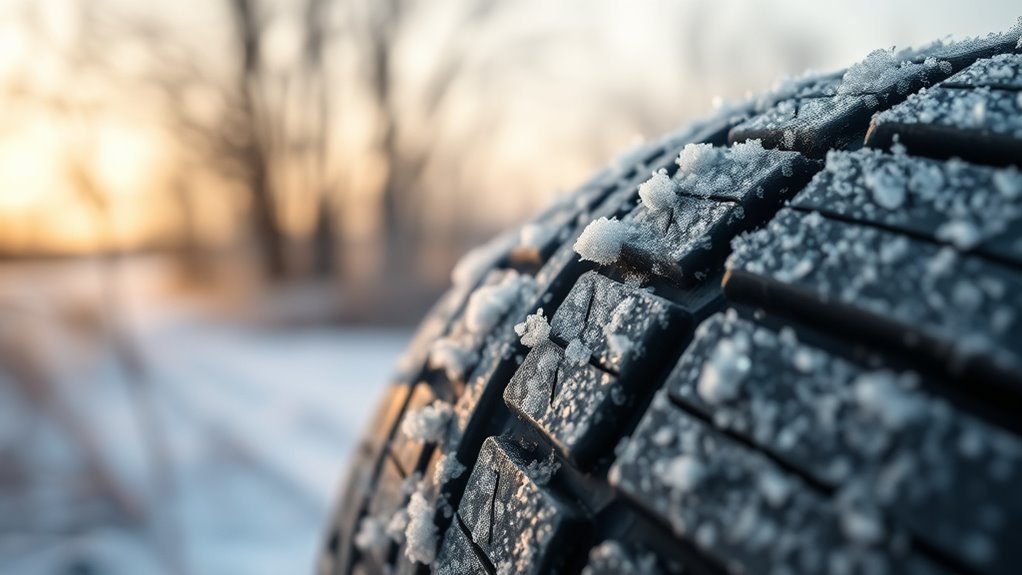
When temperatures drop, the air inside your tires contracts, causing the pressure to fall.
Cold temperatures slow down air molecules, making them occupy less space, which leads to air contraction and a drop in tire pressure.
Typically, for every 10°F decrease, tire pressure drops by about 1 to 2 PSI.
This natural pressure loss accelerates with cold weather effects, so your tires lose pressure faster than usual.
As tire pressure falls below recommended levels, your vehicle’s tire pressure monitoring systems (TPMS) may trigger the TPMS warning light, alerting you to check your tires.
To keep your tire pressure ideal, regularly use a tire gauge during colder months and adjust as needed to compensate for these temperature-driven pressure drops.
Safety Implications of Low Tire Pressure
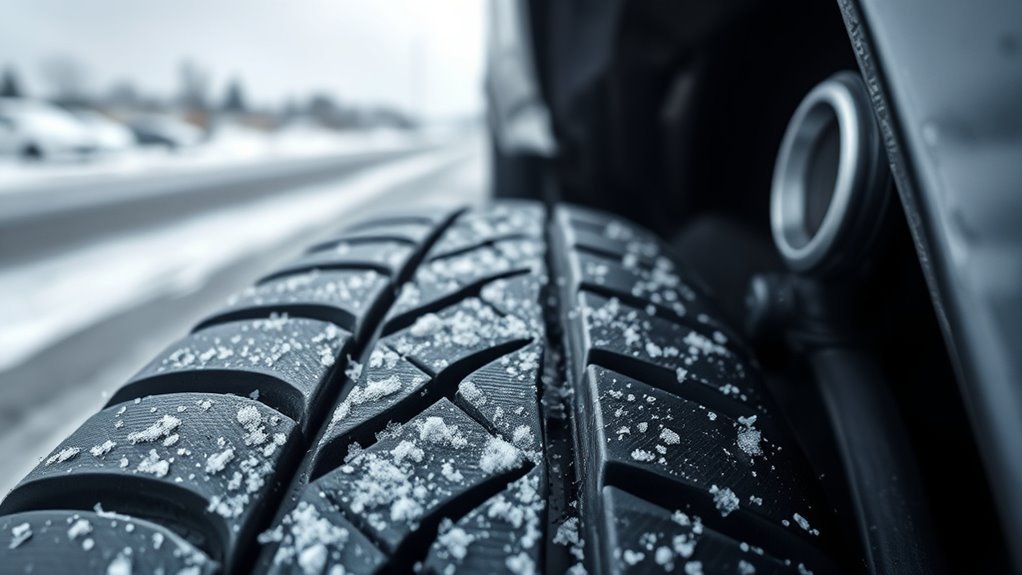
When your tire pressure drops, your car handles sluggishly and takes longer to stop, especially on icy roads.
You’ll also notice your fuel efficiency slipping as underinflated tires create more resistance.
Plus, low pressure causes uneven tire wear, meaning you’ll replace them sooner than expected.
Handling and Braking Risks
Since cold weather causes tire pressure to drop, you face increased risks in handling and braking.
Low tire pressure reduces your tires’ contact patch with the road, making handling sluggish and braking less effective.
Underinflated tires increase your braking distances, especially on icy or snowy roads, directly compromising safety.
Even a 1 PSI drop can reduce braking efficiency by up to 2%, affecting how quickly your vehicle responds.
Cold weather-induced low tire pressure also dulls tire response, increasing the chance of skidding.
To stay safe, regularly check your tire pressure and rely on your vehicle’s TPMS to alert you to low tire pressure.
Maintaining proper tire pressure ensures your tires perform at their best, helping you maintain control and shorten stopping distances during winter driving.
Fuel Efficiency Decline
Although you might not notice it immediately, low tire pressure caused by cold weather can considerably reduce your vehicle’s fuel efficiency.
When the air pressure inside your tires drops due to pressure loss from cold temperatures, your tires become underinflated.
These cold tires increase rolling resistance, forcing your engine to work harder and boosting fuel consumption.
Even a 1 PSI decrease in tire pressure can lower fuel efficiency by about 0.2%.
To avoid this decline, regularly check your tire pressure during winter.
Your pressure monitoring system (TPMS) or tire pressure warning light can alert you if air pressure falls too low.
Maintaining proper tire pressure in cold weather helps keep fuel efficiency *ideal* and reduces unnecessary emissions.
This not only saves you money but also supports safer, more eco-friendly driving.
Increased Tire Wear
If you let your tire pressure drop during cold weather, you’ll face faster and uneven tread wear, especially along the edges.
Underinflated tires reduce your tire lifespan and increase tire wear due to pressure drops that cause excessive friction.
Ignoring the tire pressure light or failing to check PSI regularly can accelerate tire deterioration.
Here’s what happens with low tire pressure in cold weather:
- Uneven tread wear, mainly on tire edges
- Increased risk of sidewall cracks and bulges
- Higher chance of blowouts on icy roads
- Premature tire replacement due to safety hazards
Maintaining proper tire pressure is key to preventing these issues and ensuring your tires last longer despite cold weather challenges.
How to Properly Check Tire Pressure in Winter
To get an accurate tire pressure reading in winter, check your tires when they’re cold—that means your vehicle hasn’t been driven for at least three hours or has been parked overnight.
Use a reliable tire gauge to measure each tire’s PSI and compare it to the manufacturer’s recommended level, usually found on the door placard or in the owner’s manual.
Before attaching the gauge or air compressor, remove the valve stem cap to prevent debris and guarantee an accurate reading.
Inflate or deflate your winter tires to the correct PSI, then securely replace the valve cap.
Since cold temperatures cause tire pressure drops, regularly check tire pressure at least once a month.
If your vehicle has a pressure monitoring system, use it as a helpful reminder to maintain proper tire inflation during cold weather.
Tips for Maintaining Optimal Tire Pressure During Cold Months
Since tire pressure drops about 1-2 PSI for every 10°F decrease in temperature, you’ll want to check and adjust your tires more frequently during the cold months to keep them properly inflated.
To maintain ideal pressure in cold weather, follow these tips:
- Check tire pressure when tires are cold, ideally before driving or after 3 hours of no use, to get accurate PSI readings.
- Use a reliable tire pressure gauge rather than relying solely on your TPMS, as it may not alert you to slight pressure drops.
- Regularly add air in tires to prevent underinflation caused by the temperature effect.
- Monitor changes often, especially during sudden cold snaps, to maintain safe tire pressure and tire longevity.
Staying proactive helps you avoid the risks of underinflation as pressure drops in cold weather.
When to Seek Professional Tire Maintenance
When your tire pressure stays low despite adding air and driving a short distance, it’s time to get a professional inspection.
Persistent low tire pressure or a TPMS warning light that won’t turn off often signals leaks and damaged sensors.
Seasonal temperature changes can cause air pressure drops, but if you constantly need to check tire pressure, professional tire maintenance is essential.
Proper tire inflation ensures safety and tire longevity, so don’t ignore signs of uneven wear or sudden pressure loss.
| Issue | Action Needed |
|---|---|
| Low tire pressure persists | Seek professional inspection |
| TPMS warning light active | Schedule sensor evaluation |
| Frequent air pressure drops | Check for leaks |
| Uneven tire wear | Visit tire specialist |
| Seasonal temperature changes | Regular professional maintenance |
Frequently Asked Questions
Do I Need to Put Air in My Tires When It’s Cold?
Yes, you should add air if your tires are below the recommended PSI.
Cold weather lowers pressure, so check regularly with a gauge when tires are cold to keep them safe, efficient, and long-lasting.
Is It Normal for Tire Pressure to Drop in Cold Weather?
Think of your tires like balloons shrinking in winter—they’ll lose pressure in cold weather, and yes, that’s normal.
You should check and inflate them regularly to keep your ride safe and smooth during chilly days.
How Do I Keep My Tires From Deflating in the Cold?
You keep your tires from deflating in the cold by regularly checking pressure with a gauge.
Inflate them to the recommended PSI when cold, and consider winter tires to maintain better pressure stability during temperature drops.
Can a Tire Lose Pressure but No Leak?
Yes, your tire can lose pressure without a leak.
Air naturally seeps through the tire material and valve. Plus, temperature changes can cause air contraction.
So, it’s important to check your tire pressure regularly.
This helps you spot real leaks versus normal drops in pressure.
Conclusion
Just like a balloon shrinks when the air gets cold, your tire pressure drops as temperatures fall.
You’ve got to stay on top of checking your tires regularly, especially in winter, to keep them safe and efficient.
Don’t let low pressure catch you off guard—it can affect your handling and fuel economy.
By maintaining proper tire pressure, you’re driving smarter and protecting yourself on every chilly trip.
In cold weather, tire pressure decreases, which can lead to unsafe driving conditions.
Regularly checking your tires not only ensures better handling but also improves fuel efficiency.
So, stay proactive this winter!
Keeping your tires properly inflated is a simple yet effective way to enhance your driving experience.
Remember, safe driving begins with well-maintained tires, especially in colder temperatures.